Whether an F1 Bernedoodle Comes Out Tri Color
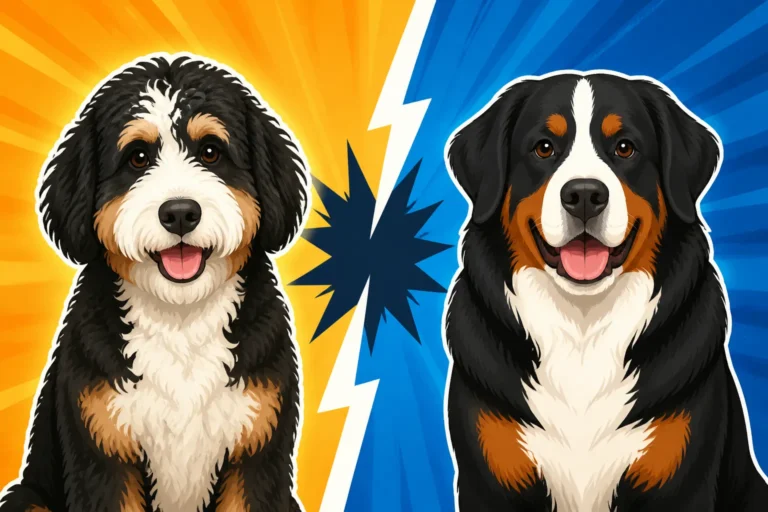
It's a question many prospective Bernedoodle parents ask, often with a specific vision in mind: can an F1 Bernedoodle, that wonderful first-generation cross, truly inherit those striking tri-color markings that make the Bernese Mountain Dog so iconic? The desire for that classic black, white, and rust pattern is incredibly strong, and it can be disheartening to feel like you have to choose between a puppy's coat and its generation. This guide is here to shed light on the fascinating genetics behind Bernedoodle colors, specifically addressing whether that coveted tri-color pattern is indeed a possibility in an F1 litter.
What Exactly is an F1 Bernedoodle?
Before we dive into the kaleidoscope of coat colors, let's make sure we're all on the same page about what an F1 Bernedoodle actually is. The "F1" designation stands for "first filial generation," meaning it's a direct cross between two purebred parents: a Bernese Mountain Dog and a Poodle. This is where the magic of the Bernedoodle begins, blending the wonderful traits of both breeds.
The Purpose of the First Cross
The F1 generation is often highly sought after because it represents the purest form of "hybrid vigor" – the idea that crossing two distinct breeds can result in offspring that are healthier and more robust than either parent breed. While this isn't a guaranteed outcome, it's a strong driving factor for many Bernedoodle enthusiasts. The goal is often to combine the Bernese's laid-back, loyal temperament and stunning appearance with the Poodle's intelligence, longevity, and famously low-shedding coat. It's a balance act, aiming for the best of both worlds.
The Genetic Mix in an F1
Genetically speaking, an F1 Bernedoodle inherits 50% of its DNA from its Bernese parent and 50% from its Poodle parent. This 50/50 split is crucial when we talk about coat color and pattern because it means the puppy has an equal chance of inheriting traits from either side. However, simply having the genes doesn't always mean they'll express themselves. Think of it like a recipe: you might have all the ingredients, but if one ingredient is dominant, it can sometimes mask the flavors of others. This is precisely what happens with certain coat color genes, and it's key to understanding the tri-color puzzle.
The Intricate Genetics of Tri-Color Markings
The tri-color pattern, which typically includes a rich black body with distinct rust (tan) points on the face, chest, legs, and under the tail, along with white markings (often on the chest, paws, and muzzle), is one of the most beloved looks in the Bernedoodle world. But achieving this look in a mixed breed involves a deeper understanding of canine coat color genetics than you might initially think. It's not just about mixing paints; it's about specific genetic codes.
The Bernese Mountain Dog's Contribution
The Bernese Mountain Dog is renowned for its consistent and beautiful tri-color coat. Genetically, Bernese Mountain Dogs typically carry a specific set of alleles (versions of genes) that dictate this pattern. For the tri-color pattern to appear, two main gene locations, known as the K-locus and the A-locus, are critical. Bernese Mountain Dogs are generally homozygous for two key alleles:
- ky/ky at the K-locus: This genotype means they do not carry the dominant black gene (K). The absence of dominant black allows other pattern genes, like those at the A-locus, to express themselves.
- at/at at the A-locus: This genotype codes for "tan points" – those rust-colored markings that define the tri-color pattern when combined with black.
So, every Bernese Mountain Dog parent will pass on these "ky" and "at" alleles to their F1 Bernedoodle puppies. The real question then becomes: what does the Poodle parent contribute, and how does that interact?
The Poodle's Genetic Wildcard
Poodles come in a vast array of colors and patterns, which makes them a "wildcard" in the genetic equation for Bernedoodles. While many Poodles appear solid in color, they can carry recessive genes for various patterns, including phantom (which is genetically similar to tri-color but without the white) or even sable. The crucial factor for producing a tri-color F1 Bernedoodle lies in the Poodle's genetic makeup at the K-locus and A-locus.
- Dominant Black (K-locus): Many Poodles carry the dominant black allele (K). If a Poodle is homozygous for dominant black (K/K), then all of its F1 Bernedoodle puppies will inherit at least one K allele, making them K/ky. A dog with even one K allele will appear solid black (or solid brown, blue, silver, etc., depending on other color genes) because the K gene masks any pattern genes from the A-locus, including the tan points from the Bernese. In this scenario, you won't get a tri-color F1 Bernedoodle.
- Non-Dominant Black (ky/ky or K/ky at the K-locus): If the Poodle is either ky/ky (meaning it doesn't carry dominant black, like a phantom Poodle) or K/ky (meaning it carries one dominant black allele and one non-dominant black allele), then there's a possibility for tri-color.
- If the Poodle is ky/ky, it will pass on a ky allele to all puppies. Since the Bernese also passes on ky, all F1 puppies will be ky/ky at the K-locus. This allows the Bernese's at/at (tan point) gene to express, and combined with any white spotting genes, the puppies will be tri-color.
- If the Poodle is K/ky, it will pass on a K allele to 50% of the puppies and a ky allele to the other 50%. The puppies who receive the K allele will be K/ky and appear solid. The puppies who receive the ky allele will be ky/ky and can express the tri-color pattern.
This complex interplay means that even if a Poodle looks solid, it might still carry the recessive "ky" gene needed to produce tri-color F1 Bernedoodles. A reputable breeder will perform genetic testing on their breeding Poodles to understand their K-locus and A-locus status, which allows them to predict the likelihood of tri-color puppies.
The Possibility of Tri-Color F1 Bernedoodles
So, after delving into the genetic jargon, let's get to the heart of the matter: can an F1 Bernedoodle truly be tri-color? The answer is a resounding yes, absolutely! However, it's not a given in every F1 litter, and it depends entirely on the genetics of the Poodle parent.
When Tri-Color Happens in an F1
For an F1 Bernedoodle to express the tri-color pattern, the Poodle parent must contribute the recessive "ky" allele at the K-locus. This means the Poodle either needs to be:
- A phantom Poodle (ky/ky): Phantom Poodles already display tan points similar to the Bernese, just typically without the white markings. If a ky/ky Poodle is bred with a Bernese (which is also ky/ky), then all the F1 puppies will be ky/ky and will express the tri-color pattern (assuming they inherit the Bernese's at/at and have white spotting).
- A solid Poodle that is a carrier for non-dominant black (K/ky): This Poodle might appear solid black or brown, but genetically carries the "ky" allele. When bred with a Bernese, there's a 50% chance each puppy will inherit the "ky" allele from the Poodle, resulting in a ky/ky genotype and allowing the tri-color pattern to show. The other 50% will inherit the "K" allele and be solid.
It's a common misconception that if a Poodle is solid, it can't produce tri-color puppies. As we've seen, a Poodle can carry the necessary recessive genes even if they aren't visibly expressed in the Poodle itself. This is why good genetic testing is so vital for Bernedoodle breeders.
The Appearance of F1 Tri-Colors
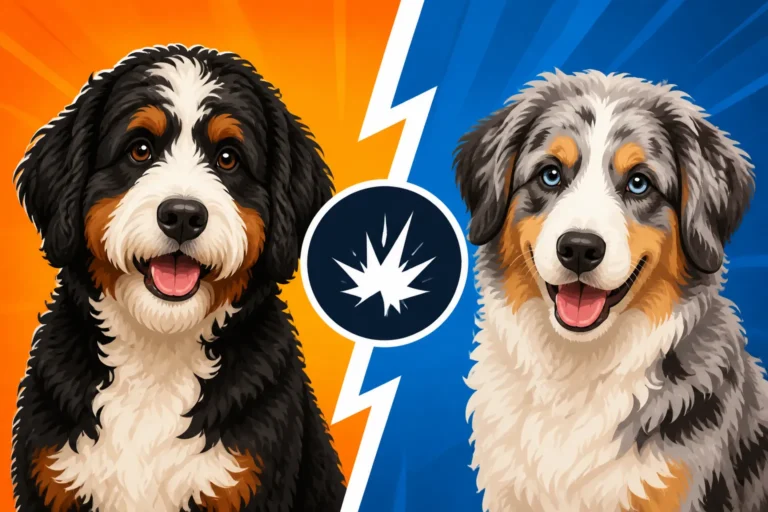
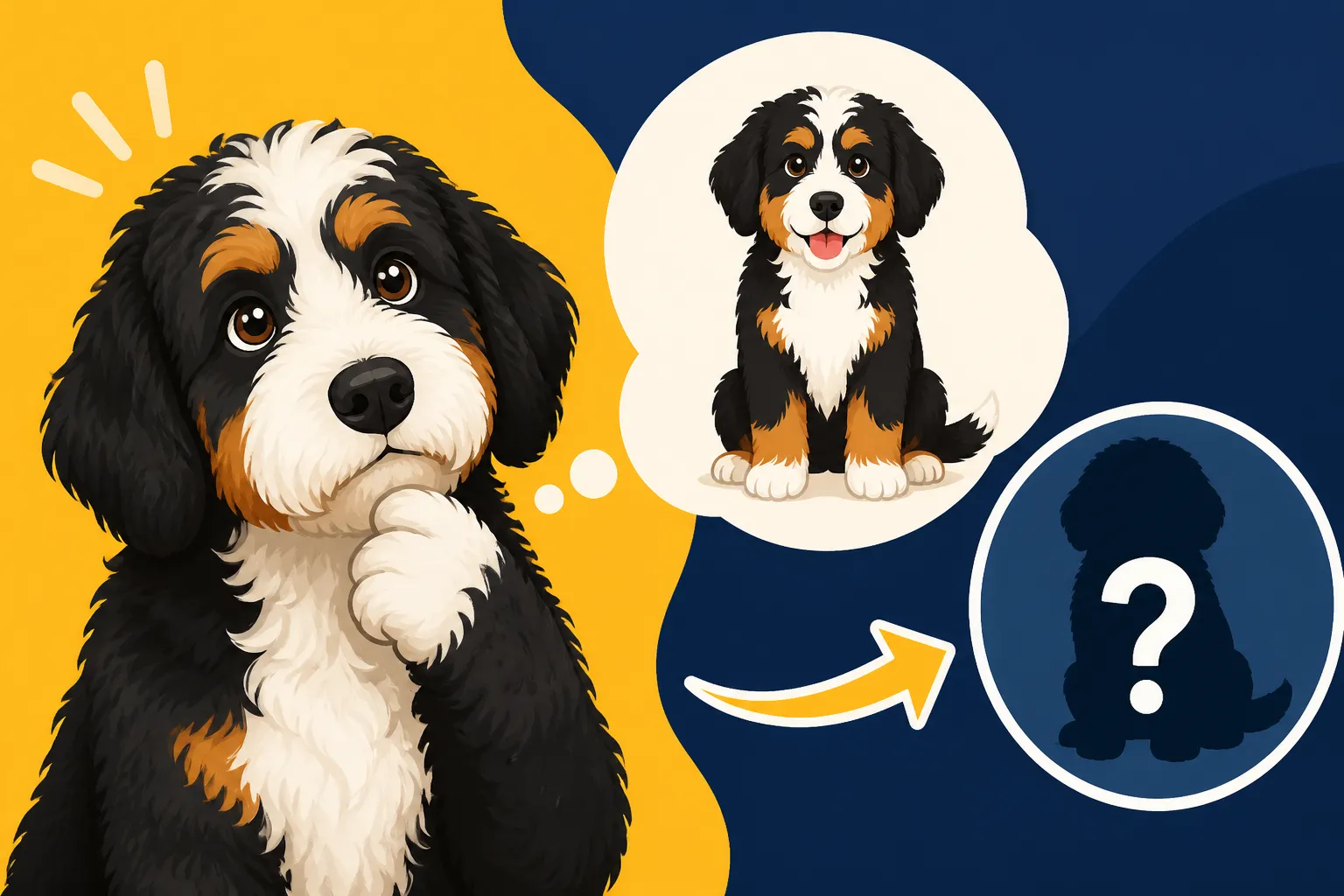
When an F1 Bernedoodle is tri-color, it generally exhibits the classic Bernese Mountain Dog pattern: a predominant black base, clear rust or tan markings in specific areas (eyebrows, cheeks, chest, legs, and under the tail), and distinct white blaze, chest, and paw markings. The quality and distribution of these markings can vary. Some might have more prominent white, others more rust. The texture of the coat will be a mix of the Bernese's straight coat and the Poodle's curly coat, often resulting in a wavy coat that is highly prized for being low-shedding. The Wavy Coat Most Bernedoodles Carry is a great resource if you're curious about different coat types.
Here’s a simplified breakdown of Poodle genetics and F1 tri-color likelihood:
| Poodle K-Locus Genotype | Poodle Appearance (Example) | F1 Bernedoodle Outcome (when bred to a Bernese) | Likelihood of Tri-Color F1s |
|---|---|---|---|
| K/K | Solid Black, Solid Brown | All F1s will be K/ky (Solid Black/Brown) | 0% |
| K/ky | Solid Black, Solid Brown | 50% F1s K/ky (Solid), 50% F1s ky/ky (Tri-Color) | ~50% |
| ky/ky | Phantom, Sable | All F1s will be ky/ky (Tri-Color) | ~100% |
(Note: This table simplifies, as other genes affect the shade of black/brown and the presence/amount of white.)
Setting Realistic Expectations
While the prospect of a beautiful tri-color F1 Bernedoodle is exciting, it's important to approach the search with realistic expectations. Not every F1 litter will produce these puppies, and even within a litter, there can be variation.
Variability in Markings and Colors
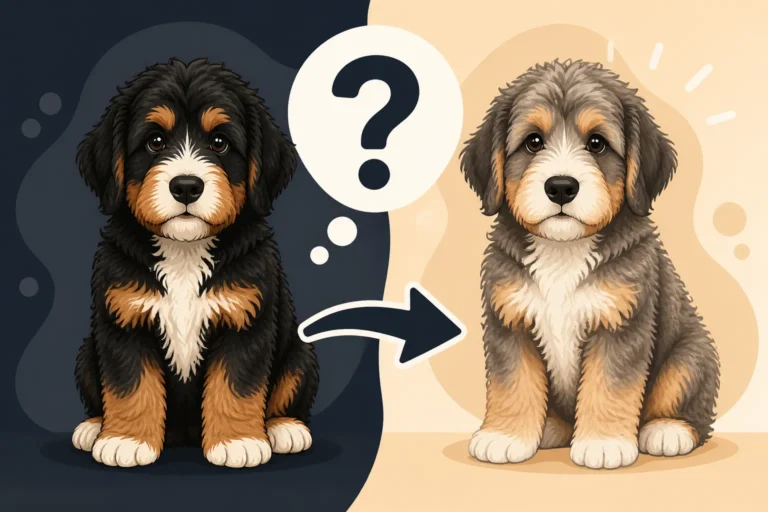
Even when the genetic conditions are right for tri-color, the exact look can differ. You might see puppies with very rich, deep rust points, while others have lighter, creamier tan. The extent of white markings can also vary significantly, from a delicate chest blaze to broader white on the face and legs. Sometimes, the white markings can yellow slightly over time, or the black base can "clear" to a grey or silver, especially if the Poodle parent carries fading genes. Whether a Bernedoodle's Color Changes After the Puppy Coat delves deeper into how a Bernedoodle's colors can evolve.
The Importance of Genetic Testing
This is where working with a responsible breeder becomes paramount. A good breeder doesn't just guess; they perform genetic health and coat color testing on their breeding dogs. This testing can identify the specific alleles at the K-locus, A-locus, and other genetic markers, allowing them to predict with high accuracy whether a pairing will produce tri-color F1 puppies. Don't be afraid to ask a breeder about the genetic test results of their Poodle parent, especially regarding the K-locus. Knowing this information upfront helps manage your expectations and ensures you're getting a puppy from a thoughtfully planned litter. When browsing for supplies for your new puppy, whether it's toys or high-quality food, remember that stores like Chewy often provide detailed product information and reviews that can help you make informed choices.
Why the Tri-Color Pattern is So Popular
There's no denying the immense appeal of the tri-color Bernedoodle. It’s often the first image that comes to mind when people think of the breed, and for good reason.
A Nod to the Bernese Heritage
For many, the tri-color pattern is a direct link to the Bernese Mountain Dog's majestic and recognizable appearance. It evokes a sense of tradition and the loving, gentle nature that the Bernese are famous for. Owners often want their Bernedoodle to showcase that heritage, making the tri-color coat a highly desirable trait. It’s a way to honor the "Bernese" part of the Bernedoodle, while still enjoying the low-shedding benefits of the Poodle. The Tri Color Markings People Buy a Bernedoodle For explores this popularity in more detail.
The "Designer Dog" Aesthetic
Beyond heritage, the tri-color pattern simply looks stunning. The contrast of the black, white, and rust creates a visually striking dog that turns heads. It’s part of the "designer dog" appeal that draws so many people to Bernedoodles in the first place. This unique blend of aesthetics and temperament is what truly makes Bernedoodles stand out.
Finding Your Tri-Color F1 Bernedoodle
If a tri-color F1 Bernedoodle is what your heart is set on, here are some actionable steps to help you in your search.
Communicating with Breeders
Be upfront and clear with breeders about your preference for a tri-color F1. Ask specific questions about their Poodle's genetic background, particularly their K-locus and A-locus results. A good breeder will be transparent and willing to discuss the genetic probabilities of their litters. They might even be able to show you pictures of previous litters from the same pairing, which can give you an idea of the consistency of their puppies' coloring.
Patience is Key
Because producing tri-color F1 Bernedoodles requires a specific genetic combination from the Poodle parent, you might find that not all breeders offer them consistently. You may need to be patient and potentially join a waiting list for a litter from parents known to produce this coloring. It's better to wait for the right puppy from a responsible breeder than to rush into a purchase from a less reputable source just for the color. This patience extends to preparing for your puppy's arrival, gathering all the necessary supplies, like high-quality puppy food from Chewy, before they even come home.
Consider Other Generations
While this article focuses on F1 Bernedoodles, it's worth noting that tri-color is also common in F1b (first generation backcross, Bernedoodle bred to Poodle) and F2 (second filial generation, Bernedoodle bred to Bernedoodle) generations, and often with more predictable results in F1b if the Bernedoodle parent carries the tri-color genes and is bred back to a Poodle that allows for expression. However, each generation comes with its own set of characteristics regarding coat type and genetic health, so always research thoroughly. Whether an F1b Bernedoodle Lives Longer Than an F1 is a good read if you're exploring different generations.
Disclaimer
This article is for general informational purposes only and does not constitute professional advice. Laws, prices and regulations vary by location and change over time. Consult a qualified professional for guidance on your specific situation.