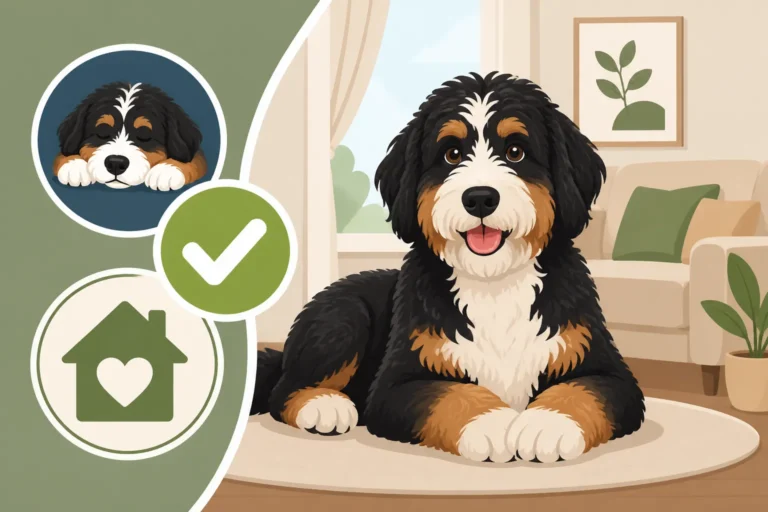
The Bernedoodle Against a Purebred Bernese
Deciding between a Bernese Mountain Dog and a Bernedoodle can feel like navigating a maze, especially when you’re picturing a new furry family member. Many prospective owners struggle with understanding the true differences in temperament, health, and daily care between these two beloved breeds. This comprehensive guide aims to illuminate those distinctions, helping you make an informed choice that perfectly aligns with your lifestyle and expectations.
Understanding the Bernese Mountain Dog: A Foundation of Loyalty and Heritage
The Bernese Mountain Dog, or Berner, is a truly magnificent breed with a rich history rooted in the Swiss Alps. For centuries, these powerful, tricolored dogs were indispensable farmhands, herding cattle, guarding property, and pulling carts laden with dairy products to market. Their heritage imbues them with a unique blend of strength, gentle nature, and unwavering loyalty that captivates many.
The Bernese Temperament and What Makes It Unique
Bernese Mountain Dogs are renowned for their calm, gentle, and affectionate disposition. They tend to be relatively reserved with strangers, though not typically aggressive, and form incredibly strong bonds with their families. This deep devotion often manifests as a desire to be near their people, earning them the nickname "velcro dogs." While they possess a dignified air, they can also be quite playful and goofy, especially during their younger years, and love to engage in family activities. However, their slow maturation means that you'll have a large puppy-like dog for longer than you might expect, which requires consistent training and socialization to manage their formidable size. This breed thrives on companionship and can suffer from separation anxiety if left alone for extended periods. Their patience and stable nature often make them wonderful companions for children, provided both dog and child are taught to interact respectfully.
Health Concerns and Lifespan Realities of the Bernese
Unfortunately, one of the most significant challenges with purebred Bernese Mountain Dogs is their relatively short lifespan. On average, a Bernese lives around 7 to 8 years, a heartbreaking reality for many owners. This brevity is often attributed to a predisposition to certain health conditions, with cancer being a leading cause of death. Malignancies like Histiocytic Sarcoma, Lymphoma, and Mast Cell Tumors are alarmingly common. What Histiocytic Sarcoma Does to a Bernese is a devastating condition that can strike relatively young. Beyond cancer, Bernese are also prone to orthopedic issues such as hip and elbow dysplasia, which can cause pain and mobility problems as they age. Other concerns include Bloat in a Standard Bernedoodle's Deep Chest, which is also a risk for Bernese, and heart conditions. Responsible breeders put immense effort into screening their breeding stock for these genetic predispositions, but the inherent risks remain a serious consideration for anyone looking to bring a Bernese into their home.
Grooming Needs and Coat Characteristics of a Purebred Bernese
The Bernese Mountain Dog boasts a stunning double coat – a long, thick outer coat and a woolly undercoat – that is perfectly adapted to cold climates. This beautiful coat, however, comes with significant grooming demands. Bernese are notoriously heavy shedders, particularly during seasonal "coat blows" in spring and fall. Expect to find their hair everywhere, on your furniture, clothes, and floors, requiring daily brushing during peak shedding times and at least 2-3 times a week otherwise to prevent mats and keep the coat healthy. Regular brushing helps distribute natural oils, remove loose hair, and keep their skin healthy. Beyond shedding, their long coats can easily pick up dirt, debris, and snow, necessitating frequent baths and meticulous drying to prevent skin issues. Owners often invest in professional grooming every few months for thorough washing, drying, and trimming, especially around their paws and ears. This isn't just about aesthetics; it's vital for their comfort and hygiene, and can add up over time.
Unpacking the Bernedoodle: The Poodle Influence
The Bernedoodle is a relatively new designer breed, deliberately created by crossing a Bernese Mountain Dog with a Poodle. The intention behind this crossbreed was to combine the desirable traits of both parents: the Bernese's gentle nature and striking appearance, with the Poodle's intelligence, athleticism, and, most notably, its low-shedding coat and longer lifespan. The first intentional litter was bred by Why Sherry Rupke Bred the First Bernedoodle, driven by the desire for a healthier, more durable companion.
Blending Temperaments: The Bernedoodle's Personality Mix
Bernedoodles are generally described as intelligent, playful, and affectionate, often inheriting a delightful mix of traits from both parent breeds. From the Bernese side, they often get that wonderful calm, loyal, and cuddly disposition, making them devoted family dogs. From the Poodle, they typically gain a boost in intelligence, making them highly trainable, and a mischievous, sometimes goofy, playful streak. This combination can result in a dog that is both eager to please and capable of independent thought, sometimes leading to a "stubborn streak under a Bernedoodle's Poodle brain." They tend to be more outgoing and less reserved with strangers than a purebred Bernese, making them excellent candidates for therapy work or simply as social companions. However, like any crossbreed, individual temperaments can vary widely, and early socialization is crucial to ensure a well-adjusted adult dog. They thrive on human interaction and can also develop separation anxiety if not properly acclimated to being alone.
Hybrid Vigor and Bernedoodle Health Prospects
One of the primary motivations for creating the Bernedoodle was to introduce "hybrid vigor" and potentially mitigate some of the significant health issues prevalent in purebred Bernese Mountain Dogs. The hope is that by widening the gene pool, the Bernedoodle might inherit fewer predispositions to certain cancers and orthopedic problems. Indeed, many Bernedoodle breeders aim for a longer lifespan, often citing The Twelve to Fifteen Years a Bernedoodle Is Sold On. While Bernedoodles do generally have a longer average lifespan than Bernese (typically 10-12 years), it's important to understand that they are not immune to the health problems of their parent breeds. They can still inherit conditions like hip and elbow dysplasia, Degenerative Myelopathy Both Bernedoodle Parents Can Carry, and various cancers, though often with a reduced incidence compared to the Bernese. Whether the Bernedoodle Cross Actually Reduced Cancer is a complex question, and diligent breeders will still screen both parent Poodles and Bernese for common genetic health issues to give their puppies the best possible start. Choosing a reputable breeder who performs all recommended health clearances is paramount to maximizing the chances of a healthy Bernedoodle.
Bernedoodle Coat Types and Grooming Demands
The Bernedoodle's coat is perhaps its most variable trait, directly influenced by the Poodle parent. While many people seek a Bernedoodle for its perceived low-shedding, hypoallergenic qualities, the reality is more nuanced. Bernedoodle coats can range from straight and wavy (more Bernese-like, and often shedding more), to curly (more Poodle-like, and typically low-shedding). The Wavy Coat Most Bernedoodles Carry is quite common. The F1 generation (first cross) usually has a wavy coat, while F1b (Bernedoodle bred back to a Poodle) or later generations are more likely to have the curlier, lower-shedding coats. Even a non-shedding Bernedoodle still requires significant grooming. Their dense, often curly or wavy coats are highly prone to matting, especially in areas of friction like armpits, behind the ears, and under collars. Daily or every-other-day brushing is often necessary, even for non-shedding types, using a slicker brush and a metal comb to get down to the skin. Without regular grooming, mats can quickly become severe, leading to skin infections and painful pulling. Professional grooming every 6-8 weeks is typically a must for Bernedoodle owners, keeping the coat trimmed to a manageable length. Ignoring these needs isn't just uncomfortable for the dog; it can lead to expensive "shave down" appointments at the groomer, which can be stressful for the dog and the wallet. Whether an F1 Bernedoodle Sheds More Than an F1b is a common question, and generally, the curlier the coat, the less shedding, but the more prone to matting it will be.
Key Differences in Size and Physicality
While both breeds are large dogs, there are subtle yet important differences in their typical size, build, and physical needs. These distinctions can significantly impact how well either dog fits into your home and daily routine.
Adult Size and Growth Patterns
A purebred Bernese Mountain Dog is a large, sturdy, and powerfully built dog. Males typically stand 25-27.5 inches at the shoulder and can weigh anywhere from 80-115 pounds. Females are slightly smaller, usually 23-26 inches and 70-95 pounds. They reach their full height relatively quickly, but continue to fill out and gain muscle mass until they are 2-3 years old. Their broad chest, strong bone structure, and substantial presence are hallmarks of the breed.
Bernedoodles, being a crossbreed, can have more variability in size, even within the same litter, depending on the size of the Poodle parent (Standard, Miniature, or Toy). A Standard Bernedoodle, crossed with a Standard Poodle, will generally be comparable in size to a Bernese, ranging from 23-29 inches and 70-90+ pounds. However, Miniature and Tiny Bernedoodles exist, bred with smaller Poodles, leading to dogs as small as 10-24 inches and 10-50 pounds. This size range is a distinct advantage for owners who love the Bernese look and temperament but need a smaller dog for their living situation. Regardless of size, both breeds benefit from a slower growth diet in puppyhood to protect their developing joints.
Exercise Requirements and Energy Levels
Bernese Mountain Dogs, despite their history as working dogs, are not typically high-energy animals once they are past puppyhood. They enjoy daily walks, moderate playtime, and being outdoors with their families, but they are not dogs that require hours of intense running or activity. They are generally content with 30-60 minutes of moderate exercise per day, perhaps a good hike or a romp in a securely fenced yard. However, as large dogs, it's crucial to avoid over-exercising them as puppies to protect their developing joints. They are powerful and can pull strongly on a leash, so early leash training is essential.
Bernedoodles tend to have a bit more energy than their Bernese counterparts, thanks to the Poodle's athletic influence. A Standard Bernedoodle will likely require 60-90 minutes of daily exercise, including walks, games of fetch, or even some dog sports like agility or Whether Bernedoodles Compete in Carting. Their intelligence also means they need mental stimulation to prevent boredom and destructive behaviors. While they enjoy being active, they are also generally happy to curl up on the couch for a nap after a good play session. The Poodle's energy can manifest as a more playful, sometimes "zoomie-prone" nature, especially in younger Bernedoodles.
Adaptability to Different Living Environments
The Bernese Mountain Dog's substantial size and double coat make them best suited for homes with ample space, ideally with a securely fenced yard where they can explore and relax. They are not ideal for apartment living unless the owners are committed to extensive daily walks and outdoor time, and even then, their sheer size can make navigating smaller spaces challenging. Their thick coats mean they do not tolerate heat well and prefer cooler climates; prolonged exposure to hot weather can quickly lead to overheating.
Bernedoodles, depending on their size, offer more flexibility. Standard Bernedoodles share many of the Bernese's needs for space and cooler temperatures. However, Miniature and Tiny Bernedoodles are much better suited for apartment living or homes with smaller yards, provided their exercise needs are met. Even Standard Bernedoodles, thanks to their Poodle heritage, can be a bit more adaptable to different climates, though all Bernedoodles with thick coats will struggle in extreme heat. For any Bernedoodle, access to indoor air conditioning during warmer months is practically a necessity. For long walks, whether you have a Bernese or a Bernedoodle, remember that Whether a Bernedoodle Should Be Walked in Summer depends heavily on temperature and humidity.
The Cost of Ownership: Bernedoodle vs. Bernese
Bringing any dog into your life is a financial commitment, but with large breeds like the Bernese and Bernedoodle, these costs can be substantial. It's crucial to understand the economic realities before deciding, as these aren't just "once-off" expenses.
Initial Purchase Price Considerations
When it comes to the initial purchase, both breeds represent a significant investment. Purebred Bernese Mountain Dogs from reputable breeders, who conduct extensive health testing on their breeding stock, typically range from $2,000 to $4,000. This price reflects the breeder's investment in health clearances, quality nutrition, veterinary care for the dam and puppies, and often registration fees.
Bernedoodles often command a similar, if not higher, price point, typically ranging from $2,500 to $5,000 or more. The "designer dog" status, the perceived health benefits, and the popularity of low-shedding coats contribute to this higher price. Mini and Tiny Bernedoodles, which require more specialized breeding and often more generations to achieve, can be even more expensive, with Why a Mini Bernedoodle Costs More Than a Standard being a common reason for price differences. It's important to be wary of extremely low-priced puppies for either breed, as this can often be a red flag for irresponsible breeding practices, lack of health testing, or puppy mill origins, which can lead to heartbreaking health issues down the line.
Ongoing Veterinary and Health Costs
Ongoing veterinary costs are a major factor for both breeds, but particularly for the Bernese Mountain Dog due to their predisposition to serious illnesses. Regular check-ups, vaccinations, parasite prevention, and quality food are standard. However, the potential for expensive treatments for conditions like cancer or severe orthopedic issues can be financially devastating. Chemotherapy, surgery, and long-term medication for chronic conditions can run into thousands, or even tens of thousands, of dollars. Pet insurance is highly recommended for both breeds, but especially for Bernese, to help manage these unpredictable costs. What Cancer Treatment Costs a Bernedoodle Owner highlights how quickly bills can accumulate.
While Bernedoodles are generally healthier, they are not immune. They still require preventative care and can face orthopedic challenges, allergies, or other inherited conditions. The cost of joint supplements, specialized diets, or allergy medications can add up over a dog's lifespan. An emergency vet visit for something like bloat or an injury can easily be hundreds to thousands of dollars. Thinking about the potential for future health expenses and budgeting for them is a non-negotiable part of responsible pet ownership for these breeds. You can often find a good selection of specialized large breed food and supplements on Chewy.
Grooming Expenses and Time Commitment
Grooming is where the financial and time commitments diverge significantly between the two breeds. A Bernese Mountain Dog requires regular brushing at home (daily during shedding season) and occasional professional bathing or de-shedding treatments. While the home grooming tools aren't too expensive, the sheer volume of hair means time investment is high. Professional grooming for a large Bernese, focusing on de-shedding and hygiene clips, can cost $80-$150 every few months, but much of the work needs to be done at home.
Bernedoodles, particularly those with curlier, low-shedding coats, have different but equally demanding grooming needs. Their coats don't shed much, but they grow continuously and are highly prone to matting. This means a Bernedoodle typically requires professional grooming every 6-8 weeks for a full bath, brush-out, and haircut. These appointments can cost anywhere from $70-$180, depending on size, coat condition, and location. Over a year, Six Hundred to Twelve Hundred a Year Grooming a Bernedoodle is a realistic budget expectation. In addition to professional grooms, daily or every-other-day brushing at home is crucial to prevent painful mats between appointments. The tools needed for home grooming – a good slicker brush, metal comb, and potentially a force dryer – are also an investment. Chewy offers a wide range of professional-grade grooming tools to help you manage your Bernedoodle's coat at home.
| Feature | Bernese Mountain Dog | Bernedoodle (Standard) |
|---|---|---|
| Temperament | Loyal, calm, gentle, reserved with strangers | Intelligent, playful, affectionate, outgoing |
| Lifespan | 7-8 years | 10-12 years |
| Shedding | Heavy, especially seasonally | Variable (low to moderate, depending on coat type) |
| Grooming Needs | Frequent brushing (de-shedding focus) | Regular brushing (mat prevention focus), professional grooming every 6-8 weeks |
| Health Risks | High cancer risk, hip/elbow dysplasia, bloat | Reduced cancer risk, hip/elbow dysplasia, DM |
| Exercise | Moderate (30-60 min/day) | Moderate to high (60-90 min/day) |
| Size | Large (80-115 lbs) | Standard (70-90+ lbs), Mini/Tiny also available |
| Cost (Initial) | $2,000 – $4,000 | $2,500 – $5,000+ |
| Cost (Grooming) | $80-150 every few months (pro) | $70-180 every 6-8 weeks (pro) |
Which Breed is Right for Your Lifestyle?
Choosing between a Bernese Mountain Dog and a Bernedoodle isn't just about statistics; it's about finding the right furry family member who will thrive in your unique home environment and bring joy for years to come. Carefully consider your personal circumstances, habits, and expectations.
Assessing Your Family Dynamics and Home Environment
If you have a large home with a spacious, securely fenced yard, live in a cooler climate, and are home often or have family members who are, a Bernese Mountain Dog could be a wonderful fit. They cherish companionship and prefer not to be left alone for long hours. Their calm demeanor makes them generally good with respectful children and other pets, and their powerful build means they are less likely to be accidentally injured by enthusiastic toddlers. However, their size means they can accidentally knock over smaller children or items, so awareness is key.
A Bernedoodle might be a better choice if you desire a slightly more outgoing and potentially longer-lived companion. If allergies are a concern in your family, a curlier-coated Bernedoodle could be a solution, though no dog is truly 100% hypoallergenic. The availability of Mini and Tiny Bernedoodles also makes them more adaptable to smaller living spaces, including apartments, provided their exercise and mental stimulation needs are met. Bernedoodles are often described as being excellent family dogs, blending the gentle nature of the Bernese with the intelligence and playfulness of the Poodle. They generally do well with children and other pets, given proper socialization.
Time Commitment for Training and Socialization
Both Bernese Mountain Dogs and Bernedoodles require significant time investment in training and socialization, especially during their formative puppy months. The Bernese, despite their intelligence, can sometimes be a bit more "stubborn" and slower to respond, needing patience and positive reinforcement. Given their eventual size and strength, early training for good leash manners and basic obedience is non-negotiable. Socializing a Bernese from a young age is crucial to help them be comfortable and confident with new people, places, and experiences, as they can lean towards shyness. Building Confidence in a Timid Bernedoodle is an area of training that can apply to the Bernese as well.
Bernedoodles generally pick up commands quickly thanks to their Poodle intelligence, making training a rewarding experience for many owners. However, their intelligence can also mean they get bored easily or can be a bit clever about testing boundaries. Consistent, positive reinforcement training from a young age is essential to harness their smarts and channel their energy productively. Just like the Bernese, early and extensive socialization is paramount to ensure they grow into well-adjusted adults, especially as puppies can be quite rambunctious. Both breeds benefit immensely from puppy classes and continued training throughout their lives.
Long-Term Care and Senior Dog Considerations
The long-term care for both breeds shifts as they age. For a Bernese, preparing for potential health challenges and a shorter senior period is crucial. As they approach What Changes in a Bernedoodle After Eight, which is also true for a Bernese, mobility issues due to arthritis or dysplasia can become pronounced. Providing comfortable orthopedic beds, ramps, and making sure the house is easy for them to navigate are important considerations. Regular veterinary check-ups become even more vital to catch any emerging health problems early.
Bernedoodles, with their generally longer lifespans, will spend more years in their senior phase. While they may have fewer severe genetic predispositions, they will still face age-related issues like arthritis, cognitive decline, or vision/hearing loss. Managing an older Bernedoodle's diet, exercise, and comfort will be a long-term commitment. Grooming might need to be adjusted for older dogs who can't stand for long periods. Having a financial plan or pet insurance that extends into a dog's senior years is a wise decision for either breed. Ultimately, both the Bernese and the Bernedoodle offer immense love and companionship, but understanding their specific needs and preparing for them will ensure a happy and healthy life together.
Disclaimer
This article is for general informational purposes only and does not constitute professional advice. Laws, prices and regulations vary by location and change over time. Consult a qualified professional for guidance on your specific situation.