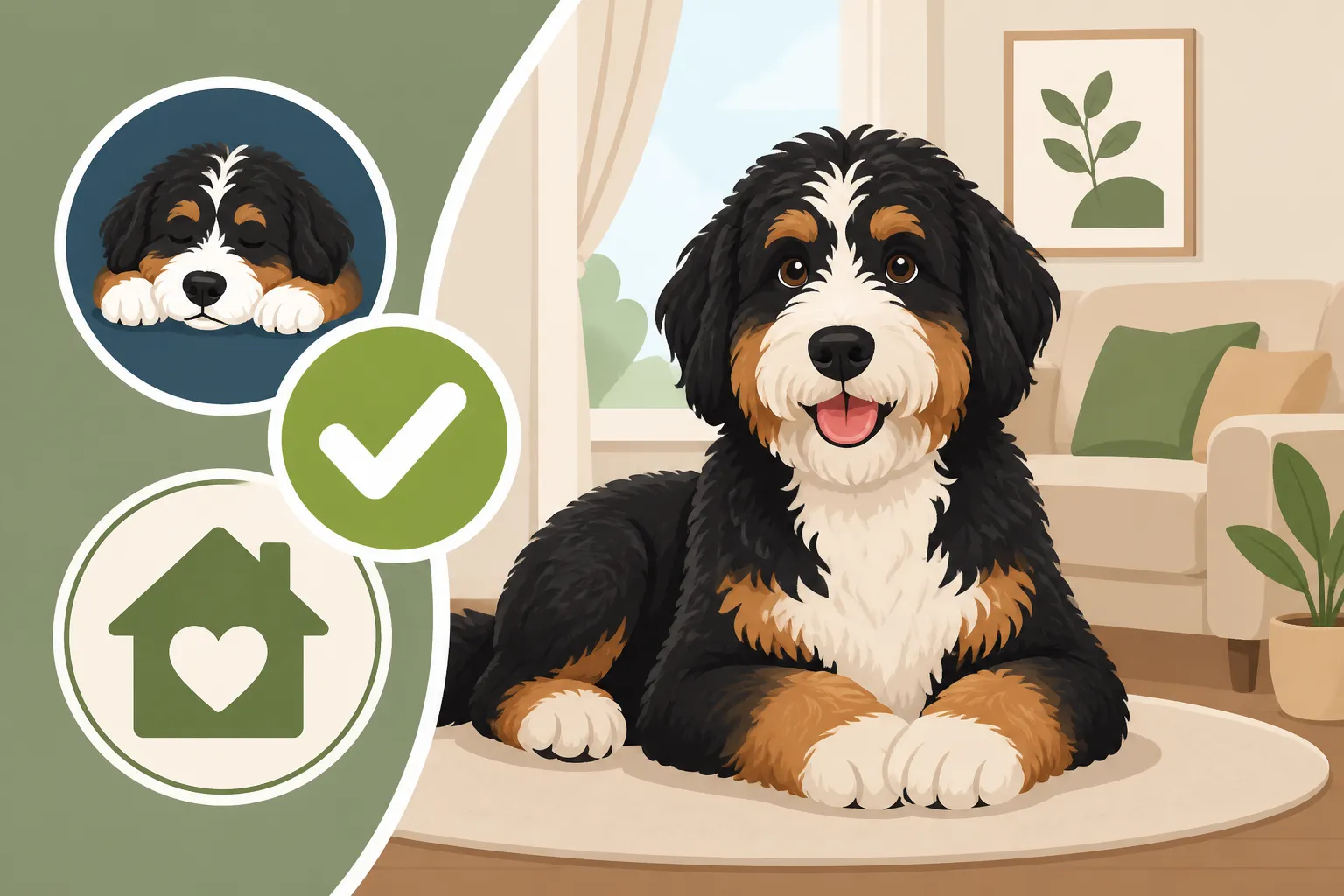
Whether a Bernedoodle Is Calm Indoors
A Bernedoodle can look wonderfully settled on the living-room rug, then turn into a restless shadow the moment you sit down to work. Whether one is calm indoors depends less on its size or “doodle” label than on age, temperament, exercise, training, and the chance to rest. This guide explains what calm behavior looks like and how to encourage it.
Are Bernedoodles naturally calm indoors
Why one Bernedoodle may settle while another paces
Bernedoodles are a cross between Bernese Mountain Dogs and Poodles, and neither parent breed comes with a guaranteed indoor temperament. Some dogs are easygoing once they have had a walk and a little company. Others are alert, playful, or quick to notice every sound in the hallway. Even puppies from the same litter can differ: one may curl up after breakfast while another keeps bringing you toys.
A calm dog is not necessarily a low-energy dog. A Bernedoodle might enjoy a brisk walk, sniffing around the yard, or a training game, then relax for a good stretch afterward. Another may need more help switching from activity to rest. The relevant question is not simply, “Does my Bernedoodle have energy?” but, “Can my dog settle after its needs have been met?”
Size does not settle the question, either. A Mini Bernedoodle may be energetic and busy indoors, while a Standard may be content to lounge nearby. Smaller dogs can also be more easily stimulated by household activity, and larger dogs may take up more space while they are playing. If you are comparing sizes, Whether a Mini Bernedoodle Is Easier to Live With offers useful context: a smaller body does not automatically mean an easier or calmer household companion.
Age makes a big difference
A young Bernedoodle may be physically large before it has the maturity to behave like a settled adult. Puppies and adolescents often have bursts of energy, short attention spans, and a habit of following people from room to room. They may appear to ignore a cue to lie down, then suddenly fall asleep in the middle of the floor. That inconsistency is common; it does not mean your dog will stay restless forever.
Many owners find the adolescent period especially tiring. A dog that once napped easily may begin testing boundaries, barking at new sounds, or demanding attention just as the family sits down for dinner. This can feel like a step backward, but growing dogs are still learning how to manage excitement and rest. For more on that stage, see Whether a Bernedoodle Is Still a Puppy at Two and The Age a Bernedoodle Finally Settles.
Adult temperament varies, too. Some Bernedoodles mature into quiet house companions, while others remain playful and people-focused. Rather than expecting a particular birthday to change everything, look for gradual progress: shorter periods of pacing, quicker recovery after visitors leave, and more moments when your dog chooses to lie down without being prompted.
What affects a Bernedoodle’s indoor behavior
Exercise and mental activity
A Bernedoodle that has not had enough movement or mental engagement may pace, nudge you, bark, chew household items, or repeatedly drop toys in your lap. That does not necessarily mean the dog needs hours of hard exercise. It may need a suitable walk, time to sniff, a short training session, or a simple chance to investigate its surroundings.
Exercise needs depend on the individual dog’s age, health, build, and energy level. A growing puppy should not be pushed into prolonged or strenuous activity just because it is restless. For an adult Standard, a mix of walks and engaging activities may be more satisfying than trying to tire it out with nonstop running. The Exercise a Standard Bernedoodle Needs Daily can help frame activity around the dog’s size and life stage.
Mental work can make a noticeable difference indoors. Try a few minutes of basic cues, a sniff-and-find game with kibble, or a food puzzle that is safe for your dog to use. If you are choosing puzzle toys or other enrichment supplies, Chewy is one place owners may browse, but match the item to your dog’s chewing habits and supervise at first. A puzzle that is too difficult can frustrate a dog instead of helping it settle.
Company, noise, and household routines
Bernedoodles are often strongly people-oriented. A dog that trails you into the kitchen, then the bathroom, may be seeking company rather than extra exercise. Some dogs are content to nap nearby; others struggle when a person leaves the room or the home. That distinction matters. If your dog relaxes when you are present but becomes distressed when left alone, adding a longer walk may not address the real problem. Whether a Bernedoodle Needs Someone Home and Whether a Bernedoodle Is Clingy explore those patterns further.
Household stimulation can also keep a dog alert. Doorbells, children running through the room, delivery drivers, other pets, and frequent visitors may interrupt rest. A Bernedoodle that seems unable to relax in a busy open-plan space might settle more readily in a quieter area with a familiar bed and fewer interruptions. This is not about isolating the dog as punishment; it is about providing a comfortable place where resting is easier.
Routines help because dogs learn what tends to happen next. A walk, meal, brief interaction, and quiet period in a predictable order can make the day easier to understand. If the household schedule changes often, keep a few anchors consistent, such as a regular bedtime routine or a cue that signals the end of play. Calm is often built through small, repeated experiences rather than one exhausting outing.
| What you notice indoors | Possible reason | Helpful first step |
|---|---|---|
| Pacing after a quiet morning | Needs movement, sniffing, or engagement | Offer a suitable walk or short enrichment activity |
| Following you from room to room | Wants company, is curious, or has not learned to settle alone | Reward relaxed behavior on a nearby bed |
| Barking at sounds outside | Alertness or difficulty disengaging | Reduce window access and reward quiet observation |
| Chewing furniture or shoes | Boredom, teething, stress, or lack of suitable outlets | Provide safe chew options and supervise |
| Restlessness despite activity | Overstimulation, discomfort, or difficulty settling | Create a quieter rest space and consider health factors |
How to teach a Bernedoodle to relax inside
Build a reliable settle routine
Start by noticing the moments when your dog is already calm. If your Bernedoodle lies down after a walk or rests while you read, quietly reward that choice with praise or a small treat. The goal is to make calm behavior worthwhile without turning every quiet moment into an exciting event. Keep your voice gentle and avoid repeatedly calling the dog over when it is already resting.
You can also teach a simple “settle” routine. Place a comfortable mat or bed in a low-traffic part of the room. Invite your dog onto it, reward a relaxed posture, and gradually extend the time between rewards. At first, a few seconds of lying down may be a success. If the dog gets up, reset calmly rather than scolding. Expecting a young, excited dog to stay still for a long stretch before it has learned the skill can set both of you up for frustration.
Practice when the house is relatively quiet, then gradually add ordinary distractions. For example, begin while you are sitting nearby, then practice while you read, prepare a snack, or move around the room. If the dog repeatedly gets up, make the exercise easier. Short, successful repetitions are more useful than insisting on a long stay that your dog is not ready to manage.
Give activity a clear beginning and end
Some dogs become more wound up when play has no stopping point. A game of fetch, tug, or indoor chasing can be fun, but it helps to end with a clear cue, put the toys away, and transition to a calmer activity. A chew, a sniffing game, or a few minutes on the mat can give the dog a chance to come down from the excitement.
If your Bernedoodle struggles with basic cues or seems to switch off during practice, keep sessions short and reward the behavior you want. A dog that looks stubborn may be distracted, tired, overexcited, or unsure what you are asking. Whether a Bernedoodle Is Stubborn or Just Slow is a helpful companion read if training feels less straightforward than you expected.
A useful daily rhythm might include a suitable walk, a short training or sniffing activity, a meal, and a quiet period. It does not need to be perfectly timed. The important part is giving your dog a reasonable outlet and then creating an opportunity to rest. If you use food puzzles or treat-dispensing toys, Chewy carries a variety of pet supplies, but choose something appropriate for your dog’s size and chewing strength. Introduce any new item while you are there to supervise.
When indoor restlessness needs a closer look
Distinguish normal energy from distress
A dog that occasionally paces before a walk or gets excited when guests arrive is not automatically having a behavioral problem. Look instead at the whole pattern. Can your Bernedoodle settle after activity? Does it eat, sleep, and interact normally? Is the restlessness tied to a predictable trigger, such as the doorbell or being left alone?
Signs of distress can include persistent panting when the room is comfortable, repeated whining, destructive behavior concentrated around departures, or an inability to settle even when the home is quiet. A dog may also become unusually restless if it is uncomfortable or unwell. If the behavior is sudden, intense, or paired with changes in appetite, movement, toileting, or sleep, contact a veterinarian rather than assuming the dog simply needs more exercise.
Be especially thoughtful about leaving a dog to “cry it out” if it appears frightened or panicked. Calm independence is a skill to build gradually, not something every dog learns by being left to cope with overwhelming distress. For concerns that seem tied to separation, a veterinarian or qualified behavior professional can help you plan appropriate next steps.
Set realistic expectations for your household
A calm indoor Bernedoodle is not necessarily silent, motionless, or happy to be ignored all day. It may greet visitors enthusiastically, carry toys around, or want to lie close to its people. The practical goal is a dog that can meet its needs, recover from excitement, and rest for reasonable periods—not a dog that never asks for attention.
Think about your home’s rhythm when deciding what “calm” should mean. A quiet household with predictable walks may suit a dog that enjoys long naps. A busy home may need planned breaks, a comfortable resting spot, and consistent rules around jumping or play. If you are still choosing a dog, meeting adult Bernedoodles and asking about their everyday behavior can be more informative than relying on broad claims about the cross. What Bernedoodle Owners Underestimate is worth reading before making that commitment.
Finally, consider calmness alongside the other work a Bernedoodle requires. Coat care, training, exercise, and companionship all shape daily life, and a dog that is relaxed indoors still needs those things. Chewy may be useful when you are looking for ordinary supplies such as a bed, safe chew, or enrichment toy, but no product replaces time, training, and attention to your dog’s individual needs.
Disclaimer
This article is for general informational purposes only and does not constitute professional advice. Laws, prices and regulations vary by location and change over time. Consult a qualified professional for guidance on your specific situation.