Whether a Bernedoodle Is Clingy
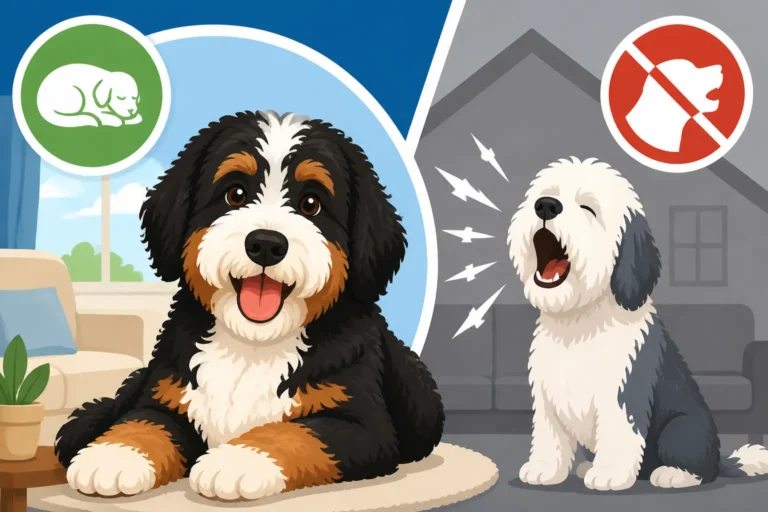
A Bernedoodle may follow you from room to room, lean against your legs, or wait outside the bathroom door. That closeness can feel sweet until you cannot get a moment alone—or your dog panics when you leave. This guide explains why some Bernedoodles seem clingy, how to tell affection from distress, and what can help your dog feel more secure.
Why a Bernedoodle May Seem Clingy
Bernedoodles are a cross between a Bernese Mountain Dog and a Poodle, but there is no single temperament every dog inherits. One may be content to nap across the room; another may shadow a favorite person all day. Genetics, early experiences, daily routine, health, and individual personality can all play a part.
The Bernese Mountain Dog is often described as people-oriented, while Poodles are typically attentive and responsive to their surroundings. Those broad tendencies may help explain why some Bernedoodles enjoy staying close, but they do not guarantee a particular temperament. A dog’s behavior in your home matters more than a breed label. For a broader look at the traits each parent may contribute, see What the Bernese Contributes to a Bernedoodle and What the Poodle Contributes to a Bernedoodle.
Affection is not automatically a problem
A dog who follows you around, curls up nearby, or greets you warmly may simply enjoy your company. If your Bernedoodle can also settle in another room, relax behind a gate, or nap while you do something elsewhere, closeness alone is not necessarily a concern.
Think about the pattern rather than one adorable habit. Does your dog follow you but remain calm when you close a door? Can they enjoy a chew or toy without needing you to participate? Do they recover quickly after you leave the house? Those are useful signs that your dog may be attached and sociable without being unable to cope independently.
It also helps to consider your own routine. If you work from home and your dog spends most of the day beside your desk, they may naturally expect that access to continue. That does not mean you caused a problem; it simply means a change—such as returning to an office or spending more time away—may require a gradual adjustment.
Temperament and upbringing both matter
Bernedoodles can vary in size, coat, and temperament, even within the same litter. A confident puppy may grow into an independent adult, while a naturally cautious dog may seek reassurance more often. Experiences during puppyhood can also shape how comfortable a dog feels around unfamiliar people, new places, and temporary separation.
A puppy who has rarely been alone may find a sudden full workday by themselves especially difficult. On the other hand, a dog who has had calm, manageable practice resting apart from people may be better prepared for everyday separations. That practice should be gradual and positive—not a sudden test of how long the dog can endure being alone.
Clinginess can also increase during transitions. Moving house, a new baby, a change in household schedules, the loss of another pet, or a new caregiver can make a dog seek extra contact. If your Bernedoodle has become unusually attached after a change, consider what else has shifted before assuming it is simply a fixed personality trait. What Bernedoodle Owners Wish They Had Known explores some of the everyday realities owners may not anticipate.
Affection, Boredom, or Separation Distress
It is easy to call any dog who follows a person “clingy,” but the reason behind the behavior matters. A dog may be seeking company, responding to an inconsistent routine, looking for activity, or struggling with separation. Watching what happens before, during, and after you leave can help you understand the difference.
| What you notice | What it may suggest | A useful first step |
|---|---|---|
| Follows you but settles when you are busy | Social closeness or habit | Reward calm resting nearby |
| Demands attention during quiet periods | Boredom or learned attention-seeking | Add predictable activity and reinforce settled behavior |
| Becomes unsettled when you prepare to leave | Worry about the departure routine | Practice low-key cues and very short absences |
| Vocalizes, paces, or damages things only when alone | Possible separation-related distress | Record the behavior and consult a veterinarian or qualified behavior professional |
| Suddenly follows you more than usual | A change in routine, stress, or possible health issue | Review recent changes and arrange a veterinary check if it persists |
Clingy behavior can be reinforced by accident
Dogs learn from what happens after they do something. If a Bernedoodle paws at your arm and immediately gets petting, conversation, or play, they may learn that pawing is an effective way to get attention. This is not a reason to scold them. It is a cue to make attention more predictable and to reward the behavior you would like to see.
For example, if your dog whines while you answer emails, wait for a brief pause and then invite them to a mat or give them a calm activity. When they settle, offer quiet praise or a small reward. If they are genuinely distressed, however, ignoring escalating panic is not a training plan; it can make the experience harder. The aim is to build calm skills at a level your dog can manage.
Boredom can look similar. A dog who has had little movement, sniffing, play, or companionship may follow you and repeatedly seek something to do. A walk that includes sniffing, a short training session, or a food puzzle may help. Adjust the activity to your dog’s age, health, and fitness rather than assuming that every Bernedoodle needs exhausting exercise.
Separation distress has a different pattern
Separation-related distress is more than a preference for company. A dog may become upset as you prepare to leave, vocalize for a prolonged period, pace, pant, drool, scratch at doors, attempt to escape, or have toileting accidents while alone. Some dogs begin reacting before the person has even left, after recognizing cues such as picking up keys or putting on shoes.
The timing and context matter. Destruction that happens only when a dog is alone may have a different cause from chewing that also happens when people are home. A phone or home camera recording can show whether your dog settles after a short period or remains distressed. It can also prevent you from guessing based on the state of the room when you return.
If your Bernedoodle appears panicked, do not rely on punishment, prolonged “cry it out,” or a crate as a quick fix. Those approaches may increase fear or risk injury if the dog tries to escape. Begin by speaking with your veterinarian, especially if the behavior is new, severe, or accompanied by physical symptoms. A veterinarian can help consider health factors and advise whether a qualified behavior professional should be involved. You may also find Whether a Bernedoodle Suffers Separation Anxiety helpful when sorting out the signs.
Helping a Bernedoodle Feel Comfortable Apart From You
The goal is not to make a people-oriented dog stop enjoying people. It is to help them learn that resting independently is safe and that your brief absence does not mean they have been abandoned. Small, repeatable successes are more useful than pushing for a long separation before your dog is ready.
Teach settling while you are still home
Start with a comfortable resting spot near you. It might be a mat, bed, or open crate, depending on what your dog already likes. Reward your Bernedoodle for choosing the spot, lying down, or relaxing there while you read, fold laundry, or work nearby. Keep the first sessions easy; you are building a habit, not asking for a long stay.
Once your dog can settle while you are close, add tiny changes. Stand up and sit back down. Take a step away and return. Walk briefly into the next room, then come back before your dog becomes worried. If they can stay relaxed, repeat and gradually vary the distance or duration. If they get up, whine, or follow in distress, make the next attempt easier.
A food puzzle or safe chew can help some dogs associate quiet time with something pleasant. Choose an activity that is appropriate for your dog and supervise new items to make sure they use them safely. If you are assembling enrichment supplies, Chewy is one place owners may look for puzzle feeders or dog-safe chews; the important part is finding something your particular dog can use calmly, not leaving an unsuitable item with them unattended.
Practice departures in manageable steps
If departures are difficult, begin with the smallest version your dog can handle. Pick up your keys and put them down. Put on your coat, then stay home. Step outside briefly and return before your dog becomes upset. These exercises help make departure cues less startling, but the duration should increase only while your dog remains calm.
There is no universal timetable. One dog may manage a short absence quickly; another may need many repetitions at a very easy level. Avoid making every practice session longer than the last. A few comfortable seconds followed by a longer interval can be more sustainable than steadily increasing the time until the dog becomes distressed.
For dogs who cannot yet cope with being alone, arrange temporary support where practical. A trusted friend, family member, sitter, or suitable day-care setting may help reduce the number of overwhelming absences while you work on training. If you are comparing supplies for a safe resting area, Chewy carries items such as beds and gates, but choose based on your dog’s size, behavior, and comfort. A gate or crate should never be used to confine a panicked dog without professional guidance. For related training ideas, see A Bernedoodle Left Alone in the House and Whether a Crate Suits a Ninety Pound Bernedoodle.
Give attention a steady rhythm
A predictable daily routine can make life easier for a dog who is unsure when attention, exercise, or rest will happen. Try to provide regular opportunities for a walk, sniffing, play, training, meals, and quiet time. The routine does not need to be rigid; it just needs to give your Bernedoodle some reliable cues about what comes next.
Practice rewarding calm behavior when your dog is near you but not actively demanding interaction. If they settle on their bed while you cook, quietly acknowledge that. If they choose to rest while you are in another room, let that success stand rather than immediately calling them back. These small moments help your dog learn that independence is also worth doing.
If your dog seems bored, rotate simple activities instead of relying on constant attention. A brief “find it” game, basic cue practice, or a sniff-focused walk can provide mental engagement. Chewy may be a convenient place to browse treat-dispensing toys, but an activity can be as simple as scattering part of a meal in a safe area for your dog to search. Keep the challenge easy enough that frustration does not replace enjoyment.
When to Get Extra Help
A change in behavior deserves attention when it is sudden, intense, or interfering with daily life. A dog who has always liked being close may be acting differently because of pain, illness, aging, or a stressful change in the household. If your Bernedoodle’s increased attachment arrives alongside restlessness, altered appetite, unusual vocalizing, toileting changes, or reluctance to move, arrange a veterinary check rather than treating it as a training issue alone.
Know when the behavior is beyond ordinary clinginess
Consider getting help if your dog cannot relax when separated from you, injures themselves trying to get through a door or crate, or shows ongoing signs of distress whenever they are left. It is also worth asking for support if the problem is worsening despite gentle practice, or if you feel you have to avoid leaving home altogether.
Before an appointment, keep notes about what happens. Record the time of day, how long you were away, what departure cues were present, and what your dog did. If it is safe and practical, a short video can give a veterinarian or behavior professional a clearer picture than a description alone. Mention any recent household changes and any new physical symptoms.
A veterinarian can help rule out medical causes and discuss appropriate next steps. For persistent separation-related problems, ask about a qualified professional who uses humane, evidence-informed behavior methods. Depending on the dog’s needs, the plan may involve carefully paced training and veterinary support. There is no shame in asking for help; it can be exhausting to live with a dog who seems frightened whenever you leave.
Set realistic expectations for your dog
Some Bernedoodles will always prefer company. That preference is not a flaw, and training does not need to turn a social dog into an aloof one. A realistic goal is a dog who can enjoy closeness while also resting safely, handling ordinary changes in your attention, and coping with appropriate periods apart.
The amount of independence you need will depend on your household. A person who works from home may want the dog to rest while they take calls, while someone who commutes may need a more structured plan for departures and care. Being honest about the routine your dog can manage helps you make practical arrangements rather than hoping the behavior will disappear on its own.
Finally, watch the whole dog rather than focusing on a single habit. A Bernedoodle who follows you but relaxes easily may simply be affectionate. A Bernedoodle who cannot settle, panics when left, or has suddenly become unusually dependent may need a slower training plan or professional guidance. Understanding that difference is the first step toward a calmer home for both of you.
Disclaimer
This article is for general informational purposes only and does not constitute professional advice. Laws, prices and regulations vary by location and change over time. Consult a qualified professional for guidance on your specific situation.