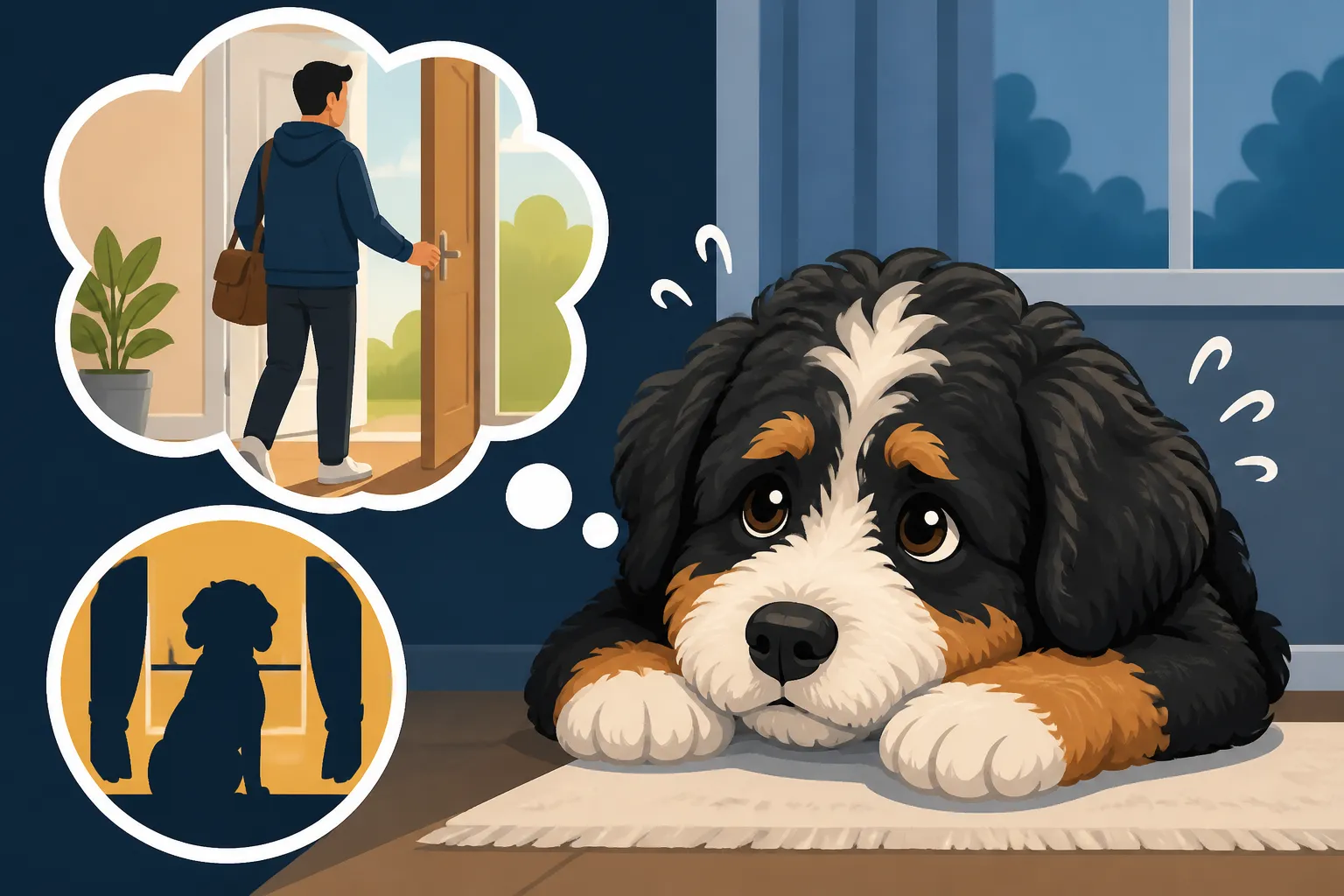
Whether a Bernedoodle Suffers Separation Anxiety
It's heartbreaking to see your beloved Bernedoodle pacing, whining, or even tearing things up the moment you head for the door. Many of us have been there, watching our normally happy, goofy companions transform into anxious messes when left alone. This guide is here to help you understand whether Bernedoodles are particularly prone to separation anxiety and, more importantly, how you can prevent it and support your dog through it.
Understanding Separation Anxiety in Bernedoodles
Bernedoodles are incredibly intelligent, sensitive, and deeply attached dogs, combining the best traits of their Bernese Mountain Dog and Poodle parents. This strong bond, while wonderful for companionship, can sometimes make them predisposed to distress when separated from their favorite humans. It’s not about being "naughty"; it's a genuine panic response.
What Does Separation Anxiety Look Like?
Separation anxiety isn't just a dog getting a little bored and chewing on a shoe. It's a profound level of stress and panic that manifests in specific, often destructive, ways. Imagine yourself in a situation where you feel utterly abandoned and helpless – that's often what your Bernedoodle is experiencing.
Common signs of separation anxiety include excessive barking or howling the moment you leave or very soon after. Your neighbors might be the first to let you know about this particular symptom, which is rarely a pleasant conversation. Another tell-tale sign is destructive chewing, often focused around exit points like doors and windows, or on items that smell strongly of you, like remote controls or blankets. This isn't just casual chewing; it can be frantic and cause real damage. Inappropriate urination or defecation, even from a perfectly house-trained Bernedoodle, is also a classic sign, and it's not a spiteful act, but rather a loss of bladder/bowel control due to intense fear. Other signs can include pacing, drooling excessively, or trying to escape their confinement, sometimes resulting in injury. It's truly distressing for them, and for you to witness or discover. You might observe some of these behaviors even before you leave, as they start to pick up on your "departure cues" like grabbing your keys or putting on your coat.
Why Are Bernedoodles Prone to It?
The unique blend of the Bernese Mountain Dog and Poodle creates a dog that is often highly people-oriented and thrives on companionship. Bernese Mountain Dogs are known for their deep loyalty and desire to be part of the family, often referred to as "velcro dogs" because of their tendency to stick close to their owners. They bond very intensely, and this strong attachment can sometimes tip over into anxiety when that bond is broken, even temporarily.
On the other hand, Poodles, while highly intelligent and trainable, are also sensitive and can be prone to separation anxiety if not properly socialized and accustomed to alone time from a young age. They are bright dogs who thrive on interaction and mental stimulation. Combine these traits, and you have a dog that truly cherishes human company and might struggle immensely when it's absent. A Bernedoodle's desire for connection is strong, and sometimes, it can be overwhelming for them when they realize they're suddenly alone. This isn't a fault; it's simply a testament to their loving nature. Their sensitive souls genuinely miss you, and for some, that missing turns into panic.
Differentiating From Other Behavioral Issues
It's crucial to understand that not every instance of barking or chewing when you're away is true separation anxiety. Sometimes, these behaviors stem from other issues that require different approaches. For example, a Bernedoodle puppy might exhibit destructive chewing simply because they're teething or haven't been taught appropriate chewing outlets. An older dog might bark because they're bored, lack sufficient exercise, or react to outside stimuli like squirrels or passersby.
Consider whether your Bernedoodle only exhibits these behaviors when you are absent, specifically, or if they do it when anyone leaves them alone. A dog with true separation anxiety is usually distressed by the absence of a specific person or people, not just general solitude. If your Bernedoodle is perfectly content chewing a bone when you're in the next room but panics the moment you step outside, that's a strong indicator. If they chew when they're bored, they might do it even when you're home but preoccupied. If they're just bored, they might chew toys or items indiscriminately. A genuinely anxious dog often shows intense distress (pacing, drooling, frantic attempts to escape) whereas a bored dog might just be destructive without the panic. Understanding the nuances is the first step toward effective intervention. You can learn more about managing their alone time in Whether a Bernedoodle Can Be Left for a Workday or explore solutions for destructive behavior in What a Bernedoodle Wrecks When Left Alone.
Preventing Separation Anxiety From the Start
The best defense against separation anxiety is a good offense. Starting early, ideally when your Bernedoodle is a puppy, can lay a strong foundation for independence and confidence. It's much easier to prevent these behaviors than to correct them once they've taken root.
Early Socialization and Independence Training
From the moment you bring your Bernedoodle puppy home, gently begin teaching them that being alone isn't scary. This doesn't mean leaving them for hours right away, but rather building up their tolerance gradually. Start with very short absences – just step out of the room for a minute, then return. Don't make a big fuss when you leave or return; keep it calm and neutral. This teaches them that your departures are no big deal and that you always come back. As they get comfortable, gradually increase the duration of your absence.
Crate training can be an invaluable tool here. A properly introduced crate becomes a safe, den-like space where your Bernedoodle feels secure. Never use the crate as punishment; it should always be a positive place. Feed meals in the crate, offer high-value chew toys there, and make it a comfortable retreat. This helps them associate alone time with positive experiences in their safe space. This foundation helps build confidence and a sense of security even when you're not physically present. You can find more tips on early development in The Age a Bernedoodle Finally Settles.
Creating a Safe and Predictable Routine
Dogs thrive on routine. A predictable schedule helps your Bernedoodle understand what to expect throughout their day, reducing uncertainty and anxiety. This includes consistent feeding times, potty breaks, play sessions, and rest periods. Incorporating "alone time" into this routine, even if you're just in another room, helps normalize your absence.
Before you plan to leave your Bernedoodle alone for a longer period, ensure they've had ample opportunity to relieve themselves and have had a good exercise session. A tired dog is a good dog, and often, a calm dog. Knowing they've met their physical needs can significantly reduce their underlying stress. Furthermore, when you do leave, try to keep your departure cues as subtle as possible. Instead of grabbing your keys, bag, and coat all at once, try to do these things intermittently throughout the day, so they don't become absolute predictors of your immediate exit. Your Bernedoodle's world should feel stable and reliable, even when you're not right by their side.
The Role of Exercise and Mental Stimulation
A Bernedoodle is a robust and intelligent dog, requiring significant physical exercise and mental engagement. A dog with pent-up energy, whether physical or mental, is far more likely to become destructive or anxious when left alone. Think about it: if they're bored and full of beans, what else are they going to do but look for trouble?
Ensure your Bernedoodle gets a good, long walk or vigorous play session before you leave them for any extended period. For a standard Bernedoodle, this could be a brisk 45-minute walk, a solid game of fetch in the yard, or even some off-leash time in a safe area. Beyond physical exertion, mental stimulation is equally vital. Puzzle toys filled with kibble or treats can keep their minds busy and associate your departure with a rewarding activity. LickiMats or Kongs stuffed with peanut butter or yogurt and frozen can provide long-lasting enrichment. Engaging their Poodle intelligence through short training sessions throughout the day also tires them out mentally. A truly satisfied Bernedoodle, both physically and mentally, is far better equipped to handle alone time calmly. This can significantly reduce their inclination to exhibit anxious behaviors. For more insights into their exercise needs, see The Exercise a Standard Bernedoodle Needs Daily.
Strategies for Managing Existing Separation Anxiety
If your Bernedoodle is already exhibiting signs of separation anxiety, it can feel overwhelming, but there are effective strategies you can employ. It requires patience, consistency, and a willingness to work gradually.
Gradual Desensitization and Counter-Conditioning
This is the cornerstone of treating separation anxiety. The goal is to gradually expose your Bernedoodle to your absence in small, manageable doses, pairing it with positive experiences. Start by identifying your Bernedoodle's "threshold"—the point at which they start to show anxiety. For some, it might be the jingle of keys; for others, it's the actual closing of the door.
Begin by practicing your departure routine without actually leaving. Put on your coat, pick up your keys, then sit back down. Repeat this many times until these cues no longer trigger anxiety. Once they're calm with the cues, start leaving for very short periods. Step outside for 5 seconds, then return. If your Bernedoodle remained calm, reward them with a calm "good dog" and a treat. If they showed signs of anxiety, you left for too long. The key is to keep the duration below their threshold of anxiety. Slowly, over days and weeks, you can increase the duration of your absence. Always return before they panic. This teaches them that departures are temporary and always end with your return. Think of it as a marathon, not a sprint.
Creating a "Safe Haven" When You're Away
When you do have to leave, ensuring your Bernedoodle has a designated, comfortable "safe haven" can make a world of difference. This could be their crate, a specific room, or a bed in a quiet corner. The idea is to make this space consistently pleasant and predictable. Ensure it's cozy, with soft bedding, and perhaps a familiar blanket that smells like you.
Before leaving, provide them with high-value, long-lasting distractions within this safe haven. This could be a frozen Kong, a puzzle toy, or a durable chew that they only get when you leave. This helps create a positive association with your absence. Some owners find that leaving on a radio or TV tuned to a talk show can provide some ambient noise, masking outside sounds and making the house feel less empty. This isn't a cure, but it's a valuable management tool to help ease their discomfort while you're working on the core issues.
Tools and Aids to Consider
There's a wide array of products available that can support your Bernedoodle during alone time. While none of these are magic bullets, they can certainly help alleviate anxiety when used in conjunction with training and behavioral modification.
- Calming Chews & Supplements: Many brands offer calming chews or supplements containing ingredients like L-Theanine, L-Tryptophan, or chamomile. While efficacy varies, some owners find them helpful in taking the edge off mild anxiety. Always consult your veterinarian before introducing any new supplements. You can find many options for these types of products on platforms like Amazon, often with reviews from other pet parents.
- Pheromone Diffusers & Collars: Products like Adaptil release synthetic dog appeasing pheromones, which mimic the calming pheromones a mother dog produces. These can create a more soothing environment and are available as diffusers for your home or collars your Bernedoodle wears.
- Anxiety Vests: Pressure wraps, such as the Thundershirt, apply gentle, constant pressure, similar to swaddling a baby. This can have a calming effect on some dogs.
- Interactive Toys & Feeders: As mentioned, puzzle toys that dispense treats, or slow feeders, can keep your Bernedoodle engaged for a while. Brands like Kong or West Paw offer highly durable options. A remote treat dispenser, sometimes found on Amazon, can even allow you to provide positive reinforcement from afar.
- Online Training Programs: For a structured approach, consider online training programs. For example, BAXTER & Bella offers comprehensive online puppy and dog training programs, including modules on preventing and managing separation anxiety. These can provide guided, step-by-step instructions for desensitization and counter-conditioning techniques from the comfort of your home. They often include live Q&A sessions and support, which can be invaluable for personalized guidance.
When to Seek Professional Help
There are times when separation anxiety is severe enough that it warrants professional intervention. If your Bernedoodle is causing significant self-harm (e.g., bloody paws from trying to escape, broken teeth from chewing on hard surfaces), or if their destructive behavior is extreme and consistent despite your best efforts, it's time to call in the experts.
Your first stop should be your veterinarian. They can rule out any underlying medical conditions that might be contributing to the behavior and can discuss anxiety medications if appropriate. Sometimes, medication can help reduce anxiety levels enough to allow behavioral modification techniques to be more effective. Your vet might also refer you to a certified professional dog trainer (CPDT) or a veterinary behaviorist. These professionals have specialized knowledge and can develop a tailored plan for your Bernedoodle, guiding you through advanced desensitization protocols and offering insights you might miss on your own. Don't feel like a failure for seeking help; it's a responsible and loving choice for your dog.
Living with a Bernedoodle That Suffers Separation Anxiety
Dealing with separation anxiety can be a long and arduous journey, testing the patience of even the most devoted Bernedoodle owner. It's not just about managing the dog's behavior; it's also about managing your own expectations and emotional well-being.
The Importance of Patience and Consistency
This isn't a quick fix. There are no shortcuts when it comes to resolving deep-seated anxiety. Every time you leave your Bernedoodle alone for too long and they experience a panic attack, it can set back your progress. This is why consistency in your training and management approach is absolutely critical. Short, successful departures are far more valuable than longer, anxiety-ridden ones.
You will have good days and bad days. There will be moments of frustration, moments where you feel like you're not making any progress, or even moments of despair when you come home to a shredded cushion or a messy floor. Remember that your Bernedoodle isn't doing this to spite you; they are genuinely suffering. Approaching the situation with empathy, a calm demeanor, and unwavering consistency will yield the best results over time. Celebrate the small victories, like a slightly longer successful departure, and try not to dwell on the setbacks.
Adjusting Your Lifestyle
While working on behavioral modification, you might need to make some temporary, or even long-term, adjustments to your lifestyle. This could mean finding a trusted dog sitter, arranging for daycare for your Bernedoodle, or asking friends and family to help out when you need to be away. The goal is to avoid leaving your Bernedoodle alone beyond their current comfort threshold for as long as possible while you implement the desensitization protocols.
For some, this might mean fewer spontaneous outings or adjustments to work schedules. While it can feel restrictive, these temporary changes are an investment in your Bernedoodle's mental health and your future together. Remember that Bernedoodles thrive on companionship and structured interaction, so consider incorporating activities like advanced obedience training or even The Draft Dog Work a Bernedoodle Can Still Do to keep their minds and bodies engaged, especially if they are a larger Bernedoodle. These activities can build confidence and reinforce a healthy bond.
The Emotional Toll on Owners
It's easy to focus solely on the dog's distress, but living with a Bernedoodle that has severe separation anxiety can take a significant emotional toll on you, the owner. The guilt, frustration, and stress of worrying about your dog when you're gone can be immense. You might feel trapped, isolated, or even resentful, which is a completely normal reaction to a challenging situation.
It's important to acknowledge these feelings and not blame yourself. You're doing your best to help your furry family member. Seek support from fellow dog owners who have experienced similar challenges, or even talk to a therapist if you feel overwhelmed. Remember to practice self-care wherever you can, because a calm and resilient owner is better equipped to help their Bernedoodle. Your Bernedoodle relies on you, and taking care of yourself allows you to continue providing the consistent, patient support they need to overcome this challenge.
| Symptom Category | Signs of Separation Anxiety | Potentially Other Issues |
|---|---|---|
| Vocalization | Persistent barking, howling, whining ONLY when left alone | Barking at squirrels, doorbells, boredom barks |
| Destructive Behavior | Chewing on exits, items with owner's scent, self-harming | Chewing inappropriate items due to teething, boredom |
| Elimination | Urinating/defecating indoors (house-trained) ONLY when alone | Marking territory, incomplete house training, medical issue |
| Physical Manifestations | Pacing, drooling, panting, trembling, frantic escape attempts | General restlessness, heat stress |
| Timing | Occurs immediately upon or shortly after owner's departure | Can occur at any time, regardless of owner's presence |
Disclaimer
This article is for general informational purposes only and does not constitute professional advice. Laws, prices and regulations vary by location and change over time. Consult a qualified professional for guidance on your specific situation.