Whether an F1 Bernedoodle Can Be Tri Color
One of the most exciting parts of bringing a Bernedoodle into your family is envisioning what your future furry companion will look like. Many dream of that iconic, show-stopping tri-color coat, but then confusion sets in when you hear about different generations, like F1, and wonder if those beautiful markings are even possible. This guide will dive deep into the fascinating genetics of Bernedoodles to clear up exactly whether an F1 Bernedoodle can indeed be tri-color, and what that means for you.
Deciphering the F1 Bernedoodle and Parental Colors
Let's start by understanding what an F1 Bernedoodle actually is. "F1" stands for "first generation hybrid," meaning it's a direct cross between a purebred Bernese Mountain Dog and a purebred Poodle. This is the generation where you get a 50/50 genetic split from each parent breed. It’s also often the generation touted for maximizing "hybrid vigor," a concept suggesting that crossbred animals may be healthier and more robust than their purebred parents, though this isn't a guaranteed outcome for every trait.
The Bernese Mountain Dog's Color Palette
The Bernese Mountain Dog, as defined by its breed standard, has a very specific and striking coat color: tri-color. This means they possess a deep black base coat, rich rust or tan markings, and crisp white markings. You’ll see the rust typically on their cheeks, over their eyes, on their chest (often in a "Swiss cross" pattern), and on their legs. The white usually forms a blaze up their face, a white tip on their tail, and white paws, sometimes extending up the legs. This is the classic look that draws so many people to the breed, but also sadly, contributes to the desire for similar markings in their Bernedoodle offspring.
Every purebred Bernese Mountain Dog will carry the genes for this tri-color pattern. It's not just a surface-level thing; these are deeply ingrained genetic codes. When a Bernese is one of the parents in an F1 cross, it contributes its entire genetic makeup, including these specific color genes, to its offspring. This foundational genetic contribution is crucial to understanding how a Bernedoodle can inherit those coveted markings.
The Poodle's Diverse Colors
On the other side of the equation, we have the Poodle. Poodles are known for their incredible diversity in coat colors. They come in virtually every shade imaginable – black, white, cream, apricot, red, brown, silver, blue, and various patterns like phantom, sable, and parti. What's important to remember for our discussion is that a purebred Poodle will not be tri-color in the same way a Bernese Mountain Dog is. They don't carry the specific genetic markers that create the Bernese's distinct black, rust, and white pattern.
A Poodle parent in an F1 Bernedoodle cross will contribute its own color genetics. If the Poodle is a solid color like black or white, it brings those dominant or recessive traits to the mix. If it's a phantom Poodle, for example, it has distinct markings that resemble the Bernese's rust but are genetically different in how they're expressed. This is where the "mystery" of Bernedoodle coat colors really begins to unravel, as the Poodle's contribution can either mask or allow the Bernese tri-color genes to show through.
The Genetics Behind Tri-Color Markings in Bernedoodles
Understanding dog coat color genetics can feel like learning a whole new language, but for tri-color in Bernedoodles, it boils down to a few key genes. The "tri" in tri-color refers to the presence of black, rust/tan, and white markings. The Bernese Mountain Dog carries specific alleles (gene variations) that produce this pattern, and whether an F1 Bernedoodle displays it depends entirely on how these genes are inherited from both parents.
The A Locus and Tri-Color Expression
The primary gene responsible for the tan points (the rust markings) seen in a tri-color dog is located on what geneticists call the A locus, specifically the "at" allele for tan points. A Bernese Mountain Dog is genetically homozygous for this gene, meaning it has two copies of the "at" allele (atat). This is why all Bernese Mountain Dogs have those characteristic rust markings above their eyes, on their cheeks, and so forth.
When an F1 Bernedoodle is bred, one parent (the Bernese) always contributes an "at" allele. The other parent (the Poodle) could contribute various alleles from the A locus, such as "A" (dominant black/agouti) or "ay" (sable). For the tri-color pattern to visibly express in the Bernedoodle, the Poodle parent must also carry and pass on an "at" allele, or an allele that allows the "at" allele from the Bernese to express. Many Poodles do carry the tan point gene (atat or atay), even if they don't visually express it themselves (for example, if they are solid black, which is a dominant gene that can mask other patterns). This means that a Poodle carrying the "at" allele is crucial for the F1 Bernedoodle to potentially be tri-color.
White Markings and the S Locus
The white markings, distinct from the rust, are governed by another set of genes, primarily at the S locus (for spotting). The Bernese Mountain Dog carries genes for significant white markings, typically referred to as "Irish spotting" or "piebald" genes. These genes dictate where the white patches appear – the chest, blaze, and feet. For an F1 Bernedoodle to truly be tri-color like a Bernese, it needs to inherit these white spotting genes from at least one parent, and ideally, have them expressed visibly.
While the Bernese will always contribute these spotting genes, the Poodle can also carry genes for white markings, especially if it's a "parti" Poodle (which has colored patches on a white background). If a Poodle is a solid color, it often doesn't carry strong white spotting genes, or carries alleles that suppress white markings. However, the presence of even one copy of a white spotting gene (like 'S' for solid vs. 'sp' for piebald) from either parent can lead to some level of white markings. A truly striking tri-color Bernedoodle needs both the tan points and distinct white patches to complete the look. You can find out more about these visual differences in What a Traditional Tri Color Bernedoodle Looks Like.
The Dominant Black Gene (K Locus) and Other Modifiers
Finally, we consider the K locus, particularly the dominant black gene (KB). If an F1 Bernedoodle inherits a dominant black gene from either its Bernese or Poodle parent, it can suppress the expression of the tan points, even if the "at" gene is present. This is why some F1 Bernedoodles might be solid black, or black and white (often called "bi-color" or "phantom bi-color"), despite having a Bernese parent. The K locus essentially acts as an "on/off" switch for the A locus patterns.
Other modifier genes also play a role, influencing the richness of the rust, how defined the white markings are, and even how much the coat might "fade" or "clear" over time, especially if the Poodle parent carried genes for fading colors. The interplay of these various genes is why Bernedoodle litters can be such a genetic lottery in terms of appearance, even from the same parents. It's a complex dance of inheritance that makes each puppy unique.
Can an F1 Bernedoodle Be Tri-Color? The Answer is Yes!
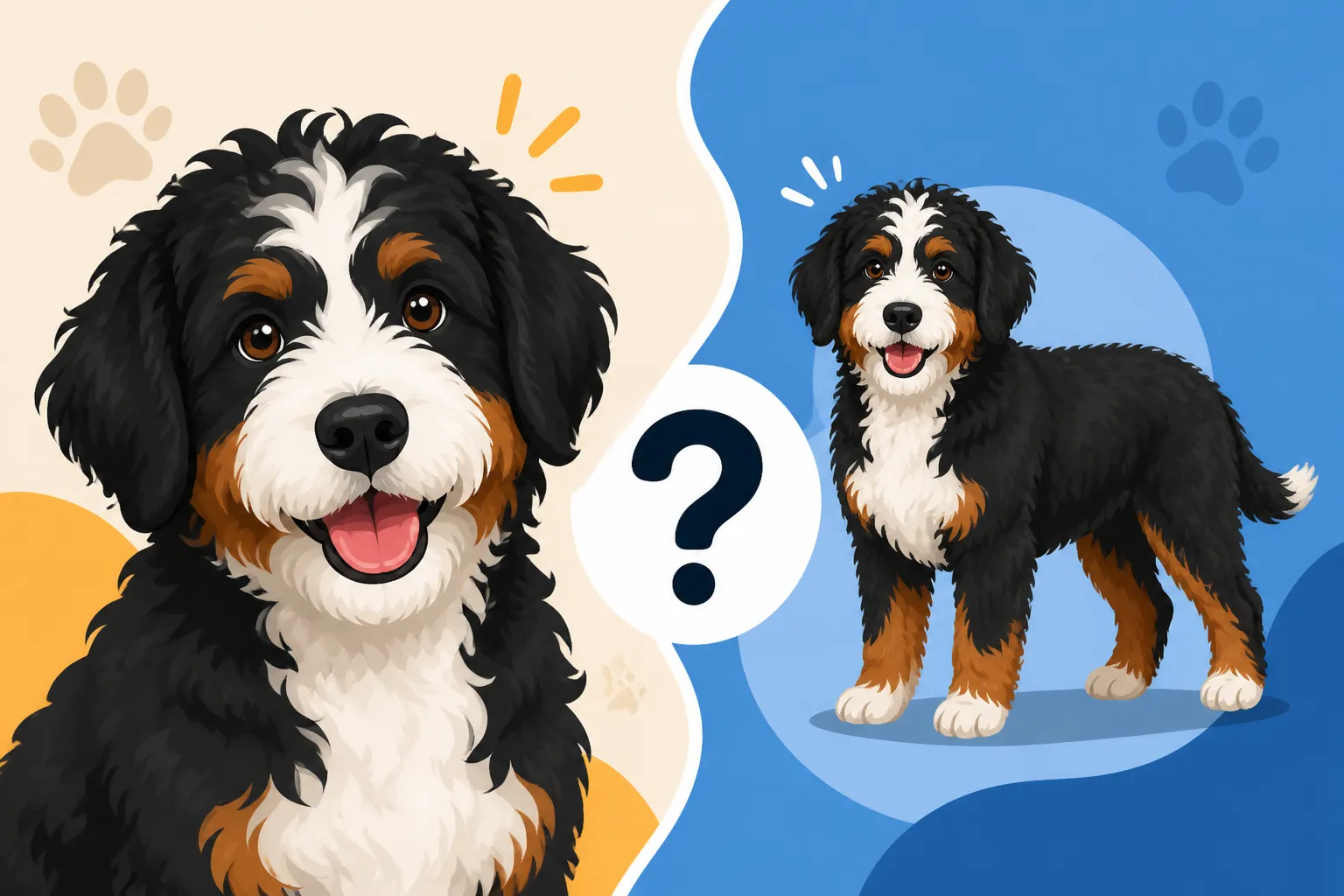
Yes, absolutely! An F1 Bernedoodle can be tri-color. In fact, it's a highly sought-after pattern, and many reputable breeders specifically aim for it. The crucial factor is the genetic contribution from both the Bernese Mountain Dog and the Poodle parent, particularly concerning the A locus (tan points) and the S locus (white markings).
Why Tri-Color F1s Are Possible
As we discussed, the Bernese Mountain Dog parent always provides the genetic blueprint for tri-color markings. The key is whether the Poodle parent also carries the necessary genes, or at least allows the Bernese genes to express. Many Poodles, especially Standard Poodles, carry the "at" allele for tan points, even if they appear solid-colored themselves due to the dominant black gene. If the Poodle parent is genetically "atat" or "atay" at the A locus, and doesn't have a dominant black gene (KB) that would override it, then the F1 puppy has a very good chance of expressing the tan points.
For the white markings, the Bernese reliably passes on genes for white. If the Poodle also carries some degree of white spotting genes, or simply doesn't have genes that completely suppress white, then the Bernedoodle puppy can inherit a lovely white blaze, chest, and socks. This combination of inherited tan points and white spotting from both sides makes the tri-color pattern not only possible but quite common in F1 Bernedoodles. Breeders often select Poodles with known genetic backgrounds for color to increase the likelihood of producing these desirable markings.
Not All F1s Will Be Tri-Color
It's important to manage expectations, however. Just because an F1 can be tri-color doesn't mean every F1 will be. Some F1 Bernedoodles will inherit a dominant black gene from the Poodle parent (or even the Bernese, although the Bernese is phenotypically tri-color, it can carry different alleles). If that dominant black gene (KB) is passed on, it can completely mask the tan points, resulting in a solid black Bernedoodle or a black and white one. These are sometimes referred to as "bi-color" or "phantom bi-color" (if they have the phantom pattern but no white "Swiss cross" type markings).
Additionally, the extent of white markings can vary significantly. Some F1 tri-colors might have very minimal white, perhaps just a small patch on the chest and a few white toes, while others will have a full Bernese-like blaze and chest marking. This variability is part of the fun (and sometimes frustration) of Bernedoodle genetics. A good breeder will be transparent about the color genetics of their parent dogs and can often give you an idea of the likelihood of different colors appearing in a litter. Knowing The Genetics Behind a Bernedoodle's Tri Markings can help you understand these possibilities.
What to Look for When Choosing a Tri-Color F1 Puppy
If a tri-color F1 Bernedoodle is your dream, here’s what to keep in mind. First, ask your breeder about the color genetics of both parent dogs. Reputable breeders will often perform genetic testing on their breeding dogs, not just for health clearances like those for Degenerative Myelopathy Both Bernedoodle Parents Can Carry or Von Willebrand's Disease in a Bernedoodle, but also for coat color. They can tell you if their Poodle carries the "at" allele and what genes are present at the K and S loci.
Second, observe the puppies carefully. The tri-color markings are usually quite evident at birth, though the rust can deepen and become richer as the puppy grows. Pay attention to the definition of the black, the warmth of the rust, and the crispness of the white. Some "phantom" Bernedoodles might have tan points, but lack the distinct white chest and blaze that completes the traditional tri-color look. If you're looking for that classic Bernese pattern, ensure the puppy displays all three distinct colors in the right places. Remember, colors can sometimes "clear" or fade a bit as a Bernedoodle ages, especially if the Poodle parent carries fading genes.
Considerations Beyond Color: Health and Temperament
While the allure of a stunning tri-color F1 Bernedoodle is undeniable, it's crucial to remember that color is just one aspect of a healthy, happy companion. The most important considerations should always be the health, temperament, and ethical breeding practices behind your puppy.
Prioritizing Health Clearances
A beautiful coat means little if your dog isn't healthy. When seeking an F1 Bernedoodle, whether tri-color or any other shade, prioritize breeders who conduct extensive health clearances on both parent dogs. This includes evaluations for hip and elbow dysplasia, common in larger breeds like the Bernese Mountain Dog, as discussed in Hips on a Ninety Pound Bernedoodle and Elbow Dysplasia in a Growing Bernedoodle. Eye certifications and genetic testing for conditions like Von Willebrand's Disease and Degenerative Myelopathy are also critical.
An ethical breeder will openly share these test results, often providing OFA (Orthopedic Foundation for Animals) or PennHIP scores, and DNA panel results. Don't be shy about asking to see these documents. A breeder focused solely on producing specific colors without regard for comprehensive health testing is a red flag. Healthy Paws is a well-regarded pet insurance provider that can help offset unexpected veterinary costs, reinforcing the importance of proactive health management.
Temperament and Training Needs
F1 Bernedoodles typically inherit a wonderful blend of traits from their parents: the loyal, calm, and goofy nature of the Bernese and the intelligence, trainability, and often lower-shedding coat of the Poodle. However, individual personalities can vary. Even within the same litter, you might find a bolder puppy and a more reserved one. The socialisation a puppy receives during its first few weeks is paramount for shaping a well-adjusted dog.
Consider the general temperament of the parent dogs. Are they friendly, calm, and well-socialized? A Bernedoodle, especially a Standard, can grow to be a large dog, so early training is vital. Starting with basic commands and positive reinforcement from day one is key, as covered in topics like Leash Manners on a Bernedoodle Heading for Ninety Pounds. Resources like Chewy offer a wide array of training aids, from treats to durable toys, to help you guide your Bernedoodle into a well-behaved adult.
Coat Care for Any Color F1 Bernedoodle
Regardless of whether your F1 Bernedoodle is tri-color, black, or phantom, you will need to prepare for significant coat care. F1 Bernedoodles tend to have wavy or curly coats, and while they may shed less than a purebred Bernese, they are not typically "non-shedding." Their coats are prone to matting, especially during the transition from puppy fluff to adult coat, or in high-friction areas like armpits and behind the ears.
Regular brushing, at least a few times a week, is non-negotiable to prevent painful mats. Professional grooming every 6-8 weeks is also a must, and these appointments can add up, as noted in The Seventy to Hundred Fifty Dollar Bernedoodle Groom. Providing high-quality food, like options from Ollie, which offers fresh, human-grade meals, can also contribute to a healthy coat and skin, reducing issues like dryness or excessive shedding. It's a commitment, but a well-maintained coat is a sign of a well-cared-for Bernedoodle.
Conclusion
So, to definitively answer the burning question: yes, an F1 Bernedoodle can absolutely be tri-color! It's a testament to the fascinating genetics at play when crossing a Bernese Mountain Dog with a Poodle. The Bernese parent provides the essential tri-color genes, and if the Poodle parent carries the right underlying genetic markers (specifically the "at" allele for tan points and adequate white spotting genes) and doesn't have an overriding dominant black gene, then those stunning black, rust, and white markings will shine through.
When you're searching for your future F1 Bernedoodle, remember that while coat color is exciting, it should never overshadow the importance of health clearances, good temperament, and a reputable breeder. Do your research, ask plenty of questions about genetic testing and parentage, and be prepared for the lifelong commitment of care that any Bernedoodle, regardless of color, deserves. The joy a tri-color F1 Bernedoodle brings to a family is truly immeasurable, but it begins with a responsible and informed choice.
| Bernedoodle Generation | Parental Cross | Tri-Color Potential | Shedding Tendency | Common Coat Types |
|---|---|---|---|---|
| F1 | Bernese x Poodle | High | Low to Moderate | Wavy, Curly, Straight (less common) |
| F1b | F1 Bernedoodle x Poodle | Very High | Very Low to Non-shedding | Curly, Wavy |
| F2 | F1 Bernedoodle x F1 Bernedoodle | Moderate | Variable | Wavy, Curly, Straight (more common) |
| F2b | F2 Bernedoodle x Poodle | High | Low to Non-shedding | Curly, Wavy |
Disclaimer
This article is for general informational purposes only and does not constitute professional advice. Laws, prices and regulations vary by location and change over time. Consult a qualified professional for guidance on your specific situation.