Whether a Coat Test Tells You If a Bernedoodle Will Shed
One of the biggest questions on every prospective Bernedoodle owner's mind is whether their furry friend will shed, and the internet is awash with claims about "hypoallergenic" coats. Many hope that a DNA coat test can provide a definitive answer, eliminating all guesswork. This comprehensive guide will delve into the realities of Bernedoodle coat genetics, explain what these tests truly tell you, and help you set realistic expectations for your companion's shedding tendencies.
Understanding Bernedoodle Coats and Shedding
Bringing a Bernedoodle into your home often comes with the promise of a low-shedding dog, a delightful combination of the intelligent Poodle and the gentle Bernese Mountain Dog. However, the reality of their coats can be a bit more complex, and shedding is rarely an all-or-nothing proposition. It’s a common frustration to hear conflicting information, especially when you’re trying to manage allergies or simply prefer less fur on your furniture.
The Myth of the "Hypoallergenic" Doodle
Let's address a common misconception right off the bat: no dog is truly 100% hypoallergenic. The term often refers to dogs that produce fewer allergens, typically because they shed less dander, which is the actual culprit behind most pet allergies. Poodles are famous for their curly, non-shedding coats, which trap dander and hair, making them a good choice for many allergy sufferers. However, when you cross a Poodle with a Bernese Mountain Dog, you introduce a whole new genetic lottery. The Bernedoodle's coat can inherit traits from both sides, meaning that while some may be very low-shedding, others will shed noticeably, and all dogs produce dander to some extent. It’s important to understand that a "hypoallergenic" claim is more about reduced allergenic properties than a complete absence. Many families have been disappointed after bringing home a Bernedoodle, only to find their allergies still flaring up, proving that the dream of a completely allergen-free dog remains just that – a dream. Whether a Bernedoodle Is Hypoallergenic is a deeper dive into this topic.
Why the Bernese Half Matters
The Bernese Mountain Dog, the other half of our beloved Bernedoodle, is a double-coated breed known for its thick, beautiful fur and, yes, significant shedding. They have a dense undercoat for insulation and a longer, coarser outer coat. This shedding is perfectly natural for a breed developed to withstand cold mountain climates, but it’s precisely what many Bernedoodle hopefuls are trying to avoid. When a Poodle is bred with a Bernese, the Bernedoodle puppy inherits a mix of genes from both parents. This means some puppies will take more after the Poodle's non-shedding coat, while others will lean more towards the Bernese's shedding characteristics, or even end up with a coat that's a blend of both, sometimes with unexpected results. The Bernese half brings with it the potential for a dense undercoat and a propensity for "blowing" that coat seasonally, which can come as a surprise if you're expecting a purely Poodle-like experience.
Different Bernedoodle Coat Types and Their Shedding Potential
Bernedoodle coats come in a wonderful variety, typically described as straight, wavy, or curly. Each type has a different shedding potential and grooming requirement.
- Curly Coats: These are generally the most Poodle-like and tend to be the lowest shedding. The tight curls trap any loose hair and dander, meaning very little falls out into your home. However, these coats are also the most prone to matting and require diligent, regular grooming to keep them healthy and tangle-free. This isn't a "set it and forget it" coat; it demands commitment. The Curly Coat Bernedoodle and Its Upkeep is a must-read for owners of these beauties.
- Wavy Coats: Often called the "fleece" coat, this is perhaps the most common and sought-after Bernedoodle coat. It’s a delightful compromise, offering a soft, flowing texture with moderate to low shedding. While not as prone to matting as a curly coat, it still requires regular brushing to prevent tangles and keep it looking its best. This coat type often sheds lightly year-round, with occasional heavier periods.
- Straight Coats: These coats are the least common and typically resemble the Bernese Mountain Dog's coat more closely. They usually have a heavier shed, sometimes quite comparable to a Bernese, especially if they have a dense undercoat. If minimal shedding is your primary goal, a straight-coated Bernedoodle might not be the best fit. These coats, while beautiful, will require more frequent vacuuming and might not be suitable for those with moderate to severe allergies. The Straight Coated Bernedoodle That Sheds offers more insights.
Understanding these distinctions is crucial, as the coat type directly influences not just shedding, but also grooming needs and potential allergic reactions.
The Science Behind Canine Coat Genetics
To truly grasp whether a coat test can predict shedding, we need to dip our toes into the fascinating world of canine genetics. It's not just about one gene, but a combination of them working together to determine everything from hair length and texture to the presence of furnishings (those adorable beards and eyebrows) and, critically, shedding.
Key Genes Influencing Shedding and Furnishings
Two primary gene loci are particularly relevant when we talk about Bernedoodle coats: the Furnishings (F) locus and the Shedding (SD) locus, often linked to the RSPO2 gene.
- Furnishings (F/f): This gene dictates whether a dog has the characteristic "furnishings" – the longer hair on the muzzle, eyebrows, and legs that gives Poodles and many Doodles their distinct look. A dog with two copies of the dominant 'F' allele (F/F) or one dominant and one recessive (F/f) will have furnishings. Dogs with two recessive alleles (f/f) will have an "improper coat" or "flat face," meaning they lack these furnishings and often have a smoother, shorter coat on their face and legs. This can significantly impact a Bernedoodle's appearance and how much it looks like a typical Doodle.
- Shedding (SD/sd): The RSPO2 gene at the SD locus is strongly associated with shedding. Dogs with at least one dominant 'SD' allele (SD/SD or SD/sd) tend to shed less. Those with two recessive alleles (sd/sd) typically have a higher shedding coat. It's important to note that while this gene is a major player, it's not the only factor. Other genes can modify the final shedding phenotype, which is why even dogs with favorable RSPO2 results might still have some degree of shedding.
The Role of the KRT71 and RSPO2 Genes
While the RSPO2 gene is the big one for shedding and furnishings, other genes like KRT71 (which influences curl) also play a role in the overall coat picture.
- RSPO2 Gene (Furnishings and Shedding): As mentioned, RSPO2 has a double duty. The presence of the dominant allele (F) at this locus gives a dog furnishings. Crucially, this same allele is also strongly associated with the low-shedding trait. So, a dog that has furnishings is more likely to be low-shedding. This is why breeders often look for puppies with furnishings if their goal is a non-shedding coat.
- KRT71 Gene (Curl): This gene affects the degree of curl in a dog's coat. A dog can be curly (Cu/Cu or Cu/cu) or straight (cu/cu). A Bernedoodle with two copies of the dominant 'Cu' allele from the Poodle parent will have a very curly coat. A dog with one dominant and one recessive might have a wavy coat, and two recessive alleles from both parents could result in a straighter coat. The curlier the coat, the better it tends to trap loose hairs, contributing to a lower amount of visible shedding. Therefore, the combination of a dominant RSPO2 allele for furnishings and a dominant KRT71 allele for curl is the "golden ticket" for a truly low-shedding Bernedoodle.
Understanding Alleles and Inheritance in Bernedoodles
Each parent passes on one allele for each gene to their offspring. This is where the genetic lottery comes in for Bernedoodles.
- Poodle Contribution: Poodles typically carry two dominant 'F' alleles for furnishings (F/F) and two dominant 'Cu' alleles for curl (Cu/Cu). They are also usually low-shedding (SD/SD).
- Bernese Contribution: Bernese Mountain Dogs typically carry two recessive 'f' alleles for improper coat (f/f) and two recessive 'cu' alleles for straight coat (cu/cu). They are also high-shedding (sd/sd).
- F1 Bernedoodles (50% Poodle, 50% Bernese): An F1 Bernedoodle receives one 'F' allele and one 'Cu' allele from the Poodle, and one 'f' and one 'cu' from the Bernese. This means all F1 Bernedoodles will be F/f (have furnishings) and Cu/cu (have wavy coats). They will also be SD/sd, meaning they inherit one low-shedding allele and one high-shedding allele. This genetic makeup generally results in a wavy, low-to-moderate shedding coat. However, due to the presence of one shedding allele, they will shed to some degree. Whether an F1 Bernedoodle Sheds More Than an F1b offers a comparison.
- F1b Bernedoodles (75% Poodle, 25% Bernese): An F1b Bernedoodle is bred by crossing an F1 Bernedoodle back to a Poodle. This significantly increases the chances of a Poodle-like coat. They are much more likely to be F/F (have furnishings) and Cu/Cu (curly coat), and SD/SD (very low shedding). This is often the preferred generation for those seeking the lowest shedding potential.
- Later Generations: As you go into F2, F3, or multigen Bernedoodles, the genetic combinations become even more complex and varied. Without careful selective breeding and genetic testing, the consistency of coat type and shedding can become less predictable.
How Coat Tests Work for Bernedoodles
Now that we understand the genetics, let's talk about the practical application: the coat test itself. These tests are invaluable tools for breeders and can offer some insight to prospective owners, but they aren't magic eight-balls.
What a DNA Coat Panel Reveals
A reputable DNA coat panel, typically performed by labs like Embark or Canine HealthCheck, analyzes your dog's genetic material (usually from a cheek swab) for specific markers related to coat traits. For Bernedoodles, the most relevant markers include:
- Furnishings (F/f locus): This tells you if your dog has one or two copies of the dominant furnishing gene (F) or two recessive copies (f/f). If your dog is F/F or F/f, they will have furnishings. If they are f/f, they will have a "flat" or "improper" coat without the characteristic beard and eyebrows.
- Shedding (SD/sd locus, often linked to RSPO2): This indicates the presence of alleles associated with low or high shedding. A result of SD/SD suggests very low shedding, SD/sd suggests low to moderate shedding, and sd/sd suggests higher shedding.
- Curl (KRT71 locus): This reveals if your dog carries genes for a curly (Cu/Cu), wavy (Cu/cu), or straight (cu/cu) coat.
- Coat Length (L/l locus): While less of a concern for Bernedoodles generally bred for longer coats, this gene determines whether a dog will have a long or short coat.
- Other Coat Traits: Some panels also include genes for coat color, intensity, and even dilution, which can affect the shade of your Bernedoodle's markings.
A responsible breeder will use these tests to ensure they are making informed breeding decisions, aiming to produce puppies with desired coat qualities and predictable shedding levels. When you’re considering a puppy, asking to see the parent dogs’ coat panel results is a smart move. What a Standard Bernedoodle Costs From a Tested Breeder goes into the value of such due diligence.
Interpreting Your Bernedoodle's Test Results
Understanding the results can still be a bit of a puzzle. It's not always a simple "yes" or "no" to shedding.
- "Furnishings: F/F, Shedding: SD/SD, Curl: Cu/Cu": This is the ideal genetic profile for a Bernedoodle aiming for the lowest possible shedding, often resulting in a tight, curly coat that needs extensive grooming but leaves minimal hair around the house. These dogs would be the most allergy-friendly.
- "Furnishings: F/f, Shedding: SD/sd, Curl: Cu/cu": This is very common in F1 Bernedoodles. It indicates they have furnishings, a wavy coat, and carry one allele for low shedding and one for high shedding. These dogs will shed, but usually in a manageable, low-to-moderate amount. They may have seasonal "blows" of their undercoat.
- "Furnishings: f/f, Shedding: sd/sd, Curl: cu/cu": This profile would suggest a Bernedoodle with a straight, Bernese-like coat that lacks furnishings and is prone to higher shedding. This outcome is less common from reputable Bernedoodle breeders who are selecting for Poodle traits, but it can happen, especially in F2 or later generations if breeding isn't carefully managed.
It's crucial to remember that these are probabilities and strong indicators, not absolute guarantees. Think of it like a weather forecast – highly reliable but sometimes unexpected showers can still pop up.
When to Get Your Bernedoodle Tested
For most companion owners, testing your individual Bernedoodle puppy for coat traits isn't strictly necessary, if you've chosen a reputable breeder who has already done the genetic testing on their breeding stock. The breeder should be able to tell you the likely coat type and shedding potential of a litter based on the parents' genetics and, in some cases, early observations of the puppies' coats.
However, there are scenarios where testing your own Bernedoodle might be helpful:
- Curiosity and Preparedness: If you've adopted a Bernedoodle with an unknown lineage or simply want to understand their genetic makeup better, a coat test can provide valuable insight. This knowledge can help you prepare for future grooming needs and manage expectations for shedding.
- Allergy Management: If you or a family member has allergies, and you're trying to pinpoint the source or understand if your Bernedoodle's shedding is contributing more than anticipated, a test might offer clues. However, remember that dander, not just hair, is the main allergen.
- Breeding: If you are considering breeding your Bernedoodle, genetic coat testing is absolutely essential. It allows you to make responsible breeding decisions, ensuring you understand the genetic potential of the puppies you produce and helping to avoid undesirable coat traits or health issues. Asking a Breeder About Cancer in the Bernese Line emphasizes the importance of a breeder doing all necessary testing.
Tests are generally performed via a simple cheek swab kit that you can order online. Many popular DNA testing companies offer these services, and you can easily send the sample back for analysis. Brands like Chewy and Amazon often carry such kits, making them readily accessible for at-home use.
Limitations and Nuances of Coat Testing
While coat tests are powerful tools, they aren't without their limitations. It's important to approach them with a realistic understanding of what they can and cannot predict.
The "Low Shed" vs. "No Shed" Reality
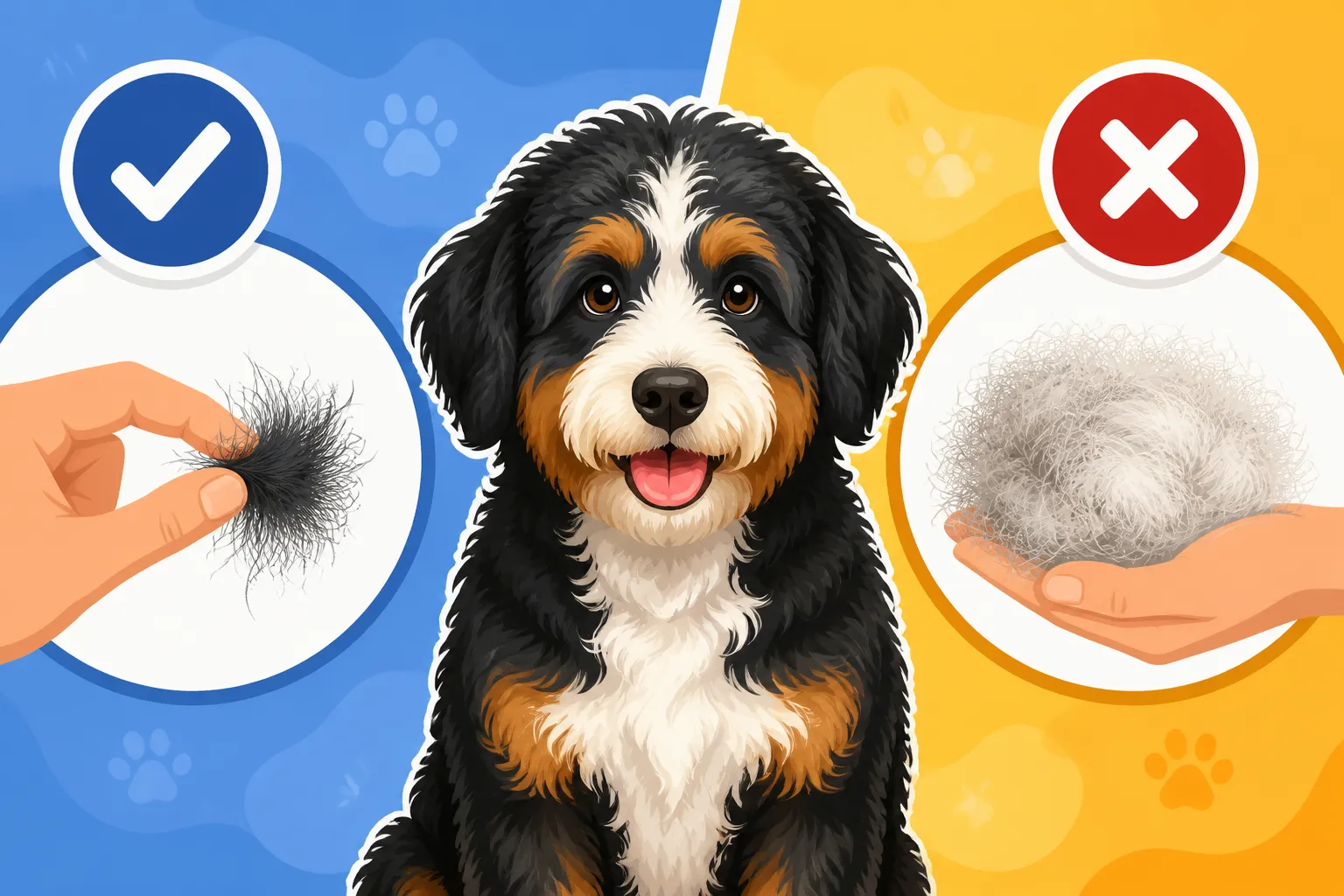
One of the biggest areas of misunderstanding revolves around the terms "low shed" and "no shed." A DNA test might indicate a dog has the genetic markers for a "low-shedding" coat, but this rarely means "no shed" at all. Even Poodles, considered non-shedding, will still lose some hair, just like humans do. Their curly coats simply trap this loose hair, preventing it from falling out into the environment. A Bernedoodle with an ideal genetic profile (F/F, SD/SD, Cu/Cu) will still have some minimal shedding, typically in the form of dead hairs that need to be brushed out.
The challenge comes when a Bernedoodle is genetically "low shed" but still seems to shed more than anticipated. This can be due to a variety of factors not directly measured by a standard coat panel, such as the density of the undercoat (a Bernese trait) or other polygenic influences that fine-tune the shedding process. So, while a test can tell you the potential for low shedding, the actual amount of hair you find around your house might vary. Whether Any Bernedoodle Is Truly Non Shedding provides a detailed look at this specific challenge.
Factors Beyond Genetics That Influence Shedding
Shedding isn't solely a genetic affair. Several environmental and physiological factors can influence how much hair your Bernedoodle loses, even if their genes point to a low-shedding tendency.
- Seasonal Changes: Dogs naturally shed more during certain times of the year, often "blowing their coat" in spring to prepare for warmer weather and again in the fall to grow a denser winter coat. This seasonal shedding can affect Bernedoodles, particularly those with a stronger Bernese influence, even if they have Poodle genetics for low shedding. The amount of daylight hours can trigger these hormonal changes.
- Diet and Nutrition: A poor diet lacking essential nutrients, especially omega fatty acids, can lead to dry, brittle hair and increased shedding. Feeding a high-quality dog food, perhaps even exploring options like those offered by Ollie, which focuses on fresh, balanced nutrition, can significantly impact coat health and potentially reduce excessive shedding.
- Stress: Just like humans, dogs can shed more when stressed or anxious. A change in environment, a new family member, or even loud noises can sometimes trigger a temporary increase in shedding.
- Health Issues: Underlying medical conditions, such as skin allergies, parasites, fungal infections, or hormonal imbalances (like hypothyroidism), can all cause excessive hair loss and shedding. If your Bernedoodle suddenly starts shedding much more than usual, a vet visit is always a good idea to rule out any health concerns. Skin Problems Under a Bernedoodle's Heavy Coat highlights related issues.
- Grooming Routine: Inadequate brushing, especially for dogs with long or dense coats, means loose hair isn't removed and can build up, appearing as excessive shedding. Regular and thorough brushing is key to managing any dog's coat, regardless of genetic shedding potential.
Why a Test Doesn't Tell the Whole Story
Ultimately, a coat test provides a valuable snapshot of a Bernedoodle's genetic predisposition, but it doesn't give you the entire movie. It can indicate a high probability of a low-shedding coat, but it can't account for every variable. For example, two Bernedoodles with identical coat genetics might still shed slightly different amounts due to individual metabolism, environmental factors, or the overall health of their coat.
Think of it this way: the test tells you the ingredients, but not how the cake will taste or how long it will stay fresh. It's a fantastic starting point, especially for breeders, but for owners, it's one piece of a larger puzzle that includes hands-on observation, consistent grooming, and attentive care. You still need to be prepared for the possibility of some shedding and a commitment to regular grooming, which is vital for any Bernedoodle, regardless of their genetic test results. The Coat a Bernedoodle Gets From Two Heavy Coated Parents often means a lot of brushing!
Beyond the Test: Managing Bernedoodle Shedding
Whether your Bernedoodle's coat test predicts low shedding or a bit more fluff, proactive management is key. You can't change genetics, but you can certainly influence the amount of hair that ends up on your couch.
Grooming Strategies for Different Coat Types
Regardless of the shedding potential, every Bernedoodle requires a robust grooming routine.
- Curly Coats: These low-shedding coats are mat magnets! Daily or every-other-day brushing with a slicker brush and a metal comb, working in sections down to the skin, is essential. Professional grooming every 6-8 weeks for a trim and bath is also highly recommended. Neglecting a curly coat can lead to painful mats that require shaving down, which is often an expensive and stressful experience for both dog and owner. The Volume of Coat a Bernedoodle Owner Brushes Weekly is a good indicator of the commitment needed.
- Wavy Coats: These still need frequent brushing, ideally every 2-3 days, to prevent tangles and remove loose hair. A combination of a slicker brush and a pin brush works well. Professional grooming every 8-10 weeks will keep their coat in good condition. Wavy coats can still mat, especially in friction areas like armpits, behind the ears, and in the britches. The Places a Ninety Pound Bernedoodle Mats First are good areas to focus on.
- Straight Coats: These coats will benefit from daily brushing with a slicker brush, pin brush, and an undercoat rake, especially during seasonal shedding periods. The goal is to remove as much loose hair as possible before it falls onto your floors. While professional grooming isn't as critical for mat prevention with a straight coat, regular baths and trims can help manage shedding and keep the coat healthy.
Remember, the goal of brushing isn't just to make the dog look neat; it's to remove dead hair and dander, distribute natural oils, and stimulate blood circulation to the skin, all contributing to a healthier coat. You can find all the necessary grooming tools on platforms like Amazon or Chewy, making it easy to set up your home grooming kit. The Brushes a Bernedoodle Owner Actually Needs will give you specific recommendations.
Diet and Environmental Factors
A healthy coat starts from within.
- High-Quality Diet: Feed your Bernedoodle a complete and balanced diet appropriate for their life stage and size. Look for high-quality protein sources and healthy fats. Some owners find success with fresh food options or kibble that is specially formulated for coat health. Ingredients rich in Omega-3 and Omega-6 fatty acids can significantly improve skin and coat condition, reducing dryness and excessive shedding. Many premium dog food brands are available through Chewy, offering a wide range of choices to suit your Bernedoodle's needs.
- Hydration: Ensure your Bernedoodle always has access to fresh, clean water. Good hydration is crucial for overall health, including skin and coat quality.
- Supplements: Discuss with your veterinarian whether specific supplements, like fish oil (omega-3 fatty acids) or biotin, might benefit your Bernedoodle's coat. Never start supplements without professional guidance.
- Clean Living Environment: Regularly vacuuming your home, especially areas where your Bernedoodle spends a lot of time, helps to remove shed hair and dander. Using air purifiers can also help reduce airborne allergens. A clean environment contributes to a healthier coat for your dog and a more comfortable living space for you.
Dealing with Seasonal Shedding and "Coat Blow"
Even Bernedoodles with Poodle-dominant genetics can experience seasonal shedding, particularly if they inherited a denser undercoat from their Bernese lineage. This is often referred to as "coat blow" and can be quite intense.
- Increased Brushing: During these periods, ramp up your brushing frequency. Daily, thorough brushing, sometimes even twice a day, will be necessary to keep up with the shedding hair. Using an undercoat rake can be particularly effective during a coat blow to remove dead undercoat.
- Professional Deshedding Treatments: Some professional groomers offer specific deshedding treatments that involve special shampoos, conditioners, and high-velocity dryers to help loosen and remove dead hair. This can be a worthwhile investment during heavy shedding seasons.
- Be Patient: Remember that seasonal shedding is a natural process. While you can manage it with diligent grooming and care, you can't stop it entirely. Be patient and consistent with your efforts, and the period of heavy shedding will eventually pass. How Many Months a Bernedoodle's Coat Change Runs can give you an idea of the duration of these periods.
Making an Informed Decision About Your Bernedoodle's Coat
Choosing a Bernedoodle involves more than just falling in love with a cute puppy. Understanding their coat and shedding potential, and what a coat test can tell you, is a big part of being a responsible owner.
What to Ask a Breeder About Coat Testing
When you're looking for a Bernedoodle puppy, a reputable breeder will be transparent and proactive about genetic health and coat testing. Don't be shy about asking specific questions:
- "Do you perform DNA coat tests on your breeding dogs?" A "yes" is a great start. Ask which specific genes they test for (F/f, SD/sd, KRT71 are key for coat type).
- "Can I see the coat test results for the sire and dam of this litter?" They should be able to provide documentation from a reputable lab.
- "Based on the parents' genetics, what is the expected coat type and shedding level for this litter?" A good breeder will be able to explain the probabilities for straight, wavy, or curly coats, and high or low shedding. They should also be able to tell you if they expect a puppy to have furnishings or an improper coat.
- "What generation is this litter (F1, F1b, F2, Multigen) and how does that impact coat predictability?" As discussed, F1b Bernedoodles generally offer more predictable low-shedding coats than F1s or some later generations without careful selection.
- "Do you offer any guarantees regarding coat type or shedding?" Some breeders might offer a limited guarantee, but understand that "no shed" is an almost impossible promise. What they should guarantee is transparent information based on testing.
A breeder who is knowledgeable and open about coat genetics and testing is a breeder who prioritizes the health and well-being of their dogs and the satisfaction of their puppy buyers.
Realistic Expectations for Bernedoodle Shedding
After all this discussion, what should your expectations be?
- No Dog is 100% Non-Shedding: Even Poodles lose dead hair; it just gets trapped in their curls. Bernedoodles, with their Bernese lineage, will likely shed some hair, even those with the most favorable genetics.
- "Low Shedding" Still Means Grooming: A Bernedoodle with a low-shedding, curly, or wavy coat will require significant, consistent grooming to prevent matting. The hair doesn't fall out, it stays in, creating tangles if not brushed regularly. So, while you might vacuum less, you'll be brushing more.
- Be Prepared for Variety: Even within the same litter, Bernedoodles can have different coat types and shedding levels. If you have severe allergies, spending time with adult Bernedoodles of the specific coat type you're considering is the best way to gauge your reaction, rather than relying solely on genetic tests or general breed descriptions.
- Embrace the Fluff: Part of the charm of a Bernedoodle is their beautiful, fluffy coat. If you're going to bring one into your life, be prepared to manage that coat as part of the joyful experience of dog ownership. The Volume of Coat a Bernedoodle Owner Brushes Weekly is a testament to this commitment.
Living Happily with Your Bernedoodle's Unique Coat
Ultimately, the goal is to have a happy, healthy Bernedoodle and a harmonious household. While coat tests offer valuable information, remember that your Bernedoodle's personality, health, and companionship will far outweigh any concerns about a few stray hairs.
Embrace your Bernedoodle's unique coat, whatever its genetic makeup or shedding potential. Invest in quality grooming tools, establish a consistent routine, and consider professional grooming as part of your budget. If you're managing allergies, focus on regular cleaning, air purifiers, and discuss strategies with your doctor. Your Bernedoodle offers so much love and joy; a little extra brushing or vacuuming is a small price to pay for such a wonderful companion.
| Coat Genetic Markers | Expected Coat Type | Shedding Level | Grooming Needs (General) | Allergy Friendliness (General) |
|---|---|---|---|---|
| F/F, SD/SD, Cu/Cu | Curly | Very Low | High: Daily brushing, professional grooming every 6-8 weeks | Highest |
| F/f, SD/sd, Cu/cu | Wavy (Fleece) | Low to Moderate | Moderate: Every 2-3 day brushing, professional grooming every 8-10 weeks | Moderate |
| F/f, SD/sd, cu/cu | Wavy to Straighter | Moderate | Moderate to High: Frequent brushing, can still mat, professional trims | Moderate to Lower |
| f/f, sd/sd, cu/cu | Straight (Improper) | High (like Bernese) | High: Daily brushing, undercoat raking, seasonal deshedding | Lowest |
| F/F, sd/sd, Cu/Cu or Cu/cu | Curly or Wavy | Moderate to High | High: Matting risk, frequent brushing needed | Moderate to Lower |
Disclaimer
This article is for general informational purposes only and does not constitute professional advice. Laws, prices and regulations vary by location and change over time. Consult a qualified professional for guidance on your specific situation.