Why a Bernedoodle Must Never Wait in a Parked Car
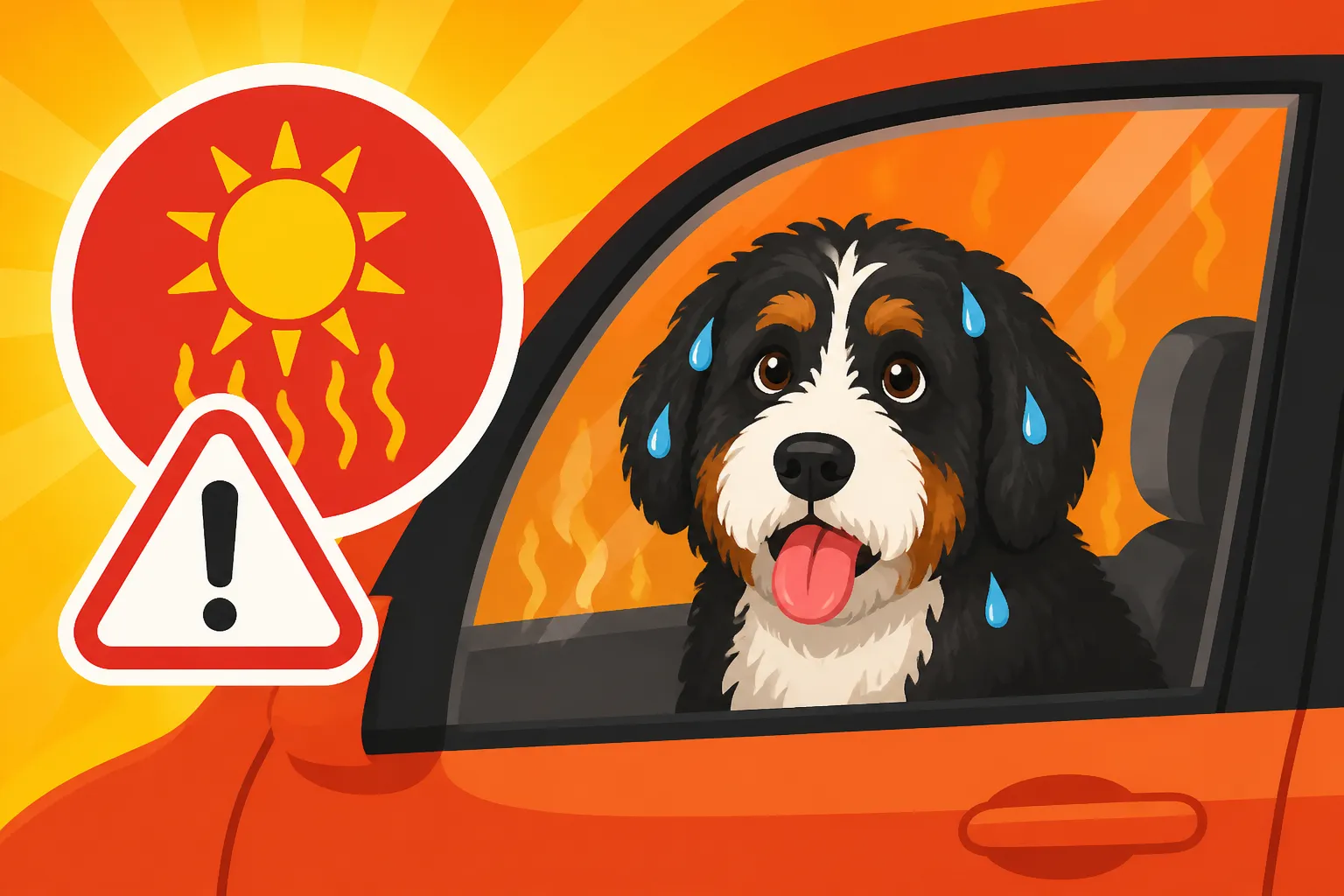
The thought of leaving your beloved Bernedoodle in a parked car, even for "just a few minutes," sends shivers down the spine of any responsible dog owner, and for good reason. What seems like a quick errand can quickly turn into a life-threatening situation, leaving you with unimaginable grief. This guide isn't about scare tactics; it's about understanding the genuine, immediate danger a parked car poses to your Bernedoodle and providing actionable ways to keep them safe.
The Silent Killer: Why a Parked Car Is Never Safe for Your Bernedoodle
It's a misconception many people hold: that a cracked window or a mild day makes leaving a dog in a car acceptable. Unfortunately, this couldn't be further from the truth, especially for a breed like the Bernedoodle. The interior of a vehicle acts like a greenhouse, trapping heat and escalating temperatures at an alarming rate, far beyond what you might expect.
The Astonishing Speed of Temperature Rise in a Vehicle
You might step out for what feels like a blink of an eye to grab a coffee or run into a store, but inside that car, the temperature is climbing relentlessly. On a pleasant 70-degree Fahrenheit day, the internal temperature of your car can reach 90 degrees in just 10 minutes. Within 20 minutes, it can hit 100 degrees, and in an hour, it can be a scorching 115 degrees. And here's the kicker: cracking a window does almost nothing to slow this process. The sun's rays penetrate the glass, heating the surfaces inside, and that heat has nowhere to go.
Imagine you’re pulling into a grocery store parking lot on a sunny spring afternoon. The air outside feels lovely, a gentle breeze rustling the trees. You think, "I'll just be five minutes, Fluffy will be fine." But the sun beating down on your car's dark interior is already at work. Even if the outside temperature isn't sweltering, the solar radiation absorbed by the seats, dashboard, and floor quickly radiates that heat into the enclosed space. Your Bernedoodle, already carrying a thick coat, is essentially in a quickly heating oven, with no escape. This rapid, exponential heat gain is the first, most insidious danger.
The Physiological Devastation of Canine Heatstroke
Dogs don't sweat like humans do; their primary way of cooling down is panting and through the pads of their feet. When trapped in a rapidly heating environment like a car, their natural cooling mechanisms quickly become overwhelmed. As their body temperature rises above its normal range (around 101-102.5°F), they enter a state of heatstroke. This isn't just "getting too hot"; it's a medical emergency that can lead to irreversible organ damage, brain damage, and tragically, death.
The symptoms of heatstroke can escalate from heavy panting and drooling to vomiting, diarrhea, weakness, stumbling, seizures, and unconsciousness. Your Bernedoodle's gums might turn bright red or bluish, indicating a lack of oxygen. Their heart rate will accelerate, and their body will be desperately trying to shed heat it simply cannot. If you ever find your dog exhibiting Signs a Bernedoodle Is Overheating, immediate veterinary intervention is critical. Cooling a dog down safely needs to be done gradually and carefully, which is nearly impossible in an uncontrolled hot car environment. Even if a dog survives heatstroke, they can suffer long-term health complications, particularly kidney damage, heart issues, and neurological problems.
What Makes Bernedoodles Especially Vulnerable to Car Heat
While no dog should ever be left in a hot car, Bernedoodles possess certain characteristics that make them particularly susceptible to heat-related emergencies. Understanding these traits underscores why this rule is non-negotiable for our big, fluffy companions.
The Insulating Power of Their Signature Coat
Bernedoodles are renowned for their beautiful, often wavy to curly coats, inherited from both the Bernese Mountain Dog and the Poodle. While this coat is fantastic for keeping them warm in cold climates, it acts as a powerful insulator, trapping body heat, especially when it's dense and dark. Many Bernedoodles have thick, double coats, and those with black or dark tri-color markings absorb even more solar radiation. Think about wearing a heavy winter coat on a summer day – that's a bit like what your Bernedoodle experiences.
This natural insulation, combined with a car's greenhouse effect, means their body temperature rises even faster and higher than a short-haired dog. Their coat, while lovely to look at and touch, is a significant liability in a hot, enclosed space. We've talked before about Why a Black Tri Bernedoodle Overheats and Whether a Black Bernedoodle Absorbs More Heat when it comes to general summer activities, but in the confined, rapidly heating space of a car, these factors are amplified exponentially. It's not just about comfort; it's about survival.
Cooling Challenges Unique to Large, Energetic Breeds
Bernedoodles are typically large to giant dogs, and bigger bodies generate more internal heat. This means they have a greater volume of tissue that needs cooling, and their surface area to volume ratio is less efficient for heat dissipation compared to smaller breeds. While Poodles are known for their athleticism, the Bernese side of the Bernedoodle often brings a more substantial build. Whether a Bernedoodle Pants More Than Other Dogs is a valid question because panting is their primary method of thermal regulation. In a hot car, the air they're panting is already hot, making the process ineffective.
A large, often active dog like a Bernedoodle might also get stressed or anxious when confined and hot, leading to increased panting and further elevation of body temperature. Even a seemingly calm Bernedoodle can quickly succumb to the heat because their physiological cooling system just isn't designed to combat the extreme conditions inside a parked vehicle. Their size means they can't easily curl up into a cooler spot or move around to find a breath of fresh air; they are simply trapped.
The Ripple Effect: Legal, Ethical, and Emotional Consequences
Beyond the immediate danger to your Bernedoodle, leaving a dog in a parked car, especially in warm weather, carries a heavy burden of legal, ethical, and emotional repercussions. It's a choice that can haunt an owner for a lifetime, with consequences reaching far beyond the vehicle itself.
The Law Is Catching Up: Legal Penalties and Citizen Action
Across the United States and many other countries, laws are increasingly being enacted or strengthened to protect animals from being left in hot vehicles. These laws often permit law enforcement officers, and in some cases, even citizens, to take action if an animal appears to be in distress. This could mean a broken window to rescue your dog, followed by fines, animal cruelty charges, and even jail time.
Imagine returning to your car to find a window shattered, your Bernedoodle gone, and a police officer waiting to issue you a citation or worse. It’s a terrifying scenario, but it's one that plays out regularly. Public awareness campaigns have made people far less tolerant of seeing an animal in a hot car. They will call the police, and they might even take matters into their own hands. While breaking a window without proper authority carries its own risks, the desperation to save an animal's life can lead to such actions. A quick stop at the store could easily turn into a legal nightmare, a hefty repair bill, and most importantly, the potential loss of your beloved companion.
The Unbearable Guilt of an Avoidable Tragedy
The emotional toll of a dog dying from heatstroke in a parked car is, for most owners, unimaginable and lifelong. It’s not just the grief of losing a family member, but the profound, inescapable guilt that it was an entirely preventable tragedy. The "I just meant to be a minute" or "I didn't think it was that hot" excuses offer no solace against the reality of an innocent life lost due to a simple, albeit fatal, oversight.
No one sets out to harm their dog, but sometimes a lack of awareness or a moment of perceived convenience can have catastrophic results. The bond we share with our Bernedoodles is deep, and the thought of causing them such suffering is heartbreaking. The ethical responsibility of pet ownership means prioritizing their safety and well-being above our own temporary convenience. If you are struggling with the care of your Bernedoodle, resources are available to help ensure their safety and comfort.
Strategies for Safe Travel and Errands with Your Bernedoodle
Knowing the risks is one thing; actively preventing them is another. Thankfully, there are straightforward strategies you can adopt to ensure your Bernedoodle is never put in harm's way when you're out and about. It all comes down to careful planning and a commitment to their well-being.
When to Leave Your Bernedoodle at Home
The simplest and most effective solution to the hot car dilemma is often the hardest for doting owners: if your errand involves leaving your Bernedoodle unattended in the car, even for a moment, they should stay home. This applies to grocery shopping, running into the bank, visiting non-pet-friendly stores, or any situation where your car will be parked for more than a few seconds while you remain in the vehicle.
Instead of bringing them, set up a comfortable, safe spot for them at home with plenty of fresh water and a cool environment. If you know you have multiple stops that aren't dog-friendly, planning your schedule to drop your Bernedoodle off at home first or leaving them there from the start is always the safest bet. For longer trips, consider a trusted dog sitter or a reputable doggy daycare. Services found through platforms like Chewy or Amazon can provide crates, beds, and interactive toys to keep them content and safe at home while you're out.
Essential Preparations for Any Car Trip
For those times when your Bernedoodle genuinely needs to accompany you in the car, perhaps for a trip to the vet, a hike at a dog-friendly park, or a visit to a friend's house, preparedness is key. Always ensure you have ample fresh water and a portable bowl available. Stainless steel bowls are great for this, or collapsible silicone bowls are easy to pack. You can find excellent options on Amazon or at your local pet supply store.
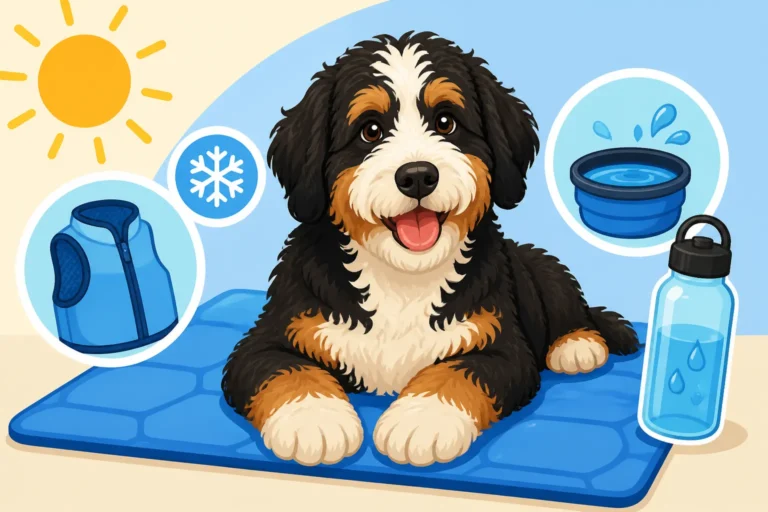
For hot weather travel, even if the air conditioning is on, consider a cooling mat or a cooling vest for your Bernedoodle. These can help regulate their body temperature, especially for longer journeys. While Whether a Cooling Vest Works on a Bernedoodle is a common question, many owners find them incredibly helpful for preventing overheating. Always have a first-aid kit in your car, including items for basic wound care and, critically, information on emergency cooling for heatstroke, just in case. Remember, the safest travel means your Bernedoodle is with you, or safely at home. Never compromise on this.
| Scenario | Safe Action | Risky Action (Avoid!) |
|---|---|---|
| Quick grocery store stop | Leave Bernedoodle at home in cool environment | Leave Bernedoodle in car with window cracked |
| Visiting a friend | Confirm friend's home is pet-friendly and cool | Leave Bernedoodle in car while you socialize inside |
| Hiking in a dog-friendly park | Bring plenty of water, cooling gear, and go | Leave Bernedoodle in car for warm-up before hike |
| Errands with multiple stops | Plan stops around dog-friendly locations or leave home | Assume short stops are fine, even with car running/AC on |
| Vet appointment | Go directly to vet, park in shade, bring immediately in | Park and wait in car in lot if building is busy |
Always Be Vigilant, Never Be Complacent
Even if you follow all the precautions, vigilance is your best defense. Before every car trip with your Bernedoodle, check the weather forecast. Understand The Temperature a Bernedoodle Should Not Be Walked In and extend that caution to car travel. If it's going to be hot, simply adjust your plans. Never rely on leaving the car running with the AC on and locking it; mechanical failures can occur, and an unattended running vehicle poses other risks.
The bottom line is that a parked car, regardless of the perceived brevity of your absence or the outside temperature, is a gamble you cannot afford to take with your Bernedoodle's life. Their well-being rests entirely in your hands, and making the informed choice to never leave them unattended in a vehicle is a fundamental act of responsible and loving pet ownership. Your Bernedoodle depends on you for every aspect of their safety and comfort, especially when it comes to the hidden dangers of a parked car.
Disclaimer
This article is for general informational purposes only and does not constitute professional advice. Laws, prices and regulations vary by location and change over time. Consult a qualified professional for guidance on your specific situation.