Whether a Bernedoodle Should Travel in Summer
The idea of hitting the road with your beloved Bernedoodle for a summer adventure sounds idyllic, doesn't it? Visions of sunny hikes and lakeside frolics dance in your head. But for many Bernedoodle owners, the looming question of "whether a Bernedoodle should travel in summer" brings a significant knot of anxiety. The truth is, these wonderful dogs, with their thick coats and often substantial size, are particularly vulnerable to overheating, and ignoring this reality can lead to dangerous, even tragic, outcomes. This comprehensive guide will walk you through the real risks, smart precautions, and critical considerations to ensure your Bernedoodle stays safe, whether you're taking a short trip to grandma's or embarking on a cross-country adventure when the temperatures rise.
Understanding Your Bernedoodle's Unique Heat Sensitivities
It’s not just about how much they pant; Bernedoodles are simply not built for extreme heat. Their unique blend of Bernese Mountain Dog and Poodle genetics, while offering many desirable traits, also brings a heightened susceptibility to heat-related illnesses. Understanding why they struggle is the first step in keeping them safe.
The Double-Edged Sword of Their Gorgeous Coat and Sturdy Build
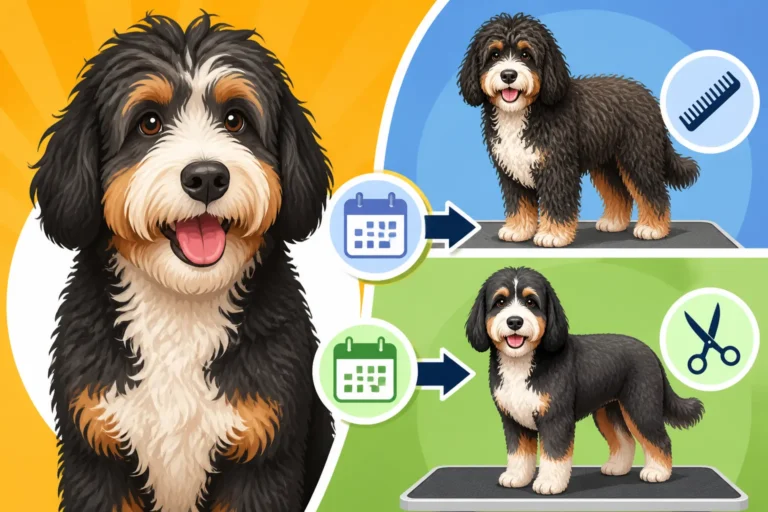
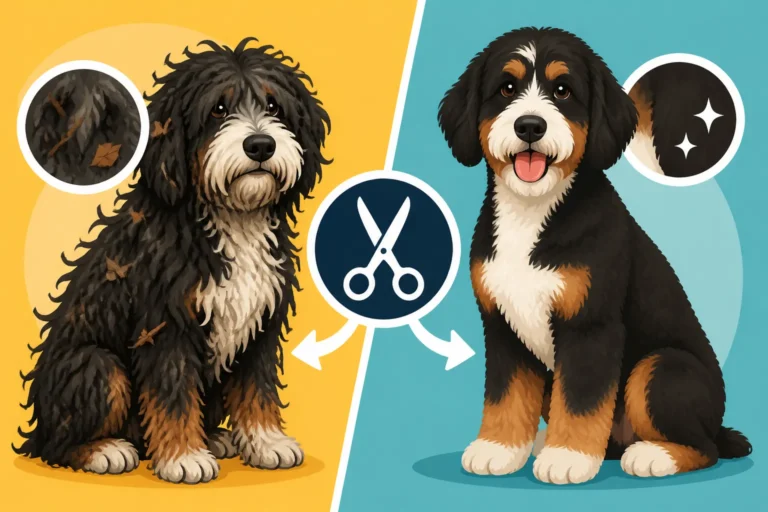
Think about that plush, often wavy or curly coat your Bernedoodle sports. It's fantastic for keeping them warm in chilly weather, but it acts like a thick winter blanket when the mercury climbs. Unlike humans who sweat all over, dogs primarily cool themselves by panting. Their dense coat traps heat close to their body, making it much harder for that panting mechanism to efficiently dissipate heat. Many Bernedoodles also inherit some of the more substantial bone structure and body mass from their Bernese side. Larger dogs simply have more mass to cool down, and their metabolic processes generate more heat. While the Poodle side might introduce a slightly less dense coat for some, the Bernese undercoat is often still present, especially in an F1 Bernedoodle. Even a professional groomer giving them a summer clip helps, but it doesn't entirely remove the insulation factor. This is also why some owners consider Whether a Shaved Bernedoodle Handles Heat Better.
Beyond their coat, some Bernedoodles might inherit a slightly shorter snout or a more compact facial structure, though usually not to the extreme of truly brachycephalic breeds like bulldogs. Even a subtle tendency towards a shorter muzzle can impact their ability to efficiently cool air as they pant. This combination of a heavy coat, a large body, and sometimes a less-than-optimal airway for rapid cooling means they're constantly fighting an uphill battle against rising temperatures, even on days that feel only mildly warm to us.
Recognizing the Silent Signs of Overheating
One of the scariest things about heatstroke in dogs is how quickly it can escalate. What starts as a bit of heavy panting can spiral into a life-threatening emergency in a matter of minutes. Owners often feel a pang of guilt, wishing they had known the subtle cues earlier. Don't beat yourself up; it's easy to miss, but crucial to learn. Early signs of heat stress include excessive panting – much heavier and faster than usual for the level of activity, especially if their tongue seems wider and darker. They might also appear restless, unable to settle, or seem unusually lethargic and slow. Their gums might become bright red, almost brick-like, or conversely, very pale. You might notice thick, sticky saliva, which indicates dehydration.
As the situation worsens, these signs become more severe. Your Bernedoodle might stagger, stumble, or even collapse. Vomiting and diarrhea are common, sometimes with blood. Their eyes might appear glazed, and their breathing could become labored and noisy. In the most critical stages, seizures and loss of consciousness can occur. Never wait for these advanced signs. If you suspect your Bernedoodle is too hot, immediate action is required. Knowing Signs a Bernedoodle Is Overheating is not just helpful, it's potentially life-saving.
The Environmental Traps of Summer Travel
It's not just the ambient air temperature that poses a threat; many elements of summer travel create dangerous microclimates for your Bernedoodle. One of the most insidious is the temperature of paved surfaces. Asphalt and concrete can absorb and retain heat, becoming dangerously hot, often 30 to 60 degrees Fahrenheit hotter than the air temperature. Imagine walking barefoot on a searing hot driveway – that's what your Bernedoodle's paw pads are experiencing. Burns can occur quickly, and the heat absorbed through their paws contributes directly to their overall body temperature.
Humidity is another silent killer. When the air is saturated with moisture, your Bernedoodle's primary cooling mechanism – evaporation from panting – becomes much less effective. The air already holds so much water vapor that less moisture can evaporate from their tongue and respiratory tract, meaning they can't shed heat as efficiently. A 75-degree day with high humidity can be far more dangerous than an 85-degree day with dry air. Consider also enclosed spaces: a car, even with windows cracked, can become an oven in minutes, as we’ll discuss shortly. Even seemingly benign spots like a sunny patch on a patio or a metal dog crate left in direct sunlight can turn into deadly heat traps. Always be aware of the immediate environment your Bernedoodle is in, not just the general forecast.
Navigating Summer Journeys: Risks and Realities
The desire to bring our furry family members along on adventures is strong, but the realities of summer heat demand careful consideration, especially for a breed like the Bernedoodle. Different travel methods present varying degrees of risk that every owner needs to understand before hitting the road, or the skies.
Car Travel: More Than Just a Joyride in the Heat
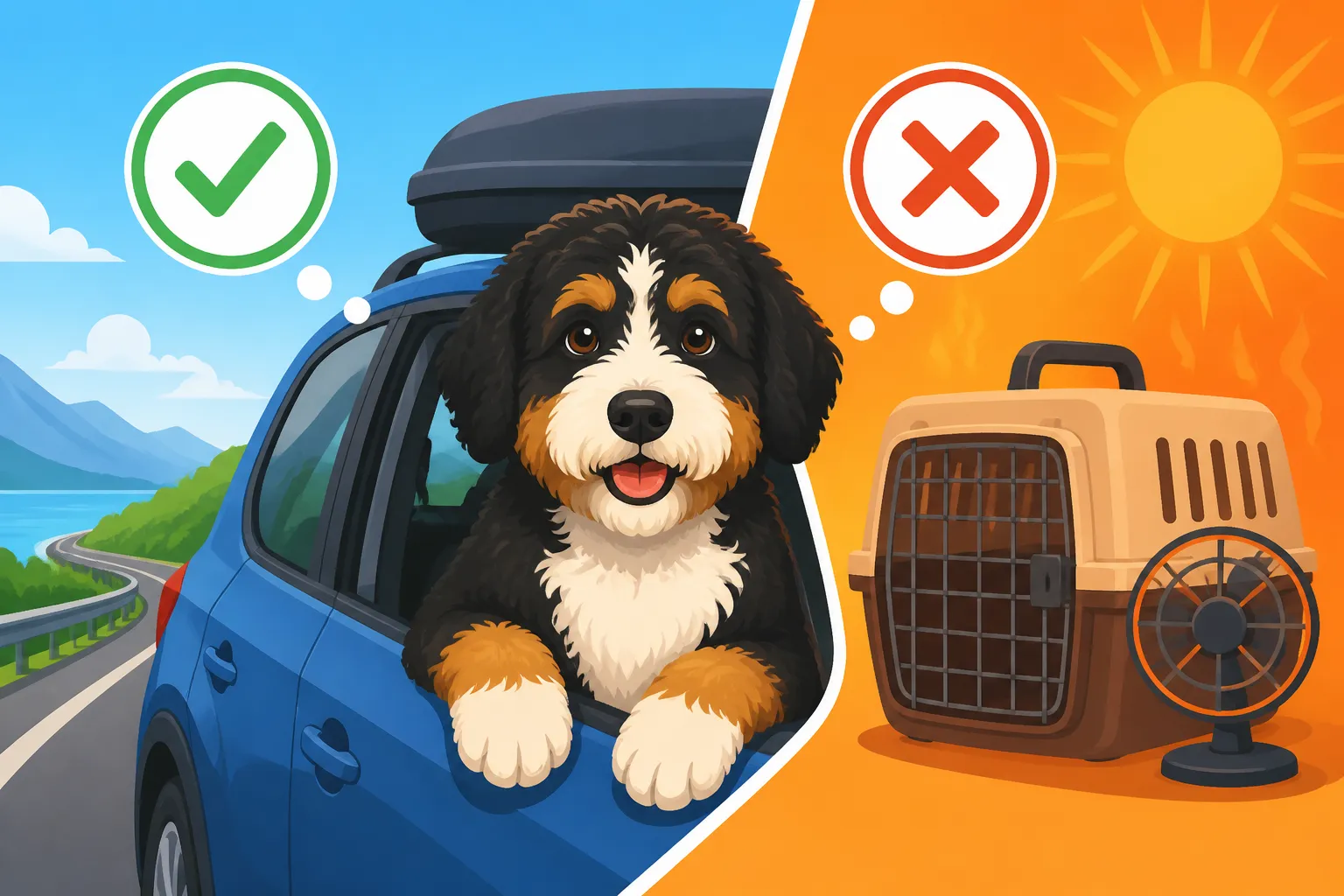
This is perhaps the most common and often underestimated danger during summer travel. While you might think "just a few minutes" in the car won't hurt, the temperature inside a vehicle can skyrocket at an alarming rate, even on relatively mild days. On an 80-degree day, the temperature inside a parked car can reach 100 degrees in just 10 minutes, and 120 degrees within 30 minutes. Cracking the windows does very little to mitigate this effect. Why a Bernedoodle Must Never Wait in a Parked Car is a lesson learned far too often the hard way. The enclosed space, often dark upholstery, and lack of air circulation create a death trap for any dog, but especially for a Bernedoodle with its insulating coat.
During active travel, while the air conditioning is running, your Bernedoodle is likely comfortable. However, challenges arise during stops. Do you leave the car running with AC? This isn't always feasible or safe. Do you take them out at every stop? What if the pavement is too hot? Long drives can also be dehydrating, and if your Bernedoodle gets car sick, stress can exacerbate their heat sensitivity. It’s imperative to plan your stops meticulously, ensuring fresh water is always available and your dog never, ever, sits in a stationary car without you and active cooling present.
Considering Air Travel and Other Public Transport Options
Air travel with a large Bernedoodle is a complex beast even in cooler weather, let alone summer. Most airlines have strict regulations regarding temperature limits for pets traveling in cargo, often refusing to transport animals when ground temperatures exceed a certain threshold (typically 85°F). This is for good reason: the cargo hold can become extremely hot and stressful, and the risk of heatstroke is profound. Even smaller Bernedoodles that might fit under the seat in the cabin still face the stress of travel, potential delays on the tarmac without adequate cooling, and the general disruption to their routine. Always check specific airline policies, which are often revised for pet safety.
Public transport like trains or buses can also be challenging. While often climate-controlled, the periods of waiting at stations or transferring can expose your Bernedoodle to harsh sun and heat. Overcrowding can limit air circulation, and the stress of new environments and confined spaces can increase their body temperature. Always assess the specific conditions of public transport and consider if it's truly the safest option for your Bernedoodle when summer temperatures are a concern.
When Not to Travel: Reading the Weather and Your Dog
Sometimes, the best decision is to simply stay home. If the forecast predicts extreme heat warnings, high humidity, or temperatures consistently above 80-85°F (and even lower for some individual Bernedoodles), traveling might be too risky. Your Bernedoodle's health and safety should always take precedence over your travel plans.
Learn to read not just the weather, but also your dog. Some Bernedoodles are more heat tolerant than others, though none are truly immune. An older Bernedoodle, one with existing health conditions (like heart or respiratory issues), or an overweight Bernedoodle will be at a much higher risk. If your Bernedoodle seems reluctant to move, is panting heavily just from walking a few steps in the yard, or generally seems uncomfortable before you even start the journey, it's a clear sign that today is not a travel day. Don't push it. There will be other, cooler times for adventures.
Smart Strategies for Safe Summer Travel
If summer travel with your Bernedoodle is absolutely necessary, or you’re simply heading out for a short excursion, preparation is everything. It’s not just about packing bags; it’s about a comprehensive strategy to combat the heat and ensure their well-being at every turn.
Planning Your Route and Timing for Cooler Moments
The sun is at its strongest in the middle of the day, typically from 10 AM to 4 PM. This is the prime time to avoid any strenuous activity or prolonged exposure for your Bernedoodle. If you absolutely must travel, aim to do so during the cooler parts of the day: early morning or late evening. Imagine a road trip where you hit the highway at 5 AM, stop for a long, cool break during midday, and then resume travel after the sun begins to set. This minimizes exposure during the hottest hours.
When planning stops, look for places with shade, grassy areas, and access to fresh water. Avoid rest stops with vast expanses of black asphalt. Many apps or online resources can help you find dog-friendly parks or areas where you can safely stretch your Bernedoodle’s legs. Always feel the pavement with your hand for at least five seconds; if it’s too hot for your hand, it’s too hot for their paws. Remember, Whether a Bernedoodle Should Be Walked in Summer is not a simple yes or no; it's about timing and conditions.
Essential Gear and Hydration Habits on the Go
Packing for your Bernedoodle in summer requires more than just food and toys. Hydration is non-negotiable. Always carry a plentiful supply of fresh water and a collapsible bowl. Even if you think you'll find water, don't risk it. Offer water frequently, even if they don't seem thirsty.
Cooling aids can be lifesavers. A cooling vest, which you soak in water and then put on your dog, works by evaporative cooling. Brands like Ruffwear or The Chillout range often found on Chewy have excellent options. Cooling mats that activate with pressure or simply by being cool to the touch can be invaluable for rest stops or in your destination. Damp towels can be draped over their back or under their armpits to help bring down core temperature. A portable, battery-operated fan can also provide much-needed airflow in a confined space, like a crate in the car, during a break. You can find many of these cooling products on Amazon. Some owners even pack a small spray bottle to mist their Bernedoodle's coat, though be cautious not to soak them completely if they don't have good airflow, as this can trap heat.
Here's a quick comparison of popular cooling methods for summer travel:
| Cooling Method | Description | Pros | Cons |
|---|---|---|---|
| Fresh Water | Offered frequently, in a collapsible bowl. | Essential, readily available, prevents dehydration. | Needs constant refilling, can be messy. |
| Cooling Vest | Soaked in water, worn by dog; uses evaporative cooling. | Effective for prolonged cooling, covers large surface area. | Needs to be re-wet, can be bulky, some dogs dislike wearing it. |
| Cooling Mat | Gel-filled or water-activated, dog lies on it. | Provides direct contact cooling, can be portable. | Effectiveness diminishes over time, heavy if water-filled. |
| Damp Towels | Wet towels placed on strategic body parts (neck, armpits, groin). | Quick, easy, uses existing supplies. | Dries out quickly, not as sustained as a vest. |
| Portable Fan | Battery-operated fan creating airflow. | Improves air circulation, helps evaporation from panting. | Requires batteries, limited range, can be noisy. |
| Paw Protection | Dog booties or paw wax for hot pavement. | Protects sensitive paw pads from burns. | Dogs may resist wearing booties, can be hot themselves if poorly ventilated. |
Preparing for the Unexpected: Emergency Protocols
Despite all precautions, emergencies can happen. Being prepared can make all the difference. Before you leave, locate the nearest emergency veterinary clinics along your travel route and at your destination. Save their numbers in your phone and know their operating hours.
Create a "doggie emergency kit" that includes:
- A well-stocked first aid kit: include antiseptic wipes, gauze, vet wrap, and any regular medications your Bernedoodle takes.
- Cooling supplies: Extra water, ice packs (wrapped in cloth to prevent direct contact burns), cooling towels.
- Electrolyte solution: Discuss with your vet beforehand which dog-safe electrolyte solutions might be appropriate in case of severe dehydration or vomiting, like some available through vet offices or specialized pet retailers like Ollie.
- Your vet's contact info and copies of your Bernedoodle's vaccination records.
If you suspect heatstroke, act immediately:
- Move them to a cooler area: Get them into the shade, an air-conditioned car, or indoors.
- Apply cool (not cold or icy) water: Focus on their paws, belly, groin, and neck. Do NOT use ice-cold water, as this can constrict blood vessels and hinder cooling, or even induce shock.
- Use fans: Direct airflow onto their wet body to aid evaporative cooling.
- Offer small amounts of water: Don't force them to drink large quantities if they are severely distressed or nauseous.
- Get to an emergency vet immediately: Even if your Bernedoodle seems to improve, internal damage can be occurring, and professional medical attention is critical. Call ahead to let them know you're coming.
Remember, the goal is always prevention. By understanding your Bernedoodle's vulnerabilities, planning meticulously, and being prepared for any eventuality, you can significantly reduce the risks associated with summer travel and ensure that any journey remains a happy, safe experience for your beloved companion.
Disclaimer
This article is for general informational purposes only and does not constitute professional advice. Laws, prices and regulations vary by location and change over time. Consult a qualified professional for guidance on your specific situation.