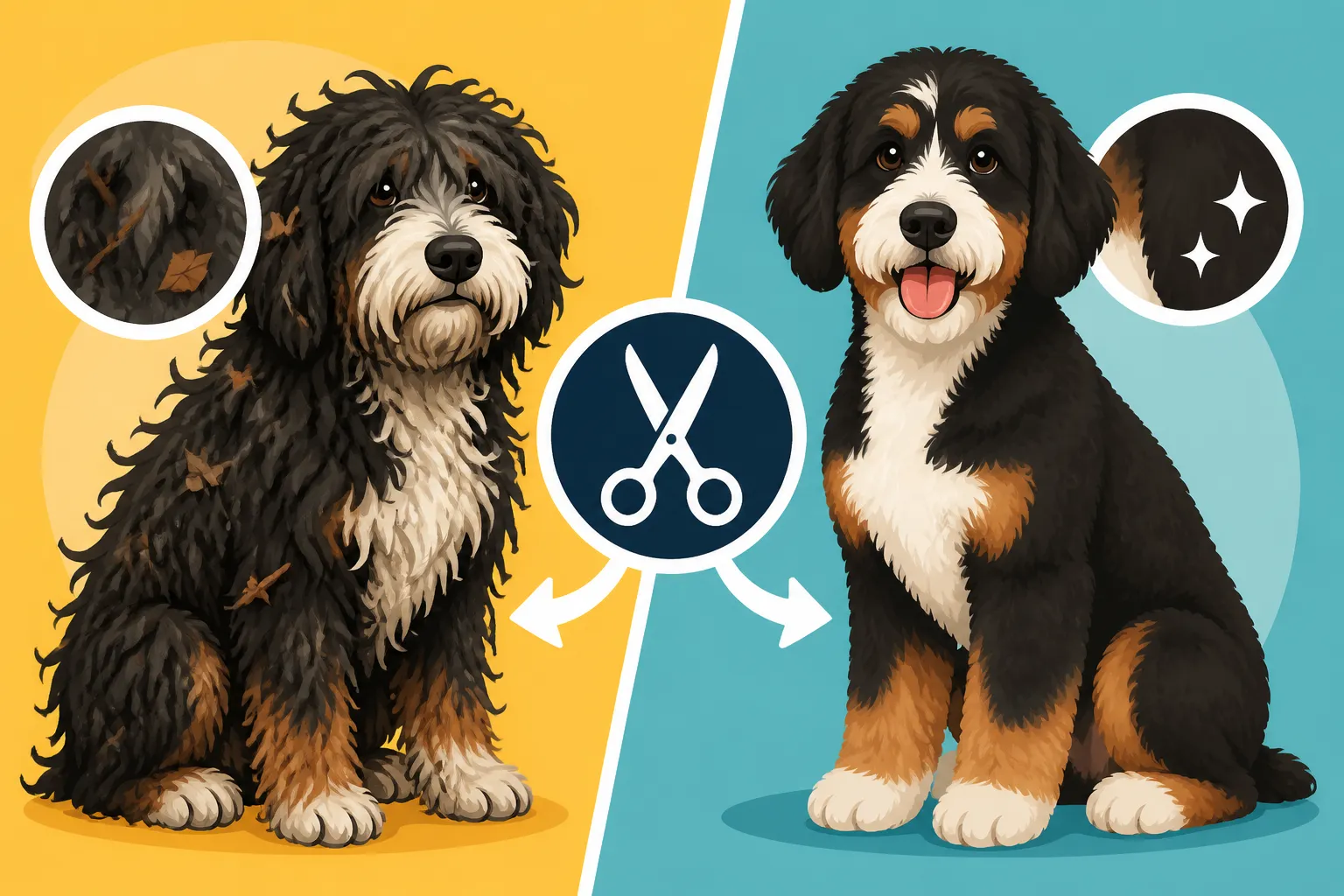
Whether a Matted Bernedoodle Must Be Shaved Down
The dread of finding a mat in your Bernedoodle's glorious, fluffy coat is a familiar, gut-wrenching feeling for many of us. You start with a little tangle, think you can brush it out, and before you know it, it feels like a solid felted brick. It's easy to feel guilt or even despair, especially when you're faced with the idea that the only solution might be to shave down that beautiful coat. But sometimes, a shave-down isn't just an option; it's the kindest, most necessary path for your furry friend's health and comfort. This guide will walk you through when a shave-down is unavoidable, why it happens, and how to prevent it in the future.
Understanding the Bernedoodle Coat and Matting
Bernedoodles are beloved for their stunning, often low-shedding coats, a beautiful mix inherited from their Bernese Mountain Dog and Poodle parents. But with that beauty comes a unique challenge: the tendency to mat, sometimes severely. It's not just a superficial aesthetic issue; mats can quickly become a serious health concern if not addressed promptly.
The Anatomy of a Bernedoodle Mat
Imagine a Poodle's dense, curly, non-shedding hair interwoven with the Bernese's thick, double coat, particularly their soft, plentiful undercoat. That's the Bernedoodle's heritage right there. While many Bernedoodles lean towards the Poodle's wavy or curly, lower-shedding coat The Wavy Coat Most Bernedoodles Carry, they often retain a good amount of that Bernese density. This combination is a perfect storm for matting.
A mat isn't just a simple tangle you can easily finger-comb out. It's a dense, tightly packed clump of fur that has become intertwined and felted, often right down to the skin. It happens when loose hair, which would normally shed out in a single-coated dog, gets caught in the surrounding live hair. This is particularly true for The Coat a Bernedoodle Gets From Two Heavy Coated Parents. The friction from walking, lying down, playing, or even just breathing can cause these hairs to knot together tighter and tighter, forming a solid mass. Areas like behind the ears The Mat That Forms Where a Bernedoodle's Ear Folds, armpits Mats in a Bernedoodle's Armpits and Britches, groin, and "britches" (the fur on their hind legs) are notorious for developing mats because these are high-friction zones. Add a bit of moisture from a swim, rain, or even just humidity, and those mats can tighten up even more, forming almost instantly.
Why Mats Are More Than Just Cosmetic
It's easy to think of mats as merely an unsightly nuisance, but the reality is far more serious for your dog. Beyond looking a bit scruffy, severe matting can lead to a host of painful and dangerous health issues.
Firstly, mats pull on the skin. Imagine having your hair constantly tugged at from multiple directions; it's uncomfortable, right? For a dog, this constant pulling can be incredibly painful, making even simple movements like walking or stretching excruciating. Secondly, mats create a breeding ground for bacteria and parasites. The matted fur traps moisture and dirt against the skin, creating a warm, damp environment perfect for skin infections, hot spots, and yeast infections. These can quickly become inflamed, itchy, and even ooze, causing your dog immense discomfort and requiring veterinary intervention. I've seen countless Bernedoodles come into the salon where, once the matting is shaved off, angry red skin or weeping hot spots are revealed underneath. It's a shocking sight and a stark reminder that what's happening beneath that beautiful coat is often much worse than you can see.
Furthermore, severe matting can restrict your Bernedoodle's movement. A large mat in an armpit, for example, can make it painful or impossible for them to fully extend their leg. Mats on the tail can restrict wagging, and mats around the eyes or mouth can interfere with their vision or ability to eat and drink comfortably. In extreme cases, mats can even cut off circulation, leading to tissue damage. This isn't just about how your Bernedoodle looks; it's about their quality of life, their physical comfort, and their overall health. Whether a Matted Bernedoodle Is Painful to Handle really gets to the heart of this issue.
Assessing the Severity of Matting
When you discover matting, your first instinct might be to grab a brush and try to work it out. While this can sometimes be effective for minor tangles, it's crucial to honestly assess the severity of the matting before attempting any at-home de-matting, for your dog's sake.
When a Mat Can Be Combed Out (and When It Can't)
The "comb test" is your best friend here. Take a fine-toothed metal comb, like a greyhound comb, and try to gently comb through your Bernedoodle's coat, starting from the skin and working outwards. If the comb glides through the hair from root to tip with minimal resistance, you're in good shape for brushing. If the comb snags or stops entirely, even with gentle pressure, you're dealing with a mat.
Small, surface-level mats that haven't tightened down to the skin might be salvageable with patience, a good detangling spray, and a slicker brush. You'll need to work slowly, holding the base of the mat to prevent pulling on the skin, and tease apart small sections at a time. This can take a significant amount of time and effort, especially on a Bernedoodle's dense coat. You might find useful products for this at Chewy or Amazon. However, if the mat feels dense, solid, and extends down to the skin, trying to comb it out will likely cause your dog immense pain, stress, and potentially skin damage. It's a painful process that can break hair, irritate the skin, and turn your dog off grooming entirely. Remember, your Bernedoodle's comfort and trust are paramount.
The "Pelted" Coat: Beyond Saving
Sometimes, the matting progresses to a point where the coat becomes "pelted." This isn't just individual mats; it's when multiple mats merge, forming a solid, unforgiving shell of fur across large sections or even the entire body. A pelted coat feels like a rigid, thick blanket covering the dog, separate from the actual skin beneath. You won't be able to get your fingers or a comb through it to the skin.
If your Bernedoodle's coat has reached this stage, attempting to brush it out is not only futile but genuinely cruel. The fur is so tightly bound that any pulling on the top layer will drag on the sensitive skin underneath, causing excruciating pain, bruising, and even tearing of the skin. It can also cause clipper burn if the groomer tries to go under it without the correct blade and technique. For a pelted coat, there is no humane option other than a complete shave-down. It’s a drastic step, yes, but it’s the only way to relieve your dog from constant discomfort and potential health risks. No amount of detangler Whether Detangler Is Worth It on a Coat This Thick or brushing will fix this; it's simply too far gone for anything else.
The Shave Down Decision: Why It's Often Necessary
Making the decision to shave down your Bernedoodle can be tough. We all love their fluffy, flowing coats, and the idea of them looking stark or "naked" can be hard to accept. However, when faced with severe matting, this decision shifts from cosmetic preference to essential care.
Prioritizing Comfort Over Appearance
It's natural to feel a pang of sadness or even guilt when you realize your Bernedoodle needs a full shave. You might worry about their appearance, what others will think, or feel like you've failed them somehow. But I want to reassure you: choosing a shave-down for a severely matted dog is a testament to your love and commitment to their well-being. You are prioritizing their comfort, health, and happiness over their looks. That beautiful coat will grow back, and it will grow back healthier once the skin underneath has had a chance to breathe and recover.
Imagine the relief your dog will feel once that heavy, painful, matted shell is gone. They'll be able to move freely, scratch without causing further irritation, and their skin will finally be able to get air and light. This fresh start is incredibly beneficial for their skin health, allowing any underlying issues like hot spots or infections to heal properly. Often, once shaved, owners notice a dramatic improvement in their dog's demeanor – they're more playful, less irritable, and visibly more comfortable. Many dogs will actually thank you with extra wiggles and happy sighs! This is especially true for those common problem areas like armpits, bellies, and behind the ears, where mats often go unnoticed until they're very severe.
The Process of a Humane Shave Down
A full shave-down for a severely matted Bernedoodle is not a quick or simple haircut. It's a delicate and often challenging procedure that requires the expertise of a professional groomer. Attempting to shave a pelted coat yourself with standard clippers or, worse, scissors, can be incredibly dangerous. Pet grooming clippers designed for dematting use very short blades that can get under the felted fur. Even with these tools, the groomer must work slowly and carefully to avoid cutting the skin, which can be thin and stretched taut beneath the mats.
A professional groomer will use specific techniques and safety precautions. They'll likely start with the shortest possible blade that can get under the matting, lifting the matted coat away from the skin as they go. This process can take several hours, depending on the size of your Bernedoodle and the extent of the matting. Many times, they'll uncover skin irritation, bruises, or infections that were hidden by the fur. Don't be surprised if your Bernedoodle looks a bit patchy or even pink underneath – this is normal, and it's the first step towards healing. Your groomer might also recommend a soothing bath after the shave to help calm any skin irritation. Always trust your groomer's judgment; they are trained to handle these situations humanely and safely. Sometimes, a severely matted dog may need sedation from a vet for the process if they are too stressed or in too much pain to tolerate it safely. This highlights just how serious and painful matting can become. You might find that What a Matted Bernedoodle Costs to Shave can be higher due to the time and specialized skill required.
Preventing Future Matting: A Proactive Approach
Once your Bernedoodle has been shaved down and is on the path to recovery, the goal is to prevent severe matting from ever happening again. This requires a consistent, proactive approach to grooming.
Daily Brushing: Your First Line of Defense
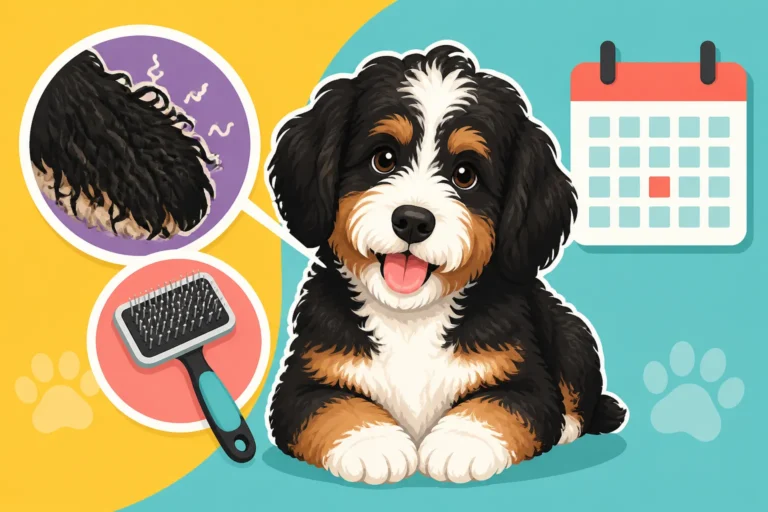
Regular, thorough brushing is absolutely non-negotiable for a Bernedoodle. I can't stress this enough! It's not enough to just skim the top of the coat; you need to get down to the skin to prevent mats from forming at the base of the hair shaft. This technique is called Line Brushing a Bernedoodle to the Skin. It involves parting the hair and brushing small sections, ensuring your brush reaches all the way to the skin.
You'll need the right tools for the job. A good quality slicker brush and a sturdy metal comb are essential The Brushes a Bernedoodle Owner Actually Needs. Start by using the slicker brush to work through the coat, then follow up with the metal comb to ensure there are no tangles or knots you've missed. Pay special attention to those high-friction areas we discussed earlier: behind the ears, under the collar, armpits, belly, and around their hindquarters.
Make brushing a positive experience for your Bernedoodle from a young age. Use treats and praise, and keep sessions short initially if they're not used to it. Aim for daily brushing, especially if your Bernedoodle has a The Curly Coat Bernedoodle and Its Upkeep or is going through a coat change phase, which typically happens around The Month a Bernedoodle Puppy Starts Matting Daily. Consistency is key to keeping those mats at bay. You can find excellent brushing tools on platforms like Amazon and Chewy.
Professional Grooming Schedule
Even with diligent home brushing, professional grooming is a vital part of Bernedoodle coat care. Their dense, often curly coats benefit immensely from regular trims, baths, and blow-outs that are difficult to replicate at home.
I recommend scheduling professional grooming appointments every 6 to 8 weeks, at minimum. This regular schedule allows groomers to trim the coat to a manageable length, thoroughly wash and dry them (which helps prevent new mats from forming), and catch any developing mats before they become severe. Discuss your Bernedoodle's coat type and your grooming routine with your professional groomer. They can advise you on the best length and style to keep your dog comfortable and mat-free. If you find matting is a constant battle, ask for a shorter overall clip, especially during warmer months. The Clip a Bernedoodle Owner Should Ask For in July can make a huge difference in maintenance. While professional grooming comes with a cost The Seventy to Hundred Fifty Dollar Bernedoodle Groom, it's an investment in your Bernedoodle's health and comfort, and far less expensive than repeated emergency shave-downs. Think of it as preventative care! Over a year, these costs can add up, but they are crucial Six Hundred to Twelve Hundred a Year Grooming a Bernedoodle.
Home Care Techniques and Products
Beyond daily brushing and professional grooming, a few other home care techniques and products can make a big difference in preventing mats.
- Bathing and Drying: When you bathe your Bernedoodle at home, always brush them thoroughly before the bath to remove any existing tangles. Condition their coat afterward. Most importantly, ensure their coat is completely dry after a bath. Damp fur is a matting magnet. Investing in a high-velocity force dryer Whether a Force Dryer Is Worth Buying for a Bernedoodle can significantly cut down drying time and help straighten the hair, making it less prone to matting. You can find these on Amazon.
- Detangling Sprays: Keep a good quality detangling spray on hand. These can help loosen minor tangles and make brushing easier. Spray a light mist over the coat before brushing, especially in knot-prone areas.
- Preventative Trimming: Learn to do some basic trimming at home. Keep the hair around their eyes, mouth, and paws trimmed short. These areas can easily collect debris and become matted. Many Bernedoodle owners learn to use grooming scissors safely for these sensitive spots.
- Avoiding Friction: Be mindful of harnesses and collars. Ill-fitting or constantly worn items can cause friction and lead to matting, especially under their arms or around their neck. Regularly check these areas.
By combining consistent home care with regular professional grooming, you can ensure your Bernedoodle's coat remains healthy, beautiful, and mat-free, allowing them to live their happiest, most comfortable life.
| Matting Severity | Description | Recommended Action | Grooming Professional Recommended |
|---|---|---|---|
| Minor Tangles | Loose knots on the surface, easily separated with fingers or a comb. | Gentle brushing, detangling spray, regular home maintenance. | Optional (for maintenance) |
| Moderate Mats | Tighter clumps that snag a comb, pulling on the skin if tugged. | Careful, patient de-matting with specific tools, or professional intervention. | Highly Recommended |
| Severe Mats | Dense, felted clumps close to the skin, causing pain and skin irritation. | Professional shave-down is almost always necessary. | Essential |
| Pelted Coat | A solid, unforgiving shell of matted fur covering large areas. | Immediate professional shave-down. No other humane option. | Absolutely Essential |
Disclaimer
This article is for general informational purposes only and does not constitute professional advice. Laws, prices and regulations vary by location and change over time. Consult a qualified professional for guidance on your specific situation.