Whether Bowl Height Matters for a Deep Chested Bernedoodle
As a Bernedoodle owner, you've probably heard all sorts of advice about how to feed your beloved furry family member, especially when it comes to the height of their food and water bowls. It's a question that keeps many of us up at night, particularly with the worry of serious health conditions like bloat in our wonderful, deep-chested companions. This guide is here to unravel the complexities surrounding bowl height, digestive health, and how to best support your Bernedoodle’s well-being.
Understanding Bloat in Deep-Chested Dogs
Let's start by talking about bloat, or more precisely, Gastric Dilatation-Volvulus (GDV). It's a terrifying reality for owners of large and deep-chested breeds, and understanding it is the first step in prevention. You might feel overwhelmed by all the information out there, and it’s completely normal to feel anxious about such a sudden and life-threatening condition.
What is Gastric Dilatation-Volvulus (GDV)?
Gastric Dilatation-Volvulus, or GDV, is an acute, life-threatening condition where a dog's stomach fills with gas and then twists on its axis. Imagine your stomach as a balloon that inflates and then rotates, pinching off both the entrance and exit. This twist traps the gas, food, and fluid, preventing anything from passing through. The pressure builds, restricting blood flow to the stomach and other organs, including the spleen, and even affecting breathing and cardiac function. It's a medical emergency that requires immediate veterinary intervention, often surgery, and even with prompt treatment, the mortality rate can be significant. The speed at which it can develop, going from a perfectly happy dog to one in critical condition within hours, is truly frightening.
Why Bernedoodles Are at Higher Risk
Bernedoodles, especially standard Bernedoodles that often inherit the deep chest conformation from their Bernese Mountain Dog parent, fall into the "at-risk" category for GDV. It's not just their size; it's that particular body shape – a large, deep chest combined with a relatively narrow waist – that seems to predispose them. Think about a long, narrow balloon versus a round one; the long, narrow one has more room to twist. The Bernese Mountain Dog side of our Bernedoodles brings with it a genetic predisposition to this condition, a legacy we, as owners, need to be acutely aware of. While the Poodle side might offer some genetic diversity, it doesn't entirely negate this risk. It's a heavy burden to carry, knowing that our goofy, loving companions could face this. If you’re curious about specific risk factors, our article on The Chest That Puts a Standard Bernedoodle at Bloat Risk goes into more detail.
Recognizing the Urgent Signs of Bloat
Knowing the signs of bloat is absolutely critical, as early intervention dramatically improves the chances of survival. You might initially dismiss subtle changes as just an upset stomach, but with a deep-chested breed like a Bernedoodle, you can't afford to wait. Look for a distended abdomen, which might appear tight and swollen, especially on their left side, although it can be subtle at first. Restlessness and pacing are common, as the dog tries to get comfortable but can't. They might attempt to vomit but only bring up foamy saliva or nothing at all (this is called non-productive retching). Excessive drooling, increased heart rate, difficulty breathing, weakness, pale gums, and collapsing are all severe indicators. If you see even one or two of these signs, especially the non-productive retching or a visibly swollen belly, it's not a wait-and-see situation. Get to an emergency vet immediately. Every minute truly counts. For more information on what this looks like, check out The Retching That Means a Bernedoodle Has Torsed.
The Debate: Elevated Bowls and Bloat Risk
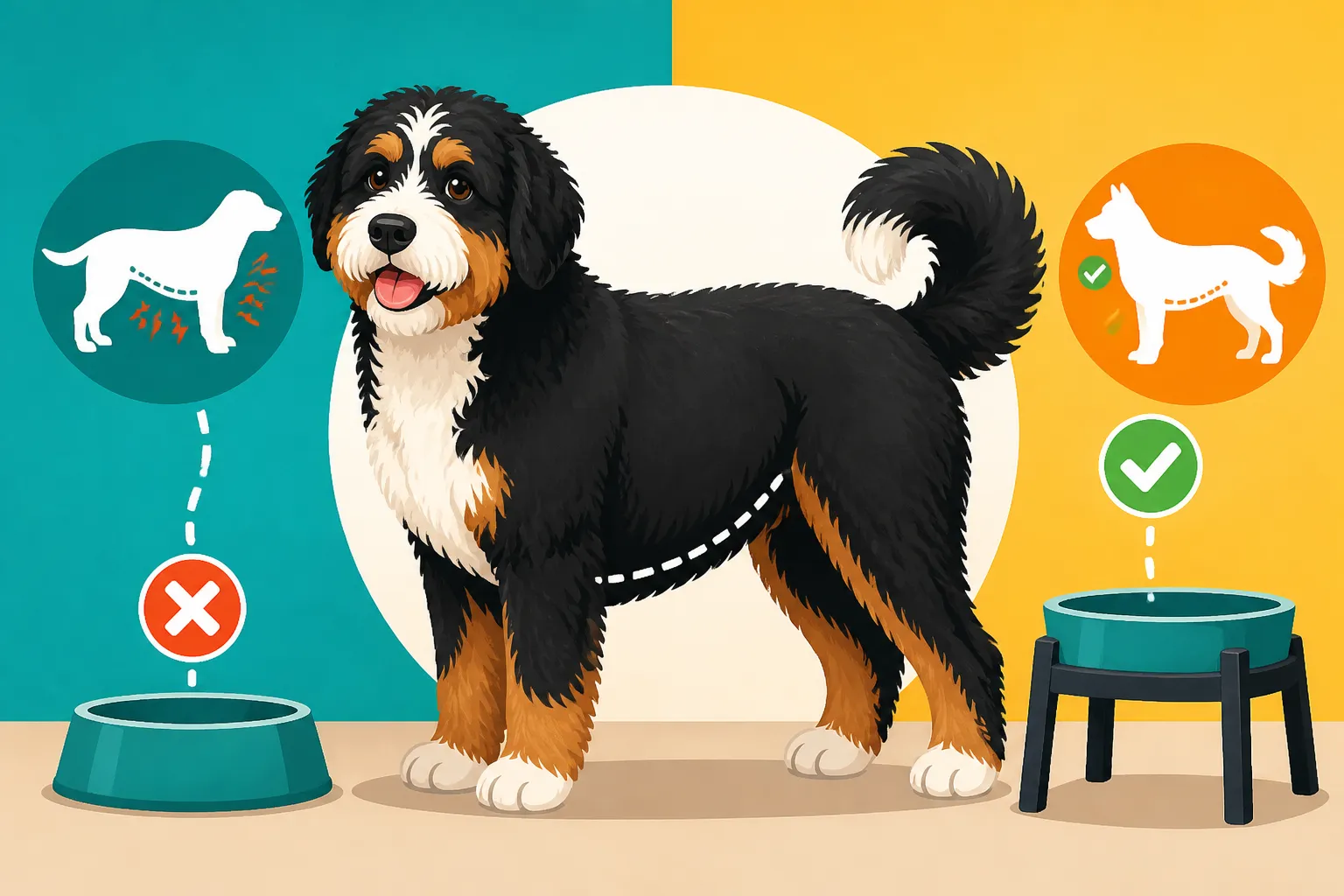
For years, it was almost universally accepted wisdom that elevated bowls were a good idea for large, deep-chested dogs. The thought was that if they didn't have to bend their necks down as far, they'd swallow less air and therefore reduce their risk of bloat. It made intuitive sense, right? But sometimes, common wisdom isn't quite right.
Historical Advice and Its Origins
The idea that raised bowls prevent bloat has been around for a long time, gaining traction decades ago among breeders and veterinarians. The theory seemed sound: dogs that eat from the floor often gulp down their food quickly, potentially swallowing more air (aerophagia) in the process. This swallowed air was believed to be a significant contributing factor to gastric distension, which could then lead to the stomach twisting. Additionally, for large breeds, bending down to eat was thought to put strain on their neck and joints. So, providing an elevated feeding station felt like a compassionate and preventive measure, offering both digestive and orthopedic benefits. Many of us grew up hearing this advice, and it's been passed down through generations of dog owners.
Modern Research and Conflicting Findings
However, as veterinary science advanced, researchers began to scrutinize this long-held belief. What they found, much to the surprise of many, was contradictory to the established advice. A large, multicenter study conducted by Purdue University in the late 1990s, which is often cited, actually suggested that feeding from elevated bowls might increase the risk of GDV in large and giant breeds. The exact mechanisms aren't fully understood, but some theories suggest that elevated feeding might encourage dogs to eat faster, or that the angle of the esophagus might change, allowing more air into the stomach.
It’s important to note that this research isn't the absolute final word, and the scientific community is always learning more. The findings challenged a deeply ingrained belief, causing a lot of confusion and concern among owners. The takeaway is that the simple solution of "elevated bowls prevent bloat" isn't as clear-cut as we once thought, and in some cases, it might even be counterproductive. It certainly validated the frustration many owners felt when trying to do the right thing, only to find the science telling a different story.
Practical Considerations Beyond Bloat
While the bloat risk is a major concern, it's not the only factor when considering bowl height. There are other practical benefits and drawbacks to think about for your Bernedoodle.
Comfort for Senior or Arthritic Dogs: For older Bernedoodles struggling with arthritis in their neck, back, or elbows, bending down can be genuinely painful. Imagine trying to eat your dinner off the floor if you had a stiff neck or sore knees! In these cases, a slightly raised bowl can provide immense relief and make mealtime much more comfortable. Our article Managing Arthritis in an Old Bernedoodle touches on how to keep your senior companion comfortable, and this certainly applies to feeding arrangements.
Ease of Swallowing for Dogs with Megaesophagus: Some dogs have a condition called megaesophagus, where their esophagus is enlarged and loses its ability to move food to the stomach efficiently. For these dogs, eating from an elevated position, or even a vertical position using a special 'Bailey chair,' is crucial to help gravity get the food down and prevent aspiration pneumonia. This is a specific medical need, not a general recommendation.
Hygiene and Cleanliness: Elevated bowls can sometimes keep the feeding area tidier, especially if your Bernedoodle is a messy eater who tends to push food around the floor. It can also prevent pests from accessing the food as easily. For us humans, it means less bending down to clean up after meals, which is a minor but welcome perk! You can find a variety of elevated feeders on Chewy or Amazon that are designed for easy cleaning.
Preventing Fast Eating (or Not): While the Purdue study suggested elevated bowls might encourage faster eating, some owners find that using slow feeder bowls, whether elevated or on the floor, can help. Slow feeder bowls have built-in ridges or mazes that force your Bernedoodle to eat more slowly, regardless of height. This can be a game-changer for a Bernedoodle that inhales its food in seconds.
Pros and Cons of Raised Feeding Bowls
Deciding on the right bowl height for your Bernedoodle isn't a simple yes or no answer. It involves weighing potential benefits against the concerns, and understanding that what works for one dog might not be ideal for another. It's a real head-scratcher when you're just trying to do your best for your furry friend!
Potential Benefits for Certain Conditions
Even with the bloat concerns, there are specific scenarios where an elevated bowl might be genuinely beneficial for your Bernedoodle:
- Orthopedic Support for Senior Dogs: As Bernedoodles age, they can develop conditions like arthritis or spondylosis in their spine, hips, or elbows. Bending their large bodies down to floor level multiple times a day can exacerbate pain and stiffness. An elevated bowl allows them to eat in a more natural, upright position, reducing strain on their joints and neck. It’s about making their daily life as comfortable as possible. You might also find this helpful for a Bernedoodle recovering from an injury or surgery where minimizing movement is key. For senior dogs, making small adjustments like this can significantly improve their quality of life. Consider if your older Bernedoodle exhibits signs of discomfort when bending to eat, as this could be a strong indicator that a raised bowl would help.
- Aspiration Risk Reduction: For dogs prone to regurgitation or those with specific esophageal motility disorders (like megaesophagus, mentioned earlier), eating from a raised position can help gravity assist the food down the esophagus and into the stomach. This minimizes the risk of food being inhaled into the lungs, which can lead to serious respiratory issues like aspiration pneumonia. This isn't a common concern for most healthy Bernedoodles, but if your vet has diagnosed such a condition, an elevated feeder could be medically necessary.
- Improved Posture for Tall Dogs: Even healthy, very tall standard Bernedoodles might find bending all the way to the floor slightly awkward or uncomfortable over time. A properly sized elevated feeder can promote better posture during meals, potentially preventing unnecessary strain on their neck and shoulders. It’s less about a critical medical need and more about long-term comfort for their large frame.
Concerns and Arguments Against Elevated Bowls
The primary argument against elevated bowls, as we discussed, stems from the research linking them to an increased risk of bloat (GDV) in certain breeds.
- Increased Bloat Risk (GDV): The most significant concern is the study indicating a higher incidence of bloat in large and giant breeds fed from elevated bowls. While the exact reason remains debated, some theories suggest that elevated bowls might allow dogs to eat faster, swallowing more air, or that the mechanics of swallowing from a raised position could alter gastric dynamics in a way that promotes twisting. This finding sent shockwaves through the veterinary community and prompted many vets to reverse their previous recommendations. It leaves many owners in a tricky spot, wanting to do the best but facing conflicting information.
- Faster Eating and Air Swallowing: Some argue that elevated bowls make it easier for dogs to gulp down their food at a frantic pace, especially if they are enthusiastic eaters. Rapid eating, regardless of bowl height, is a known risk factor for bloat because dogs tend to swallow excessive amounts of air along with their food. If your Bernedoodle is a speed eater, focusing on solutions like a slow-feeder bowl or portion control might be more impactful than bowl height alone. You can find excellent slow-feeder options for large dogs on Amazon.
- Expense and Stability: Elevated feeders can be more expensive than simple floor bowls, especially sturdy, well-made ones that won't tip over under the weight of a hungry Bernedoodle. Some flimsier designs might wobble, causing anxiety for your dog or spilling food. You want something robust if you choose to go this route, capable of handling a ninety-pound Bernedoodle.
When a Raised Bowl Might Be Helpful
Given the conflicting information and individual dog needs, when could an elevated bowl be a good choice for your Bernedoodle?
- Geriatric or Arthritic Bernedoodles: If your older Bernedoodle visibly struggles to bend down to eat or drink due to joint pain, a raised bowl can offer significant relief and improve their comfort during meal times. The benefit to their quality of life in this specific situation often outweighs the potential, debated bloat risk. It's a conversation to have with your vet, prioritizing your individual dog's current needs.
- Dogs with Diagnosed Esophageal Issues: For Bernedoodles with confirmed medical conditions like megaesophagus, where gravity is needed to aid food transit, an elevated feeding position is medically recommended by veterinarians. This is a specific health management strategy, not a general dietary one.
- Post-Surgical Recovery: Following certain surgeries, a dog might be unable to bend or put weight on certain limbs. An elevated bowl can temporarily provide a comfortable eating position during recovery, under veterinary guidance.
Ultimately, the decision isn't just about bloat; it's about considering your Bernedoodle’s age, health conditions, and individual eating style.
Here's a quick comparison to help you visualize the considerations:
| Feature | Floor-Level Bowl | Elevated Bowl |
|---|---|---|
| Bloat Risk | Current research suggests potentially lower risk | Current research suggests potentially higher risk |
| Joint Comfort | Requires bending, can strain neck/back/elbows | Reduces bending, improves comfort for arthritic dogs |
| Eating Speed | Can encourage gulping, but depends on dog | Might encourage faster eating for some dogs |
| Hygiene | Closer to floor, potential for more mess | Keeps food off floor, potentially tidier |
| Stability | Generally stable, less prone to tipping | Depends on design, ensure heavy, stable base |
| Cost | Generally less expensive | Can be more expensive for sturdy designs |
| Medical Need | Standard for healthy dogs | Beneficial for specific conditions (e.g., megaesophagus) |
Making an Informed Decision for Your Bernedoodle
Navigating all this information can feel like a maze, especially when you're trying to figure out the best approach for your specific Bernedoodle. The key is to make a truly informed decision, combining general knowledge with your dog's unique needs and, most importantly, professional veterinary advice.
Consulting Your Veterinarian
This is perhaps the most crucial step. Your veterinarian knows your Bernedoodle's full health history, breed predispositions, and can assess their current condition. They are the best resource for personalized advice. Don't hesitate to bring up the elevated bowl debate during your next check-up.
Discuss the pros and cons, specifically mentioning the current research on bloat risk. If your Bernedoodle is a senior struggling with Arthritis in a Bernedoodle at Eight or has other orthopedic issues, your vet can help you weigh the comfort benefits against any potential bloat risk. They might suggest a compromise, such as a slightly raised bowl that minimizes bending but doesn't elevate the food excessively. Or, they might recommend focusing on other bloat prevention strategies entirely, which we'll discuss next. Your vet can also advise on things like Whether Anesthesia Is Riskier on a Ninety Pound Bernedoodle if a bloat-related surgery were ever needed, which might influence preventive measures.
Observing Your Dog's Eating Habits
Beyond what the research says, observe your own Bernedoodle. How do they eat?
- Are they a "gulper"? Does your Bernedoodle inhale their food in seconds, swallowing a lot of air in the process? If so, addressing the eating speed is probably more critical than bowl height. A slow-feeder bowl, regardless of whether it's on the floor or elevated, can force them to slow down. You can find many options on Chewy designed to make mealtime last longer.
- Do they seem uncomfortable? Watch your Bernedoodle as they eat and drink. Do they stiffen up, shift their weight, or show any signs of pain or awkwardness when bending down? This is especially important for older dogs or those with known joint issues. If they seem uncomfortable, then comfort might be a higher priority.
- Do they make a mess? While not health-related, if your Bernedoodle splatters food and water everywhere, an elevated bowl might keep the area a bit cleaner. Just be sure to find one with a stable base.
By paying close attention to your individual dog, you can gather valuable insights that will help you and your vet make the best decision.
Other Bloat Prevention Strategies
Regardless of your choice on bowl height, there are several other widely accepted and critical strategies to help reduce your Bernedoodle's risk of bloat:
- Smaller, More Frequent Meals: Instead of one or two large meals a day, feed your Bernedoodle two or three smaller meals. This prevents the stomach from becoming excessively full, which is a major risk factor.
- Slow Down Eating: If your Bernedoodle eats too quickly, invest in a slow-feeder bowl, scatter food across a large flat surface, or use puzzle feeders. Anything that prolongs mealtime helps reduce air swallowing.
- Limit Exercise Around Meals: Avoid vigorous exercise or play for at least an hour before and two hours after meals. A full stomach bouncing around during activity can increase bloat risk. This also applies to things like Whether a Bernedoodle Should Be Walked in Summer – timing is key.
- Ensure Constant Access to Fresh Water: While fresh water is essential, avoid allowing your dog to gulp down large quantities of water immediately after eating.
- Reduce Stress: Stress can contribute to bloat. Provide a calm, quiet environment for your Bernedoodle to eat.
- Consider Gastropexy: This surgical procedure, often performed at the same time as spaying or neutering, permanently attaches the stomach to the abdominal wall. This prevents the stomach from twisting, though it won't prevent it from dilating (filling with gas). It's a prophylactic measure often recommended for high-risk breeds like Bernedoodles. Discuss What Gastropexy Adds to a Bernedoodle's Spay with your vet to see if it’s right for your dog.
- Feed a High-Quality Diet: While diet isn't a direct cause of bloat, a consistent, high-quality diet that doesn't cause digestive upset can support overall gastrointestinal health. Make sure you are Feeding a Bernedoodle That Will Reach Ninety Pounds appropriate for their size and age.
- Manage Underlying Health Issues: Address any conditions that might cause excessive gas or digestive upset.
By focusing on these proven prevention methods, you're taking comprehensive steps to protect your beloved Bernedoodle, regardless of your ultimate decision on bowl height.
Disclaimer
This article is for general informational purposes only and does not constitute professional advice. Laws, prices and regulations vary by location and change over time. Consult a qualified professional for guidance on your specific situation.