Flooring That Suits a Heavy Bernedoodle
One of the biggest unsung heroes of living comfortably with a large, wonderful Bernedoodle is your flooring. Many owners find themselves watching their beloved, sometimes clumsy, companion slip and slide across polished floors, leading to anxious moments and worries about their dog's long-term joint health. This guide will walk you through understanding why certain floors are problematic for heavy dogs, which materials offer the best combination of safety and comfort, and practical ways to make your home a safer haven for your big, lovable Bernedoodle.
The Hidden Dangers of Slippery Floors for Your Bernedoodle
It’s easy to overlook, but the smooth, glossy floors we often choose for aesthetics or easy cleaning can be a real hazard for a Bernedoodle. Their size and weight, combined with the often-dense coat that can obscure paw pads, mean they lack the natural grip smaller dogs might find. This isn't just about a comical slip; it has serious implications for their health and well-being, from puppyhood right through their senior years.
Impact on Developing Joints
When your Bernedoodle is a puppy, their bones and joints are still developing rapidly. Excessive slipping on slick surfaces forces their young joints to work harder, twist unnaturally, and absorb impacts they aren't ready for. Imagine a child constantly trying to walk on ice; their muscles and ligaments would be constantly strained. For a Bernedoodle puppy, this can exacerbate genetic predispositions to common large-breed orthopedic issues. Conditions like Loose Hips in a Growing Standard Bernedoodle and Elbow Dysplasia in a Growing Bernedoodle are already concerns for this breed, and a lack of proper traction during their formative months can undeniably make these issues worse or bring them on earlier. Their muscles aren't yet strong enough to compensate for poor footing, leading to micro-traumas that can set the stage for lifelong discomfort.
Think about a Bernedoodle puppy trying to zoom around the kitchen, only to have their back end slide out from under them when they try to turn. This kind of sudden, uncontrolled movement puts immense stress on their hips, knees, and elbows. It’s not just about inherited conditions; even a genetically sound puppy can develop problems if their environment isn't supportive of healthy growth. Providing proper traction from day one gives their growing bodies the stability they need to mature correctly, fostering stronger bones and more resilient joints.
Risks for Senior and Arthritic Dogs
As our Bernedoodles age, their gait can become less steady, their muscles weaker, and their joints more prone to stiffness and pain, especially if they are dealing with Arthritis in a Bernedoodle at Eight. Slippery floors become an even greater threat, turning simple movements into treacherous expeditions. A senior Bernedoodle trying to get up from a nap on a hardwood floor might struggle to gain purchase, leading to frustrating and painful attempts. The fear of falling can make them hesitant to move, reducing their activity levels and potentially leading to further muscle atrophy.
For dogs suffering from neurological conditions like Degenerative Myelopathy Both Bernedoodle Parents Can Carry, which affects coordination and hind-limb strength, slick floors are an absolute nightmare. They already have difficulty placing their feet, and without proper grip, they are almost guaranteed to slip and fall, risking serious injury. Even a minor fall can cause significant damage to already compromised spines or joints. The emotional toll is also significant; a dog that fears moving around their own home loses confidence and joy. Providing stable, grippy flooring for older Bernedoodles is not just a comfort; it's a critical component of maintaining their quality of life, preserving their dignity, and preventing unnecessary pain and injury.
Everyday Accidents and Injuries
Beyond long-term joint damage, slippery floors are a recipe for acute injuries. Imagine your enthusiastic Bernedoodle greeting you at the door, trying to stop quickly, or launching into a joyful "zoomie" session. On slick surfaces, these natural dog behaviors can quickly turn into painful accidents. We've all seen a large dog slide across the floor and crash into furniture or a wall – it's alarming for us and potentially very harmful to them.
These everyday slips and slides can cause muscle strains, sprains, and even more severe injuries like cruciate ligament tears. A sudden twist or splay of the legs while trying to regain balance can easily damage the knee ligaments, particularly in a heavy dog like a Bernedoodle. Torn Cruciates in a Heavy Bernedoodle is a painful and often expensive injury that can sometimes be exacerbated or triggered by repeated trauma from slipping. Similarly, shoulder and elbow injuries, back pain, and even paw pad abrasions are common consequences. It’s not just about major accidents; even minor, repetitive slips can lead to chronic pain and inflammation, making your Bernedoodle uncomfortable and less eager to engage in activities they once loved. Providing proper flooring isn't just about preventing catastrophic injuries; it's about ensuring their daily movements are safe, comfortable, and free from preventable pain.
Ideal Flooring Materials for Bernedoodle Comfort and Safety
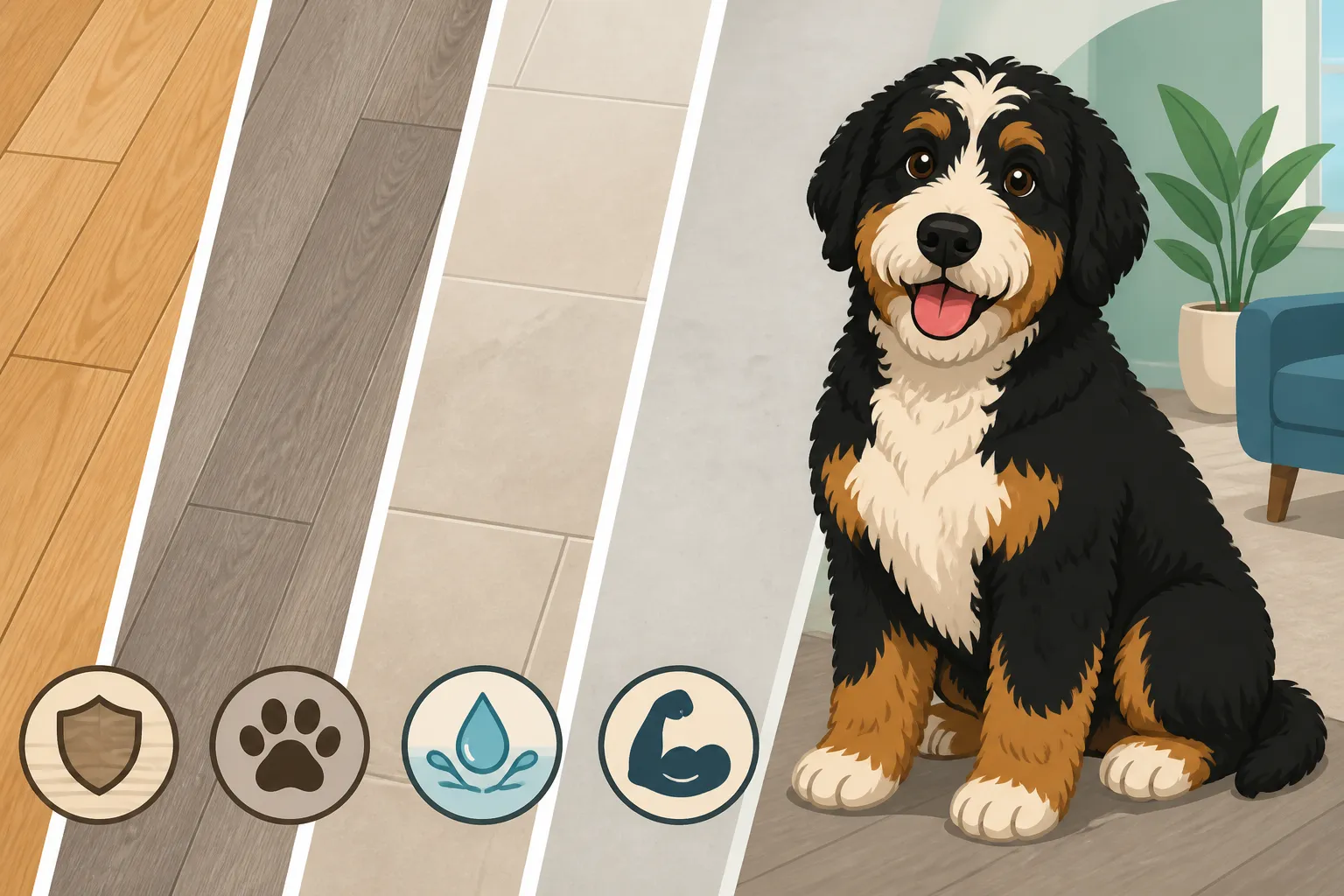
When it comes to choosing the best flooring for your Bernedoodle, especially a heavy one, the primary considerations are traction, cushioning, and durability. You want something that provides a stable surface for their paws, offers a bit of give to protect their joints, and can stand up to their size and activity level.
Carpet and Rugs: The Soft Landing
Carpet, particularly low-pile, dense carpet, is often the gold standard for providing excellent traction and a soft, forgiving surface. It's a fantastic choice for Bernedoodles because it cushions their joints, absorbs impact from their weight, and prevents slipping entirely. Imagine the difference in how your Bernedoodle moves on a plush carpet versus a highly polished marble floor – it's night and day. Wall-to-wall carpeting in main living areas or hallways where your dog spends a lot of time can dramatically reduce the risk of slips and falls. The added insulation also means a cozier spot for them to sprawl out.
Of course, carpet isn't without its challenges. Bernedoodles have thick coats, and while they are often low-shedding, they still track in dirt, dander, and occasional loose hairs. Cleaning can be more involved, especially if you have a puppy still mastering potty training or an older dog prone to accidents. Regular vacuuming is a must, and professional cleanings might be necessary to keep it fresh. For spot cleaning, having pet-specific enzyme cleaners on hand is crucial. If wall-to-wall isn't an option, strategically placed area rugs with non-slip pads (you can find excellent, grippy pads on Amazon) are an effective compromise. They create safe zones and pathways, giving your Bernedoodle confidence in their movements without committing to carpeting every room. Just be prepared for the occasional fur tumbleweed, especially during How Many Months a Bernedoodle's Coat Change Runs.
Cork and Bamboo: Sustainable and Supportive
For those looking for hard flooring options that are still dog-friendly, cork and bamboo offer some intriguing benefits. Cork flooring is naturally soft, resilient, and elastic, providing a wonderful cushion underfoot for both humans and dogs. Its cellular structure gives it natural give, which is excellent for mitigating impact on a Bernedoodle's joints. It's also surprisingly quiet, absorbing the sound of heavy paws thudding across the floor, which can be a real blessing in a busy household. Cork also has a naturally grippy surface, even when sealed, making it far less slippery than traditional hardwood or tile. It's also antimicrobial and resistant to mold and mildew, which can be a plus for pet owners.
Bamboo, while often marketed as a hardwood alternative, is actually a grass. High-quality engineered bamboo flooring can be incredibly durable, often harder than many traditional hardwoods. The key with bamboo is to choose a product with a textured or distressed finish rather than a highly polished, smooth one. The texture provides much-needed traction for Bernedoodle paws. It's also an eco-friendly option, as bamboo is a rapidly renewable resource. However, beware of lower-quality bamboo, which can be prone to scratching and water damage. Both cork and bamboo require proper sealing and maintenance to protect against pet accidents. While they might scratch more easily than a tile, their inherent give and traction make them much more suitable choices for a large dog than unforgiving, slick surfaces.
Luxury Vinyl Plank LVP and Tile with Grip
Luxury Vinyl Plank (LVP) and Luxury Vinyl Tile (LVT) have truly revolutionized the market for pet-friendly flooring. These aren't your grandmother's peel-and-stick vinyl squares! Modern LVP/LVT is incredibly durable, highly water-resistant (often waterproof), and comes in a vast array of styles that mimic wood, stone, and ceramic with remarkable realism. The crucial advantage for Bernedoodle owners is that many LVP products have textured surfaces – a subtle grain or embossed pattern – that provide excellent grip. This texture, combined with a slight inherent give, makes it far safer and more comfortable for heavy dogs than traditional smooth vinyl or laminate. It's also warm underfoot, unlike cold tile. LVP is relatively easy to clean, resisting stains and spills, which is a major bonus when living with a big dog who might track in mud or have a drooling moment.
When it comes to tile, the keyword for Bernedoodles is "grip." While polished ceramic or porcelain tile is notoriously slippery, unglazed, textured, or honed stone tiles (like slate or travertine) or ceramic tiles with a matte finish can offer adequate traction. The rougher, more porous surface gives paws something to hold onto. Tile is incredibly durable and easy to clean, making it a practical choice for areas like entryways, mudrooms, or kitchens. However, it's a very hard and cold surface. This means it offers no cushioning for joints, which can be problematic for older Bernedoodles or those with orthopedic issues. If you choose tile, it's even more essential to supplement with soft, grippy rugs in resting areas to provide comfort and warmth. Always check the coefficient of friction (COF) for tile; a higher COF means better slip resistance.
Flooring Options to Approach with Caution (and how to mitigate risks)
While some flooring types are clear winners for Bernedoodle households, others require a more cautious approach. It's not to say they're entirely off-limits, but understanding their drawbacks and how to mitigate them is crucial for your dog's safety and your peace of mind.
Hardwood and Laminate: The Beautiful but Treacherous
Oh, hardwood floors. They're beautiful, classic, and often increase a home's value. Laminate offers a similar aesthetic at a lower cost. Many of us adore the look. However, for a heavy Bernedoodle, traditional smooth, sealed hardwood or laminate flooring can be incredibly treacherous. The smooth, hard surface offers almost no traction for paws, leading to constant slipping and sliding. Imagine a ninety-pound dog trying to get up from a lying position, or simply walk through a room, and constantly struggling for grip. This isn't just uncomfortable; it's actively harmful to their joints, muscles, and confidence, as we discussed earlier. The lack of shock absorption also means every step is a hard impact on their already stressed joints.
Beyond the slip hazard, hardwood and laminate are prone to scratches. A Bernedoodle's claws, even well-trimmed ones, can leave unsightly marks over time. They also don't handle moisture well. A spilled water bowl, an excitedly dribbling mouth, or an accidental potty break can cause warping, staining, or swelling if not cleaned up immediately. If you already have hardwood or laminate, or if it's a non-negotiable choice for you, mitigation is key. This means covering as much surface area as possible with large, non-slip area rugs and runners. Ensure these rugs have effective non-slip backings to prevent them from sliding around themselves – a rug that slides is just another hazard. Regular nail trims, as described in The Seventy to Hundred Fifty Dollar Bernedoodle Groom or Trimming Between a Bernedoodle's Pads, are also paramount to reduce scratching and improve natural paw grip.
Polished Stone and Ceramic Tile: Cold and Slippery
Polished stone, such as marble or granite, and highly glazed ceramic or porcelain tiles are another category that presents significant challenges for Bernedoodles. While incredibly durable and often stunning in appearance, their surfaces are typically very smooth and provide virtually no friction for a dog's paws. Much like hardwood, this makes them extremely slippery, leading to all the same risks of falls, injuries, and joint strain. Imagine your Bernedoodle trying to navigate a polished foyer after a bath – it's a disaster waiting to happen.
Beyond the slip factor, these materials are often very cold, which can be uncomfortable for a dog trying to rest, especially an older one with achy joints. The hardness offers no cushioning whatsoever. While beautiful, these floors prioritize aesthetics and easy cleaning (for human spills) over canine safety and comfort. If you have these types of floors, or are considering them, you absolutely must plan for extensive rug coverage. Large, plush area rugs in every room where your Bernedoodle will spend time are not optional; they are a necessity. Consider radiant heating if it's a new installation to combat the cold. Again, prioritizing textured, unglazed versions of tile is the only way to even consider this type of flooring for a Bernedoodle's main living space.
| Flooring Type | Traction for Bernedoodles | Joint Comfort | Durability | Maintenance | Cost |
|---|---|---|---|---|---|
| Carpet (Low-Pile) | Excellent | High | Medium | Regular vacuuming, spot cleaning, occasional deep cleaning | Moderate |
| Cork | Good | High | Medium-High | Regular sweeping/vacuuming, occasional damp mop, protective sealing | Moderate-High |
| Bamboo (Textured) | Good | Medium-High | High | Regular sweeping/vacuuming, damp mop, prompt spill cleanup | Moderate-High |
| LVP/LVT (Textured) | Good-Excellent | Medium | High | Easy to clean, damp mop | Moderate-High |
| Tile (Unglazed/Matte) | Good | Low | Very High | Easy to clean, grout maintenance | Moderate-High |
| Hardwood (Smooth) | Poor | Low | Medium-High | Regular sweeping/vacuuming, careful cleaning, prone to scratches | High |
| Laminate (Smooth) | Poor | Low | Medium | Easy to clean, prone to water damage, scratches | Low-Moderate |
| Polished Stone/Tile | Very Poor | Very Low | Very High | Easy to clean | High |
Making Existing Floors Bernedoodle-Friendly
Sometimes, replacing all your flooring simply isn't an option, or perhaps you've moved into a home with existing flooring that isn't ideal for your Bernedoodle. Don't despair! There are many practical and effective ways to adapt your current environment to create a safer, more comfortable space for your furry friend.
Strategic Rug Placement and Runners
This is, hands down, the most impactful and often easiest way to improve traction on slippery floors. Think of your Bernedoodle's common pathways: from their bed to the water bowl, through hallways, to the back door, and where they tend to play or zoom. These are the critical areas for rug placement. Invest in large area rugs for living rooms and thick runners for hallways and high-traffic zones. The goal is to create a continuous, non-slip "roadway" for your dog to navigate without ever having to step on a slick surface.
The secret to successful rug placement isn't just the rug itself, but what's under it. You absolutely need high-quality, non-slip rug pads. These aren't just thin pieces of felt; look for pads made of rubber or natural felt-and-rubber blends that truly grip the floor and prevent the rug from shifting. Many brands available on Amazon offer excellent non-slip rug pads in various sizes. Chewy also often carries a good selection of pet-friendly rugs and pads. Regularly check and adjust rugs to ensure they haven't shifted, creating new slip hazards. This proactive approach can make a world of difference in your Bernedoodle's confidence and joint health.
Traction Solutions for Paws
Sometimes, even with rugs, your Bernedoodle might still struggle a bit, especially when getting up from a lying position or making a quick turn on a non-carpeted patch. This is where direct paw traction solutions come in handy. There are several options you can explore:
- Paw Balms/Waxes: Products specifically designed to create a grippy, protective layer on your dog's paw pads. These can be particularly useful for temporary relief, like a day trip to a friend's house with slick floors. They also help prevent pads from drying and cracking.
- Grippy Socks/Booties: These are little socks or booties with rubberized soles that provide instant traction. They can be excellent for older dogs or those with mobility issues, giving them the confidence to walk on any surface. The trick is finding a pair that fits your Bernedoodle's large paws comfortably and stays on! Brands like Pawz or other options available on Chewy often come in various sizes suitable for larger breeds.
- Toe Grips: These are tiny, soft rubber rings that are glued onto your dog's nails (or applied by a vet/groomer). They extend slightly past the nail and contact the floor, providing grip similar to a traction device on a car tire. They are a more semi-permanent solution than socks and can be very effective for dogs with neurological conditions or severe mobility issues.
Experiment to see which solution, if any, works best for your individual Bernedoodle and their specific needs.
Regular Nail Trims and Paw Hair Management
This might seem basic, but it's incredibly important and often overlooked. Overgrown nails are like wearing high heels on a slick surface – they lift the paw pad off the ground, significantly reducing the natural traction your dog has. When nails are too long, they push against the floor, forcing the paw to splay and making it difficult for the paw pads to grip properly. Regular trimming to keep nails short, so they don't click on hard floors, is essential.
Equally important is managing the hair between your Bernedoodle's paw pads. Bernedoodles have luscious coats, and this hair can grow long and bushy, creating a "slipper" effect. When this hair gets matted or overly long, it becomes another slick surface, preventing the actual paw pads from making contact and gripping the floor. Keeping the hair trimmed flush with the paw pads allows for maximum traction. This task can often be done during your regular grooming appointments, which you might be budgeting for anyway, perhaps with a The Seventy to Hundred Fifty Dollar Bernedoodle Groom. However, you can also learn to do it yourself with a small pair of blunt-nosed scissors or a paw trimmer; just be careful! Regular inspection of their paw pads for excess hair or dryness is a good habit to develop for all Bernedoodle owners.
Considering Long-Term Costs and Maintenance for Heavy Bernedoodles
Choosing flooring isn't just about the initial aesthetics and safety; it's a long-term investment that needs to stand up to the unique demands of a large, active Bernedoodle. Understanding the durability, cleaning requirements, and even sound implications will help you make a truly informed decision.
Durability Against Wear and Tear
A heavy Bernedoodle is a formidable force when it comes to floor wear and tear. Their weight means more pressure per square inch with every step. Their claws, even if diligently trimmed, can still scratch softer surfaces, especially during excited sprints or sudden stops. Then there's the drool, the tracked-in mud, the occasional accidents (even from the most well-trained dog), and the general rough-and-tumble of a large, playful companion.
When considering durability, think about how well a material resists scratches, dents, and water damage. Hardwoods can be beautiful but are often susceptible to deep scratches and water damage if not well-maintained. Laminate can be more scratch-resistant but less forgiving with standing water. LVP and LVT typically excel in durability and water resistance, making them excellent choices for busy pet households. Tile and natural stone are extremely durable, but their hardness can contribute to joint issues for your dog if not mitigated with rugs. Carpets offer joint comfort but can show wear in high-traffic areas and are susceptible to staining. Factor in the long-term cost of repairs or early replacement if you choose a floor that isn't robust enough for your Bernedoodle's daily life.
Cleaning and Stain Resistance
Let's be realistic: living with a Bernedoodle means living with some level of dirt and potential messes. They have fluffy coats that pick up debris, they love to play outside, and they're not immune to upset stomachs or age-related accidents. Therefore, the ease of cleaning and the material's stain resistance should be high on your priority list.
Hard-surface floors like LVP, LVT, and tile are generally the easiest to clean. A quick sweep, vacuum, or damp mop can handle most spills and dirt. Look for products that are truly waterproof, not just water-resistant, for maximum peace of mind. Carpet, while great for traction, requires more intensive cleaning. You'll need a good vacuum for daily maintenance and prompt action with pet-specific stain and odor removers (many excellent options are available on Chewy or Amazon) for accidents. For darker-colored Bernedoodles, light carpets might show loose fur more, while for lighter-colored dogs, darker carpets might highlight hair. Materials with a slight pattern or texture can sometimes hide minor dirt better than a solid, smooth color. Prioritize floors that don't trap odors and can withstand frequent cleaning without degradation.
Sound Absorption and Noise Reduction
A heavy Bernedoodle can make a surprising amount of noise, especially during play or when they get excited. The thud of paws, the clatter of toenails, the occasional wrestle, or even the sound of them getting up and down can echo through a home with hard, reflective surfaces. This can be disruptive for your household and, surprisingly, even for your dog if they're sensitive to loud noises.
Soft materials like carpet and cork naturally absorb sound, creating a much quieter environment. This is a huge benefit for noise reduction, making your home feel calmer and more serene. Even the sound of a large Bernedoodle walking across a soft rug is significantly muted compared to the incessant click-clack on hardwood. LVP and LVT, while hard, can sometimes have an underlayment that offers some sound dampening. Tile, stone, laminate, and hardwood, on the other hand, tend to amplify sound, turning your home into an echo chamber for doggy activities. If you opt for these harder surfaces, strategically placed rugs aren't just for traction; they also play a vital role in acoustic dampening, helping to create a more peaceful living space for everyone, including your Bernedoodle.
Beyond the Floor: Other Ways to Support Your Bernedoodle's Joints
While proper flooring is foundational to your Bernedoodle's joint health and comfort, it's part of a larger picture. A holistic approach that includes appropriate bedding, smart home modifications, and excellent nutrition will provide the best long-term support for your big, beloved companion.
Orthopedic Beds and Ramps
Even with the best flooring, your Bernedoodle will spend a significant portion of their day sleeping or resting. Providing high-quality orthopedic bedding is paramount, especially for heavy breeds prone to joint issues. An orthopedic bed, typically made with dense, supportive memory foam, helps distribute their weight evenly, alleviating pressure points on hips, elbows, and shoulders. This is particularly crucial for older Bernedoodles or those with existing conditions like Arthritis in a Bernedoodle at Eight. A good bed prevents them from continually resting on hard surfaces, which can worsen joint pain and stiffness. Make sure the bed is appropriately sized – a Bernedoodle needs ample space to stretch out fully and comfortably. Many reputable pet retailers like Chewy offer a wide selection of orthopedic beds designed for large breeds.
Beyond beds, consider ramps or pet stairs for accessing furniture or vehicles. A Bernedoodle jumping on and off couches, beds, or in and out of cars repeatedly puts tremendous stress on their joints. A ramp provides a gentle, low-impact alternative, preserving their joints over time. This is especially important as they age or if they're dealing with conditions that make jumping painful or risky. Supporting an old Bernedoodle that cannot rise or Helping an Old Bernedoodle Get Up Off the Floor becomes much easier when they don't have to navigate high obstacles.
Balanced Nutrition and Weight Management
What goes into your Bernedoodle's bowl is just as important as the floor they walk on. A balanced, high-quality diet provides the essential nutrients for strong bones, healthy cartilage, and robust muscles that support their skeletal structure. For a growing Bernedoodle, opting for a large-breed puppy formula is critical, as these are formulated with specific calcium and phosphorus ratios to support slow, steady growth, preventing the rapid growth that can exacerbate joint problems. This ties into Feeding a Bernedoodle That Will Reach Ninety Pounds to ensure they're getting the right nutrients without overfeeding.
Maintaining a healthy weight throughout your Bernedoodle's life is arguably one of the most significant factors in preventing and managing joint issues. Every extra pound puts additional stress on their hips, knees, and elbows. An overweight Bernedoodle is far more likely to develop or worsen arthritis and other orthopedic problems. Regular monitoring of their body condition, consulting your vet about ideal weight, and adjusting food portions accordingly (as discussed in Keeping a Bernedoodle's Weight Down) are crucial. Brands like Ollie, which offer fresh, high-quality ingredients, can be an excellent option for precise portion control and nutrient-dense feeding, helping to manage weight effectively. Consider supplements like glucosamine and chondroitin, often recommended by vets for large breeds, to support joint health, but always discuss these with your veterinarian first.
Appropriate Exercise and Vet Check-ups
Even with excellent flooring and nutrition, appropriate exercise is vital for a Bernedoodle's joint health. Regular, moderate, low-impact exercise helps build and maintain strong muscles that support joints, keeps them flexible, and helps manage weight. Think consistent walks, gentle swimming, or playing in a safe, soft-surfaced yard. Avoid high-impact activities like excessive jumping or long, strenuous runs on hard surfaces, especially when they're young or if they have existing joint issues. This advice is key for topics like Exercise for a Bernedoodle With Arthritis.
Finally, never underestimate the power of regular veterinary check-ups. Your vet is your best partner in monitoring your Bernedoodle's joint health, catching potential issues early, and recommending proactive measures. They can assess gait, palpate joints, and suggest diagnostic tests like X-rays if concerns arise. They can also advise on appropriate joint supplements, pain management strategies, and physical therapy if needed. Consistent veterinary care, perhaps as part of The Screening a Bernedoodle Should Have Yearly, ensures that any joint issues are addressed promptly, giving your beloved Bernedoodle the best chance at a comfortable, active, and happy life, no matter their age or the type of floors you have.
Disclaimer
This article is for general informational purposes only and does not constitute professional advice. Laws, prices and regulations vary by location and change over time. Consult a qualified professional for guidance on your specific situation.