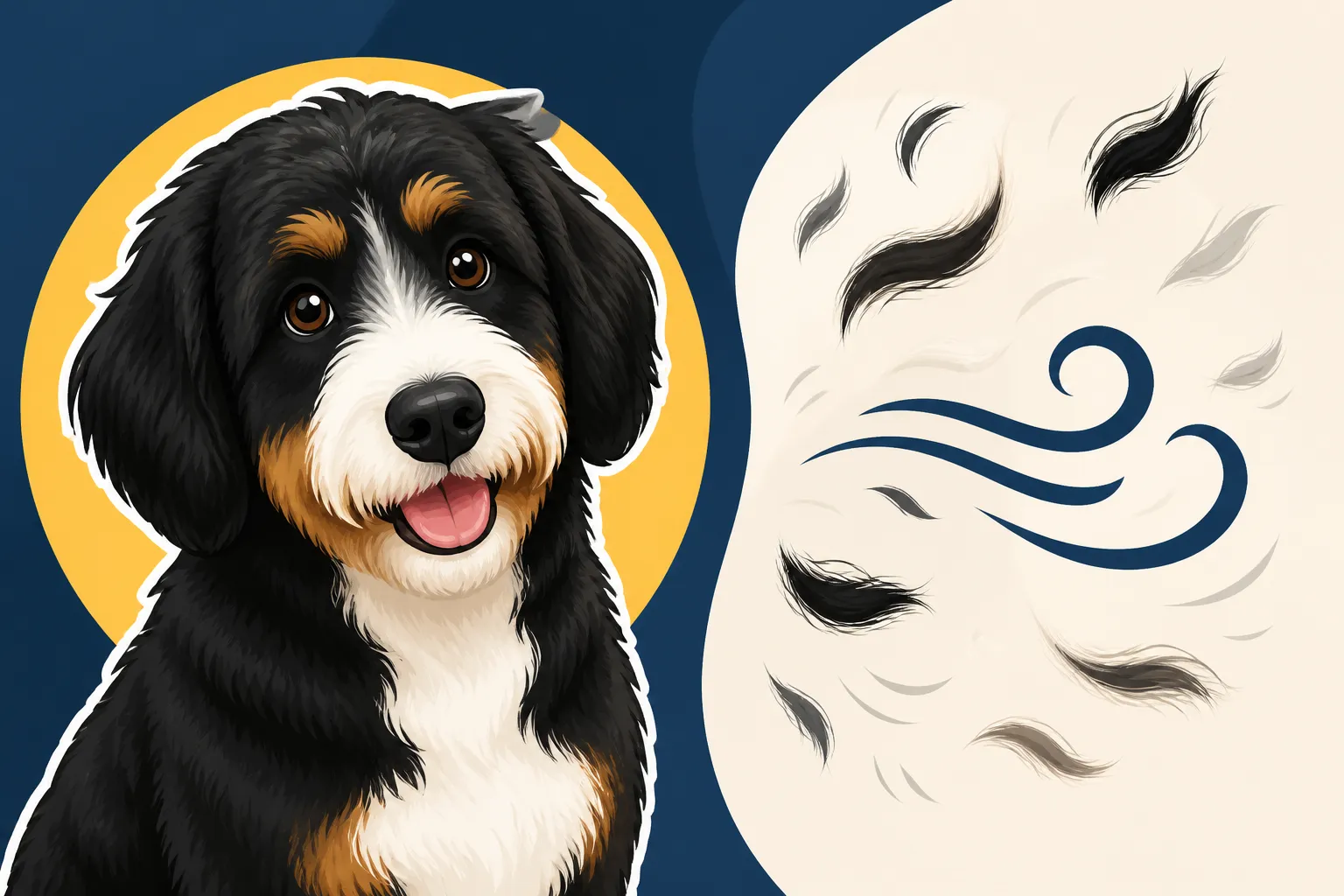
Whether a Flat Coated Bernedoodle Blows Its Coat
One of the biggest questions I hear from Bernedoodle hopefuls is about their coat, and honestly, it’s often a bit of a gamble. While many dream of that perfectly wavy, low-shedding fleece, sometimes a Bernedoodle ends up with a flatter, more Bernese-like coat. If you’re wondering if that means you’re in for a fur-nado, you've hit the nail on the head – this guide is going to walk you through exactly what to expect when your flat-coated Bernedoodle decides it’s time to "blow" its coat.
Understanding the Bernedoodle Coat Spectrum and the Flat Coat's Place
Navigating the world of Bernedoodle coats can feel like trying to solve a complex puzzle, especially when breeders talk about F1, F1b, and generations. The truth is, it's a genetic lottery, and sometimes your sweet puppy grows into a dog with a coat that leans heavily towards one parent or the other. This isn't a flaw; it's just how genetics work, but it certainly dictates your grooming routine!
The Genetic Lottery of Bernedoodle Coats
Every Bernedoodle is a mix of a Bernese Mountain Dog and a Poodle, and these two breeds couldn't be more different in terms of their coats. Poodles are famous for their tightly curled, non-shedding, hypoallergenic coats, while Bernese Mountain Dogs boast a thick, double-layered coat that sheds quite a bit, especially seasonally. When you mix these two, you get a spectrum of possibilities.
Often, people hope for that ideal wavy or curly fleece coat, which tends to be low-shedding. But then there are the straight or "flat" coated Bernedoodles. These pups inherit more of the Bernese coat characteristics, meaning less curl and more of that traditional dog hair texture. This isn't something that necessarily becomes clear in the first few weeks; sometimes that adorable fluffy puppy coat transitions into a much straighter, denser adult coat as they mature. It's a journey, and you might not know exactly what you're getting until your pup is a bit older. For more on the variations, you might be interested in The Coat a Bernedoodle Gets From Two Heavy Coated Parents or even The Wavy Coat Most Bernedoodles Carry and The Curly Coat Bernedoodle and Its Upkeep.
What Exactly Is a Flat Coat Bernedoodle?
A flat-coated Bernedoodle typically looks more like a Bernese Mountain Dog than a Poodle. Their hair is generally straight or only very slightly wavy, and it lacks the characteristic curl or fleece texture that makes many Bernedoodles "hypoallergenic" or low-shedding. Think of it as a soft, flowing coat, but with significant density, particularly in areas like the legs, chest, and tail.
What's really key here is that a flat coat often comes with a much more pronounced undercoat, just like their Bernese parent. This thick undercoat is what provides insulation and protection for a Bernese, but it also means serious shedding. While any Bernedoodle can shed to some degree—even the curlier ones still lose some hair, even if it gets caught in their curls—a flat-coated Bernedoodle will shed much more noticeably and voluminously. This means you’ll find hair on your furniture, clothes, and floating around the house, which can be a real surprise if you were expecting a truly non-shedding dog.
Does a Flat-Coated Bernedoodle Truly "Blow" Its Coat?
This is the big question, and for anyone with a flat-coated Bernedoodle, the answer is a resounding yes! If your dog's coat leans heavily towards the Bernese side, you're going to experience what dog owners refer to as "blowing coat." It's a dramatic event, and it's best to be prepared rather than caught off guard by the sheer volume of fur.
The Reality of Seasonal Shedding for Flat Coats
"Blowing coat" isn't just regular shedding; it's an intensified, seasonal shedding event typical of double-coated breeds. Breeds like the Bernese Mountain Dog are built for colder climates, and their thick double coat helps them regulate their body temperature. In the spring, they shed their heavy winter undercoat to prepare for warmer weather, and in the fall, they shed their lighter summer coat to make way for a new, thicker winter layer.
A flat-coated Bernedoodle, having inherited more of this Bernese coat type, absolutely participates in this seasonal "blow." This means instead of a consistent, manageable shedding throughout the year, you'll experience two periods of particularly heavy shedding. During these times, your dog will be actively pushing out old, dead undercoat in massive quantities. It can be quite a shock if you've never owned a double-coated breed before, and it quickly dispatches any lingering hopes of a truly non-shedding Bernedoodle, as discussed in Whether Any Bernedoodle Is Truly Non Shedding.
Managing the Avalanche: When and How Much to Expect
So, when does this "fur-nado" hit? Typically, you can expect the heaviest shedding in spring, as your Bernedoodle prepares for warmer temperatures by shedding its thick winter undercoat. Then, again in the fall, they'll shed their lighter summer coat to grow in a denser one for winter. These periods can last for several weeks, and during this time, you'll be amazed at the amount of hair that comes off your dog.
It's not just a few stray hairs; it's clumps, tumbleweeds of fur, and a constant layer over every surface in your home. Some owners describe being able to literally pull handfuls of undercoat from their dog, almost like wool from a sheep. If you live in an area with distinct seasons, you'll likely notice these patterns clearly. Even if you don't, changes in indoor temperature and light cycles can trigger these natural shedding cycles. Be prepared for consistent, daily grooming during these times, because if you don't stay on top of it, that shed hair can quickly lead to matting and skin issues. It's a common misconception that because flat coats shed, they don't mat – in fact, all that loose hair can tangle into mats if not properly brushed out.
Strategies for Surviving the Flat Coat Shed
Living with a flat-coated Bernedoodle means accepting that shedding is part of the package, especially during seasonal coat blows. But don't despair! With the right tools and a consistent routine, you can manage the fur and keep your home (mostly) hair-free, and your dog comfortable.
Essential Grooming Tools and Techniques
When your flat-coated Bernedoodle is blowing its coat, your regular brush simply won't cut it. You need an arsenal designed for heavy shedding:
- Slicker Brush: This is your everyday workhorse for removing loose hair from the topcoat and beginning to get at the undercoat. Use it frequently, even daily, during shedding season.
- De-shedding Rake or Tool: This is where the magic happens for the undercoat. Tools like an undercoat rake are specifically designed with long teeth to reach deep into the dense undercoat and pull out all that dead, loose fur without cutting the healthy guard hairs. Brands like Furminator or others readily available on Amazon or Chewy offer various options, but ensure you use them correctly to avoid irritating your dog's skin.
- Force Dryer: If you bathe your Bernedoodle at home (which is a whole adventure with a large, heavy-coated dog!), a high-velocity force dryer is invaluable. It blasts out loose undercoat that shampoo and conditioner have helped loosen, significantly reducing the amount of hair you'll find floating around later. It’s also fantastic for drying that thick coat quickly and preventing skin issues.
The key technique is line brushing. This means parting your dog's coat in small sections and brushing from the skin out, layer by layer, rather than just skimming the top. This ensures you're actually getting to the undercoat where most of the shedding occurs. It's time-consuming, but absolutely necessary. For more specific recommendations, check out The Slicker and Rake a Bernedoodle Needs.
Professional Help and Regular Maintenance
While home grooming is crucial, don't underestimate the power of a professional groomer, especially for a flat-coated Bernedoodle during a coat blow. Groomers have specialized equipment, like powerful force dryers and professional-grade de-shedding tools, that can extract an incredible amount of loose hair in one session.
Many groomers offer de-shedding treatments that involve a special shampoo, conditioner, and intensive drying and brushing. This can significantly reduce the amount of hair your dog sheds at home for weeks. Scheduling these appointments strategically before and during peak shedding seasons can be a lifesaver. It’s not just about managing the mess; it also helps prevent uncomfortable matting and keeps your dog’s skin healthy under that dense coat. Remember, even with shedding, tangled undercoat can form painful mats close to the skin. To get an idea of the cost, What a Full Groom Costs on a Ninety Pound Bernedoodle might be a helpful read.
Environmental Management and Cleaning Tips
Beyond grooming your dog, you'll also need to manage the shedding within your home. Here are a few tips:
- Vacuum Regularly (and often): Invest in a good pet-specific vacuum cleaner. You'll be using it daily, especially during peak shedding times.
- Lint Rollers: Keep them handy. Your clothes, furniture, and car seats will thank you.
- Furniture Covers: Consider washable covers for your couch and chairs to easily remove hair.
- Air Purifiers: While not a magic bullet, a good air purifier can help capture airborne dander and hair, improving air quality, especially if anyone in the household has mild allergies (though remember, a flat-coated Bernedoodle will produce plenty of dander and shed hair).
- Dedicated Dog Bedding: Ensure your dog has its own washable beds. Many dog beds on Chewy or Amazon come with removable, washable covers, which is a must-have for heavy-shedding dogs.
Embrace the routine. The more consistent you are with brushing and de-shedding, the less hair you'll find around your home. It’s a commitment, but one that leads to a happier, healthier dog and a cleaner living space. To understand the time commitment, consider The Weekly Hours a Standard Bernedoodle's Coat Takes.
Setting Expectations: Life with a Flat-Coated Bernedoodle
Choosing a flat-coated Bernedoodle means embracing a certain lifestyle that revolves around coat care. It’s not just about aesthetics; it has practical implications for your dog’s health and your daily routine. Understanding these upfront can prevent surprises down the road.
Health Implications of a Flat Coat
While the shedding might be the most obvious trait of a flat-coated Bernedoodle, there are also important health considerations tied to their dense double coat. This type of coat, especially with copious shedding, still requires meticulous care to prevent matting. Dead undercoat, if not brushed out, can easily felt together, forming tight mats close to the skin. These mats can pull on the skin, causing pain and irritation. They also trap moisture and debris, creating a breeding ground for bacteria and yeast, which can lead to skin infections or "hot spots." Even though they shed, thorough line brushing is essential to avoid this painful issue.
Additionally, a dense coat can make it harder to spot skin problems, parasites, or lumps and bumps. Regular grooming not only manages shedding but also provides an opportunity for you to do a thorough skin check. Being proactive about grooming helps maintain the integrity of their skin barrier and overall coat health. You can learn more about related issues in Skin Problems Under a Bernedoodle's Heavy Coat.
Is a Flat Coat Right for You?
When considering a flat-coated Bernedoodle, it's really important to be honest with yourself about your lifestyle and expectations. They offer a unique set of pros and cons:
Pros:
- Distinct Look: Often they maintain a more Bernese Mountain Dog aesthetic, which many people adore.
- Less Matting in Certain Areas (but not overall): While they shed heavily, the individual hairs may not tangle as easily as a curly coat between brushes. However, the sheer volume of undercoat can still mat severely if neglected.
- Often Easier to Clean Mud/Debris: The smoother, straighter hair can sometimes be easier to brush debris out of compared to tight curls.
Cons:
- Significant Shedding: This is the big one. Prepare for hair everywhere, especially during seasonal coat blows. This directly contradicts the idea of a truly "hypoallergenic" dog. If allergies are a concern for your household, a flat-coated Bernedoodle is likely not the right fit, as explored in Whether a Bernedoodle Is Hypoallergenic.
- Intensive Grooming Demands: While different from a curly coat, a flat coat still requires regular, consistent brushing, especially de-shedding, to prevent matting and manage loose hair. This means more time and potentially more cost if you rely on professional groomers.
- Not Hypoallergenic: This can't be stressed enough. If you or someone in your home has dog allergies, a flat-coated Bernedoodle will likely cause a reaction due to the shedding hair and dander.
Ultimately, a flat-coated Bernedoodle is a wonderful dog, full of the sweet, goofy, and loyal traits of the breed. But you must be prepared for the reality of their coat. It means dedication to grooming, a good vacuum cleaner, and an acceptance that your life will involve a bit more dog hair. If you can embrace that, you'll be rewarded with an amazing companion.
| Coat Type | Shedding Level | Grooming Frequency (Typical) | "Blows Coat" Seasonally? | Allergic Friendliness | Appearance (Leans Towards) |
|---|---|---|---|---|---|
| Flat Coat | High / Very High (Seasonal) | Daily-Weekly (Heavy De-shed) | Yes | Low | Bernese Mountain Dog |
| Wavy Fleece | Low-Moderate | Every 2-3 days | Mildly | Moderate | Blend / Poodle |
| Curly Wool | Very Low / Minimal | Daily-Every other day | No / Very Mild | High | Poodle |
Disclaimer
This article is for general informational purposes only and does not constitute professional advice. Laws, prices and regulations vary by location and change over time. Consult a qualified professional for guidance on your specific situation.