Teaching a Bernedoodle to Walk Beside You
Oh, the sheer joy of a Bernedoodle — and the sheer terror of their enthusiasm when a squirrel dares to cross their path! Many of us have been there, feeling like our arm is about to detach from our shoulder as our beloved giant pulls with the force of a small pony. It's frustrating, sometimes embarrassing, and can even feel unsafe, making those walks less about enjoyment and more about bracing for impact. This guide is here to help you reclaim your walks, teaching your wonderful Bernedoodle how to walk politely and calmly beside you, transforming every outing into a peaceful stroll for both of you.
Understanding Why Your Bernedoodle Pulls
It's easy to get frustrated when your Bernedoodle pulls, especially when they’re dragging you toward every interesting smell or distant dog. But understanding why they pull is the first step toward teaching them better manners. It’s rarely about defiance; it’s usually rooted in instinct, excitement, and simply not knowing any better.
Instinctual Behaviors and the Thrill of the Outdoors
Bernedoodles, like all dogs, are driven by their senses. Their world is a symphony of smells, sights, and sounds, all amplified a hundredfold compared to ours. When you step outside, it's an overwhelming sensory experience, a giant sniffing buffet, and they want to get to all of it now. This isn't naughtiness; it's just pure, unadulterated doggy excitement and curiosity. They smell where another dog peed, catch a whiff of a rabbit that dashed through the bushes last night, or spot a bird taking flight – and their instinct kicks in to investigate. They're often so immersed in this exploration that they don't even realize they're pulling your arm out of its socket. Plus, the Bernese Mountain Dog side of them has a history of pulling carts, so there's a natural inclination to lean into a harness and use their substantial body weight to move forward.
Lack of Early Training or Inconsistent Reinforcement
Many times, a Bernedoodle pulls simply because they haven't been consistently taught not to. As puppies, their pulling might have seemed cute or manageable, but a Raising a Bernedoodle Puppy That Will Outweigh You at 80-90 pounds pulling is a whole different story. If pulling has ever worked for them – even once, meaning they got to the thing they wanted faster – they've learned that pulling is an effective strategy. It's a classic case of positive reinforcement: dog pulls, dog gets to sniff that bush, therefore dog learns pulling gets them what they want. Inconsistent training, where sometimes you let them pull and other times you try to correct it, only confuses them further. They don't understand the rules because the rules keep changing. It’s also incredibly difficult to teach Leash Manners on a Bernedoodle Heading for Ninety Pounds when they reach their full strength if you haven’t started early.
High Energy Levels and Excitement
Bernedoodles are a wonderfully energetic breed, especially in their younger years. Their Poodle parentage brings intelligence and a need for mental and physical stimulation, while the Bernese side provides a sturdy, playful companion. This combination means they often have a lot of pent-up energy, particularly if they haven't had enough exercise before their walk. Think of it from their perspective: they've been cooped up inside, and now they're finally getting to go out! All that excitement needs an outlet, and for many dogs, that outlet becomes pulling on the leash. They want to run, explore, and simply move, and the leash becomes an annoying restriction rather than a polite guide. It's not malicious, just a natural expression of their joyous, sometimes overwhelming, energy. Even a standard Bernedoodle has The Exercise a Standard Bernedoodle Needs Daily that needs to be met.
Essential Tools and Gear for Leash Training
Before you even step out the door, having the right tools can make a world of difference in your leash training journey. While no single tool is a magic fix, the right gear can help manage the pulling while you teach your Bernedoodle the polite way to walk.
Harnesses vs. Collars
For a Bernedoodle, especially a large one, a regular neck collar is often insufficient for leash training and can even be harmful. A strong pull on a collar puts immense pressure on their trachea, potentially causing damage and definitely leading to discomfort. This discomfort can actually make them pull harder, creating a vicious cycle.
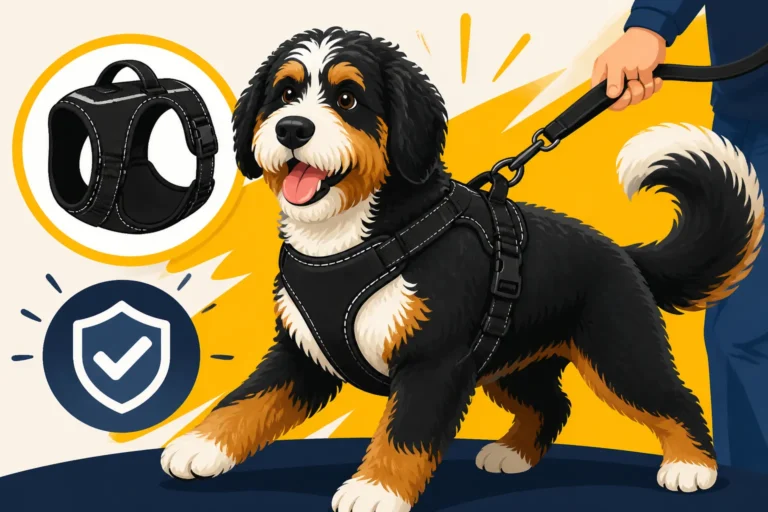
- Front-Clip Harnesses: These are often a game-changer for big, strong pullers. A front-clip harness, like those from popular brands found easily on Amazon, attaches the leash at your dog's chest. When your Bernedoodle pulls, the leash redirects their momentum to the side, gently turning them back towards you. This makes it very difficult for them to pull forward with their full strength and encourages them to pay attention to your movements. It’s a physical redirect rather than a correction, which is much more positive and effective. Many owners find this to be the most humane and effective "no-pull" solution. The Harness That Holds a Ninety Pound Bernedoodle will need to be sturdy and well-fitted.
- Back-Clip Harnesses: While comfortable for dogs that don't pull, these can actually encourage pulling in dogs that do, as it allows them to lean their full weight into the harness and pull like a sled dog. They're great for casual strolls once your dog has mastered loose-leash walking, but not ideal for active training sessions with a strong puller.
- Head Halters (Haltis/Gentle Leaders): These devices fit over your dog's muzzle and behind their ears, attaching the leash under their chin. They work by giving you control over their head, and where the head goes, the body follows. For a really determined puller, Whether a Head Halter Controls an Eighty Pound Bernedoodle can be quite effective, as it prevents them from using their neck and shoulder muscles to pull. However, many dogs find them initially intrusive and can resist them. It’s crucial to introduce them very slowly and positively, with lots of treats, to ensure your Bernedoodle forms a good association with wearing it. Never yank on a head halter, as it can strain their neck.
Leashes and Rewards
A good leash is also paramount. For training, a standard 6-foot leash made of durable nylon or leather is usually best. Avoid retractable leashes for training purposes; they teach your dog that pulling extends their range, which is the opposite of what you want. They also offer very little control, especially with a powerful Bernedoodle.
| Training Tool | Description | Pros | Cons | Best For |
|---|---|---|---|---|
| Front-Clip Harness | Leash attaches at the chest, redirects dog sideways when they pull. | Prevents strong forward pulling, gentle redirection. | Can get tangled if not fitted well. | Strong pullers, humane control. |
| Back-Clip Harness | Leash attaches on the back, distributes pressure over chest. | Comfortable, good for non-pullers. | Can encourage pulling in untrained dogs. | Dogs with good leash manners. |
| Head Halter | Fits over muzzle and behind ears, controls head direction. | Excellent control, prevents strong pulling. | Can be resisted initially, requires positive introduction. | Very strong pullers, dogs needing precise control. |
| Standard Collar | Attaches around the neck. | Basic attachment for ID tags. | Can cause choking/injury if dog pulls heavily, offers minimal control. | ID tags, not recommended for training pulling. |
And let's talk treats! High-value treats are absolutely essential. Think small, soft, smelly treats that your Bernedoodle absolutely adores – cooked chicken, cheese, or even liverwurst. These are your primary currency for rewarding good behavior. Keep them easily accessible in a treat pouch, so you can reward instantly. Some online training programs, like BAXTER & Bella, emphasize positive reinforcement, and high-value treats are a cornerstone of that approach.
Step-by-Step Training: The Loose Leash Walk
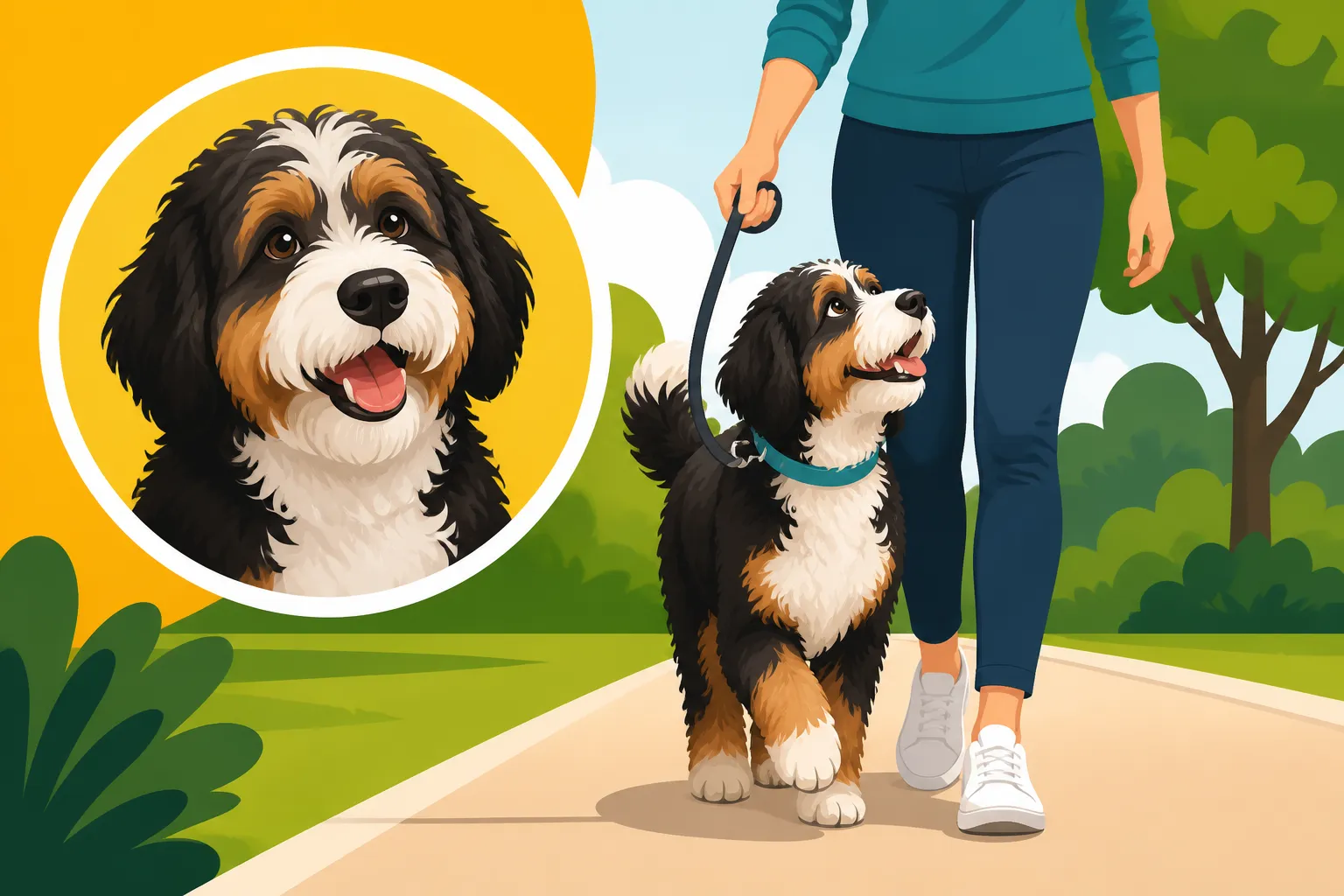
Teaching a Bernedoodle to walk politely beside you isn't an overnight fix; it's a journey that requires patience, consistency, and a whole lot of positive reinforcement. Think of it as teaching them a dance, where you're leading, and they're matching your rhythm.
Starting Indoors and in Low-Distraction Areas
Begin your loose-leash training in a quiet, low-distraction environment, like your living room or backyard. The fewer exciting things there are to pull towards, the easier it is for your Bernedoodle to focus on you. The goal here is to establish the concept of loose-leash walking before introducing the overwhelming stimuli of the outside world.
- "Magnet Hand" Technique: Hold a high-value treat in your hand at your side, letting your Bernedoodle sniff it. As they walk beside you, slowly move forward. Keep the treat near their nose, guiding them gently.
- Reward for Slack: The moment your Bernedoodle takes a step with a loose leash (no tension), say "yes!" or click (if you're using a clicker) and immediately give them the treat. The key is to reward the action of the loose leash. Take a few steps, reward. Take a few more, reward. This is how they learn that being close to you with a relaxed leash earns them good things.
- Change Directions Frequently: If your Bernedoodle starts to forge ahead, don't pull back. Instead, simply change direction. The sudden change will usually break their forward momentum and cause the leash to go slack as they reorient to follow you. The moment the leash is loose, reward them for checking in. This teaches them that paying attention to you keeps them on track. Whether a Bernedoodle Is Slower to Learn Than a Poodle is a common question, but consistency always wins out.
- Short and Sweet Sessions: Keep these early training sessions brief, about 5-10 minutes max, especially when you're starting. You want to end on a high note, with your Bernedoodle still engaged and successful.
Once they're consistently walking with a loose leash indoors, gradually move to slightly more distracting environments – your quiet street, then a park during off-peak hours.
Implementing the "Stop and Go" Method
This is a classic technique that many Bernedoodle owners swear by, particularly for those strong pullers. It teaches your dog that pulling gets them absolutely nowhere.
- Walk, Stop, Wait: Start walking. The instant your Bernedoodle applies tension to the leash – meaning they pull ahead even slightly – immediately stop walking. Stand still, like a tree. Do not move forward until the leash goes slack.
- Reward Slack and Resume: The moment the leash goes slack (they might turn to look at you, or take a step back), praise them or click, and then immediately start walking again.
- Repeat, Repeat, Repeat: This might feel like you're taking two steps forward and three steps back at first. You might only get a few feet before having to stop. That's okay! Persistence is key. Your Bernedoodle will quickly learn that pulling makes the walk stop, and a loose leash makes the walk continue. This repetition is vital. What a Bernedoodle Will Work For is usually getting to continue their walk!
Being Consistent and Patient
Consistency is the single most important factor in loose-leash training. Every single person who walks your Bernedoodle must use the same methods. If one person lets them pull, it undoes the training you've worked so hard on. Make sure everyone in the family is on board.
Patience is equally crucial. Bernedoodles are intelligent, but they are also powerful and often have a strong desire to explore. They won't master this overnight. There will be days when it feels like they've forgotten everything. Take a deep breath, go back to basics, and remember that every successful step, no matter how small, is progress. Positive reinforcement, always. Avoid harsh corrections or jerking the leash, as this can damage your relationship with your dog and make them fearful of walks. Even established online programs like BAXTER & Bella emphasize this consistent, positive approach.
Troubleshooting Common Leash Walking Challenges
Even with the right tools and a solid training plan, you're bound to hit some bumps in the road. Bernedoodles, with their delightful mix of Bernese charm and Poodle smarts, can present unique challenges. It’s important to anticipate these and have a strategy for overcoming them.
Dealing with Distractions and Over-Excitement
Distractions are the arch-nemesis of loose-leash walking. A passing dog, a bicyclist, a child playing, or even a particularly interesting clump of grass can turn your well-behaved Bernedoodle into a pulling machine. Whether a Bernedoodle Reacts to Other Dogs on Leash is a common concern.
- Proximity and Gradual Exposure: When you see a distraction approaching, increase your distance from it. The further away you are, the less intense the distraction is for your Bernedoodle, and the easier it will be for them to focus on you.
- "Look at That" Game: This game teaches your Bernedoodle to look at a distraction, then voluntarily look back at you for a reward.
- When your Bernedoodle spots a distraction (e.g., another dog), before they react, say "yes!" and give them a high-value treat.
- Repeat this as the distraction moves past, or as you get slightly closer. The goal is to change their association: "Other dog means good things from owner!" rather than "Other dog means PULL!"
- Eventually, they will see the distraction and automatically look to you for their treat.
- Keep Moving (or Strategically Stop): If your Bernedoodle is overwhelmed and pulling hard towards a distraction, you can either:
- Change Direction: As mentioned earlier, a sharp turn in the opposite direction breaks their focus and momentum.
- The "Stop and Go": If changing direction isn't feasible, revert to the "stop and go." Stand still until they disengage from the distraction and the leash goes slack, then reward and move on.
- Pre-Walk Exercise: A tired Bernedoodle is a well-behaved Bernedoodle. Before a training walk, consider a vigorous play session in the yard, a game of fetch, or some mental puzzles. Burning off some of that initial energy can significantly reduce pulling due to over-excitement.
When Your Bernedoodle Ignores You
Sometimes it feels like your Bernedoodle has selective hearing, especially when something exciting is happening. Whether a Bernedoodle Ignores a Command It Knows is a common frustration, but it's usually not malicious.
- Increase Reward Value: If your Bernedoodle isn't paying attention, your treats might not be exciting enough to compete with the environment. Level up your treats! Instead of kibble, try tiny pieces of hot dog or cheese.
- Practice in Quieter Settings: If your Bernedoodle is consistently ignoring you in a busy park, it means the environment is too challenging right now. Go back to a quieter area where they can succeed, and gradually reintroduce distractions. Build up their focus in easier settings before expecting it in high-stimulus ones.
- Engage with Games: Don't just walk; interact! Play short games of "find it" with treats scattered in the grass, practice quick "sit" or "down" commands, or do some impromptu tug if your Bernedoodle loves it. These interactions build engagement and teach them that you are interesting, even when the world is full of other exciting things.
- Consider "Focus" Cues: Teach a specific command like "Watch me!" or "Focus!" indoors first. Hold a treat to your nose, say the cue, and reward when they make eye contact. Practice until it's solid, then gradually introduce it outdoors, starting with minimal distractions. This gives you a tool to grab their attention when needed.
Managing a Bernedoodle's Strength and Stubbornness
Let's face it, Bernedoodles are strong. A determined Bernedoodle can easily pull an adult off balance, making Whether a Bernedoodle Pulls Its Owner Over a genuine concern. You might also encounter what feels like stubbornness. Whether a Bernedoodle Is Stubborn or Just Slow is a question many owners ask. Often, it's not stubbornness but a lack of understanding or overwhelming stimuli.
- Consistency, Consistency, Consistency: I can't stress this enough. Every step of every walk needs to reinforce loose-leash walking. If you occasionally let them pull, you're teaching them that sometimes pulling works.
- Short, Frequent Training: Instead of one long, frustrating walk, try several shorter training sessions throughout the day. Your Bernedoodle (and you!) will stay more engaged and less overwhelmed.
- Review Your Gear: If you're consistently losing the battle, revisit your tools. Is your harness fitted correctly? Is it truly a front-clip, or are you accidentally using a back-clip? Are you sure a head halter isn't needed for your specific dog's strength and pulling habits? Don't be afraid to experiment to find what works best for your Bernedoodle and your ability to manage them.
- Professional Help: If you're feeling truly overwhelmed or aren't seeing progress, don't hesitate to reach out to a professional dog trainer. They can offer personalized advice, observe your specific situation, and teach you techniques tailored to your Bernedoodle's personality and challenges. Programs like BAXTER & Bella offer online resources and live coaching that can be invaluable.
- Patience and Empathy: Remember that your Bernedoodle isn't trying to be difficult. They're a dog, and they're responding to their environment and instincts. Your job is to kindly and consistently guide them to more desirable behaviors. It takes time, but the reward of a peaceful, enjoyable walk with your loyal companion is absolutely worth it.
Teaching your Bernedoodle to walk politely beside you is one of the most important things you can do to strengthen your bond and ensure a lifetime of happy adventures together. It won't always be easy, but with the right tools, consistent effort, and a whole lot of love, you'll get there.
Disclaimer
This article is for general informational purposes only and does not constitute professional advice. Laws, prices and regulations vary by location and change over time. Consult a qualified professional for guidance on your specific situation.