Whether a Mini Bernedoodle Is Half the Grooming Bill
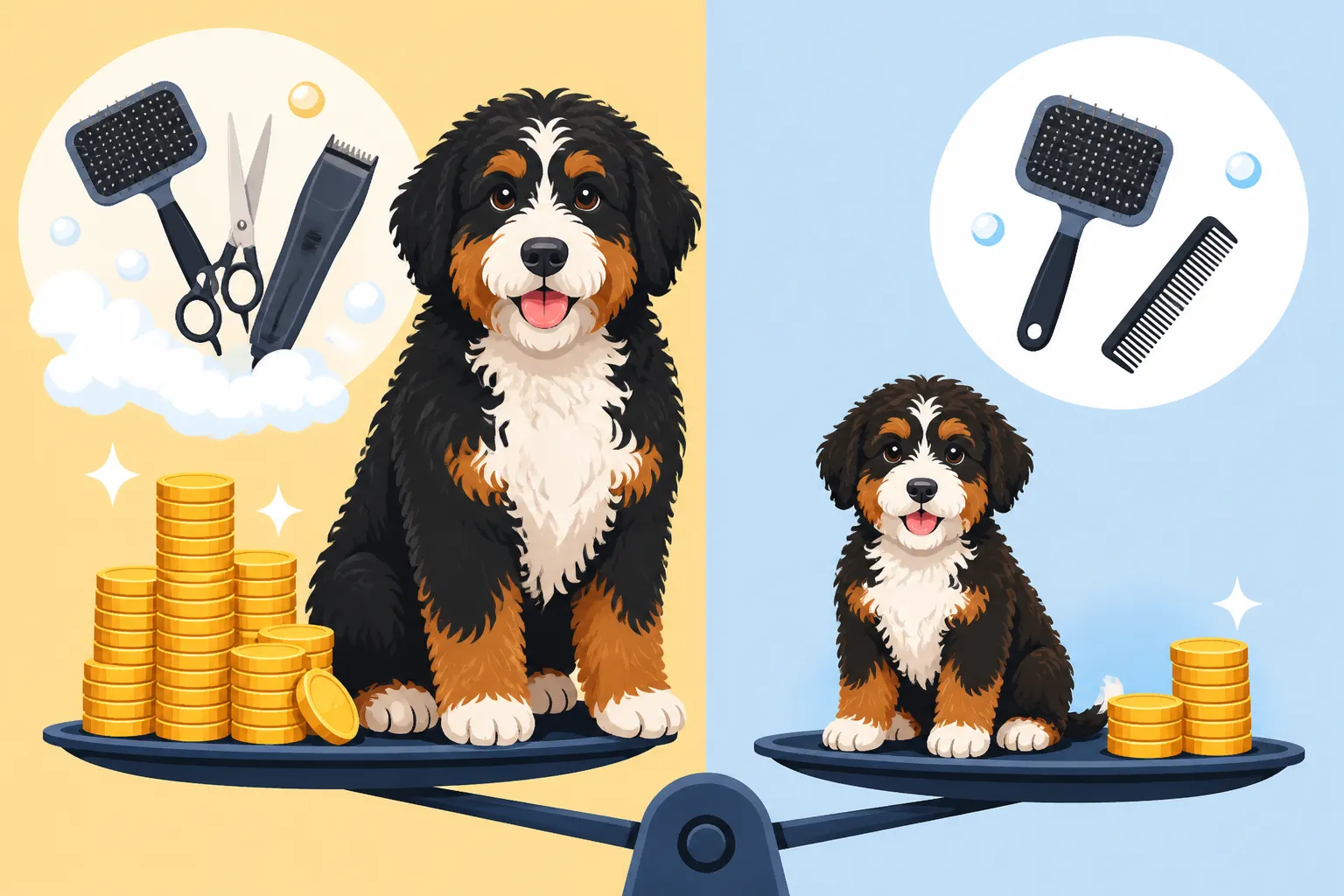
It’s a common, and completely understandable, thought when you’re considering a Mini Bernedoodle: "Smaller dog, smaller grooming bill, right? Maybe half the cost of a standard Bernedoodle?" Oh, if only it were that simple! Many prospective owners assume that because a Mini Bernedoodle is significantly smaller than its Standard counterpart, the grooming costs will scale down proportionally. Unfortunately, the reality of doodle grooming, regardless of size, is far more nuanced, and you might be surprised to learn that while there might be a slight reduction, it's rarely a straight 50% cut. This guide will walk you through why that assumption often doesn't hold true and what truly drives your Mini Bernedoodle's grooming expenses.
The Reality of Bernedoodle Grooming Costs
When you look at a fluffy, adorable Mini Bernedoodle, it’s easy to think, "Less dog, less hair, less money for the groomer." But the math simply doesn't work out that way in the world of professional pet grooming. Grooming is a skill-based, time-intensive service, and many of the fixed costs and efforts remain consistent whether the dog is 25 pounds or 80 pounds.
Size Isn't Always Linear for Grooming
Imagine you're baking a cake. If you bake a small cupcake versus a large wedding cake, the ingredients are a bit less for the cupcake, but the skill, the time to decorate, and the care required are still there, sometimes even more intricate for smaller details. Grooming is similar. While a groomer might use slightly less shampoo or conditioner on a Mini Bernedoodle compared to a What a Standard Bernedoodle Groom Costs, the bulk of their work isn't just about product volume.
Think about the physical setup of a grooming salon: the tub, the drying stations, the grooming tables, the specialized clippers and scissors. These tools and the overhead to run the business don't magically become cheaper just because a smaller dog walks in. Furthermore, the expertise required to handle a potentially squirmy, fluffy doodle, to prevent nicks, and to achieve that perfect "doodle cut" is the same, whether it's a giant or a miniature version. You're paying for their time, their training, their equipment, and their patience, which are all pretty consistent regardless of the dog's exact weight.
The Time Factor in Mini Bernedoodle Grooming
The biggest misconception is that less surface area means significantly less time. While it's true a groomer might shave a large section of a Standard Bernedoodle faster than the same section on a mini simply due to the sheer size, the detail work on a mini can sometimes take just as long, if not longer. Think about those tiny paws, the expressive doodle face, the sensitive areas around the ears and tail – these all require meticulous attention.
A groomer isn't just rushing a blade over a dog; they are carefully brushing, drying, detangling, scissoring, and clipping. Each of these steps takes focused time and effort. A Mini Bernedoodle still has four paws to trim, two ears to clean and potentially pluck, a full coat to wash and thoroughly dry (which can be surprisingly long for a dense doodle coat), and a haircut that needs to be symmetrical and aesthetically pleasing. These aren't tasks that get halved just because the dog is smaller. If anything, the smaller scale might even demand more precision in certain areas.
What Influences Your Mini Bernedoodle's Grooming Bill
So, if size isn't the primary driver, what does dictate how much you'll spend on your Mini Bernedoodle's spa days? It boils down to a few critical factors that are largely independent of whether your dog is 25 pounds or 80.
Coat Type and Condition are Paramount
This is arguably the single biggest determinant of your grooming bill. Bernedoodles, regardless of size, come with a variety of coat types: wavy, curly, and occasionally straight. The wavy and curly coats, while often low-shedding, are notorious for matting. If your Mini Bernedoodle has a thick, curly, or even dense wavy coat, and it isn't brushed regularly at home, mats will form. And mats are the groomer's nemesis, and therefore, your wallet's nemesis.
A groomer faced with a matted Mini Bernedoodle has two main options: spend hours carefully de-matting (which is often painful for the dog and expensive for you, charged by the hour) or shave the coat down completely. Neither is ideal, and both will significantly increase the cost. A dog presented with a well-maintained, tangle-free coat will always be cheaper and faster to groom. Consistent daily or every-other-day brushing, especially in high-friction areas like armpits, behind the ears, and the britches, is your best defense against costly matting. For a comprehensive guide, check out The Volume of Coat a Bernedoodle Owner Brushes Weekly.
Groomer's Rates and Location
Just like any service, the price for grooming can vary wildly based on who you choose and where you live. A highly experienced, in-demand groomer with a loyal client base, especially one specializing in doodles, will naturally charge more than a brand-new groomer or a less specialized salon. Their expertise in handling complex coats, understanding breed-specific cuts, and ensuring a stress-free experience for your dog is a premium service.
Geographic location also plays a massive role. Grooming salons in bustling urban centers or affluent suburban areas will generally have higher overheads (rent, staff wages) and will pass those costs on to their clients. Conversely, a groomer in a smaller town or rural area might have lower prices. It's not uncommon for the same service to cost 20-30% more in one area versus another, even for the same size and breed of dog. This factor often overshadows any slight cost difference due to dog size.
Frequency of Grooming
Another significant cost driver is how often you schedule professional grooms. It might seem counterintuitive, but trying to stretch out the time between grooming appointments to save money often has the opposite effect. A Mini Bernedoodle with a typical doodle coat needs professional grooming every 6-8 weeks, sometimes even every 4 weeks if you prefer a longer, fluffier look that requires more maintenance.
If you wait 10, 12, or even 16 weeks between appointments, the chances of matting increase exponentially, especially during "coat change" periods as they grow from puppy fluff to adult coat. When mats occur, the groomer has to spend extra time and effort on dematting, or they may even have to shave your dog completely, adding significant surcharges to your bill. Sticking to a consistent schedule, even if it feels like frequent visits, often results in a lower per-visit cost and a happier, healthier coat for your Mini Bernedoodle in the long run. To understand the bigger picture, consider A Year of Grooming Bills on a Standard Bernedoodle.
Breaking Down the Typical Grooming Services
Understanding what goes into a typical grooming appointment can help you see why the price doesn't just shrink with your dog's size. Each step is essential, whether your Bernedoodle is mini or standard.
The Full Service Groom
When you take your Mini Bernedoodle in for a "full groom," you're signing up for a comprehensive spa day that addresses every aspect of their coat and hygiene. This isn't just a quick wash and trim; it's a multi-step process:
- Pre-Brush and Prep: The groomer starts by thoroughly brushing out the coat to remove loose hair and minor tangles before the bath. This helps the shampoo penetrate better and prevents mats from tightening when wet. For dogs with long coats, this can take a fair bit of time.
- Shampoo and Conditioning: Your dog will get a bath, often with specialized shampoos and conditioners designed for their coat type and any skin sensitivities. This involves multiple latherings and rinses to ensure the coat is squeaky clean.
- Thorough Drying: This is a crucial, time-consuming step for doodles. Their dense, often curly coats need to be dried completely and meticulously with high-velocity dryers, followed by fluff drying and brushing, to prevent matting and ensure an even cut. Incomplete drying can lead to skin issues and a poor finish.
- Full Haircut and Styling: This is where the artistry comes in. The groomer will use clippers and scissors to achieve the desired length and style, whether it’s a short "teddy bear" cut or a longer, flowing look. This includes precise work around the face, ears, paws, and tail.
- Nail Trim: A necessary part of hygiene, ensuring your dog's nails are kept at a healthy length to prevent discomfort or paw problems.
- Ear Cleaning and/or Plucking: The groomer will clean your Mini Bernedoodle's ears and, if necessary and depending on your preference and the dog's comfort, gently pluck excess hair from the ear canal to prevent infections.
- Final Brush and Finishing Touches: A last brush-through to check for any missed spots, a spritz of dog-friendly cologne, and sometimes a cute bandana or bow.
As you can see, every single one of these steps is required for a Mini Bernedoodle, just as it would be for a Standard. The time taken for each might be slightly less for smaller sections, but the overall process remains largely the same.
Add-on Services and Their Impact
Beyond the standard full groom, there are often additional services that can add to your bill. These are almost universally charged extra, regardless of your dog's size, because they require extra time, specialized products, or additional skill.
- Dematting Fees: This is probably the most common and expensive add-on. If your Mini Bernedoodle arrives with significant matting, the groomer will either charge an hourly rate to try and brush them out (which can easily add a substantial amount to your bill) or advise a full shave-down, which still takes extra time and effort. It's often painful for the dog, too. You can learn more about this specific cost in What Dematting a Bernedoodle Costs by the Hour.
- Anal Gland Expression: While some groomers include this, many charge extra for this hygienic service.
- Specialty Shampoos and Conditioners: If your Mini Bernedoodle has sensitive skin, allergies, or needs a flea and tick bath, medicated or hypoallergenic shampoos might incur an additional charge.
- Teeth Brushing: Many salons offer a quick brush with pet-safe toothpaste as an add-on.
- De-shedding Treatments: While Bernedoodles are often low-shedding, some still have a denser undercoat, and a de-shedding treatment (often involving specific shampoos and brushing techniques) can be offered.
- Pad Trims/Paw Balm: Extra attention to paw pads or moisturizing balms can be additional services.
These services demonstrate that the cost isn't solely tied to the dog's physical dimensions but to the condition of the dog and the specific care it requires.
Strategies for Managing Mini Bernedoodle Grooming Costs
While you might not achieve a 50% discount on grooming simply because you chose a mini, there are definitely proactive steps you can take to keep those costs manageable and ensure your Bernedoodle looks and feels their best.
Invest in Home Grooming
This is hands down the most impactful thing you can do to reduce your professional grooming bills. A well-maintained coat coming into the salon requires less work from the groomer, which translates to less time and therefore less cost for you. It also makes the experience more comfortable for your dog.
You don't need to become a professional groomer yourself, but investing in a few key tools and dedicating regular time to coat care can make a huge difference. You'll want a good slicker brush, a metal comb that can reach down to the skin, and possibly a detangling spray. For drying after home baths (which you might do between professional grooms), a high-velocity force dryer, though an initial investment, can be invaluable for thoroughly drying that thick doodle coat and preventing mats. Brands like Chewy offer a wide range of these home grooming supplies, making it easy to get started. Understanding the realistic expectations of home grooming can be found in Whether Grooming a Bernedoodle at Home Is Realistic.
By keeping your Mini Bernedoodle's coat tangle-free, you avoid those hefty dematting fees and ensure the groomer can focus on the haircut rather than untangling a neglected coat. Even 15-20 minutes every other day can prevent hours of professional work.
Regular Professional Appointments
As we touched on earlier, consistency is key. Rather than trying to save money by extending the time between grooms, embrace a regular schedule, typically every 6-8 weeks. Think of it like preventive maintenance for your car – small, regular services prevent bigger, more expensive problems down the line.
Some owners opt for full grooms every 8 weeks, with a "bath and tidy" appointment in between (around the 4-week mark). A bath and tidy typically includes a bath, blow-dry, brush-out, face trim, paw trim, and sanitary trim, but no full body haircut. This helps keep the coat in excellent condition, prevents matting in those crucial areas, and makes the full groom much easier for both the dog and the groomer. While it adds an extra appointment, the cost per bath and tidy is significantly less than a full groom, and it often prevents the need for expensive dematting surcharges at the next full appointment.
Research Groomers and Packages
Don't just pick the first groomer you find. Take the time to research local options, read reviews, and ask for recommendations from other Bernedoodle owners in your area. Many groomers offer different pricing tiers based on the services included or even loyalty programs for regular clients.
When you call for a quote, be specific about your dog's breed (Mini Bernedoodle), weight, age, coat type (if you know it – curly, wavy), and how often they're currently groomed. Ask for an estimate for a full groom and also for a bath and tidy. Some salons offer package deals if you book multiple appointments in advance, or discounts for puppies who are just getting introduced to grooming. Don't be afraid to visit a few salons, check out their facilities, and meet the groomers. A good relationship with a skilled groomer who understands doodle coats is priceless for your Mini Bernedoodle's comfort and your budget.
Here’s a quick overview of how factors generally influence grooming costs for Bernedoodles of all sizes:
| Factor | Low Cost Impact | Medium Cost Impact | High Cost Impact |
|---|---|---|---|
| Dog Size (Mini vs. Standard) | Minimal difference (Mini slightly less) | Small difference (time reduction) | Negligible difference (fixed costs) |
| Coat Type | Wavy, well-maintained | Wavy/Curly with minor tangles | Dense curly, prone to matting |
| Coat Condition | Clean, brushed, no mats | Some tangles, minor mats | Heavy matting, pelted |
| Grooming Frequency | Every 4-6 weeks (consistent) | Every 8-10 weeks (some tangles possible) | Every 12+ weeks (high matting risk) |
| Groomer Experience | New groomer, general salon | Experienced, doodle-friendly groomer | Specialized doodle salon, highly sought-after |
| Geographic Location | Rural/lower cost of living | Suburban/moderate cost of living | Urban/high cost of living |
| Add-on Services | None | Basic (e.g., anal glands, specialty shampoo) | Extensive (e.g., extensive dematting, teeth clean) |
As you can see, while "Mini" might put you in the "minimal difference" column for size, the other factors can quickly push your costs into the "high impact" range if not managed properly.
In conclusion, the idea that a Mini Bernedoodle's grooming bill will automatically be half that of a standard is a lovely thought, but it’s largely a myth. While there might be a small reduction in cost due to slightly less drying time or product use, the primary drivers of grooming expenses – the groomer’s skill, time, coat condition, and frequency of care – remain largely the same. By being proactive with home grooming, sticking to a regular schedule, and finding a great groomer, you can manage your Mini Bernedoodle's grooming costs effectively, ensuring they always look their best without breaking the bank.
Disclaimer
This article is for general informational purposes only and does not constitute professional advice. Laws, prices and regulations vary by location and change over time. Consult a qualified professional for guidance on your specific situation.