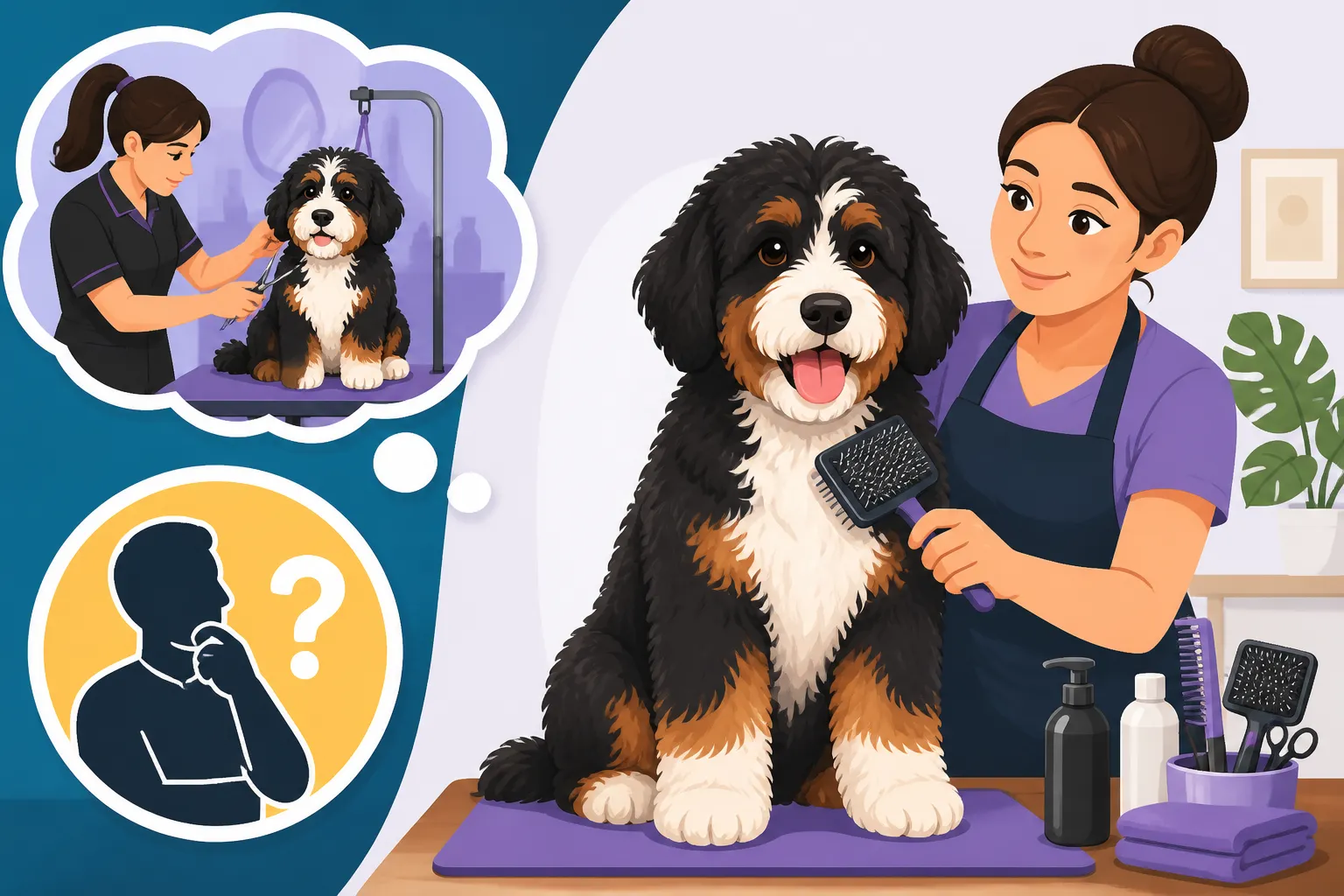
Whether Grooming a Bernedoodle at Home Is Realistic
Many Bernedoodle owners find themselves staring at a fluffy, adorable, yet increasingly shaggy companion, wondering if tackling that magnificent coat at home is truly feasible. The thought of those hefty professional grooming bills can make even the most squeamish owner consider a DIY approach. It's a daunting task, let's be honest, trying to keep a dog that can weigh up to ninety pounds looking neat and mat-free when their coat seems to grow inches overnight. This comprehensive guide will walk you through the realities, challenges, and necessary steps to determine if grooming your Bernedoodle at home is a realistic and sustainable option for you and your beloved furry friend.
Understanding the Bernedoodle Coat: Your Primary Challenge
Before you even pick up a brush, you need to understand the beast (or beauty, rather!) you're dealing with. Bernedoodles aren't like short-haired dogs that just need a quick wipe-down. Their coats are designed to be eye-catching, yes, but also incredibly demanding.
Understanding Bernedoodle Coat Types
The Bernedoodle's coat is a direct inheritance from its Bernese Mountain Dog and Poodle parents, and it can vary wildly. This isn't a one-size-fits-all situation, and the type of coat your Bernedoodle has will significantly impact the effort required for home grooming.
You might have a pup with a lovely, flowing wavy coat, which is often considered the "ideal" Bernedoodle look. This coat is typically softer, less prone to tight curls, and can sometimes be a bit easier to manage than its curlier counterparts, though it's still far from maintenance-free. Then there are the lucky few who get a very curly coat, closely resembling that of a Poodle. While often lauded for being the most "non-shedding" and "hypoallergenic" of the types, this coat is a magnet for mats. Those tight curls grab onto anything and everything – dirt, leaves, dead hair – intertwining them into formidable tangles. Finally, and less common, some Bernedoodles inherit more of the Bernese straight coat. These coats, while beautiful, are usually the ones that shed the most and can still mat, especially when wet or if they have a dense undercoat. Knowing whether you have The Wavy Coat Most Bernedoodles Carry or The Curly Coat Bernedoodle and Its Upkeep is crucial for preparing yourself. Each type requires specific attention and tools.
The Challenge of the Undercoat and Matting
Regardless of the curl pattern, many Bernedoodles, especially those with more prominent Bernese genetics or F1 generations, possess a dense undercoat that adds another layer of grooming complexity. This soft, woolly undercoat is fantastic for insulation but terrible for matting. It traps shed hair against the skin, and if not thoroughly brushed out, it quickly forms tight, painful mats. These aren't just cosmetic issues; mats can pull on the skin, causing discomfort, irritation, and even skin infections. They can hide parasites, skin problems, and prevent air circulation, leading to hot spots.
The challenge intensifies when a Bernedoodle's puppy fluff transitions to its adult coat. This period, often around 8 to 18 months, is notorious for matting. You'll find yourself needing to brush your Bernedoodle daily, sometimes twice a day, just to keep ahead. You might discover The Month a Bernedoodle Puppy Starts Matting Daily hits sooner than you expected, turning your adorable fluffball into a matted mess seemingly overnight if you're not vigilant. It’s a constant battle, and one that requires dedication and the right technique to win.
The Sheer Volume of Coat
Let's talk about the sheer amount of hair on a Bernedoodle, especially a standard-sized one. These are big dogs, often seventy to ninety pounds, and they are covered in thick, luxurious fur from nose to tail. Even a mini Bernedoodle has a substantial coat for its size. This isn't just a surface brush-over job; it's a deep dive into layers of fur.
When you commit to home grooming, you're signing up for considerable time and physical effort. Imagine trying to wash, dry, and thoroughly brush out a fluffy blanket that also happens to be a living, wriggling, sometimes uncooperative animal. That's a good analogy for tackling a large Bernedoodle's coat. The amount of dead hair that comes out during a proper brush-out can be astonishing, filling brush after brush. This volume means every step of the grooming process—brushing, bathing, drying, trimming—takes significantly longer than you might anticipate. It’s not just a quick thirty-minute task; think hours, not minutes, for a full groom.
Essential Home Grooming Tools: Your DIY Arsenal
You can't go into battle without the right weapons, and home grooming a Bernedoodle is definitely a battle against mats and tangles. Investing in quality tools isn't optional; it's absolutely necessary if you want to succeed and avoid causing your dog pain or frustration.
Brushes and Combs You Can't Live Without
Forget the single-purpose dog brush you might have for a short-haired breed. A Bernedoodle requires a whole toolkit. Your absolute must-haves include a good quality slicker brush and a sturdy metal comb. The slicker brush, with its fine, wire bristles, is your workhorse for separating and detangling hair, getting down to the skin to lift out dead undercoat and prevent mats. It's the brush you'll be using for How Often a Bernedoodle Should Be Brushed, which is often daily for many Bernedoodles.
However, a slicker brush alone isn't enough. You also need a metal comb, ideally one with both wide and fine teeth. This comb is your mat detector and finishing tool. After using the slicker brush, you must run the metal comb through the entire coat, from root to tip. If the comb snags, you've found a mat that the slicker missed, and you need to go back and work it out gently. Without this comb, you might think you've brushed your dog thoroughly, only to discover painful mats hiding close to the skin. The Slicker and Rake a Bernedoodle Needs should ideally be ergonomic, because you'll be holding it for long periods. You might also find a dematting rake or a shedding blade useful for those denser undercoats, but use them with caution to avoid cutting the skin.
Clippers, Scissors, and Force Dryers
This is where the investment can get serious, but it's crucial. You'll need a good set of clippers for body trims and sanitary areas. Don't skimp here; cheap clippers can overheat, pull hair, and cause undue stress to your dog (and you!). Look for professional-grade clippers with interchangeable blades, such as those from Andis or Wahl. Different blade sizes allow for various coat lengths, from a short summer shave to a longer, fluffy look.
Grooming scissors are essential for tidying up faces, paws, and other delicate areas. You'll need straight shears for general trimming and thinning shears to blend lines and soften edges, especially around the face and ears. Safety is paramount when using sharp tools near your dog, so sharp, high-quality scissors are vital for clean cuts and minimal pulling.
Perhaps the most underestimated, yet absolutely vital, piece of equipment is a high-velocity force dryer. This isn't your average human hairdryer. A force dryer blows air at a powerful speed, pushing water out of the coat and separating individual hairs. This is crucial for preventing mats during drying, especially after a bath, and significantly reduces drying time. Without a force dryer, a Bernedoodle can take hours to air dry, and even then, the coat will likely clump and mat, negating all your brushing efforts. Drying a Bernedoodle to the Skin effectively is critical for coat health. Brands like K9-II or Shernbao offer excellent options, though they are an investment.
Shampoos, Conditioners, and Detanglers
Bathing a Bernedoodle isn't just about getting them clean; it's a vital part of coat maintenance. You'll need a good quality dog shampoo, preferably one designed for thick or curly coats. A conditioning treatment is equally important to hydrate the hair, make it more manageable, and reduce static. Many professional groomers swear by specific brands to help with detangling.
Detangling sprays are another lifesaver. Applied to dry or slightly damp matted areas, they can help loosen knots, making them easier to brush out with less pain for your dog. Consider a leave-in conditioner or a special coat spray for use between baths to keep the coat hydrated and less prone to tangles. Chewy offers a wide selection of grooming products, including these specialized shampoos and detanglers, making it easy to find what you need. Remember, healthy hair is less likely to mat, so proper washing and conditioning are fundamental.
The Home Grooming Process: A Step-by-Step Reality
Alright, you've got your tools, you understand the coat. Now, how do you actually do this thing? It’s not just a quick wash and brush. It’s a process, and setting yourself up for success starts long before the first snip.
Starting Early: Puppy Acclimation
One of the biggest mistakes new Bernedoodle owners make is waiting until their puppy is a shaggy mess before introducing grooming. This breed requires intensive grooming, and the earlier you start acclimating your puppy to the process, the better. Begin with short, positive sessions as soon as you bring your puppy home. This means handling their paws, ears, tail, and face regularly. Let them hear the sound of the clippers (unturned on at first, then running but not touching them). Let them feel the brush gently. Reward heavily with treats and praise.
The goal is to make grooming a neutral or even pleasant experience, not a terrifying ordeal. Get them used to being on a grooming table or an elevated surface, which saves your back and signals to them that it's "grooming time." Even if you plan on professional grooming, these early acclimation steps are invaluable. A dog that is comfortable with being touched and handled will be much calmer for both you and a professional groomer, leading to a safer and more positive experience overall. Think about Teaching a Bernedoodle to Lie Down for Three Hours of Grooming – that kind of patience starts when they're tiny.
The Daily Brush Out Routine
This isn't a suggestion; it's a command for Bernedoodle owners. For many Bernedoodles, especially those with wavy or curly coats, a daily brush-out is non-negotiable. If you let it slide for even a few days, particularly during the dreaded coat change phase, you’ll be battling serious mats. This routine should involve line brushing.
Line brushing means systematically brushing small sections of hair at a time, starting from the bottom and working your way up. You part the hair, brush the section underneath, then drop more hair down and repeat. This ensures you get all the way down to the skin, where mats love to form. Use your slicker brush first, then follow with your metal comb to confirm there are no tangles. Pay extra attention to common matting spots: behind the ears, in the armpits, between the legs, and around the tail. These areas gather friction and moisture, making them mat-magnets. This consistent effort is crucial for maintaining a healthy, mat-free coat and preventing costly dematting fees at the groomer.
Bathing and Drying a Big Dog at Home
Bathing a standard Bernedoodle at home is an undertaking, often requiring a dedicated space like a large utility tub or even a walk-in shower. You'll need to thoroughly wet the coat, which can take time given its density. Apply shampoo, working it through all layers of the coat, making sure to rinse completely. Any leftover shampoo can irritate the skin and lead to more matting. Follow with conditioner, letting it sit for a few minutes before rinsing thoroughly.
The real challenge, as mentioned, is the drying. After a bath, towel dry as much as possible, then immediately begin using your high-velocity force dryer. As you dry, continuously brush the coat to keep the hair separated and straight. This is absolutely critical to prevent new mats from forming as the hair dries. If you let a Bernedoodle air dry, or use a low-power human dryer, you'll almost certainly end up with a matted mess. Drying a Bernedoodle to the Skin is a time-consuming but essential step. This entire bath-and-dry process for a large Bernedoodle can easily take two to three hours, if not more.
Trimming and Detailing: The Finer Points
Once your Bernedoodle is clean and thoroughly dry, it's time for the trim. This is where patience, a steady hand, and confidence come into play. For full body clips, you'll use your clippers with the desired blade length. Always clip with the grain of the hair for a softer finish, or against the grain for a shorter cut. Be mindful of sensitive areas, folds of skin, and bony protrusions.
Use your grooming scissors for the face, paws, and sanitary areas. Trim around the eyes to ensure clear vision and prevent irritation. Shape the beard and mustache, trim the hair around the paw pads to prevent slipping and debris accumulation, and keep the sanitary areas clean for hygiene. Don't forget to trim the nails, using appropriate nail clippers or a dremel tool. If you're unsure, or if your dog is particularly wiggly, it’s best to err on the side of caution and consider professional help for these more delicate tasks. The goal for home trimming isn't necessarily a show-ring perfect cut, but a clean, comfortable, and functional one for your dog.
Challenges and Realities of DIY Grooming
While the idea of saving money by grooming at home is appealing, the reality can be quite different. There are significant hurdles that many owners underestimate.
Time Commitment and Physical Demands
Let's be blunt: grooming a Bernedoodle is a huge time commitment. A full groom – brushing, bathing, drying, and trimming – for a standard Bernedoodle can easily take three to five hours, sometimes more if your dog is prone to matting or uncooperative. This isn't a once-a-month chore; many Bernedoodles need some form of grooming (at least a thorough brush-out) every other day, with a full bath and trim every 4-8 weeks. Think about The Volume of Coat a Bernedoodle Owner Brushes Weekly – it's substantial.
Beyond the time, it's physically demanding. You'll be bending, lifting, holding, and wrestling with a large, strong dog for extended periods. Your back, arms, and knees will feel it. If you don't have a dedicated grooming table (which is highly recommended for safety and ergonomics), you'll be on the floor or hunched over in the tub, adding to the physical strain. It’s not a task for the faint of heart or those with physical limitations.
Dealing with Matting and Tangled Hair
This is often where the dream of home grooming crashes into reality. Mats are painful to remove, and if they're severe, they can require hours of careful work to deconstruct, or even a full shave-down. Attempting to brush out tight mats on your own can cause significant pain, skin irritation, and even open wounds if you're not careful. This negative experience can then make your dog hate grooming even more.
A groomer has specialized tools, techniques, and experience in dealing with matted coats safely and efficiently. If your Bernedoodle routinely gets matted, the time and stress of trying to fix it at home might far outweigh the cost of a professional. Knowing What a Matted Bernedoodle Costs to Shave might be eye-opening, but sometimes it's the kindest, safest solution. If you consistently find yourself battling severe mats, it's a clear sign that professional intervention, or a drastic change in your home grooming routine, is needed.
Safety Concerns and Potential for Injury
Sharp clippers and scissors around a wiggly, eighty-pound dog are a recipe for disaster if you're not careful. It's incredibly easy to accidentally cut skin, especially in delicate areas like ears, paw pads, armpits, or around the genitals. Nicking an ear or causing a clipper burn can result in a painful wound, infection, and a trip to the vet. Even just pulling hair with dull clippers or a snagging brush can cause discomfort and make your dog associate grooming with pain.
Then there's the stress on the dog. An untrained or fearful dog can lash out, bite, or try to escape, potentially injuring both themselves and you. This is why early acclimation and positive reinforcement are so vital. If your Bernedoodle resists grooming aggressively or shows extreme fear, pushing through it at home can damage your bond and create long-term behavioral issues around grooming.
The "Perfect" Look vs. Practicality
Many Bernedoodle owners fall in love with the breed's signature fluffy, teddy-bear look. Achieving that perfectly sculpted, even, and blended cut requires significant skill, practice, and specialized tools. Home grooming, especially for beginners, often results in a less-than-perfect, sometimes choppy, "home haircut" look.
For some, practicality trumps aesthetics, and a clean, comfortable dog is the main goal, regardless of a few uneven spots. However, if you desire that salon-quality finish, it's likely you'll be disappointed with your own attempts. It's a matter of setting realistic expectations. Home grooming is about maintenance, comfort, and hygiene, not necessarily about replicating a professional show groom.
When to Call in the Professionals: Knowing Your Limits
There's no shame in admitting that some tasks are best left to the experts. Knowing when to wave the white flag and book an appointment with a professional groomer is a sign of responsible pet ownership.
Severe Matting or Behavioral Issues
If your Bernedoodle's coat has gone beyond a few minor tangles and developed into large, felted mats, it's time for a professional. Attempting to brush out severe mats at home is often painful for the dog, potentially leading to skin damage, and can make them resent all future grooming efforts. A professional groomer has the expertise, specialized tools, and often a higher comfort level with dealing with matted coats. They can safely shave down matted areas, minimizing discomfort and injury. Sometimes, a full shave is the kindest reset button for a severely matted coat.
Similarly, if your Bernedoodle exhibits significant behavioral issues during grooming—biting, snapping, extreme fear, or aggression—a professional groomer might be a safer option. They are trained in handling difficult dogs, recognizing stress signals, and using appropriate restraint techniques to complete the groom safely. In some cases, a Bernedoodle that fights its owner but not the groomer might benefit from the impartial, firm, yet gentle hand of an experienced professional.
Specialty Clips and Advanced Techniques
While you can certainly learn to give a basic, functional trim, achieving specific styles or intricate cuts is an art form best left to professional groomers. If you dream of a particular "teddy bear" cut, or if your Bernedoodle is destined for any kind of show or public appearance where aesthetics matter, a pro is your best bet. They understand canine anatomy, coat growth patterns, and how to use various blades and shears to create a balanced, aesthetically pleasing look.
Advanced techniques like hand-scissoring, precise blending, or even creative grooming are skills that take years to master. Don't expect to replicate these results with a few YouTube tutorials and a basic clipper set. If you value a consistently polished and professionally styled look for your Bernedoodle, then factoring in The Seventy to Hundred Fifty Dollar Bernedoodle Groom for regular appointments is a necessary part of ownership.
Recognizing Your Limits and Your Dog's Comfort
Ultimately, the decision to groom at home or professionally comes down to a realistic assessment of your own capabilities and your dog's tolerance. If you find yourself consistently dreading grooming sessions, if your dog is stressed or miserable during the process, or if you're frequently missing critical grooming steps, then home grooming might not be realistic.
It's okay to admit that you don't have the time, skill, or patience for the intense demands of a Bernedoodle coat. Prioritizing your dog's comfort and well-being, and preserving your bond with them, is far more important than saving a few dollars. If grooming at home causes you both undue stress, then outsourcing the task to a professional is a loving and responsible choice. Sometimes, a happy dog with a professional groom is better than a stressed dog with a homemade, uneven haircut.
Cost-Benefit Analysis of Home vs. Professional Grooming
When considering whether grooming your Bernedoodle at home is realistic, it often boils down to a calculation of costs versus benefits. It's not just about money; it's about time, effort, and peace of mind for both you and your dog.
Financial Savings vs. Time and Effort Investment
On the surface, grooming at home seems like a clear financial winner. Professional grooming can be expensive, with The Seventy to Hundred Fifty Dollar Bernedoodle Groom being a common range for a standard size, and often more if your dog is matted or requires extra services. Over a year, this can quickly add up to significant figures. However, home grooming isn't free. You have initial equipment costs – quality clippers, a force dryer, brushes, combs, scissors, shampoos – which can easily run into several hundred dollars. While these are one-time investments, they're substantial.
| Aspect | Home Grooming | Professional Grooming |
|---|---|---|
| Initial Cost | High (equipment purchase: $200-$800+) | Low (no equipment purchase) |
| Recurring Cost | Low (shampoo, blades, electricity: $20-$50/month) | High (groomer fees: $70-$150+ per session) |
| Time Investment | High (3-5+ hours per full groom, daily brushing) | Low (drop off, pick up) |
| Effort/Skill | High (requires learning, physical exertion) | Low (groomer handles everything) |
| Quality of Finish | Varies (often functional, can be uneven) | Consistent (professional, styled look) |
| Dog's Experience | Can be stressful if not acclimated, or bonding if positive | Can be stressful or positive depending on dog/groomer |
| Matting Management | Difficult and painful if severe | Expert handling, safe removal or shave |
The real "cost" of home grooming often comes in the form of time and effort. As discussed, a full Bernedoodle groom can consume half a day. If your time is valuable, or if you simply don't have that many consecutive hours to dedicate, the perceived financial savings might be offset by the opportunity cost of your time. If you work long hours or have other commitments, finding those dedicated hours can be incredibly challenging. For some, paying a professional is a worthwhile investment in regaining their free time and avoiding a major chore.
Quality of Groom and Coat Health
A professional groomer brings expertise, specialized tools, and an objective eye that most home groomers simply cannot match. They can achieve a much more even, polished, and aesthetically pleasing cut. More importantly, they are skilled at thoroughly cleaning and drying the coat, detecting early signs of skin issues, and identifying potential health problems hidden by fur. A good groomer understands coat dynamics and can implement strategies to prevent matting specific to your dog's coat type. They can also provide a deeper clean and more thorough drying than many owners can achieve at home, which is vital for preventing skin issues under that thick coat.
While a home groom can certainly keep your Bernedoodle clean and comfortable, it often lacks the finesse and consistency of a professional. If poor home grooming leads to chronic matting, skin problems, or accidental cuts, the vet bills could quickly negate any perceived savings. Furthermore, if you're not thoroughly line brushing and drying, you could inadvertently be setting your dog up for painful matting and skin irritation down the line. A consistently well-groomed coat from a professional can actually contribute to better overall health and comfort for your Bernedoodle.
Long-term Considerations for Your Bernedoodle's Well-being
Beyond the immediate financial and aesthetic concerns, consider the long-term well-being of your Bernedoodle. Positive grooming experiences, whether at home or with a professional, contribute to a happier, healthier dog. Regular handling and grooming also allow you to bond with your pet and check for lumps, bumps, or skin irritations that might otherwise go unnoticed.
If home grooming becomes a source of stress, fear, or pain for your Bernedoodle, it can lead to behavioral issues, a breakdown in trust, and even aggression around handling. This can impact their overall quality of life and even make vet visits more challenging. Pet insurance providers like Healthy Paws might cover unexpected vet visits resulting from grooming accidents or chronic skin conditions exacerbated by poor coat care, but prevention is always best. Sometimes, paying for a professional groomer who can handle your Bernedoodle with skill and patience is an investment in their mental and physical health, ensuring they remain comfortable and happy throughout their lives. Ultimately, the decision of whether grooming a Bernedoodle at home is realistic comes down to a personalized assessment of your resources, commitment, and your dog's unique needs. You can always blend the two, doing daily brush-outs and minor trims yourself, and leaving the full baths and body clips to a pro every few months.
Disclaimer
This article is for general informational purposes only and does not constitute professional advice. Laws, prices and regulations vary by location and change over time. Consult a qualified professional for guidance on your specific situation.