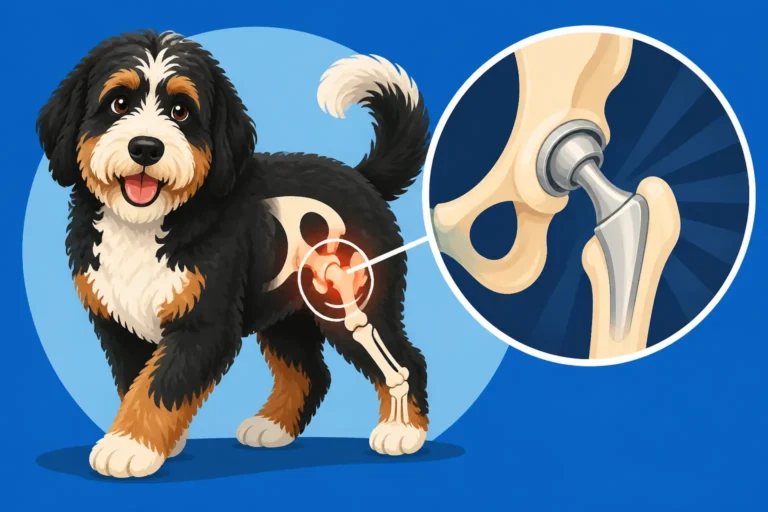
Whether a Rare Color Bernedoodle Is a Marketing Line
It's incredibly frustrating when you're trying to make an informed decision about bringing a Bernedoodle into your family, only to feel like you're navigating a minefield of marketing buzzwords. You see breeders advertising "rare" colors with eye-watering price tags, and it leaves you wondering: is this truly a unique genetic marvel, or is it just a clever way to charge more for a puppy? This guide will cut through the noise, exploring the genetics behind Bernedoodle colors and shedding light on whether a so-called "rare color Bernedoodle" is a genuine rarity or simply a successful marketing tactic.
Understanding Bernedoodle Color Genetics
Before we dive into the idea of "rare" colors, it helps to grasp the basics of how Bernedoodle colors work. Remember, a Bernedoodle is a cross between a Bernese Mountain Dog and a Poodle. Both breeds bring their own set of color genes to the table, and how they combine is what creates the wonderful variety we see.
The Basic Colors: Black, Tri-Color, Sable, Phantom
When most people picture a Bernedoodle, a few core color patterns probably come to mind. The most famous, of course, is the traditional tri-color, which mimics the Bernese Mountain Dog's classic black, rust, and white markings. This pattern is recessive, meaning both parents must carry the gene for it to express. If you're looking for that iconic look, What a Traditional Tri Color Bernedoodle Looks Like might be a good read.
Beyond tri-color, you'll also see solid black Bernedoodles, which inherit genes that suppress other color expressions, or phantom Bernedoodles. Phantom refers to a specific pattern of tan or apricot points on a black or brown dog, similar to a Doberman's markings. Sable is another common one, characterized by a lighter base coat with black tipping on the ends of the hairs, often giving a smoky or shaded appearance. These colors are all part of the normal genetic possibilities when crossing a Bernese and a Poodle, and their occurrence is well understood within canine genetics. They might be more or less common depending on the specific parentage and the breeder's focus, but they aren't inherently "rare" in a genetic sense.
"Rare" Colors and Their Origins
Now, let's talk about what breeders might label as "rare." These often include merle, chocolate tri, solid white or cream, and even blue eyes. For many potential owners, these colors are incredibly appealing, offering something a little different from the standard. However, the term "rare" can be a bit misleading. In some cases, these colors are simply less common because specific genetic combinations are needed, or perhaps breeders have historically focused on other traits.
Take chocolate tri, for instance. It’s essentially the traditional tri-color pattern, but with the black pigment replaced by brown. This happens when the dog inherits two copies of a recessive "brown" gene in addition to the tri-color genes. Genetically, it's not inherently more complex or less likely than black tri; it just requires a different combination of genes. Similarly, solid white or cream Bernedoodles often get their light coloring from the Poodle side, which carries genes for various shades of white, cream, and apricot. While a solid white Bernese is certainly rare, a solid cream Poodle is not, so a Bernedoodle inheriting mostly Poodle color genes might easily be light-colored. The perceived rarity is often driven by demand and aesthetic appeal rather than true genetic scarcity in the broader dog population.
Marketing vs. Reality: The "Rare Color" Premium
This is where things get really interesting – and sometimes a little frustrating for prospective puppy parents. The allure of a unique-looking dog is undeniable, and some breeders have become incredibly adept at tapping into that desire.
Why Breeders Use "Rare" in Marketing
Let's be honest: calling something "rare" immediately makes it sound more desirable, exclusive, and, inevitably, more expensive. For breeders, advertising a "rare color" Bernedoodle can be a powerful marketing tool to differentiate their puppies and justify a higher price point. If you see a breeder charging a premium for a color they label "rare," it's worth digging deeper into why it's considered rare. Is it because the genetic combination is genuinely hard to achieve, or simply because it's currently in high demand? Often, it's the latter.
Sometimes, a color might be less common in the general Bernedoodle population because fewer breeders are focusing on it, or perhaps the parent breeds don't easily produce it without specific genetic planning. This scarcity, whether intentional or accidental, allows breeders to market these puppies at a premium. For example, a perfectly marked "blue merle tri" Bernedoodle might fetch a much higher price than a standard black tri, not because it's genetically more complex, but because it's visually striking and currently fashionable. The key is understanding that "rare" in a marketing context often refers to market scarcity and perceived value, rather than actual genetic rarity or superior quality. This is especially true when considering Whether Color Should Change What You Pay for a Bernedoodle.
What Truly Makes a Color "Rare" (and if it applies to Bernedoodles)
From a purely genetic standpoint, a truly "rare" color would be one that results from an extremely uncommon mutation, or a highly complex interaction of multiple genes that occurs with very low probability. It would be something that geneticists would study because its existence challenges our understanding of canine coat color inheritance. Does this apply to Bernedoodles? For the most part, not really.
The colors typically marketed as "rare" in Bernedoodles – merle, blue eyes, chocolate tri, phantom, sable – are all well-documented genetic traits in dogs. They might be less common than black or traditional tri, but that doesn't make them scientifically "rare." The difference often lies in the frequency of these genes in the parent populations (Bernese Mountain Dogs and Poodles) and the intentional breeding choices made to produce them. For example, merle isn't naturally found in Bernese Mountain Dogs, so it must come from the Poodle side (or another breed introduced somewhere in the lineage, which is a whole other discussion for transparency). Therefore, a merle Bernedoodle isn't "rare" genetically; it just means a merle Poodle was used in the cross. The term "rare" is more a reflection of market dynamics and consumer preference than it is a biological reality in most Bernedoodle color cases.
Common "Rare" Bernedoodle Colors Under Scrutiny
Let's break down some of the most frequently marketed "rare" colors in Bernedoodles and see what's really going on behind the scenes.
Merle: A Case of True Rarity or Market Trend?
Merle is perhaps the most popular "rare" color in the Bernedoodle world, characterized by splotches of darker pigment on a lighter background, often with striking blue or odd-colored eyes. It's incredibly eye-catching, and puppies with this pattern command high prices. But is it genuinely rare? Not in the sense of being a genetic anomaly. The merle gene (M locus) is common in many breeds like Australian Shepherds, Border Collies, and some Poodles. Its presence in a Bernedoodle comes directly from a Poodle parent that carries the merle gene.
The reason merle often comes with a higher price tag isn't due to its inherent rarity, but rather its aesthetic appeal and the perceived complexity of breeding it. Ethical breeding of merle dogs requires a thorough understanding of genetics, as breeding two merle dogs together (a "double merle" cross) can lead to severe health issues like deafness and blindness. This is why you'll often see merle Bernedoodles advertised as special, but it's crucial for buyers to understand the genetics and potential risks. Whether Merle Is Safe to Breed in a Bernedoodle is a vital topic for any prospective owner. The demand for merle, coupled with the specialized knowledge (and ethical considerations) required for breeding, drives up its market value, but it's less about true genetic rarity and more about controlled supply and high demand.
Blue Eyes and Unique Markings: Fleeting Appeal?
Blue eyes are another trait often touted as "rare" and are usually accompanied by a significant price increase. While undeniably beautiful, blue eyes in Bernedoodles are most commonly associated with the merle gene. The merle gene can dilute eye pigment, leading to partial or full blue eyes. In some rare instances, blue eyes can occur independently of merle, but this is far less common in Poodles and Bernese Mountain Dogs. So, if a breeder is advertising blue-eyed Bernedoodles, it's highly likely they are merle dogs, and understanding merle genetics becomes paramount. Whether Blue Eyed Bernedoodles Have Eye Problems is a common question, and it often ties back to the merle gene.
Unique white markings, such as an unusually wide blaze or specific patches, might also be called "rare." These are often just variations of the white spotting genes that both Bernese Mountain Dogs and Poodles carry. While a particular pattern might be less common or especially striking, it doesn't indicate a genetic rarity beyond the normal variations seen in these breeds. Essentially, while these features can make a puppy stand out, their "rarity" is more often about visual preference and current trends than it is about a profound genetic uniqueness.
Chocolate Tri and Solid Colors: Demand Over Scarcity
Chocolate tri Bernedoodles feature the classic Bernese tri-color pattern, but with rich brown instead of black pigment. These are often marketed as "rare" and can command a premium. Genetically, the chocolate (or brown) color is caused by a recessive gene (b/b at the B locus). If a Poodle parent and a Bernese parent both carry this recessive gene, a chocolate tri Bernedoodle can be produced. It's not inherently more difficult to produce than a black tri, but it requires specific genetic carriers. Therefore, its "rarity" largely stems from the fact that fewer breeders might specifically aim for chocolate tri, or perhaps their breeding stock doesn't carry the necessary recessive genes as commonly as the black gene.
Similarly, solid-colored Bernedoodles – whether black, brown, cream, or apricot – can sometimes be presented as rare. A solid black Bernedoodle, for example, is simply one that inherits dominant black genes without any of the tri-color, phantom, or sable patterning genes expressing themselves. Solid cream or apricot Bernedoodles get their color primarily from the Poodle side. While a purebred Bernese is rarely solid, Poodles come in a vast array of solid colors. So, a Bernedoodle inheriting mostly solid Poodle genes might be solid-colored. Again, the perception of rarity for these colors is often influenced by current popularity and demand for more "flashy" patterns, rather than their genetic improbability. It's less about scarcity and more about current market trends.
The Importance of Health Over Hue
When the conversation turns to "rare" Bernedoodle colors and their associated price tags, it's easy to get caught up in the aesthetics. However, as a seasoned dog owner, I can't stress enough that color should always be secondary to health and temperament.
Prioritizing Health Clearances
No matter how stunning a Bernedoodle's coat color, it means very little if the dog is riddled with preventable genetic health issues. A truly responsible breeder will prioritize the health of their breeding dogs above all else, ensuring that they undergo comprehensive health clearances for conditions common to both Bernese Mountain Dogs and Poodles. This includes screenings for hip and elbow dysplasia, eye conditions, heart problems, and genetic diseases like Von Willebrand's disease and degenerative myelopathy. The Five Clearances a Bernedoodle Breeder Should Have is an excellent resource to understand what to look for.
A breeder who is overly focused on promoting "rare" colors without transparently providing health testing results for both parent dogs should raise a significant red flag. A beautiful coat won't make up for a lifetime of vet visits for inherited conditions. Always ask to see OFA (Orthopedic Foundation for Animals) or PennHIP certifications for hips and elbows, eye certifications (like CAER exams), and DNA test results for genetic diseases. If a breeder charges a premium for a "rare" color but skimps on health testing, that's not rarity you want to invest in; it's a risk.
Long-Term Costs Beyond the Purchase Price
It’s tempting to justify a higher purchase price for a "rare" colored Bernedoodle because it feels special. But remember, the initial cost of a puppy is just the tip of the iceberg when it comes to lifetime ownership. A higher price tag for a fancy color does not translate to lower future veterinary bills or less effort in care. In fact, some "rare" colors, like merle, can even come with increased health risks if not bred responsibly.
Consider the ongoing expenses: quality food (especially for a larger Bernedoodle, which can eat quite a bit), regular grooming to prevent matting, routine vet check-ups, vaccinations, and unexpected medical emergencies. These costs add up significantly over a Bernedoodle's lifespan, which can be The Twelve to Fifteen Years a Bernedoodle Is Sold On. This is why many owners opt for pet insurance, with providers like Healthy Paws offering plans to help mitigate the financial impact of unforeseen health issues. Don't forget the everyday essentials from places like Chewy or the potential for fresh dog food delivery services like Ollie, which all contribute to a Bernedoodle's well-being. Focusing too much on a "rare" color at the point of purchase can distract from the real, long-term financial commitment. It's essential to understand Insuring a Bernedoodle Against the Bernese Half and budget for all aspects of ownership.
Comparing Bernedoodle Colors: Marketing vs. Reality
To help you navigate the claims, here's a quick comparison of some common Bernedoodle colors, examining their perceived rarity versus their genetic reality and associated considerations.
| Color/Pattern | Perceived Rarity (Marketing) | Genetic Basis (Reality) | Common Price Range vs. Standard Black/Tri | Potential Health Concerns (Ethical Breeding is Key) |
|---|---|---|---|---|
| Traditional Tri | Common | Black, rust, white markings (recessive expression) | Base/Standard | General Bernedoodle health concerns |
| Solid Black | Common | Dominant black gene | Base/Standard | General Bernedoodle health concerns |
| Phantom | Mid-level Rare | Tan points on black/brown (specific gene combination) | Often slightly higher | General Bernedoodle health concerns |
| Sable | Mid-level Rare | Lighter base with black tips (agouti gene variants) | Often slightly higher | General Bernedoodle health concerns |
| Chocolate Tri | Rare | Tri-color with recessive brown gene instead of black | Significantly higher | General Bernedoodle health concerns |
| Merle | Very Rare | Merle gene (dilutes pigment in patches) | Substantially higher | Deafness/blindness if double merle (MM) |
| Blue Eyes | Very Rare | Often linked to merle gene | Adds to price, especially if not merle | Usually tied to merle, check eye health. |
| Solid White/Cream | Rare | Recessive Poodle color genes | Often slightly higher | General Bernedoodle health concerns |
Disclaimer
This article is for general informational purposes only and does not constitute professional advice. Laws, prices and regulations vary by location and change over time. Consult a qualified professional for guidance on your specific situation.