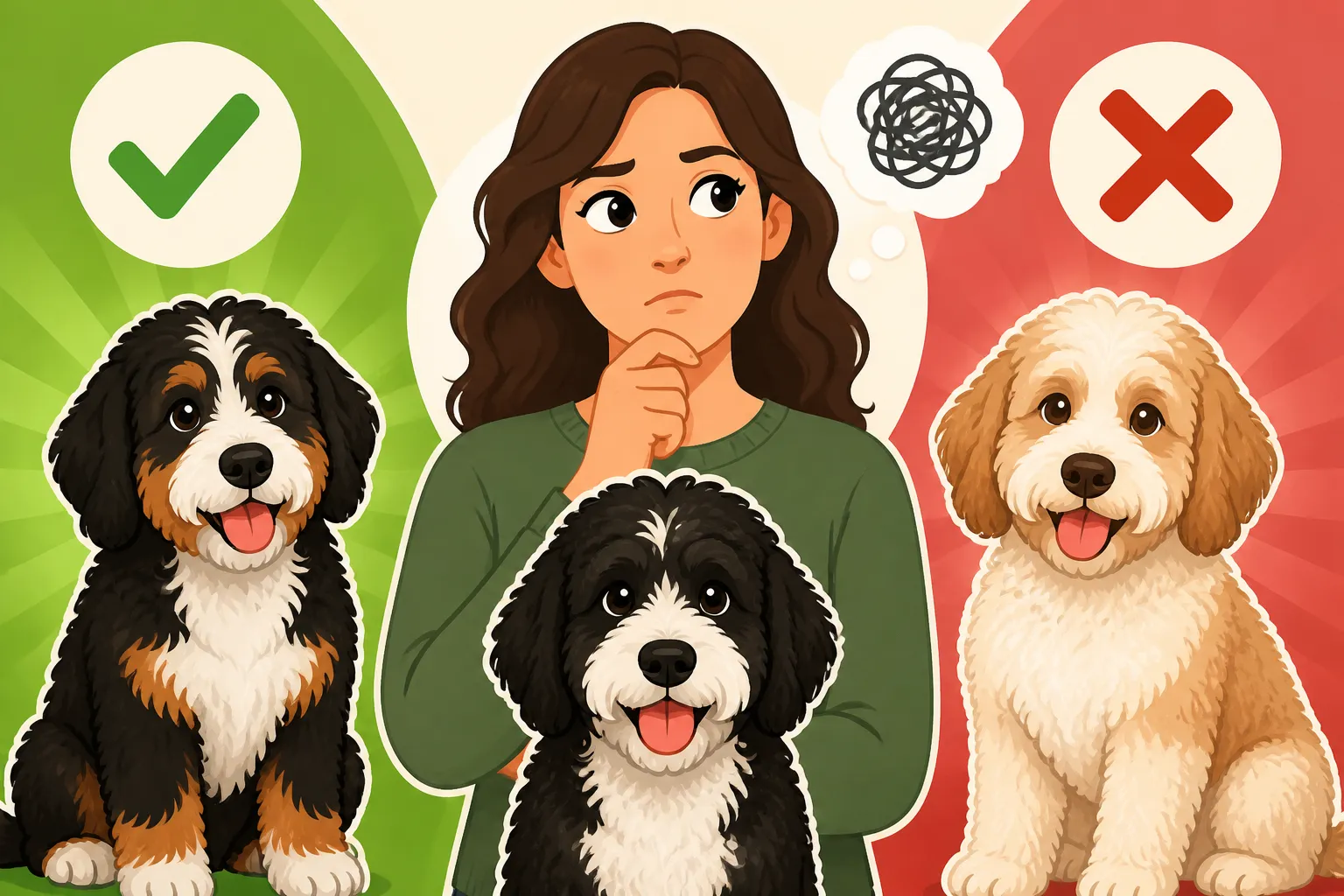
Whether Picking a Bernedoodle by Color Is a Mistake
It’s perfectly natural to fall in love with a particular Bernedoodle coat color or pattern. We see those stunning tri-colors, the unique merles, or a solid black with just the right amount of white, and our hearts just melt! But here’s the thing, dear reader: while a puppy's color is undeniably charming, making it the primary factor in your decision can inadvertently lead to heartbreak down the road. This guide will walk you through why prioritizing health, temperament, and ethical breeding practices over a specific coat color is the wisest choice for a long and happy life with your Bernedoodle.
The Allure of Color: Why We're Drawn to Specific Shades and Patterns
Let's be honest, who hasn't scrolled through countless photos of Bernedoodle puppies, swooning over their incredible variety? From deep ebony to striking tri-colors, and even the controversial merles, these dogs are undeniably gorgeous. It’s easy to get caught up in the "look," especially when you’re dreaming of your future furry family member.
The "Wow" Factor: Tri-colors, Merles, and Blue Eyes
There’s a reason certain Bernedoodle colors command a premium price and captivate our attention on social media. The classic tri-color, with its distinct black, rust, and white markings, is often what people picture when they think of a Bernedoodle. It's a direct nod to their Bernese Mountain Dog heritage, combined with the Poodle's often non-shedding coat. Then there are the merle patterns, which create a marbled, almost painted effect on the coat, sometimes accompanied by striking blue eyes. These are truly unique and visually arresting, often leading to a desire for something a little different.
The "wow" factor is powerful. It makes us pause, admire, and imagine our perfect companion. It's not wrong to appreciate beauty, but it becomes a potential pitfall when this aesthetic preference overshadows more crucial aspects of a puppy's well-being and suitability for your home. Breeders know this desire exists, and unfortunately, some exploit it.
The Desire for Uniqueness Versus Health
The quest for a "rare" or "designer" color can lead prospective owners down risky paths. While some color patterns are naturally occurring and perfectly healthy within the Bernedoodle genetic pool (like many tri-colors), others can be associated with less reputable breeding practices or even increased health risks. For example, some breeders might intentionally breed for highly sought-after, but genetically complex, patterns without fully understanding the underlying science or the potential for health issues.
It's common to see breeders charging significantly more for specific colors or patterns. While some price differences might reflect the inherent challenge in producing certain traits responsibly, an exorbitant price solely based on color should be a red flag. It suggests that aesthetics are being prioritized over the fundamental health and temperament of the puppies. Remember, a truly unique companion comes from a combination of great health, a wonderful personality, and a strong bond, not just a flashy coat.
Deeper Than the Coat: Health and Temperament as Top Priorities
When you welcome a Bernedoodle into your home, you're not just getting a pretty face; you're gaining a family member who will hopefully be with you for over a decade. During that time, the color of their fur will matter far less than their overall health and their personality. Focusing on these elements from the start sets the stage for a truly fulfilling relationship.
Inherited Health Concerns Across All Colors
Bernedoodles, like all breeds and crosses, are susceptible to certain inherited health conditions from both their Bernese Mountain Dog and Poodle parents. These issues, such as hip and elbow dysplasia, various forms of cancer, and bleeding disorders like Von Willebrand's Disease, are not linked to coat color. A vibrant, eye-catching merle puppy can have just as much risk for Elbow Dysplasia in a Growing Bernedoodle or Hips on a Ninety Pound Bernedoodle as a solid black one if the parents haven't been properly health tested.
For instance, the devastating impact of cancers like Histiocytic Sarcoma, which is prevalent in Bernese Mountain Dogs, is a significant concern for many Bernedoodle owners. While the cross aims to improve longevity, Whether the Bernedoodle Cross Actually Reduced Cancer is a complex question still being explored. Similarly, The Bleeding Disorder a Bernedoodle Gets From the Bernese, Von Willebrand's Disease, is a genetic condition that affects a dog's ability to clot blood, and its presence isn't indicated by coat color. These are serious considerations that should always come before a desire for a particular hue. Investing in a good pet insurance policy, like those offered by Healthy Paws, early on can provide immense peace of mind, regardless of your dog's color.
The Impact of Temperament: Beyond a Pretty Face
A Bernedoodle's temperament is a blend of the calm, loyal, and sometimes goofy Bernese, and the intelligent, active, and often sensitive Poodle. This combination can result in a wonderful companion – a dog that loves to cuddle, enjoys playtime, and is eager to please. However, a puppy from poorly chosen parents, selected for color rather than disposition, can inherit undesirable traits regardless of how stunning their coat is.
You might end up with a shy or anxious dog when you expected a confident, outgoing companion. The Shyness a Bernedoodle Gets From the Bernese is a real trait that can be exacerbated by poor socialization or genetic predisposition. Or perhaps a dog that struggles with training because it hasn't inherited the Poodle's keen intelligence, despite looking exactly like the "perfect" color you envisioned. Puppies also mature slower than they grow, so Why a Bernedoodle Matures Slower Than It Grows means you need a dog with a stable foundation. A dog's ability to integrate into your family, interact with children, or adapt to new situations will define your daily life together far more than whether it has a perfect white blaze or striking merle patches.
The Breeder's Role: Prioritizing Ethics Over Aesthetics
The breeder you choose is arguably the most critical factor in bringing home a healthy, well-adjusted Bernedoodle. Reputable breeders understand that a dog is more than just its appearance; they prioritize health, temperament, and genetic integrity above all else.
Health Testing and Genetic Clearances Are Non-Negotiable
An ethical Bernedoodle breeder will conduct extensive health testing on both parent dogs before breeding them. This isn't just a casual vet check-up; it involves specific screenings for conditions prevalent in Bernese Mountain Dogs and Poodles. This includes OFA (Orthopedic Foundation for Animals) certifications for hips and elbows, cardiac evaluations, eye clearances, and genetic panels for diseases like Von Willebrand's Disease and Degenerative Myelopathy. The Five Clearances a Bernedoodle Breeder Should Have are truly crucial, providing a roadmap to the potential health of their offspring.
When a breeder focuses purely on producing "trendy" colors without this rigorous health screening, they are putting their puppies (and your future heartache) at significant risk. They might even try to justify skipping tests by saying their dogs "look healthy" or that the mixed-breed status makes testing unnecessary, which simply isn't true. Whether an Untested Bernedoodle Litter Is Worth Buying is a resounding no, no matter how attractive the puppies are.
Understanding Color Genetics Versus Health Risks
While many Bernedoodle colors are safe, certain genetic combinations carry inherent health risks that an ethical breeder will actively avoid. The most well-known example is the Merle gene. While a single copy of the Merle gene produces beautiful patterns, breeding two Merle-patterned dogs together (a "double merle") can lead to severe health problems, including deafness, blindness, and other ocular defects.
A responsible breeder understands these genetics deeply and will never breed two merles together. If a breeder is offering "double merle" puppies or seems unconcerned about the risks associated with certain color pairings, that's a serious red flag. You should never support practices that knowingly put animal health at risk, and Whether a Double Merle Bernedoodle Should Be Sold when intentionally bred is a topic that ethical breeders take very seriously.
Avoiding "Designer" Color Scams
The demand for specific Bernedoodle colors has unfortunately led to a rise in "designer" color scams. Breeders will inflate prices dramatically for certain markings, like a "rare" blue merle or a "perfect" tri-color, sometimes without any corresponding investment in health testing or proper care. For instance, The Premium a Tri Color Bernedoodle Carries can be substantial, but that cost should reflect the breeder's dedication to health, not just rarity. Similarly, What a Merle Bernedoodle Is Priced At can be higher due to demand, but again, the focus should always be on ethical breeding.
When faced with a breeder charging thousands more for a particular color, ask yourself if that extra cost translates into tangible benefits for the puppy's health and upbringing, or if it's simply a marketing ploy. If it’s the latter, you’re not getting better value; you’re simply paying for hype. Long-term, those extra dollars might be better spent on high-quality food from a reputable brand like Chewy, or a fresh food subscription service like Ollie, ensuring your dog's daily nutritional needs are met, regardless of their coat color.
Making an Informed Choice: A Holistic Approach
Ultimately, choosing a Bernedoodle should be about finding a companion that will enrich your life for many years. This means looking beyond the superficial and making a decision based on well-rounded information and a solid understanding of what makes a good, healthy dog.
Looking Beyond the Puppy Photos
It's so easy to fall in love with a picture. Those adorable puppy eyes, that fluffy coat, those perfect markings! But a photograph can't tell you about the puppy's parents' health clearances, their temperament, or the environment they're being raised in. When you're considering a Bernedoodle puppy, always:
- Visit the breeder in person: If possible, spend time at the breeder's facility. Observe the cleanliness, how the puppies interact with their littermates and humans, and the disposition of the parent dogs (if available).
- Ask for health records: Don't just take their word for it. Ask to see the OFA certificates, genetic test results, and veterinary records for both parents. A reputable breeder will be transparent and proud to share this information.
- Prioritize temperament: Engage with the puppies. Do they seem confident and friendly, or overly timid or aggressive? A good breeder can help guide you to a puppy whose personality will best fit your lifestyle.
- Consider the breeder's philosophy: Do they seem genuinely invested in the well-being of their dogs, or does their conversation constantly circle back to colors and prices?
The Reality of Bernedoodle Coat Changes
Here's a little secret many new owners discover: a Bernedoodle's puppy coat and color can, and often will, change as they mature. What starts as a rich black might "clear" or fade to a deep charcoal or silver. Sables, which have black-tipped hairs, often lighten considerably, with the black receding as they grow. Even the intensity of tri-color markings can sometimes shift. Whether a Bernedoodle's Color Changes After the Puppy Coat is a common question, and the answer is frequently yes!
This reality further underscores why prioritizing color is a gamble. The "perfect" color you chose might not be the adult coat you end up with. Imagine falling in love with a puppy purely for its unique markings, only for them to fade or transform over its first year. If your attachment was solely to that aesthetic, you might find yourself disappointed, overshadowing the joy of having a loving companion.
Long-Term Joy Over Fleeting Appearance
Ultimately, the goal is to bring home a companion that will bring you immense joy and be a beloved member of your family for many years. This joy comes from their healthy body, their loving temperament, their silly antics, and the deep bond you build together – not the shade of their fur.
A dog with a wonderful temperament, free from the pain of preventable genetic diseases, will be a much happier and more fulfilling companion than one chosen for its rare coat color but plagued by health issues or behavioral problems.
Here’s a quick comparison to help you visualize the priorities:
| Factor | Prioritizing Color Only | Holistic Approach (Recommended) |
|---|---|---|
| Breeder Focus | Aesthetics, "rare" colors, high prices | Health, temperament, genetic testing, structure |
| Health Risks | Potentially higher for certain color genetics (e.g., double merle), unknown due to skipped tests | Minimized through parental screening and ethical breeding |
| Temperament | Unpredictable, may lack proper socialization | Prioritized for stability and family fit |
| Long-Term Joy | Risk of disappointment if health/temperament issues arise, or color fades | Higher likelihood of a happy, healthy, and predictable companion |
| Cost | Potentially inflated purchase price, high vet bills for preventable health issues | Fair price for a well-bred puppy, reduced long-term vet costs (for preventable issues) |
So, next time you're scrolling through those irresistible Bernedoodle photos, let yourself appreciate the beauty, but remember to let your head rule your heart when it comes to the final decision. Look for a reputable breeder, ask the hard questions about health and temperament, and choose a puppy that’s set up for a lifetime of health and happiness, no matter what color coat they wear.
Disclaimer
This article is for general informational purposes only and does not constitute professional advice. Laws, prices and regulations vary by location and change over time. Consult a qualified professional for guidance on your specific situation.