Whether an Untested Bernedoodle Litter Is Worth Buying
Oh, the age-old dilemma, isn't it? You're scrolling through listings, daydreaming about bringing home that fluffy Bernedoodle puppy, and then you spot one with a price tag that seems almost too good to be true. The catch? The breeder admits there's been no health testing on the parents. It’s a moment that makes your heart sink a little, because while the allure of a "bargain" is real, the potential heartbreak of a sick puppy is even more so. This guide is going to walk you through exactly why buying a Bernedoodle from an untested litter is a significant gamble, what risks you're truly taking on, and why those upfront savings rarely, if ever, pay off in the long run.
The Allure of the "Bargain" Bernedoodle Puppy
Let’s be honest, Bernedoodles are not cheap. The initial cost can be a hefty investment, and that alone can make anyone pause. When you see a price that's significantly lower, it’s only natural for your ears to perk up, especially if you’re trying to stick to a budget or just trying to save a little cash.
The Immediate Appeal of a Lower Price Tag
In the world of designer dogs, Bernedoodles have become incredibly popular, and with popularity comes a higher price point. You might find a standard Bernedoodle puppy costing upwards of $3,500 to $6,500, with mini and tiny versions often commanding even more. So, when a breeder advertises a puppy for $1,500 or even $2,000, it feels like finding a unicorn. That immediate rush of saving thousands of dollars can be incredibly compelling, especially if you’re a first-time dog owner who might not fully grasp the financial implications of potential health issues down the line. It's easy to think, "Maybe I got lucky!" or "Perhaps these specific lines are just naturally healthy." This thought process, while understandable, often leads down a path of regret.
The Breeder's Justification for Skipping Health Testing
Untested breeders often have a whole host of explanations for why they haven't done health clearances. Some might tell you, "Oh, our dogs are farm dogs, they're super healthy, never had an issue." Others might say, "Health testing is just a scam, it's so expensive, and my vet says my dogs are perfectly fine." You might even hear the classic, "These puppies are just for pets, not for showing, so testing isn't necessary."
While it's true that comprehensive health testing is an investment, often costing breeders hundreds, if not thousands, of dollars per breeding dog, these justifications are rarely, if ever, valid when it comes to a breed mix with known genetic predispositions. A responsible breeder wants to know the genetic health of their lines. They view it as a critical part of ethical breeding, not an optional expense. If a breeder is cutting corners here, what other corners are they cutting in terms of puppy care, early socialization, or even the quality of the parent dogs themselves? It’s a huge red flag that should prompt you to walk away, no matter how cute those puppy pictures are.
Understanding the Health Risks Without Testing
This is where the rubber meets the road. Skipping health testing isn't just about saving money; it's about ignoring the very real, very serious health risks that are prevalent in both parent breeds of the Bernedoodle. These aren't minor sniffles; we're talking about debilitating and often fatal conditions.
The Bernese Mountain Dog's Genetic Vulnerabilities
The Bernese Mountain Dog, while a magnificent and sweet-natured breed, unfortunately carries a heavy genetic burden. One of the most heartbreaking issues is their propensity for certain cancers. Histiocytic Sarcoma and Whether a Bernedoodle Escapes It is a particularly aggressive and devastating form of cancer common in Bernese Mountain Dogs, often striking them at a young age. Lymphoma and mast cell tumors are also alarmingly prevalent. When a Bernese parent hasn't been screened or had its lineage scrutinized for these cancers, you're essentially playing Russian roulette with your puppy's future health.
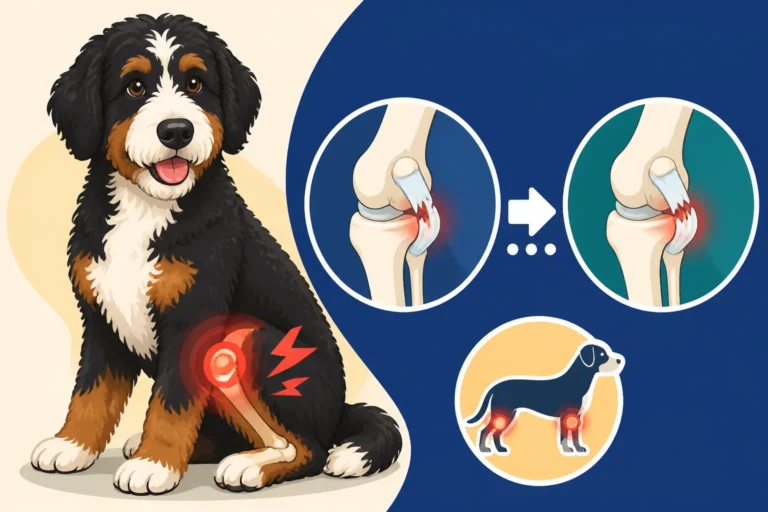
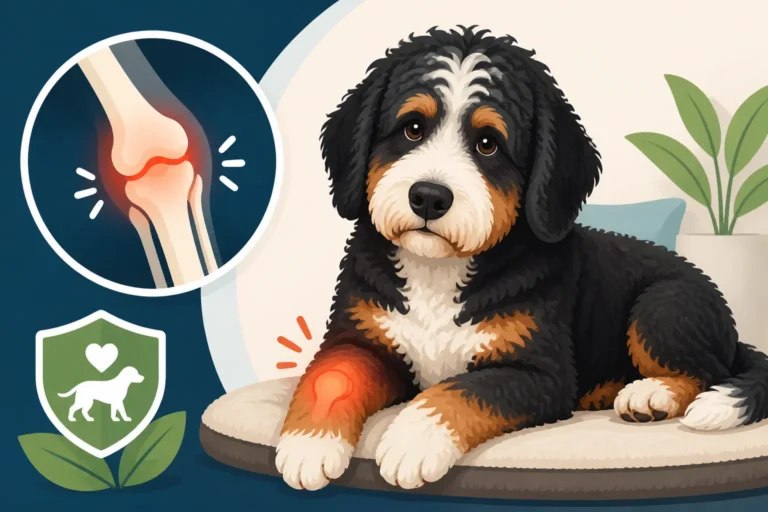
Beyond cancer, orthopedic problems are a massive concern. Hips on a Ninety Pound Bernedoodle and Elbow Dysplasia in a Growing Bernedoodle are widespread in the Bernese. These conditions are polygenic, meaning multiple genes contribute, and environmental factors play a role, but strong genetic predispositions exist. A Bernese with poor hip or elbow structure has a very high chance of passing those genes onto its offspring, leading to painful, expensive, and often life-limiting joint issues for your Bernedoodle. Without OFA or PennHIP clearances on the Bernese parent, you have no idea if you're bringing home a ticking orthopedic time bomb.
It's also worth noting that the average lifespan for a Bernese Mountain Dog is notoriously short, often around 7-8 years. The hope with the Bernedoodle cross, as discussed in The Seven Years a Bernese Lives and the Twelve a Bernedoodle Might, is to extend this, but without careful breeding and testing, you might just inherit the Bernese's shorter lifespan and its health problems.
The Poodle's Contributions to the Genetic Pool
Now, let's not forget the Poodle side of the equation. Poodles are generally a healthier breed than Bernese, with a longer lifespan, but they certainly aren't without their own genetic predispositions. For instance, Von Willebrand's Disease in a Bernedoodle is a common bleeding disorder found in Poodles. This can lead to excessive bleeding during surgery (like spaying or neutering), injury, or even spontaneously. A simple DNA test can easily identify carriers or affected dogs, yet an untested breeder will skip this crucial step.
Another significant concern is Degenerative Myelopathy Both Bernedoodle Parents Can Carry. This is a progressive neurological disease that affects the spinal cord, leading to hind limb weakness and eventual paralysis. It's truly heartbreaking to watch a dog decline from DM. Fortunately, there's a DNA test (The SOD1 Test Both Bernedoodle Parents Need) that can identify carriers and affected dogs. A responsible breeder would never breed two carriers together, as this puts puppies at a 25% risk of being affected.
Eye conditions like Progressive Retinal Atrophy (PRA) or cataracts are also found in Poodles. While not as immediately life-threatening as some other conditions, they can lead to blindness and significantly impact a dog's quality of life. Regular eye exams by a veterinary ophthalmologist are part of responsible breeding for Poodles.
The Hybrid Vigor Myth vs. Reality
One of the arguments you'll hear from breeders of untested Bernedoodle litters is the concept of "hybrid vigor" or "heterosis." The idea is that crossing two different purebreds (like a Bernese and a Poodle) introduces greater genetic diversity, which in turn reduces the likelihood of inheriting recessive genetic diseases common in purebred lines. And there's some truth to this in a general sense. Increased genetic diversity can be beneficial.
However, hybrid vigor is not a magic shield against all genetic diseases. It does not mean that you can throw two dogs together without any health testing and expect perfectly healthy puppies. If both parent breeds carry the same recessive gene for a disease (like DM, for example), or if the Bernese side is riddled with polygenic issues like hip and elbow dysplasia, hybrid vigor won't magically eliminate those risks. In fact, if not carefully screened, you can actually combine the genetic weaknesses of both breeds, leading to a dog that's predisposed to a wider range of issues. Without testing, it’s not hybrid vigor; it’s just a gamble.
The Financial and Emotional Cost of an Untested Puppy
The initial savings on an untested puppy can quickly evaporate and turn into a devastating financial drain. But beyond the money, the emotional toll on you and your family is perhaps the heaviest burden of all.
Veterinary Bills That Quickly Add Up
Let's talk numbers, because this is where the "bargain" price becomes a cruel illusion. Imagine you saved $2,000 on the purchase price of your puppy. That seems great, right? Now, consider these potential costs:
- Hip Dysplasia: Diagnosing hip dysplasia can involve X-rays and specialist consultations, costing hundreds. Surgery for one hip can easily run from $4,000 to $7,000, and many dogs need both hips done. If it's severe, your dog might need a total hip replacement, which can be upwards of $10,000 per hip. Physical therapy, ongoing pain medication, and joint supplements will add thousands more over their lifetime.
- Elbow Dysplasia: Similar to hips, diagnosis and treatment can be expensive. Surgery to correct elbow dysplasia can range from $2,000 to $5,000 per elbow. Again, lifelong management of arthritis is a given.
- Cancer Treatment: This is often the most financially devastating. What Cancer Treatment Costs a Bernedoodle Owner can be astronomical. A diagnosis might involve biopsies, imaging (ultrasound, X-rays, MRI), and consultations with an oncologist, easily costing $1,000 to $3,000 just for diagnostics. Chemotherapy treatments can range from $3,000 to $10,000 or more, depending on the type of cancer and protocol. Radiation therapy can be even higher, often $5,000 to $15,000. These are costs that can easily exceed the initial price of your "bargain" puppy many times over.
- Degenerative Myelopathy: While there’s no cure, managing comfort and mobility for a dog with DM can still be expensive. This includes regular vet visits, medications, specialized harnesses, physical therapy, and potentially a canine wheelchair, which alone can cost hundreds to over a thousand dollars.
- Von Willebrand's Disease: If an untested dog with vWD needs surgery, the complications from excessive bleeding can lead to emergency veterinary care, blood transfusions, and extended hospital stays, easily running into thousands of dollars.
These aren't hypothetical, rare scenarios; these are common problems in the Bernedoodle's parent breeds. The savings you think you're getting upfront are often just a down payment on a lifetime of expensive vet bills. Many families find themselves in the agonizing position of being unable to afford the treatments their beloved dog needs.
The Emotional Toll on Families
Beyond the financial strain, the emotional impact of having a sick dog is profound. You bring a puppy home, full of joy and anticipation, only to watch them suffer from a debilitating genetic condition, often starting at a young age. Witnessing your dog in pain, managing chronic illness, and making difficult decisions about their quality of life is heartbreaking. The stress on families can be immense, leading to sleepless nights, anxiety, and profound grief.
Imagine your beautiful Bernedoodle, barely a year or two old, already struggling to get up due to hip or elbow pain. Or receiving a cancer diagnosis when they should be in the prime of their life. The bond we form with our dogs is deep, and knowing that their suffering could potentially have been avoided by responsible breeding choices is a heavy burden to carry. It can turn the joy of pet ownership into a constant source of worry and sadness.
The Role of Pet Insurance (and its limitations)
This is precisely why pet insurance becomes a topic of conversation for Bernedoodle owners. Companies like Healthy Paws offer excellent coverage for accidents and illnesses, which can be a literal lifesaver for unexpected medical emergencies. However, even the best pet insurance, including a robust plan from Healthy Paws, has limitations, especially when it comes to pre-existing conditions.
If your Bernedoodle puppy develops hip dysplasia or a form of cancer that is clearly genetic and manifests early, and the condition was already present or developing before your insurance policy kicked in, it might be deemed a pre-existing condition. This means the insurance company will likely deny coverage for that specific illness or any related issues. While Healthy Paws is known for its comprehensive plans, no insurer will cover a condition that was evident or diagnosable before coverage began. This is a crucial point for anyone considering an untested litter: if you're knowingly buying a puppy with a higher risk of genetic disease, you may find yourself without insurance coverage when you need it most. It underscores why starting with a healthy, well-bred puppy is the absolute best form of "insurance."
What Responsible Breeding Looks Like (And Why It Matters)
Choosing a puppy from a responsible breeder isn't just about avoiding problems; it's about supporting ethical practices and ensuring the best possible start for your new family member.
Essential Health Clearances for Bernedoodle Parents
A truly responsible Bernedoodle breeder invests in the health of their breeding dogs through comprehensive testing. They won't just tell you their dogs are "healthy"; they'll show you the proof. Here's a rundown of the essential health clearances you should expect to see for both parent dogs:
- Orthopedic Foundation for Animals (OFA) or PennHIP Certifications for Hips and Elbows: This is non-negotiable. For hips, you want to see ratings of Excellent, Good, or Fair. For elbows, you want to see Normal. The age at which The Age a Bernedoodle's Elbows Can Be Graded is typically 24 months, so parents should be at least two years old before breeding.
- OFA Cardiac Clearance: To screen for heart conditions.
- OFA Thyroid Clearance: To check for hypothyroidism, which can be inherited from the Bernese side.
- OFA Eye Clearance (CAER exam by a board-certified veterinary ophthalmologist): This screens for various eye diseases common in Poodles, like PRA and cataracts, and needs to be done annually. Whether a Bernedoodle Needs a CAER Exam Each Year is a good question to ask.
- Genetic DNA Panel: This is critical for conditions like:
- Von Willebrand Disease (vWD): As mentioned, a bleeding disorder.
- Degenerative Myelopathy (DM): The neurological condition affecting the spinal cord.
- Progressive Retinal Atrophy (PRA): Eye degeneration leading to blindness.
- Neonatal Encephalopathy with Seizures (NEwS): A severe neurological disorder.
- Osteochondrodysplasia: A form of dwarfism.
A breeder should provide you with copies of these results, ideally with verifiable OFA numbers or lab reports. You can even look up OFA results online using the dog's registered name or number. This transparency is key. You might ask The Five Clearances a Bernedoodle Breeder Should Have to ensure you're getting a complete picture.
The Value of Transparency and Ongoing Support
A reputable breeder doesn't just sell you a puppy and disappear. They're a resource for life. They should be able to discuss the health history of their lines, answer your questions about the results of the health clearances, and explain the temperament of the parent dogs. They’ll also have a thorough puppy contract, which often includes a health guarantee against specific genetic conditions. Understanding What a Bernedoodle Health Guarantee Covers is crucial.
They'll also be transparent about the challenges, such as the intense grooming needs of The Volume of Coat a Bernedoodle Owner Brushes Weekly or the fact that even with testing, no breeder can guarantee a dog will never have a health issue. What they can guarantee is that they've done everything in their power to stack the odds in your favor by selecting healthy, well-tempered breeding stock. They'll ask you questions too, ensuring their puppy is going to a good, prepared home. This isn't just a transaction; it's a relationship built on trust and a shared commitment to the well-being of the animal.
Red Flags to Watch Out For
When you're searching for a Bernedoodle, be vigilant. There are unfortunately many unscrupulous breeders out there. Here are some glaring red flags that scream "untested litter" and "irresponsible breeder":
- No health testing documentation: If a breeder claims to do testing but can't produce official reports with OFA or PennHIP numbers, run. "My vet said they're healthy" is not a health clearance.
- Vague answers or defensiveness: If you ask about specific health tests (e.g., "Can I see the OFA hip scores for the sire?") and the breeder gets defensive, changes the subject, or gives non-answers, it's a bad sign.
- "First come, first served" mentality: Good breeders have waiting lists and carefully vet prospective buyers. Those pushing for a quick sale, especially if they have multiple litters available simultaneously, are often more interested in profit than puppy welfare.
- The price is significantly lower than average: As discussed, a drastically low price often means corners have been cut, and health testing is usually the first to go.
- Lack of socialization: Puppies from responsible breeders are raised in a clean, stimulating environment and handled regularly. If puppies appear shy, fearful, or housed in unsanitary conditions, it’s a warning.
- Unwillingness to let you meet the parent dogs: You should always be able to meet the mother (dam) of the litter. Sometimes the father (sire) lives elsewhere, but the breeder should still provide extensive information and photos.
- No health guarantee or a very vague one: A solid health guarantee is a sign of a breeder who stands behind their dogs.
The Long-Term Perspective: Is the Risk Worth It?
When you’re staring into the eyes of a cute puppy, it’s incredibly hard to think about the potential for future illness. But this is precisely the time you must think about it. The decision to buy a Bernedoodle from an untested litter isn’t just about saving a few thousand dollars today; it’s about potentially signing up for years of emotional distress and thousands, if not tens of thousands, of dollars in veterinary bills down the road.
The initial savings will almost certainly be dwarfed by the cost of managing a serious genetic disease. More importantly, no amount of money can truly compensate for the heartbreak of watching your beloved companion suffer from an avoidable illness. Responsible breeders commit to health testing because they care deeply about the dogs they bring into the world and the families who will love them. They understand that their choices have lifelong consequences.
Ultimately, the question of whether an untested Bernedoodle litter is "worth buying" comes down to how much risk you're willing to take with your wallet and your heart. For most people, that risk is simply too high. Investing in a puppy from health-tested parents isn't just a cost; it's an investment in a longer, healthier, and happier life for your Bernedoodle, and peace of mind for you.
| Feature | Untested Bernedoodle Litter | Health-Tested Bernedoodle Litter |
|---|---|---|
| Initial Cost | Typically significantly lower | Higher, reflecting breeder's investment in health and care |
| Genetic Health Risks | High risk of inherited conditions (dysplasia, cancer, DM, vWD, etc.) | Significantly reduced risk of known inherited conditions |
| Predictability | Low predictability of adult health and temperament | Higher predictability of adult health and temperament |
| Veterinary Bills | Potentially very high for treating genetic diseases | Lower likelihood of major genetic health issues, but still possible |
| Pet Insurance | Pre-existing conditions may not be covered (e.g., by Healthy Paws) | Better chance of full coverage for unexpected illnesses/accidents |
| Breeder Support | Often minimal or non-existent after sale | Ongoing support and guidance from a knowledgeable breeder |
| Emotional Impact | High potential for heartbreak, stress, and difficult decisions | Greater peace of mind, focus on joy of companionship |
Disclaimer
The information provided in this article is for educational and informational purposes only and does not constitute veterinary advice. Always consult with a qualified veterinarian for any health concerns or before making any decisions about your pet's care.