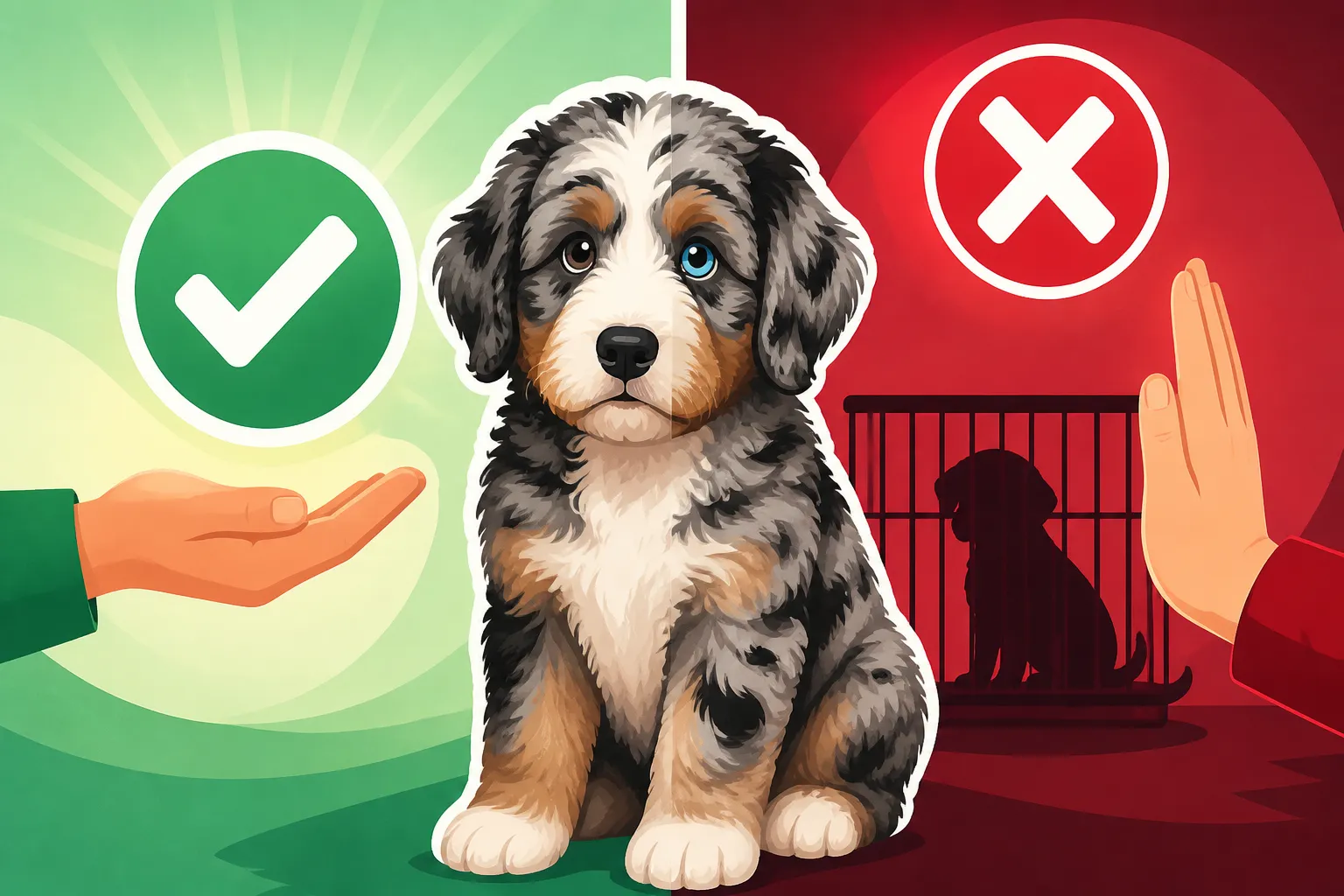
Whether a Double Merle Bernedoodle Should Be Sold
The allure of a unique Bernedoodle coat pattern can be incredibly strong, but sometimes, what seems beautiful on the surface hides a world of potential heartache and serious health problems for the dog. When you see a Bernedoodle puppy with an unusually high amount of white, especially around the eyes and ears, it might be a "double merle," a genetic combination that brings with it severe risks. This guide will dive deep into why breeding and selling double merle Bernedoodles is a highly controversial and often unethical practice, and what every potential owner needs to know to protect these vulnerable pups.
Understanding the Merle Gene and its Appeal in Bernedoodles
The merle gene creates those stunning, marbled coat patterns we often see in various breeds, including some Poodles, which is where it typically enters the Bernedoodle gene pool. It's a dominant gene, meaning a dog only needs one copy of it (let's call it M) to display the merle pattern. A dog with one copy (Mm) is what we call a "single merle," and they can have beautiful patches of diluted color, often with striking blue eyes, or even heterochromia (one blue eye, one brown). These single merle Bernedoodles are incredibly popular, and many ethical breeders work with the merle gene, carefully, to produce these eye-catching puppies.
The appeal is undeniable. A merle Bernedoodle often stands out with its unique blend of colors – maybe a slate gray marbled with darker black, or liver and cream, all against the backdrop of the traditional Bernese tri-color or bi-color markings. When done responsibly, breeding single merles can introduce gorgeous diversity to the Bernedoodle's appearance. Breeders will often highlight the unique patterns, knowing that many prospective owners are looking for a dog that truly stands out from the crowd. However, the pursuit of these patterns without a deep understanding of genetics is where problems begin. What a Merle Bernedoodle Costs can vary greatly depending on factors like these patterns, but price isn't the only consideration.
How the Merle Gene Affects Coat and Eye Color
The merle gene essentially dilutes random areas of the dog's base coat color, creating lighter patches. If a dog's base color is black, the merle gene will create patches of gray. If the base is brown, it will create lighter brown patches. This dilution also impacts the eyes, which is why merle dogs often have those captivating blue eyes, even if their base color wouldn't typically produce them. The gene affects pigment cells, specifically melanocytes. In single merle dogs (Mm), this dilution is patchy and generally safe. The dog has enough normal pigment cells to function properly.
The patterns can be diverse, from subtle streaks to bold, distinct patches. Sometimes, merle can also create "phantom" patterns, where lighter tan points might appear on a black or brown merle coat, adding another layer of complexity and beauty. The genetic interaction can be quite intricate, and understanding it goes beyond just looking at a pretty puppy. For breeders, genetic testing to confirm the merle allele (M locus) is crucial to ensure they are breeding responsibly and understand the potential outcomes for their litters.
The Desirability of Unique Merle Patterns
It’s easy to see why merle Bernedoodles fetch so much attention. Who wouldn't be captivated by a fluffy, playful pup with striking blue eyes and a coat that looks like a painter's masterpiece? This high demand, unfortunately, can sometimes lead to less scrupulous breeding practices. Some breeders, driven by market trends and the promise of higher prices, might not fully understand the genetic implications of working with merle dogs, or worse, they might deliberately take risks.
The drive for "rare" or "exotic" colors can overshadow health considerations. Many people seek out a merle pattern because they want something truly special, not realizing the potential health costs if that pattern is the result of irresponsible breeding. This is why it's so important for buyers to be informed and to ask the right questions, rather than simply falling in love with a picture. The health and well-being of the dog should always come first, even over a beautiful coat.
The Peril of the Double Merle Bernedoodle
Now, let's talk about the significant danger: the double merle. This occurs when two single merle dogs (Mm x Mm) are bred together. Genetically, there's a 25% chance that each puppy in such a litter will inherit two copies of the merle gene (MM). These dogs are known as "double merles," "homozygous merles," or sometimes "lethal whites" due to their often predominantly white coats and severe health issues. This isn't just about an unusual coat color; it's about debilitating conditions that dramatically impact a dog's quality of life. Whether Merle Is Safe to Breed in a Bernedoodle is a critical question, and the answer is a resounding "no" when it comes to breeding two merles together.
The irony is that many people associate a lot of white with being cute or rare, not realizing it's often a warning sign in merle-carrying breeds. A dog with an excessive amount of white, particularly on the head, is a red flag for a double merle, and this isn't just a cosmetic issue.
Severe Health Consequences: Vision and Hearing Impairments
The biggest and most tragic consequences of being a double merle are severe eye and ear abnormalities. The merle gene, when inherited in a double dose, disrupts the development of pigment cells not just in the coat, but also in the eyes and inner ears.
For the eyes, double merle Bernedoodles often suffer from:
- Microphthalmia: Abnormally small eyes, which can range from barely noticeable to severely underdeveloped.
- Colobomas: Gaps or holes in parts of the eye, such as the iris or retina, leading to impaired vision.
- Retinal detachment: The retina separates from the back of the eye, causing blindness.
- Cataracts: Clouding of the lens, further obstructing vision.
- Complete blindness: Many double merle dogs are born completely blind in one or both eyes.
For the ears, the issues are equally devastating:
- Deafness: Partial or complete deafness is extremely common, often in both ears. The absence of pigment cells in the inner ear, which are crucial for hearing, prevents proper development.
- Vestibular issues: Some may also have problems with balance, though this is less common than deafness.
Imagine a Bernedoodle, a breed known for its playful and gentle nature, born into a world where it cannot see or hear. It’s a profound disadvantage that requires immense dedication and specialized care from any owner. Whether Blue Eyed Bernedoodles Have Eye Problems discusses some conditions, but the issues in double merles are far more extensive and severe.
Beyond "Just White": Explaining the Cellular Damage
It's not simply that a double merle dog happens to have a lot of white fur; the extensive white patches on their body, especially on the head, are outward indicators of internal cellular damage. The gene affects melanocytes, which are cells responsible for producing pigment. These cells are also vital for the normal development and function of the eyes and auditory system.
When a dog receives two copies of the merle gene, it causes an extreme reduction or absence of these pigment-producing cells in critical areas. This isn't just a lack of color; it's a structural defect. The parts of the eye that rely on pigment for proper light absorption and processing, and the delicate hair cells in the inner ear that transmit sound, simply don't develop correctly or fail to function. This cellular disruption is why the consequences are so severe and often irreversible. It's a fundamental developmental error, not merely a cosmetic trait.
Why Double Merles are an Ethical Dilemma for Breeders
For any responsible Bernedoodle breeder, the concept of intentionally breeding two merle dogs is a massive ethical breach. The knowledge about the dangers of double merle is well-established within the canine genetics and ethical breeding communities. To knowingly create puppies with such a high probability of severe disabilities is, quite simply, irresponsible and cruel.
Ethical breeders prioritize health and temperament above all else. They understand that their choices impact the lives of living beings and the families who adopt them. The allure of unique patterns or higher prices should never, ever come at the cost of a puppy's well-being. This is why you'll find widespread condemnation of double merle breeding practices from reputable clubs and organizations worldwide.
The Responsibility of Ethical Breeding Practices
Ethical breeding starts with health testing, not just for the common Bernedoodle ailments like hip and elbow dysplasia, but also for specific genetic traits that can cause harm, such as the merle gene. The Five Clearances a Bernedoodle Breeder Should Have often include genetic panels that can identify the merle locus. A responsible breeder will know the merle status (M/m or m/m, where 'm' is non-merle) of both parent dogs and would never breed two M/m dogs together.
Their responsibility extends to educating potential buyers. A good breeder will explain merle genetics, the risks, and why they only breed single merles to non-merles. They are transparent about their breeding practices and the health of their puppies, offering guarantees that reflect their commitment to soundness. When a breeder cannot or will not discuss these critical genetic details, it’s a huge red flag.
The Importance of Genetic Testing (M Locus)
Genetic testing is an indispensable tool for ethical breeders. Before any merle-patterned dog is considered for breeding, it should be tested for its merle genotype. This simple DNA test confirms whether the dog carries one copy (Mm) or no copies (mm) of the merle gene. There are different variants of the merle gene (e.g., cryptic merle, dilute merle), but the primary concern with double merles is the presence of two active merle alleles.
With this information, a breeder can make informed decisions:
- Mm x mm (Merle to Non-Merle): This is the only responsible way to breed merle dogs. Roughly half the litter will be single merle, and half will be non-merle, with virtually no risk of double merles.
- Mm x Mm (Merle to Merle): This cross carries a 25% risk of double merle puppies (MM) with severe health issues, and thus, should never be done.
- MM (Double Merle): A dog with two merle genes should not be bred at all, as it would guarantee all its offspring would be merle, potentially leading to accidental double merle matings down the line if future partners aren't tested.
Any breeder who claims to breed merle to merle without issues, or dismisses the need for M locus testing, is either dangerously uninformed or deliberately putting profits before puppy welfare. Whether an Untested Bernedoodle Litter Is Worth Buying touches on the broader issue of untested litters, which is especially pertinent with merle genetics.
Why Intentional Double Merle Breeding is Widely Condemned
The condemnation of intentional double merle breeding comes from every corner of the responsible dog community: veterinarians, geneticists, breed clubs, and animal welfare organizations. It's considered unethical because it knowingly inflicts suffering and disability on puppies. These aren't minor inconveniences; these are lifelong challenges for the dog and their future owners.
For a breeder to deliberately produce puppies that are likely to be blind, deaf, or both, simply for the sake of an extreme white coat or perceived uniqueness, goes against the fundamental principles of animal husbandry and welfare. It places an immense burden on the new owners, who often find themselves facing unexpected and significant veterinary bills, specialized training needs, and emotional distress. This isn't just poor breeding; it's exploitation. Spotting a Bernedoodle Listing That Came From a Mill often involves breeders who cut corners on health and genetic testing, which is exactly where double merle breeding can slip through.
Accidental Double Merle Breeding: Still a Problem, Requires Education
While intentional double merle breeding is abhorrent, sometimes these litters can happen accidentally. This usually occurs when a breeder doesn't realize one or both of their parent dogs carry the merle gene. This might happen with "cryptic merles" – dogs that genetically carry merle but don't visibly express the pattern, perhaps because their base coat color is too light or they have other masking genes. Without proper genetic testing, these cryptic merles can unknowingly be bred to visible merles, leading to a double merle outcome.
Even accidental breeding resulting in double merle puppies still highlights a failure of responsible breeding practices – specifically, a failure to perform appropriate genetic testing. While the intent might not have been malicious, the outcome for the puppies is the same. This underscores the critical need for comprehensive genetic screening for all breeding dogs, especially when merle is involved in a line. Education is key here; breeders need to understand the risks and how to prevent them.
The Impact on Bernedoodle Owners and the Dog Itself
Bringing a dog into your home is a huge commitment, but bringing home a dog with special needs, particularly blindness and deafness, adds layers of complexity and responsibility that many are not prepared for. While these dogs can live fulfilling lives, it requires an extraordinary level of dedication, patience, and financial resources from their owners.
It’s easy to be overcome by pity and want to "save" a double merle puppy, but it’s crucial to understand the realities of daily life with such a dog. These aren't typical puppy challenges; they are fundamental sensory limitations that impact every aspect of the dog's existence.
Living with a Blind and/or Deaf Dog: Challenges and Rewards
Life with a blind and/or deaf Bernedoodle is undeniably challenging, but it can also be incredibly rewarding for those who are prepared.
Challenges:
- Safety: The home needs to be made completely safe. Stairs might need gates, sharp corners padded, and furniture arrangements kept consistent. Outdoors, a secure, escape-proof yard is essential, and walks will always require a leash in quiet areas.
- Communication: Standard verbal cues are useless for a deaf dog, and visual cues are useless for a blind one. Owners must learn alternative communication methods, such as touch signals (for deaf dogs), scent work, and consistent verbal markers paired with touch/scent (for blind dogs).
- Socialization: Introducing them to new people, animals, and environments requires extra care and patience to avoid startling them. They might be more prone to anxiety in unfamiliar situations.
- Navigation: A blind dog relies heavily on scent and memory to navigate. Moving furniture can be disorienting. Deaf dogs miss environmental cues, like a car approaching.
- Training: While trainable, the methods differ. Patience and positive reinforcement are paramount. Potty training might take longer as they can't hear you calling them out or see you heading to the door.
Rewards:
Despite the challenges, many owners of blind and deaf dogs report incredibly deep bonds. These dogs often develop heightened senses of smell and touch, becoming exquisitely tuned to their owners' presence. Their resilience and adaptability are truly inspiring. The joy they find in simple things, like a favorite scent or a warm cuddle, is profound. It teaches owners incredible patience, empathy, and creative problem-solving.
The Financial Burden: Vet Care, Specialized Training, Accessibility Modifications
The financial aspect is a significant consideration. From the moment you bring a double merle Bernedoodle home, you might face substantial costs.
- Veterinary Care: Initial diagnosis and ongoing monitoring of eye and ear conditions can be expensive. Specialized veterinary ophthalmologists and audiologists might be needed. Surgical interventions, if possible, are costly.
- Specialized Training: While some owners can learn to train their special needs dog themselves, many benefit from professional guidance from trainers experienced with deaf or blind dogs. This can involve private sessions or specialized classes.
- Accessibility Modifications: This could include sensory toys, puzzle feeders, tactile indicators for stairs, sound-emitting balls, or even custom ramps.
- Insurance: Pet insurance, like that offered by Healthy Paws, becomes almost a necessity. While pre-existing conditions typically aren't covered, having insurance for other potential health issues can be a huge relief, as you're already likely bearing significant costs for their primary disabilities. It's worth researching carefully what any policy covers regarding congenital conditions. Insuring a Bernedoodle Against the Bernese Half hints at the importance of insurance for breed-specific issues, and double merle conditions fall under this critical need for coverage.
Companies like Chewy can be invaluable resources for specialized toys, bedding, and supplies that cater to dogs with sensory impairments. For instance, puzzle toys that rely on scent can keep a blind dog engaged, and vibration collars can help get a deaf dog's attention. Even high-quality food from brands like Ollie might be recommended for overall health, which is especially important for a dog managing other challenges.
The Emotional Toll on Families
Adopting a double merle Bernedoodle takes an emotional toll, both positive and negative. The joy of helping a vulnerable creature thrive is immense, but the daily reality can also be emotionally draining. There might be moments of frustration, sadness over their limitations, or worry about their safety. Owners often become fierce advocates for their dogs, navigating public spaces and educating others about their unique needs.
Families must be prepared for the extra time and energy required. Spontaneous trips or leaving the dog with a sitter can become more complicated. It’s a commitment that changes your lifestyle in profound ways. However, for those who embrace it, the love and bond shared with a special needs Bernedoodle can be one of the most enriching experiences of their lives. It's a journey of profound love, learning, and resilience, but it's not for everyone, and it should never be a burden placed upon unsuspecting owners by an unethical breeder.
Should Double Merle Bernedoodles Be Sold?
This is the core question, and it's a deeply complex one. Ethically, no double merle Bernedoodle should ever be intentionally bred and sold. The deliberate production of animals with known debilitating conditions is widely condemned. The suffering these dogs face, and the burden placed on their eventual owners, makes intentional double merle breeding indefensible.
However, once a double merle puppy is born – whether due to accidental breeding, ignorance, or outright disregard – it exists. These puppies deserve a chance at a loving, fulfilling life. The question then shifts from should they be bred to how should they be placed responsibly?
The Nuanced Answer: Intentional vs. Accidental Litters
When a double merle is born, the ethical responsibility falls heavily on the breeder. An ethical breeder who has an accidental double merle litter (due to a cryptic merle parent, for example) should take full responsibility for these puppies. They should:
- Fully disclose all health issues to potential adopters. Transparency is key.
- Cover all initial veterinary costs for diagnosis and early intervention.
- Ensure appropriate homes are found, often through specialized rescues or experienced owners.
- Educate adopters on the unique care requirements.
- Never profit from the sale of a double merle puppy. Often, these dogs are placed for only a nominal adoption fee or free to approved homes.
Selling these puppies without full disclosure, or at prices that suggest they are somehow "rare" or "desirable" for their extreme white markings, is deeply unethical. The priority must always be the welfare of the dog.
The Role of Rescues and Responsible Rehoming
Specialized rescues play a crucial role in the lives of double merle dogs. Many organizations focus specifically on placing deaf or blind dogs, providing support and education to potential adopters. These rescues understand the unique needs of these dogs and can carefully vet homes to ensure a good match. If you encounter a double merle Bernedoodle, advocating for its placement through a reputable rescue is often the best path.
These rescues also often help educate the public and contribute to ongoing efforts to discourage irresponsible breeding practices. They are on the front lines, dealing with the consequences of unethical breeding, and are invaluable resources for both dogs and humans. Why Bernedoodles Are Surrendered sometimes includes overwhelming health needs, a category double merles often fall into.
What Buyers Should Look For and Ask About
As a potential Bernedoodle owner, you are the first line of defense against irresponsible breeding. Here's what you need to do:
- Educate yourself: Understand merle genetics and the risks of double merle.
- Demand transparency: Ask breeders about their merle breeding practices. Specifically, ask if both parents were tested for the merle gene (M locus) and for results.
- Ask for parent photos and genetic profiles: See both parents. If both parents are merle, walk away. If one parent is merle, ask to see the non-merle parent's genetic test results too.
- Inspect puppies carefully: Look for excessive white, especially around the face, ears, and eyes. Observe how puppies respond to sound and visual cues. A reputable breeder will have already performed initial screenings for hearing and vision.
- Question breeders who advertise "extra white" merles: This phrase can sometimes be a subtle way of marketing double merles as special, rather than acknowledging their potential health issues.
- Avoid breeders offering unusually cheap merle pups: While not always the case, very low prices can sometimes indicate cut corners on health testing or care. Conversely, unusually high prices for "rare" white merles should also be a red flag. What a Standard Bernedoodle Costs From a Tested Breeder generally reflects investments in health.
The Responsibility of Disclosure from Breeders
A truly ethical breeder will disclose everything. If, by unfortunate accident, a double merle puppy is born in their litter, they will inform you upfront about the potential for blindness and deafness. They will provide veterinary reports, genetic test results, and clear guidance on care. They will also typically offer such a puppy at a significantly reduced fee, or even free, to a carefully vetted home that understands the commitment required. The goal isn't profit; it's placing a special needs dog in a suitable environment.
A breeder who tries to hide these issues, downplay them, or sell a visibly double merle puppy at a high price, is not an ethical breeder and should be avoided at all costs. Their actions contribute to the suffering of these animals and the heartbreak of unprepared families.
Ethical Breeding Practices: A Buyer's Checklist
Choosing a Bernedoodle puppy is an exciting time, but it's vital to do your due diligence, especially when considering a merle-patterned dog. Your choices directly support ethical breeding or inadvertently contribute to irresponsible practices.
Ask for Genetic Testing Results, Specifically for the Merle Gene
This is non-negotiable for any merle Bernedoodle. A reputable breeder will readily provide documentation of genetic testing for both parent dogs, showing results for common Bernedoodle health concerns (like hip/elbow dysplasia and conditions related to the Bernese Mountain Dog and Poodle parents) as well as the merle (M locus) gene. You should see "mm" for the non-merle parent and "Mm" for the merle parent. If a breeder cannot or will not provide these results, it’s a red flag. Don't be shy about asking. It's your right as a responsible potential owner.
Understand the Parents' Coat Colors and Genetic Makeup
Beyond just seeing the paperwork, try to see the parents in person or in detailed videos. Understand their base coat colors and how the merle pattern manifests (or doesn't) in them. If you see two merle-patterned parent dogs, regardless of what the breeder says, you should immediately walk away. This is a clear indicator of a high-risk breeding practice. Ask about their lineage and if there's any history of health issues related to merle in their family lines.
Look for Transparency and Education from Breeders
An ethical breeder is an open book. They should be willing to spend time talking to you about their dogs, their breeding philosophy, the health clearances, and the specific needs of the Bernedoodle breed. They should educate you on potential pitfalls, like double merle risks, and explain how they avoid them. They will welcome questions and won't pressure you into a quick decision. They often have an application process and may even ask you questions about your experience and home environment to ensure their puppies go to suitable homes.
Red Flags: Breeders Offering "Extra White" or Unusually Cheap Merle Pups
Be highly suspicious of any breeder using terms like "extreme merle," "extra white merle," "super merle," or similar phrasing to describe puppies with a lot of white fur. These terms are often marketing ploys to sell double merles without fully disclosing the associated health risks. Similarly, extremely low prices for merle puppies can indicate a breeder who is cutting corners on health testing, proper nutrition, and vet care, all of which contribute to the cost of a healthy puppy. Conversely, don't assume a high price guarantees ethical breeding; some unethical breeders capitalize on demand for "rare" appearances. Always prioritize transparency and health clearances over price point or flashy descriptions. The Full Cost of Twelve Years With a Bernedoodle will significantly outweigh the initial purchase price, especially if you're dealing with extensive medical issues.
Conclusion
The decision of whether a double merle Bernedoodle should be sold is deeply rooted in ethical breeding principles and animal welfare. While the unique patterns of single merle Bernedoodles are captivating, the genetic combination that creates a double merle often leads to profound and lifelong health challenges, primarily severe vision and hearing impairments. Intentionally breeding two merle dogs is a practice widely condemned by responsible dog communities because it knowingly inflicts suffering.
As potential Bernedoodle owners, it is our collective responsibility to be informed, ask tough questions, and demand transparency from breeders. Seek out breeders who prioritize health testing, understand merle genetics, and are committed to placing all puppies, including any accidental special needs pups, into loving, well-prepared homes with full disclosure. By doing so, we can help ensure that every Bernedoodle, regardless of its coat pattern, has the best possible start to a happy and healthy life.
Disclaimer
This article is for general informational purposes only and does not constitute professional advice. Laws, prices and regulations vary by location and change over time. Consult a qualified professional for guidance on your specific situation.