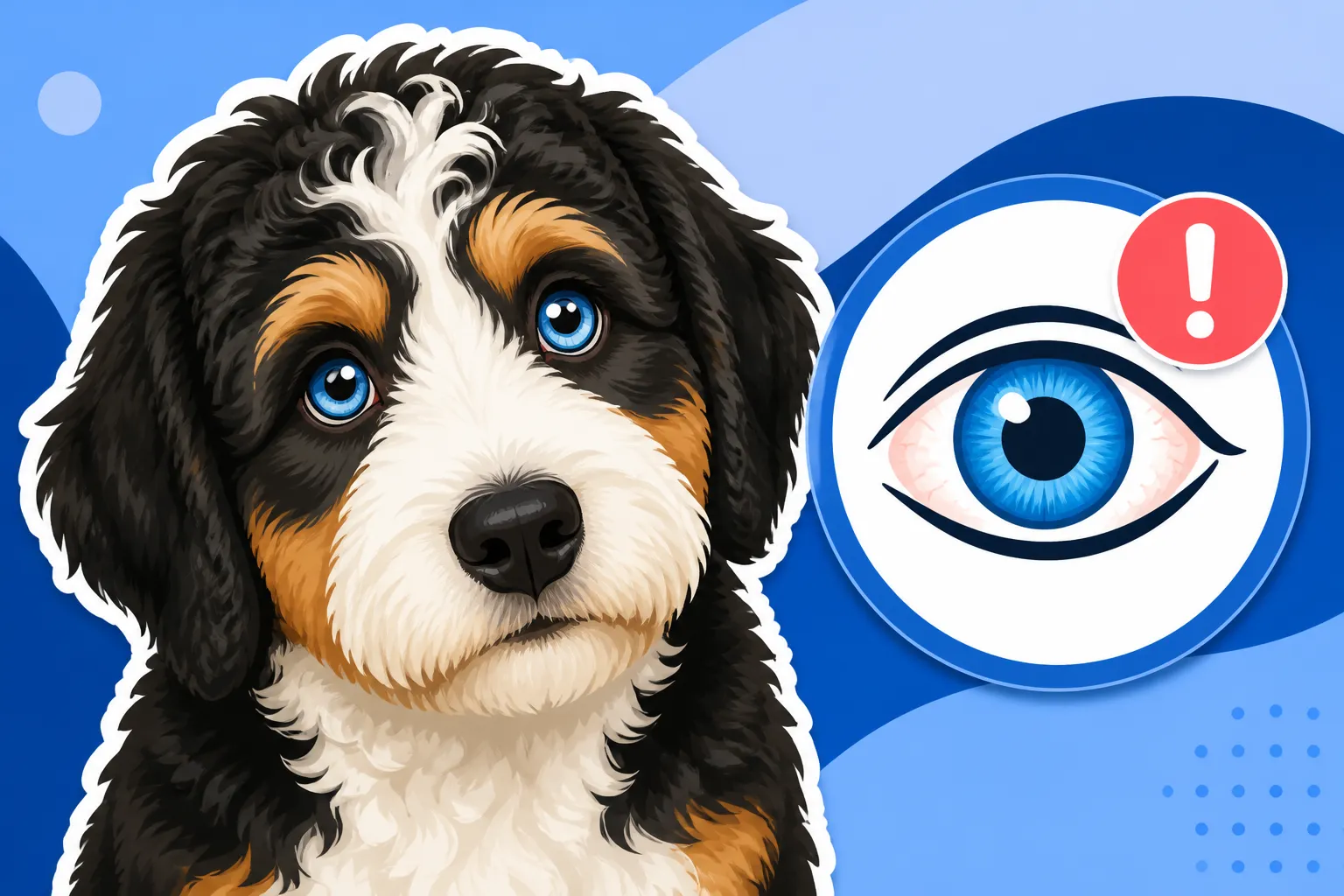
Whether Blue Eyed Bernedoodles Have Eye Problems
The captivating gaze of a blue-eyed Bernedoodle can truly stop you in your tracks. Those striking, often icy, blue eyes are undeniably beautiful, adding a unique charm to an already adorable breed. But for many potential Bernedoodle parents, a little worry creeps in behind the admiration: are those stunning blue eyes just a pretty facade, or do they signal deeper health concerns, particularly involving their vision? This guide dives deep into whether blue-eyed Bernedoodles face increased risks for eye problems, helping you understand the genetics, the risks, and what to look for in a healthy pup.
The Allure and the Reality: Why Some Bernedoodles Have Blue Eyes
It's easy to fall in love with the look of a blue-eyed Bernedoodle. They’re undeniably striking, often standing out in a litter. But it's important to understand why some Bernedoodles have blue eyes, as the reason can sometimes point to potential health considerations. Not all blue eyes are created equal, genetically speaking, and distinguishing between different types is key to understanding the associated risks.
The Genetics Behind Blue Eyes: Merle vs. Puppy Blues
When you see an adult Bernedoodle with clear, bright blue eyes, it’s almost always due to the presence of the merle gene. The merle gene dilutes random patches of a dog’s base coat color, creating distinctive patterns like dappled or mottled areas, and it can also affect eye and nose pigment. When the merle gene is present, it can cause one or both eyes to be blue, or even give an eye a marbled, multi-colored appearance. This gene is not naturally found in purebred Bernese Mountain Dogs, nor is it typically found in most Poodle lines used for Bernedoodles, unless it's specifically been introduced through careful breeding. Therefore, a blue-eyed Bernedoodle often means that a merle Poodle was used in the cross, or a merle Bernedoodle was bred to another non-merle parent.
It's also worth noting that many puppies, regardless of breed or eventual adult eye color, are born with blue eyes. This is completely normal and not indicative of any health issue. Their eyes are still developing, and the pigment hasn't fully set in. Over the first few weeks and months of life, as they mature, this "puppy blue" will typically change to their permanent adult color, which for most Bernedoodles will be a rich brown. So, if you're looking at a very young puppy with blue eyes, it's wise to ask the breeder if they expect those eyes to stay blue or to change. If the blue eyes are indeed expected to remain, especially in an adult dog, the merle gene is almost certainly at play.
The Ethical Questions Around Merle Bernedoodles
The merle gene itself isn't inherently bad, and a single merle gene (meaning the dog inherited one copy from one parent) usually doesn't cause health problems. The concern arises with "double merle" dogs, which occur when two merle-carrying dogs are bred together. A double merle puppy inherits two copies of the merle gene, and this genetic combination is strongly associated with a significantly higher risk of severe health issues, particularly in the eyes and ears. These can include microphthalmia (abnormally small eyes), colobomas (missing pieces of eye tissue), deafness, or severe vision impairment.
Responsible breeders understand these genetics deeply and will never breed two merle dogs together. If a breeder is producing merle Bernedoodles, they should be able to clearly explain their genetic testing protocols, showing proof that at least one parent is not a merle carrier. This ensures that no double merle puppies are accidentally produced. The Merle Bernedoodle and the Argument Around It is a topic that dives into this more deeply. For families interested in a blue-eyed Bernedoodle, ensuring the breeder is knowledgeable and transparent about merle genetics is paramount. You need to verify that your potential puppy only carries a single merle gene, if that's the cause of its blue eyes, to mitigate these severe risks.
Deciphering the Risks: Blue Eyes and Associated Eye Health Concerns
When considering a blue-eyed Bernedoodle, the primary concern revolves around the potential link between the merle gene and certain eye conditions. While not all blue-eyed dogs will have problems, understanding the possibilities is crucial for making an informed decision and providing the best care. It’s also important to differentiate between issues specifically tied to eye color genetics and general eye conditions that any Bernedoodle might face.
Potential Eye Issues Tied to the Merle Gene
The merle gene's primary function is to dilute pigment, and while it often creates beautiful coat patterns and sometimes blue eyes, in its double-dose form (double merle), it can cause serious developmental abnormalities in the eyes. Dogs that are homozygous for the merle gene (carrying two copies) are at a much higher risk of ocular defects. These can include:
- Microphthalmia: This means the eyes are abnormally small, sometimes appearing sunken or misshapen. It can range from mild to severe, often leading to significant vision impairment or even blindness.
- Colobomas: These are gaps or holes in the eye structures, such as the iris (the colored part), retina, or optic nerve. Depending on the location and size, colobomas can cause anything from minor vision disturbances to severe vision loss or light sensitivity.
- Persistent Pupillary Membranes (PPMs): While not exclusively linked to merle, PPMs can sometimes be more prevalent or severe in affected merle dogs. These are remnants of fetal blood vessels that should have disappeared before birth. They can interfere with vision if they cross the pupil.
- Abnormalities of the Tapetum Lucidum: This is the reflective layer behind the retina that enhances night vision. In merle dogs, this layer can be underdeveloped or absent, affecting vision in low light.
These conditions are more commonly associated with the double merle genotype. A Bernedoodle with blue eyes due to a single merle gene is generally healthy, and their blue eyes are typically just a cosmetic trait. However, it's vital to confirm with the breeder that they understand and test for merle, ensuring they never breed two merle dogs together. This responsibility rests squarely on the breeder's shoulders to prevent tragic outcomes. Whether a Double Merle Bernedoodle Should Be Sold delves into these ethical considerations, which are paramount when considering a blue-eyed pup.
Common Bernedoodle Eye Conditions Not Related to Eye Color
Beyond the specific risks associated with the merle gene, Bernedoodles, like any breed, are susceptible to a range of eye conditions that are not tied to their eye color. These inherited or acquired conditions can affect any Bernedoodle, regardless of whether their eyes are brown, blue, or hazel. Being aware of these is crucial for all Bernedoodle owners, not just those with blue-eyed dogs.
Some of the more prevalent eye conditions seen in the Bernese Mountain Dog and Poodle lines, and thus in Bernedoodles, include:
- Progressive Retinal Atrophy (PRA): This is a group of degenerative diseases that affect the retina, eventually leading to blindness. It's often inherited, and responsible breeders should screen their breeding stock for PRA. While there are different forms, some are common in Poodles. Whether a Bernedoodle Inherits PRA From the Poodle explores this in detail.
- Cataracts: These are opacities that develop in the lens of the eye, clouding vision and potentially leading to blindness. While cataracts can occur due to age or injury, hereditary cataracts can appear earlier in life. Cataracts in an Older Bernedoodle is a great resource if you're concerned about age-related changes.
- Entropion and Ectropion: These are eyelid abnormalities. Entropion is when the eyelid rolls inward, causing eyelashes to rub against the cornea, leading to irritation, pain, and potential ulcers. Ectropion is when the eyelid rolls outward, exposing the conjunctiva and making the eye more prone to dryness and infection. Both can be surgically corrected but can cause significant discomfort if left untreated. Entropion in a Bernedoodle's Eyelids provides more information on this condition.
- Distichiasis and Ectopic Cilia: These involve abnormally growing eyelashes that can rub against the eye, causing irritation. These are relatively common and can usually be managed or corrected.
The key takeaway here is that while merle-associated blue eyes carry a specific set of potential risks due to careless breeding, many other eye conditions can affect any Bernedoodle. This underscores the critical importance of health testing for all breeding dogs, regardless of their planned coat or eye color, to ensure the healthiest puppies possible.
| Eye Color Type | Common Cause | Associated Eye Health Risks (Primary) | General Risk Level (for eye color linked issues) |
|---|---|---|---|
| Puppy Blue Eyes | Temporary pigment development | None; eyes will change to adult color | Very Low |
| True Blue Eyes | Single Merle gene (Mm) | Very Low (if inherited from one parent only) | Low |
| True Blue Eyes | Double Merle gene (MM) | High risk of microphthalmia, colobomas, abnormal pupil, deafness | Very High |
| Brown/Hazel | Standard pigment gene (non-merle) | None directly related to eye color; risks are breed-specific conditions | N/A (General Bernedoodle risks apply) |
Due Diligence: Choosing a Breeder and Ensuring Eye Health
Navigating the world of Bernedoodle breeders can feel like a minefield, especially with the added complexity of blue eyes and merle genetics. Your choice of breeder is perhaps the single most important factor in ensuring you bring home a healthy puppy, regardless of their eye color. A reputable breeder prioritizes health above all else, and this includes rigorous eye health screening.
The Importance of Comprehensive Eye Health Clearances
Any breeder of Bernedoodles, blue-eyed or otherwise, should be performing comprehensive health clearances on their breeding dogs. For eyes, this typically means annual examinations by a board-certified veterinary ophthalmologist. These exams, often certified by organizations like the Orthopedic Foundation for Animals (OFA) through their Eye Certification Registry (CAER), screen for a wide array of inherited eye diseases such as PRA, cataracts, glaucoma, and eyelid abnormalities like entropion or ectropion. A clean CAER certificate means the dog was examined and found to be free of observable inherited eye disease at the time of the exam. You should expect to see current certificates for both parent dogs. The Five Clearances a Bernedoodle Breeder Should Have is an excellent resource detailing all the necessary health screenings.
For blue-eyed Bernedoodles, the stakes are even higher. If the blue eyes are due to the merle gene, a truly responsible breeder will also perform genetic testing to confirm the merle status of their breeding dogs. They will ensure that any merle dog is only bred to a non-merle dog to prevent the devastating health problems associated with double merle. They should be able to provide documentation of these genetic tests, not just the physical eye exams. Don't be shy about asking to see these specific documents; any reputable breeder will be proud to share them and explain their health protocols.
Red Flags in Breeder Practices
Unfortunately, the popularity of certain traits like blue eyes or specific coat colors has led to an increase in irresponsible breeding practices. It's crucial for prospective owners to be vigilant and recognize red flags. If a breeder is advertising "rare" blue eyes or merle colors with an inflated price tag, but cannot provide comprehensive health clearances for the parents – especially specific merle genetic testing results – that should be a huge warning sign. Prioritizing aesthetics over health is a dangerous game for the puppies involved.
Another red flag is a breeder who avoids discussing health testing or downplays its importance. They might claim their dogs are "vet checked" or "healthy lines," but this isn't the same as proper, documented genetic and ophthalmological clearances. Be wary of breeders who offer vague answers or become defensive when asked about their testing protocols. Furthermore, if a breeder has multiple litters available constantly, seems solely focused on profit, or doesn't allow you to meet the puppy's parents (at least the mother), these are all signs that they might not be putting the welfare of their dogs first. Remember, the true cost of a puppy isn't just the purchase price; it's also the potential veterinary bills for preventable genetic conditions. A healthy pup from a responsible breeder is an investment in a long, happy life together. A good health guarantee from a breeder can provide some peace of mind, but it’s no substitute for proper screening from the start. What a Bernedoodle Health Guarantee Covers can help you understand what to look for in such an agreement.
Proactive Care: Keeping Your Bernedoodle's Eyes Healthy
Whether your Bernedoodle has captivating blue eyes, soulful brown eyes, or eyes that are somewhere in between, proactive care is essential for maintaining their vision and overall eye health throughout their life. Regular observation and timely veterinary intervention can make a significant difference in catching and addressing potential issues early.
Routine Eye Care and Observation
Your Bernedoodle's eyes should be bright, clear, and free from excessive discharge or redness. Make it a habit to check their eyes daily. Look for any signs of irritation, such as redness, squinting, excessive tearing, or pawing at their face. A small amount of clear discharge might be normal, especially in the mornings, but thick, colored, or copious discharge warrants a closer look. Gently pull down their lower eyelid to check the pink membrane for any unusual swelling or discoloration. If you notice persistent redness, cloudiness, sensitivity to light, or a change in eye color, it's time to consult your veterinarian.
Grooming plays a vital role in Bernedoodle eye care, especially with their luscious, often wavy or curly coats. Long hair around the eyes can irritate the cornea, trap debris, and contribute to tear staining or infections. Regular trimming of the hair around their eyes is crucial to keep their vision clear and prevent irritation. You can do this carefully at home with blunt-nosed scissors or enlist your professional groomer. If you find your Bernedoodle's eyes constantly watering, and you suspect irritation from hair, addressing this promptly is important. Whether a Bernedoodle's Eyes Water Under Its Fringe offers more insights into managing this common issue.
Nutritional and Veterinary Support
A balanced, high-quality diet provides the foundational nutrients for overall health, including eye health. While no specific diet can prevent inherited eye diseases, feeding your Bernedoodle a complete and balanced diet, perhaps like those offered by Ollie, ensures they receive essential vitamins and antioxidants that support cellular health, which is beneficial for all organ systems, including the eyes. Some dog foods available on platforms like Chewy also contain supplements like Omega-3 fatty acids, which are thought to support ocular health, though always discuss any dietary changes or supplements with your vet.
Regular veterinary check-ups are non-negotiable for ongoing eye health. Your vet will perform routine eye exams as part of their annual physical, looking for any abnormalities. For Bernedoodles, especially as they age, these annual screenings become even more important. The Screening a Bernedoodle Should Have Yearly covers the full spectrum of health checks your furry friend needs. If your vet identifies any potential issues, they might refer you to a veterinary ophthalmologist for a specialized examination. And let's be realistic, medical care for our beloved pets can be expensive. Investing in pet insurance, such as a policy from Healthy Paws, can provide invaluable financial support if your Bernedoodle ever develops a serious eye condition or needs specialized treatment, giving you peace of mind to pursue the best care options without financial strain.
Disclaimer
This article is for general informational purposes only and does not constitute professional advice. Laws, prices and regulations vary by location and change over time. Consult a qualified professional for guidance on your specific situation.