Getting a Bernedoodle Puppy Clean Indoors
Bringing home a fluffy, adorable Bernedoodle puppy is pure joy, but the reality of house-training can quickly turn that joy into a carpet-cleaning nightmare. Many new puppy parents feel overwhelmed by the constant vigilance required to prevent accidents, especially when their little fluffball seems to have the bladder control of a leaky faucet. This guide is here to walk you through proven, empathetic strategies to help your Bernedoodle puppy become reliably clean indoors, making life easier and your floors much happier.
Understanding Your Bernedoodle Puppy's Potty Training Journey
Potty training isn't just about teaching your puppy where to go; it's about understanding their developmental stage and working with it, not against it. Your Bernedoodle, no matter how clever they are, is essentially a baby learning a brand new language, and that language involves their bodily functions. It's a process, and patience truly is your greatest tool.
Why Potty Training Feels Like a Full-Time Job
It's easy to feel like you've signed up for round-the-clock puppy patrol, and in a way, you have! Bernedoodle puppies, like all young canines, have very small bladders and undeveloped sphincter muscles, meaning they can't "hold it" for long periods. A tiny eight-week-old Bernedoodle might only be able to comfortably hold their bladder for an hour or two during the day. This isn't them being defiant or difficult; it's pure biology. They simply don't have the physical capacity yet.
Compounding this is their lack of understanding about our living spaces. To a puppy, the soft carpet might feel just as appropriate as the grass outside. They haven't yet learned the human concept of "inside" versus "outside" for toileting. While Bernedoodles are known for their intelligence, often picking up commands quickly, bladder control is a physical maturity issue, not just a mental one. So, even if they understand "go potty," their little bodies might not always cooperate, making constant supervision absolutely crucial in these early weeks.
The Importance of Consistency and Schedule
The cornerstone of successful potty training is an ironclad, consistent schedule. Puppies thrive on predictability, and establishing a routine helps them understand when and where they are expected to relieve themselves. Think of it as teaching a toddler to use the restroom – it's a repetitive process until it becomes second nature. This means taking your Bernedoodle puppy out at specific, frequent intervals, regardless of whether you think they need to go.
A typical puppy schedule revolves around key moments: first thing in the morning, immediately after waking from a nap, five to ten minutes after eating or drinking, before and after play sessions, and right before bedtime. Taking them to the same designated potty spot outside every single time helps them associate that specific area with relieving themselves. Use a consistent potty command like "go potty" or "do your business" right as they're eliminating, followed by enthusiastic praise and a small, high-value treat immediately after they finish. This positive reinforcement solidifies the behavior in their minds. For more insights on early learning, you might find What a Bernedoodle Puppy Should Learn First helpful.
Essential Tools and Techniques for Indoor Cleanliness
While consistency is king, having the right tools and employing smart techniques can significantly smooth out the potty training journey. It's about setting your Bernedoodle puppy up for success and minimizing opportunities for mistakes.
Crate Training as a Potty Training Ally
A crate is not a cage; it's a powerful potty training tool that taps into a dog's natural instinct to keep their sleeping area clean. When introduced properly, a crate becomes a safe, comfortable den for your Bernedoodle. The key is to choose the right size: it should be just large enough for your puppy to stand up, turn around, and lie down comfortably, but not so large that they can designate a "potty corner" away from their sleeping area. If the crate is too big, you can use a divider to adjust the space as they grow.
When your Bernedoodle puppy is in their crate, they're much less likely to have an accident, especially for short periods. This provides you with scheduled breaks from active supervision. Always take your puppy directly outside to their potty spot the moment they come out of the crate. Never use the crate as punishment, or they'll develop a negative association with it. Many Bernedoodle owners find crating essential, particularly for managing overnight needs; learn more about How Long a Bernedoodle Puppy Lasts Overnight and Whether a Crate Suits a Ninety Pound Bernedoodle. You can find excellent, durable crates in various sizes on platforms like Amazon, making it easy to get one that fits your growing Bernedoodle.
Leash Training for Successful Outdoor Trips
Even if you have a securely fenced yard, using a leash for potty breaks is incredibly beneficial in the early stages. The leash helps keep your puppy focused on the task at hand rather than getting distracted by every leaf, bird, or interesting smell. When they're off-leash, especially in a new environment, puppies can easily get sidetracked, forget why they're outside, and then come back in to promptly have an accident.
With a leash, you can guide them directly to their designated potty spot and keep them confined to that area until they relieve themselves. This focused approach reinforces the idea that this specific place is where business gets done. Once they eliminate, then you can reward them with praise, a treat, and maybe a few minutes of supervised playtime in the yard before heading back inside. This method ensures that outdoor trips are efficient and purpose-driven, making the association between the spot and the action much stronger.
Cleaning Up Accidents Properly
No matter how diligent you are, accidents will happen. It's part of the puppy journey, and how you clean them up is just as important as how you prevent them. The absolute necessity here is an enzymatic cleaner specifically designed for pet odors and stains. These cleaners don't just mask the smell; they break down the odor-causing molecules that are irresistible to a dog's superior nose. If you use a regular household cleaner, or even just soap and water, you might think the spot is clean, but your Bernedoodle can still detect residual odors.
If they can smell it, they're likely to return to that same spot to "refresh" their scent, leading to repeated accidents in the same location. Thoroughly douse the accident area with the enzymatic cleaner, allow it to sit for the recommended time, and then blot it up. Avoiding scrubbing can actually spread the stain and odor further. This diligent cleanup process is vital for breaking the cycle of indoor accidents and preventing your Bernedoodle from developing a preference for specific indoor potty spots.
Common Potty Training Pitfalls and How to Avoid Them
Potty training can sometimes feel like a dance with two left feet, but many common frustrations stem from pitfalls that are easily avoided once you know what to look for. Understanding these traps can save you and your Bernedoodle a lot of stress.
Punishing Accidents Indoors
One of the biggest mistakes owners make is punishing their Bernedoodle puppy for accidents that happen indoors. While it's incredibly frustrating to find a puddle or a pile on your pristine rug, scolding, yelling, or rubbing your puppy's nose in it is counterproductive and harmful. Puppies don't connect your anger to their past action of eliminating; instead, they learn to associate your presence with punishment when they go potty.
This can lead to them hiding their accidents from you, sneaking off to a quiet corner of the house, or even becoming fearful of eliminating in front of you, whether inside or outside. Instead of teaching them not to go indoors, you're teaching them to fear you or to be secretive about their bodily functions. The goal is to build trust and teach them that going potty outside earns praise and rewards. If you catch them in the act, calmly interrupt them (a clap, a gentle "ah-ah!"), and immediately scoop them up and take them outside to their designated spot. If they finish outside, reward lavishly. Platforms like BAXTER & Bella emphasize positive reinforcement methods, which are far more effective for building a strong, trusting relationship and successful training outcomes.
Misinterpreting Potty Cues
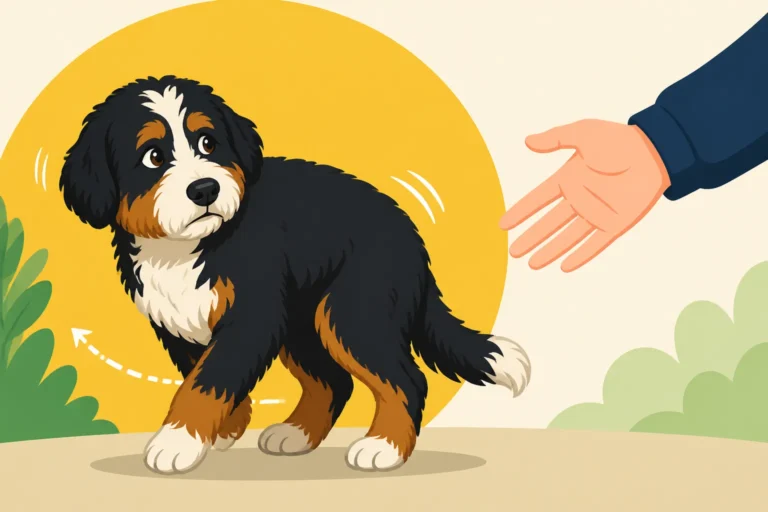
Bernedoodles are generally expressive dogs, and they often give subtle (or not-so-subtle) cues that they need to go potty. The problem is, as busy humans, we sometimes miss them! Learning to read these signals is key to preventing accidents. Common potty cues include sniffing the ground intently, circling, whining, pacing near a door, or suddenly getting quiet and looking distracted. Sometimes, they might even start to head towards a previous accident spot.
The trick is to act immediately when you see these signs. Don't wait to finish your coffee or send that email. A Bernedoodle puppy's bladder capacity is limited, and a few seconds can be the difference between making it outside and having an accident. It also means not giving your puppy too much unsupervised freedom too soon. Until they are reliably clean indoors for several weeks, they should either be actively supervised, in their crate, or contained in a puppy-proofed area with easy access to their potty spot. Ignoring these cues is like ignoring a ticking clock – eventually, it's going to go off!
Dealing with Regression and Setbacks
Just when you think you've got this whole potty training thing figured out, your Bernedoodle might have an accident indoors after weeks of perfect behavior. This can be incredibly disheartening, but understand that setbacks and regressions are a completely normal part of puppy development. Adolescence, in particular, can be a time when puppies "forget" some of their training, testing boundaries and sometimes reverting to old habits. The Age a Bernedoodle Finally Settles can give you an idea of when to expect more consistent behavior.
If your Bernedoodle starts having accidents again, the first step is always to rule out any medical issues with a quick trip to the vet. A urinary tract infection (UTI) or other health problems can suddenly cause a perfectly trained dog to have accidents. If the vet gives a clean bill of health, then it's time to go back to basics. Re-evaluate your schedule, increase your vigilance, and reduce their unsupervised freedom. Sometimes, simply tightening up the routine for a week or two is all it takes to get them back on track. Remember, patience and consistency brought you this far, and they'll get you through any bumps in the road too. What a Standard Bernedoodle Asks of a First Time Owner highlights many such challenges.
Graduating to Full House-Training and Beyond
Achieving full house-training with your Bernedoodle puppy is a huge milestone, but it's not a finish line where all rules suddenly disappear. It's a gradual process of building trust and reinforcing good habits that will serve you both for a lifetime.
Extending Freedom Gradually
Once your Bernedoodle puppy has been consistently accident-free for several weeks, you can start to gradually extend their freedom within the house. This isn't an overnight jump from crate to full run of the house! Start by giving them access to one additional room, always supervised. If they remain accident-free, slowly expand their territory. The concept here is that they "earn" more space through their consistent good behavior.
Many owners find "umbilical cord" training incredibly helpful during this transition. This involves keeping your puppy tethered to you by a leash, so they are always within your sight. This way, you can catch any pre-potty cues immediately. Baby gates are also fantastic for safely containing your Bernedoodle in puppy-proofed areas, providing more space than a crate but less opportunity for mischief and hidden accidents than the entire house. Remember, supervised freedom is key; unsupervised freedom is an invitation for accidents.
Maintaining a Lifelong Routine
Even after your Bernedoodle is fully house-trained, maintaining a somewhat consistent schedule for potty breaks is beneficial. Adult dogs, especially larger breeds like Bernedoodles, still appreciate and thrive on routine. While they won't need to go out every couple of hours like a puppy, knowing when their regular outdoor times are can prevent discomfort and accidents. Think of it like this: would you want to hold it indefinitely without a foreseeable break? Probably not!
Life happens, of course, and routines sometimes get disrupted by travel, illness, or changes in your daily schedule. During these times, be extra mindful of your Bernedoodle's needs and try to provide more frequent opportunities to go outside. An adult Bernedoodle can typically hold their bladder for many hours, but it's not fair to push their limits regularly. A consistent feeding schedule, as discussed in How Many Meals a Bernedoodle Puppy Needs Daily or Whether a Bernedoodle Can Be Free Fed, also helps regulate their elimination schedule. For those who need to leave their Bernedoodle for longer periods, Whether a Bernedoodle Can Be Left for a Workday offers additional considerations.
Remember, every Bernedoodle is an individual, and their potty training journey will be unique. Some pick it up in a flash, others take a bit longer. Celebrate the successes, learn from the accidents, and most importantly, enjoy the precious puppy stage – even the slightly messy parts! The Five Minute Rule on a Bernedoodle Puppy's Walks can also provide useful guidance on appropriate exercise that won't overwhelm a young pup.
Disclaimer
This article is for general informational purposes only and does not constitute professional advice. Laws, prices and regulations vary by location and change over time. Consult a qualified professional for guidance on your specific situation.