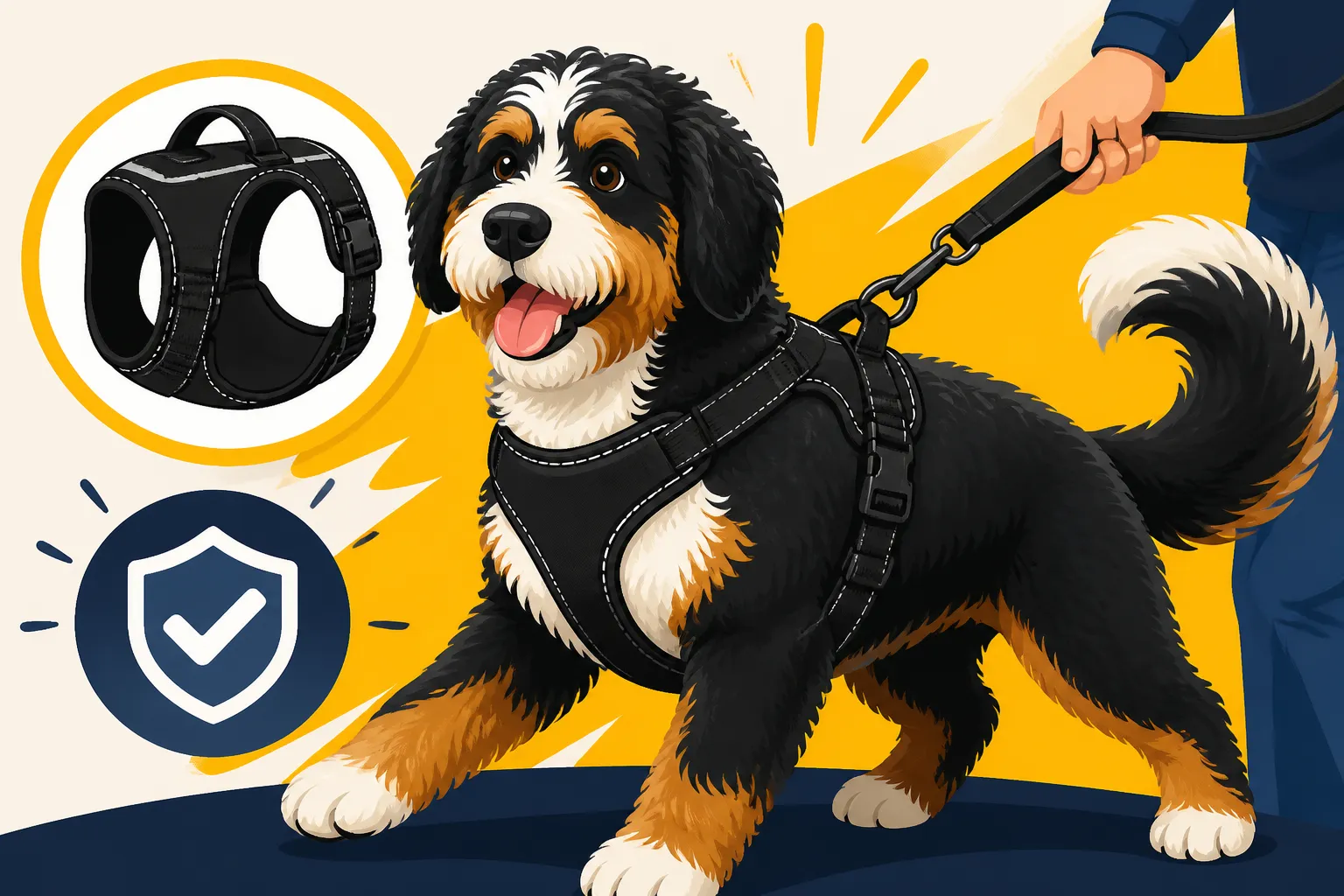
The Harness That Holds a Ninety Pound Bernedoodle
Anyone who has tried to walk a powerful, large Bernedoodle knows the struggle: one minute you're enjoying a peaceful stroll, the next you're being yanked down the street by a ninety-pound bundle of enthusiasm. Finding a harness that genuinely offers control, comfort, and durability for such a substantial dog can feel like an impossible quest, leaving you frustrated and your shoulders aching. This comprehensive guide is here to unravel the mysteries of choosing the right harness, ensuring both you and your gentle giant can enjoy your walks again.
Why a Standard Harness Just Doesn't Cut It for a Ninety-Pound Bernedoodle
When you have a dog as large and strong as a standard Bernedoodle, especially one nearing ninety pounds, a regular, off-the-shelf harness simply won't suffice. These aren't dainty little lapdogs we're talking about; they're substantial canines with significant pulling power and unique needs that demand a more robust and thoughtfully designed solution.
The Sheer Force of a Large Bernedoodle
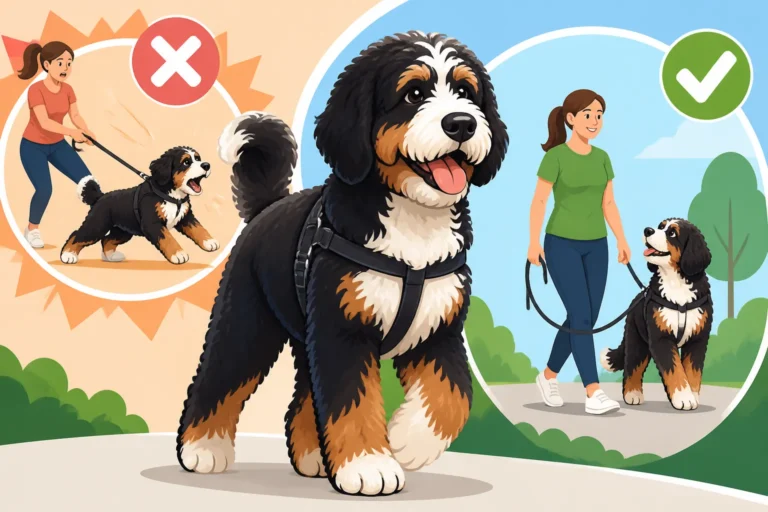
Let's be real, a ninety-pound Bernedoodle can easily weigh more than many adults, and their enthusiasm knows no bounds. If your dog decides to chase a squirrel, greet a passing stranger, or simply surge forward with excitement, that force translates directly to you at the other end of the leash. A flimsy harness made for smaller breeds will dig into their chest, slip, or worse, break. You need something engineered to distribute that pressure safely and effectively, preventing discomfort for your dog and sudden jolts for you. It’s not just about managing a casual stroll; it’s about having reliable control in unexpected situations, protecting both you and your beloved companion from injury. This is especially true when working on Leash Manners on a Bernedoodle Heading for Ninety Pounds.
The Bernedoodle's Unique Build and Coat
Bernedoodles, with their Bernese Mountain Dog and Poodle heritage, often have a deep chest, substantial bone structure, and a thick, sometimes wavy or curly coat. Standard harnesses might rub or chafe against their skin, especially in areas like the armpits, leading to hot spots or discomfort. A harness that's too narrow or made from abrasive materials will quickly become a source of irritation, making your dog dread walks. Furthermore, their thick fur can hide ill-fitting straps, making it harder to spot issues until they've become quite uncomfortable for your dog. You need a design that takes into account their broad shoulders and deep chest, allowing for free movement without causing friction or matting their beautiful coat.
The Desire for Control and Safety
Ultimately, a harness for a large Bernedoodle isn't just about utility; it's about safety for everyone involved. Without proper control, a powerful dog can inadvertently knock over a child, spook another animal, or pull you into a dangerous situation. Many owners struggle with Teaching a Bernedoodle Not to Pull at Eighty Pounds, and the right harness can make a huge difference in that training. A well-designed harness helps manage their strength, redirects their pulling without pain, and keeps them securely attached to you. It's an essential tool for training, socialization, and simply enjoying the outdoors together, transforming stressful walks into pleasant bonding experiences.
Key Features of a Harness Built for a Large Bernedoodle
When you're dealing with a ninety-pound Bernedoodle, you can't just grab any harness off the shelf. You need specific features that cater to their size, strength, and comfort. Think of it like choosing the right gear for a heavy-duty job – you wouldn't use a toy screwdriver to build a house, right? The same logic applies to your big, wonderful dog.
Durable Materials and Robust Construction
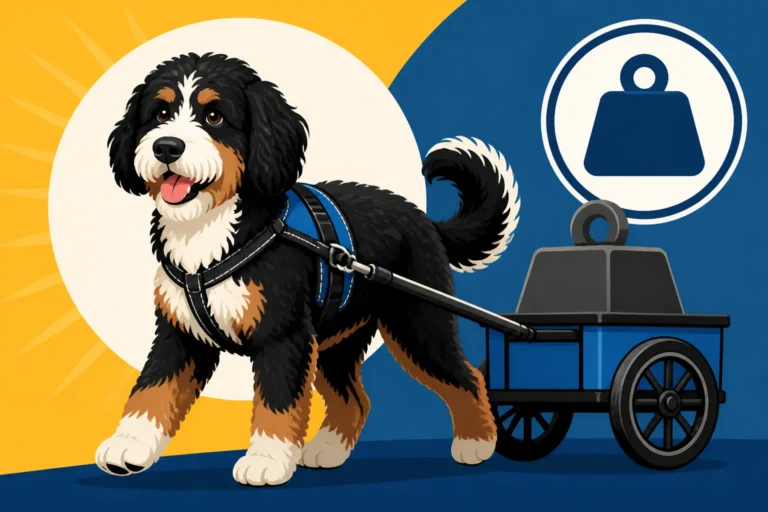
The first and foremost consideration is durability. A large Bernedoodle puts a lot of stress on a harness, so you need materials that can withstand the test of time and force. Look for harnesses made from heavy-duty nylon webbing, often double-layered or reinforced, that can handle significant tension. The hardware is just as critical; plastic buckles found on smaller harnesses are a definite no-go. You'll want sturdy metal D-rings, clips, and adjusters. These components should feel solid and secure, with no flimsy parts that might bend or break under pressure.
Think about the stitching, too. Reinforced stitching at stress points, where straps meet or buckles are attached, is a hallmark of a well-made harness. Imagine your Bernedoodle lunging unexpectedly – you need absolute confidence that every part of that harness will hold. Many owners find reliable options on platforms like Amazon by reading reviews from other large dog owners, specifically looking for comments on durability.
Optimal Weight Distribution and Padding
A harness should distribute pressure evenly across your dog's chest and shoulders, rather than concentrating it on their throat, which can happen with a collar. For a ninety-pound Bernedoodle, wide straps are crucial for this. Narrow straps can dig in and cause discomfort, especially when pulling. Look for harnesses with broad chest plates or wider webbing that spreads the load across a larger surface area.
Padding is another non-negotiable feature. Soft, breathable padding in key areas like the chest, under the belly, and around the leg openings prevents chafing and rubs. Materials like neoprene, fleece, or air-mesh provide cushioning without adding excessive bulk or trapping heat. This is especially important for Bernedoodles, whose thick coats can already be prone to matting and skin irritation if constantly rubbed by an ill-fitting harness. Comfort is paramount, not just for your dog's well-being, but also for their willingness to wear the harness and enjoy their walks.
Secure and Adjustable Fit
A harness is only effective if it fits properly. For a large Bernedoodle, this means multiple adjustment points to achieve a snug, yet comfortable, fit. Look for harnesses with at least four adjustment points: usually around the neck, chest, and sometimes even a belly strap. This allows you to customize the fit for your dog's unique proportions, ensuring it's neither too tight nor too loose. A harness that's too loose can shift and rub, or worse, your dog could back out of it. One that's too tight will restrict movement and cause pain.
The "two-finger rule" is a good guideline: you should be able to comfortably slide two fingers under any strap once the harness is on. Ensure the harness doesn't restrict shoulder movement or rub behind the front legs. It's a delicate balance, but a well-fitting harness will feel like a natural extension of your dog, allowing them to move freely and happily. You might even find some models offer a customizable fit that makes it easier to keep your big pup in check, preventing situations where A Bernedoodle That Jumps on People is an issue.
Types of Harnesses for Better Control and Comfort
Choosing the right type of harness can significantly impact your control over a powerful Bernedoodle and their overall comfort. Not all harnesses are created equal, especially when you're dealing with a dog that can easily outweigh you. Understanding the different designs and their specific benefits and drawbacks is key to making an informed decision for your large companion.
Front-Clip Harnesses
How they work: Front-clip harnesses feature a leash attachment ring located on the dog's chest, rather than on their back. When your Bernedoodle pulls, the leash pulls them gently to the side, redirecting their forward momentum. This makes it very difficult for them to pull effectively, as every pull turns them, rather than giving them leverage.
Pros for a ninety-pound Bernedoodle:
- Excellent no-pull effectiveness: This is often the go-to choice for strong pullers. The redirection immediately discourages pulling without causing pain or discomfort. It's a humane and effective way to teach better leash manners.
- Improved steering: The front attachment gives you more control over your dog's direction, making it easier to guide them away from distractions or turn them around if needed. This can be invaluable when you're working on Teaching a Bernedoodle Not to Pull at Eighty Pounds.
- Safety: By preventing strong pulling, it reduces strain on your arm and shoulder, and minimizes the risk of your dog getting away from you. This also keeps pressure off their neck and throat, preventing potential injury.
Cons to consider:
- Potential for tangling: The leash can sometimes get tangled under the dog's front legs if it's too long or if your dog is very active. This is usually easily remedied with a slightly shorter leash or by adjusting your handling.
- Can be awkward for some dogs: Some dogs might initially find the sensation of being turned slightly disorienting, but most adapt quickly.
- Requires careful fit: The chest strap needs to sit correctly to be effective and comfortable. If it's too high, it can interfere with shoulder movement; too low, and it loses effectiveness.
Many reputable brands offer excellent front-clip harness designs specifically for large breeds, and you can often find a wide selection with user reviews on Amazon to help guide your choice.
Back-Clip Harnesses
How they work: Back-clip harnesses have the leash attachment ring located on the dog's back, typically between the shoulder blades. This is perhaps the most common harness style, often seen on smaller dogs.
Pros for a ninety-pound Bernedoodle:
- Comfort and ease of use: Generally easy to put on and take off, and once fitted, they tend to be very comfortable as there's no strap directly under the armpits to interfere with movement.
- Good for non-pullers: If your Bernedoodle is already a polite walker or you're using it in conjunction with other training methods, a back-clip harness is perfectly adequate and comfortable.
- Less tangling: The leash is less likely to get tangled with the dog's legs.
Cons for a powerful Bernedoodle:
- Can encourage pulling: The main drawback for a large, strong Bernedoodle is that a back-clip harness can actually encourage pulling. It allows them to lean into the harness and use their full body weight, much like a sled dog, giving them more leverage to pull you forward. This means you have less direct control over their momentum.
- Not ideal for training pullers: If you're actively working on stopping pulling, this style is usually counterproductive. For an energetic standard Bernedoodle, you need a training approach that gives you more leverage.
- Less steering control: With the leash attachment point at the back, you have less ability to gently steer your dog away from distractions or guide their movements.
While a back-clip harness might be sufficient for a senior Bernedoodle who has calmed down, or for casual backyard use, it's generally not the best choice for a young, enthusiastic, or strong-pulling ninety-pound Bernedoodle during walks, especially if you're working on improving The Exercise a Standard Bernedoodle Needs Daily without being dragged along.
Dual-Clip/Multi-Functional Harnesses
How they work: These harnesses offer the best of both worlds, featuring both a front-clip and a back-clip attachment point. This versatility allows you to switch between the two based on your needs or your dog's progress.
Pros for a ninety-pound Bernedoodle:
- Versatility: You can use the front clip for training no-pull manners and control during walks, and then switch to the back clip for more relaxed strolls once your dog has learned not to pull.
- Training flexibility: Ideal for dogs still learning. You can start with the front clip to establish good habits and then transition to the back clip as they improve. Some even use two leashes, one on each clip, for maximum control in challenging environments.
- Suitable for various activities: The back clip might be preferred for activities like hiking or running once pulling is no longer an issue, as it offers a less restrictive feel for continuous forward motion.
Cons to consider:
- Potentially more straps: Some designs might have more straps or buckles, which can sometimes make them a bit trickier to put on initially, though this is usually a minor adjustment.
- Cost: May sometimes be slightly more expensive than single-clip options due to their added functionality and robust design.
Brands like Ruffwear and other durable manufacturers often produce excellent dual-clip options. They allow you to tailor your approach, providing the control you need when your Bernedoodle is still learning, and the freedom for them once those good habits are firmly established. BAXTER & Bella, for example, often incorporates different harness types into their training programs, recognizing that the right equipment is a crucial part of effective training.
Fitting Your Bernedoodle for the Perfect Harness
Finding the right harness is only half the battle; ensuring it fits your ninety-pound Bernedoodle perfectly is the other, equally critical, part. An ill-fitting harness can be uncomfortable, ineffective, and even dangerous. It's not a "one size fits all" situation, especially with the varied builds of Bernedoodles. Taking the time to measure and adjust correctly will make all the difference in your dog's comfort and your control.
Taking Accurate Measurements
Before you even think about buying a harness, you need to measure your Bernedoodle. Don't guess their size based on their weight alone, as individual proportions can vary widely. Here’s how to get it right:
- Chest Girth (the most important measurement): This is the circumference of your dog's chest at its widest point, usually just behind their front legs. Use a soft tape measure, wrap it snugly but not tightly around their rib cage. Make sure the tape is parallel to the ground. This measurement will dictate the primary size of the harness.
- Neck Girth: Measure around the base of your dog's neck, where a collar would naturally sit, or slightly lower if the harness design requires it. This helps ensure the neck opening isn't too tight or so loose that your dog can slip out.
- Back Length (optional but helpful): While not always necessary for harness sizing, knowing the length from the base of the neck to the base of the tail can help visualize how the harness will sit on their body, especially for those with longer or shorter torsos.
Always compare these measurements to the manufacturer's sizing chart. If your Bernedoodle is between sizes, it’s usually safer to size up, especially if the harness has multiple adjustment points, as you can tighten a larger one more easily than trying to make a smaller one stretch. Many harnesses available on Amazon provide detailed sizing guides, often with diagrams, which are incredibly useful.
Step-by-Step Fitting Guide
Once you have your harness, it's time for the fitting. Be patient, especially if your Bernedoodle isn't used to wearing a harness. Positive reinforcement with treats and praise can make this a much smoother experience.
- Loosen all straps: Before attempting to put it on, fully loosen every adjustable strap on the harness. This gives you maximum flexibility to position it correctly.
- Identify front and back: Most harnesses are designed to go over the head, with a front piece that rests on the chest and a back piece that sits between the shoulders. Ensure you have it oriented correctly.
- Slide over head: Gently slide the neck opening over your Bernedoodle's head. The chest piece should be resting on their chest.
- Position chest strap: Guide their front legs through the appropriate openings, or clip the belly strap if it's a step-in design. The chest strap should sit a few inches behind their front legs, not directly in their armpits. This is crucial for preventing chafing.
- Adjust the neck strap: Start by adjusting the strap around the neck. You should be able to comfortably slide two fingers under the strap. It should be snug enough that your dog can't easily slip their head out, but not restrictive.
- Adjust the chest/belly strap: Tighten the strap around their chest. Again, use the two-finger rule. Ensure it's snug but allows for full, unrestricted breathing and movement. Check that the harness isn't too low, potentially allowing your dog to step out, or too high, digging into their armpits.
- Check for symmetry and movement: Step back and observe your Bernedoodle. Does the harness sit evenly? Is it twisted? Ask them to walk a few steps, sit, and lie down. The harness should not impede their natural movement, especially their shoulder blades. The chest plate should not ride up into their throat when they walk or pull. A proper fit ensures their comfort and your control, which is essential when considering Whether a Bernedoodle Can Be Walked by a Child.
Common Fitting Mistakes to Avoid
Even with the best intentions, it's easy to make a few common errors when fitting a harness, especially on a large, fluffy Bernedoodle.
- Too loose: This is probably the most frequent mistake. A harness that's too loose can shift around, causing rubbing, or allow your Bernedoodle to back out of it, especially if they get spooked or try to escape. Always re-check the "two-finger rule."
- Too tight: While less common than too loose, a harness that's too tight will restrict movement, cause discomfort, and can lead to skin irritation or even breathing issues if it's compressing their throat. Look for red marks on their skin after a walk.
- Sitting too far back or forward: The chest strap should sit correctly, not up in their armpits (causing chafing) or too far back (reducing effectiveness). For a front-clip harness, ensure the chest ring is truly on the front of their chest for optimal no-pull leverage.
- Ignoring the coat: Bernedoodles have thick coats. Make sure the harness is adjusted over the coat, not compressed into it, which can make it feel tighter than it is and cause matting. Brush the fur smooth before fitting.
- Not re-checking regularly: Dogs can gain or lose weight, and harnesses can stretch or loosen over time. Always re-check the fit periodically, especially after growth spurts if you have a young Bernedoodle.
By paying close attention to these details, you can ensure that the harness you choose for your ninety-pound Bernedoodle provides maximum comfort and the control you need for happy, safe walks. This commitment to proper equipment and training is why many turn to resources like BAXTER & Bella for comprehensive guidance on raising well-behaved companions.
Comparing Harness Types for Your Bernedoodle
To help you visualize the differences and make the best choice, here's a quick comparison of the main harness types for a large Bernedoodle.
| Feature | Front-Clip Harness | Back-Clip Harness | Dual-Clip/Multi-Functional Harness |
|---|---|---|---|
| Leash Attachment | On the dog's chest | On the dog's back | Both chest and back |
| Control for Pullers | Excellent – redirects momentum | Poor – can encourage pulling by giving leverage | Excellent (front clip) / Poor (back clip) |
| Ease of Steering | High – allows for directional guidance | Low – minimal steering capability | High (front clip) / Low (back clip) |
| Comfort for Dog | Generally high, if fitted correctly; no throat pressure | High, often less restrictive movement | Generally high, offers flexibility |
| Prevention of Chafing | Good, with proper fit and padding | Good, typically less friction if well-fitted | Good, with proper fit and padding |
| Best Use Case | Training strong pullers, everyday control | Already good leash walkers, casual strolls | Versatile for training and general walking |
| Typical Materials | Heavy-duty nylon, metal hardware, padding | Nylon, mesh, sometimes lighter hardware | Heavy-duty nylon, metal hardware, extensive padding |
| Common Brands | Ruffwear, Easy Walk, Blue-9 Balance | Web Master, many general pet brands | Freedom No-Pull, Balance Harness |
Choosing the right harness is a pivotal step in fostering a harmonious relationship with your large Bernedoodle. By understanding their unique needs and the specific benefits of different harness designs, you can invest in a tool that provides both you and your furry friend with comfort, safety, and control. This allows you to truly enjoy all your adventures together, from a brisk morning walk to a leisurely hike.
Disclaimer
This article is for general informational purposes only and does not constitute professional advice. Laws, prices and regulations vary by location and change over time. Consult a qualified professional for guidance on your specific situation.