Teaching a Bernedoodle Not to Jump on Guests
Oh, the sheer joy and equal measure of chaos that a Bernedoodle brings! One minute they're a fluffy, gentle giant, melting hearts with those soulful eyes, and the next, your unsuspecting guest is getting a full-body hug from a ninety-pound bundle of enthusiasm. It's a common, if slightly jarring, scenario for so many Bernedoodle families, and it leaves us wondering how to bridge that gap between their loving nature and polite greetings. This guide is here to walk you through practical, empathetic strategies to teach your wonderful Bernedoodle how to greet people calmly, ensuring a more relaxed environment for everyone who walks through your door.
Understanding Why Your Bernedoodle Jumps on Guests
Before we can effectively address the jumping, it's really important to understand why your beloved Bernedoodle feels the need to launch themselves at visitors. It’s rarely out of malice or aggression; in fact, it’s usually quite the opposite. These big, loving dogs often have very good reasons for their enthusiastic vertical greetings, and once we pinpoint the root cause, we can tailor our training approach.
The Excitement Factor
Let's be honest, who doesn't get excited when someone new comes over? For a Bernedoodle, that excitement is often amplified tenfold. They are social creatures, inheriting that friendly, eager-to-please nature from both the Bernese Mountain Dog and the Poodle side. When a new person enters their space, it's a huge surge of novelty, smells, and potential petting opportunities. They haven't learned other ways to express this joy, so jumping becomes their go-to. It's their way of saying, "Hello! I'm so happy you're here! Pay attention to ME!" And often, even negative attention (like pushing them off) is still attention, inadvertently reinforcing the behavior.
Think about it from their perspective: a new person, new scents, new sounds. It's like a party starting just for them! Their brain goes into overdrive, and their body follows. They want to be as close as possible, get those delightful pets, and engage. This isn't just a puppy thing either; many adult Bernedoodles, especially those that haven't had consistent training, continue this behavior well into their later years. Understanding this underlying excitement helps us approach the training with patience and empathy, rather than frustration.
Seeking Attention and Reinforcement
Dogs, much like toddlers, will repeat behaviors that get them what they want – and what they often want most is our attention. When your Bernedoodle jumps, even if you react by pushing them down, saying "no," or making eye contact, you're inadvertently giving them the attention they craved. They learn quickly that jumping equals interaction. This is why consistency is key; every single time a jump results in any form of attention, it strengthens the behavior.
Consider a scenario: Aunt Carol comes over, and your Bernedoodle, A Bernedoodle That Jumps on People, leaps up. Aunt Carol, startled but kind, puts her hands on his chest to push him down, smiling and saying, "Oh, you big boy!" In that moment, your Bernedoodle just got physical touch, eye contact, and vocalization – a jackpot of attention. He'll remember that for the next time. We need to teach them that the only way to get that wonderful attention is with four paws on the floor.
Lack of Alternative Behaviors
Another significant reason Bernedoodles jump is simply because they haven't been taught an alternative. They don't know what else to do when guests arrive. It's not innate for a dog to sit politely or lie down when someone new enters the room. These are learned behaviors that require clear instruction and consistent practice. If your Bernedoodle has never been shown a better way to greet, then they'll stick with what feels natural and what has, perhaps, worked for them in the past.
This is especially true for large breeds like Bernedoodles, who can be quite physically imposing even when they mean well. A young Bernedoodle, even at 60 pounds, can easily knock over a small child or an elderly guest. It's our responsibility to guide them, to give them the tools to navigate social interactions politely. Just as we teach children manners, we must teach our dogs how to behave appropriately in different situations.
Foundational Training: Setting the Stage Before Guests Arrive
Effective training to stop jumping starts long before a guest even rings the doorbell. It involves building a strong foundation of basic manners and self-control, which are crucial for a large, enthusiastic dog like a Bernedoodle. Without these basics, managing the actual greeting becomes much harder.
Mastering Basic Commands
The absolute cornerstone of preventing jumping is a solid grasp of basic commands, particularly "sit," "stay," and "down." These commands provide your Bernedoodle with an alternative, polite behavior to offer when excitement levels rise. Practice these commands frequently in various environments, gradually introducing distractions. A Bernedoodle, despite sometimes having The Stubborn Streak Under a Bernedoodle's Poodle Brain, is intelligent and eager to please, especially when the reward is right.
For instance, start practicing "sit" and "stay" when you approach the door, before you even open it. Ask for a sit, reward it, then open the door a crack. If your dog stays, reward again. If they break, close the door and start over. This teaches them that calm behavior before the exciting event is what earns praise and rewards. You can find excellent durable training treats on Amazon that your Bernedoodle will happily work for, making these sessions more effective. Also, consider an online program like BAXTER & Bella that offers structured lessons and support for teaching these foundational skills, which can be invaluable, especially when Raising a Bernedoodle Puppy That Will Outweigh You.
Impulse Control Exercises
Beyond basic commands, impulse control is vital. This involves teaching your Bernedoodle to resist immediate gratification and to wait for cues. Exercises like "leave it" and waiting for their food bowl are excellent ways to build this skill. A dog that can "leave it" when a dropped treat is tempting can also learn to "leave" the urge to jump on a new person.
Here’s a simple "wait" exercise: Hold a treat in your hand. When your Bernedoodle tries to get it, close your fist. As soon as they stop nudging or pawing and look at you, open your hand slightly. If they go for the treat, close it again. The moment they wait for your release cue (like "take it" or "ok"), reward them. This teaches them patience and that calm anticipation earns rewards. Gradually, you can apply this to opening the door or presenting a new toy. Building this mental muscle helps them pause and think before reacting impulsively by jumping.
Managing Energy Levels
An under-exercised Bernedoodle is a Bernedoodle with a lot of pent-up energy, and that energy often manifests as over-excitement and jumping. Ensuring your dog gets adequate physical and mental stimulation before guests arrive can make a world of difference. The Exercise a Standard Bernedoodle Needs Daily can be substantial. A good, brisk walk, a rigorous play session in the yard, or a trip to the dog park to burn off some steam can help them be calmer and more receptive to training when company shows up.
Mental exercise is just as important. Engage their Poodle brain with puzzle toys, scent work, or short training sessions. A tired dog, both physically and mentally, is much less likely to jump up. Plan ahead: if you know you have guests coming, take your Bernedoodle for a longer walk or a game of fetch about an hour before they're due. A calm, relaxed dog is far more capable of remembering their manners than one bursting with unspent energy.
Managing the Real-Life Guest Arrival: Strategies for Success
Once your Bernedoodle has a solid foundation, it’s time to apply those skills to the real-world challenge of greeting guests. This requires a proactive approach and a clear plan to guide both your dog and your visitors.
The "No Jump" Protocol at the Door
This protocol is all about being prepared and consistent. Before your guests even knock, decide how you want your Bernedoodle to greet them. Will they be on a leash? Crated? Or will they be expected to sit politely? Inform your guests ahead of time about your training efforts and ask for their cooperation. This is crucial because even one enthusiastic "Oh, it's okay, I don't mind!" from a guest can set your training back significantly.
When the doorbell rings, give your Bernedoodle a clear command, like "place" on their mat, or a "sit-stay" away from the door. If they struggle with this, put them on a leash. Open the door only when they are calm and in position. If they lunge or jump, immediately close the door (or turn your back if already open) and wait for calm. Repeat. This teaches them that polite behavior opens the door to interaction. Once they are calm, then allow controlled, calm greetings. The online puppy program from BAXTER & Bella often has modules specifically on door manners and polite greetings, offering step-by-step guidance that many Bernedoodle owners find incredibly helpful.
Here's a breakdown of the "No Jump" Protocol:
| Step | Bernedoodle Behavior | Owner Action | Guest Action (if applicable) |
|---|---|---|---|
| Pre-Arrival | Excited, pacing, barking | Crate, leash, or command to "place" in a designated spot. | N/A |
| Doorbell/Knock | Arousal increases, moves towards door | Reinforce "place" or "sit-stay." If needed, physically block or hold leash. | N/A |
| Opening Door (partial) | Stays in position, calm | Praise, small treat. Open door slightly more. | Wait patiently. |
| Lunges, jumps, barks | Immediately close door (or turn back). Re-establish calm. Repeat. | N/A | |
| Guest Enters (controlled) | Remains calm, sits, four paws on floor | Praise lavishly, offer treat. Allow calm approach to guest. | Acknowledge dog only when calm. No petting while jumping. |
| Jumps at guest | Step between dog & guest. Dog back on leash/to "place." Reset. | Turn back to dog, ignore until four paws on floor. | |
| Greeting (after calm) | Sits or stands calmly next to owner/guest | Allow guest to gently pet (if dog remains calm). | Pet gently. If dog jumps, hands up, turn away. |
Enlisting Your Guests as Training Allies
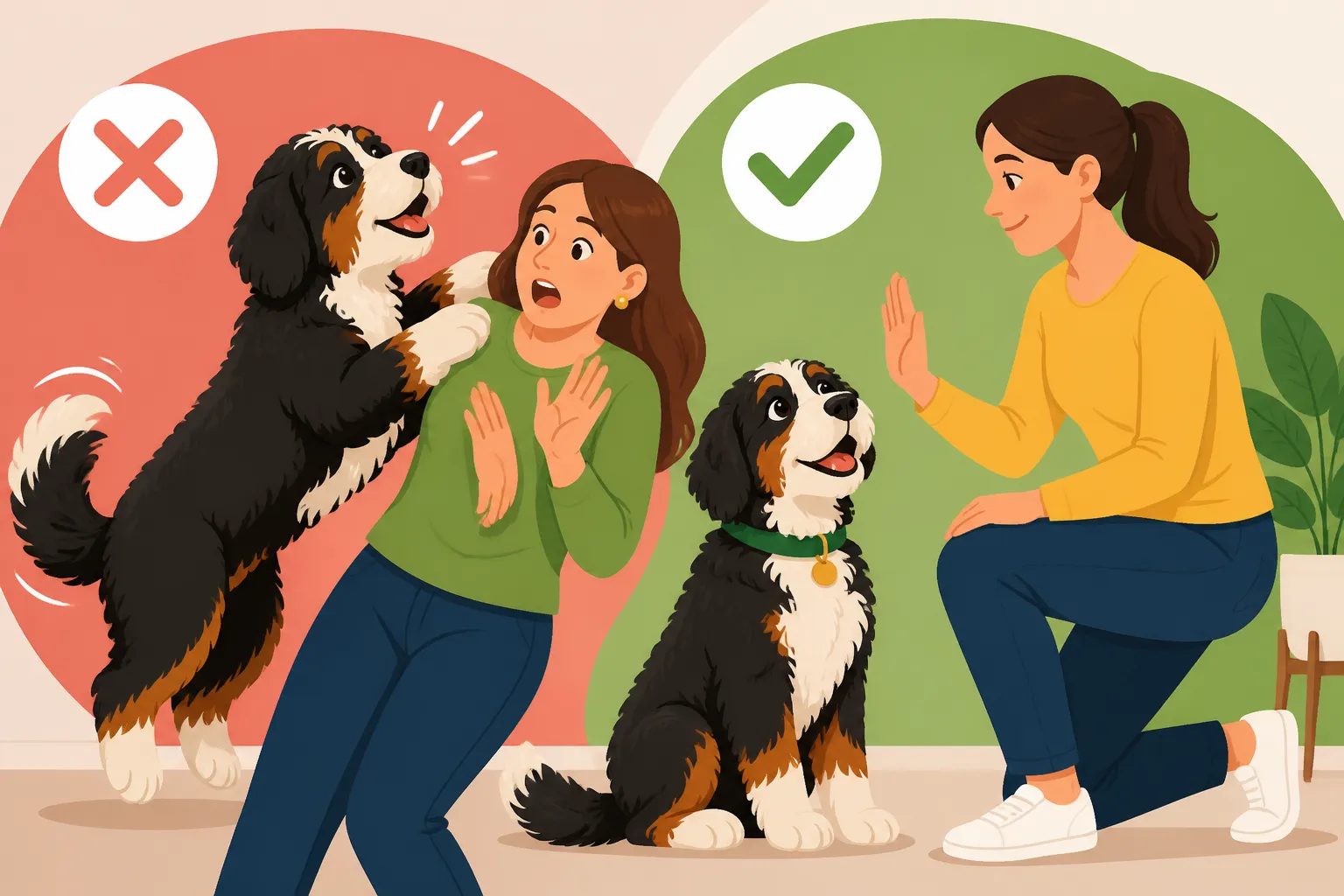
Your guests are invaluable to this process! Before they arrive, briefly explain your training goals. Ask them to completely ignore your Bernedoodle if they jump. This means no eye contact, no talking, no pushing them off, and definitely no petting. Their hands should simply go up or they should turn their back until all four paws are on the floor. Only when your Bernedoodle is sitting or standing calmly should they offer a quiet, gentle pet.
This can feel awkward at first, but it's incredibly effective. Bernedoodles thrive on connection, and if they learn that jumping disconnects them from the person they want to greet, while calm behavior earns them that sweet, sweet attention, they'll adjust. Encourage your guests to follow through with these rules, and remind them that this isn't about being mean, but about teaching your Bernedoodle good manners so they can be a welcome, polite member of society. This consistent approach reinforces the message that jumping does not get results. Teaching a Bernedoodle Not to Jump on Guests is truly a team effort.
Using Management Tools
Sometimes, especially in the early stages of training, management tools are your best friend. A leash, even just held by you, can prevent jumping and give you more control. A sturdy indoor gate can keep your Bernedoodle safely separated until they've settled down. You can find a wide variety of effective dog gates on Amazon that can help you manage your space during these crucial training moments.
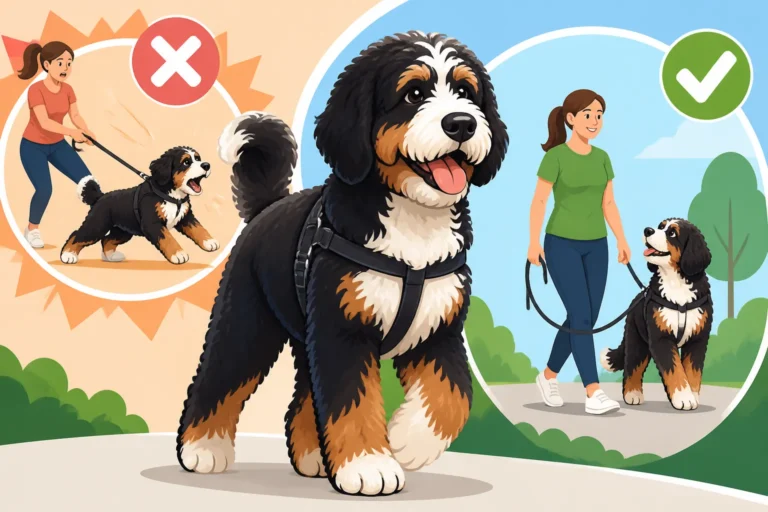
Crating can also be an excellent option. If your Bernedoodle is particularly over-the-top, having them in their crate for the initial arrival, and then releasing them after the initial excitement has died down, can be very beneficial. This teaches them that guests aren't a free-for-all, and that calm is rewarded with inclusion. Just make sure their crate is a positive, comfortable space. Whether a Crate Suits a Ninety Pound Bernedoodle can depend on early positive experiences. When using a leash, ensure it's a comfortable, flat collar or a front-clip harness to avoid putting pressure on their throat if they do try to lunge, which ties into managing Leash Manners on a Bernedoodle Heading for Ninety Pounds.
Consistency and Troubleshooting: Long-Term Solutions
Getting your Bernedoodle to stop jumping isn't a one-and-done fix. It requires ongoing consistency, adaptation, and patience, especially with such enthusiastic and sometimes slow-to-mature dogs.
Reinforcing Good Habits Continuously
Every single greeting, whether it's with a close family member or a new visitor, is a training opportunity. Don't slack off! If you allow jumping sometimes but not others, your Bernedoodle will get confused. Always ask for a sit or four-on-the-floor before offering attention. Keep treats handy, and reward every calm greeting, no matter how small. Think of it as investing in a lifetime of polite greetings.
This continuous reinforcement helps cement the desired behavior. It’s also important to remember that a Bernedoodle, despite their intelligence, might take The Age a Bernedoodle Finally Settles a bit longer than some other breeds. They stay puppy-like in spirit for a good while, and that means consistent, patient training through adolescence and beyond is key. The more you practice, the more it becomes second nature for them.
Troubleshooting Common Setbacks
Even with the best intentions, you might hit some snags. Perhaps your Bernedoodle gets too excited and forgets everything, or a well-meaning guest accidentally reinforces the jumping. Don't get discouraged!
- Over-excitement: If your Bernedoodle is simply too hyped up, go back to basics. Increase pre-arrival exercise. Use a leash for every single greeting, or have them on "place" until they are completely settled. Don't rush the introduction.
- Relapse with specific guests: Some people just bring out the inner lunatic in our dogs! If a particular person causes a relapse, work with them specifically. Ask them to stand still, hands folded, until your Bernedoodle offers a sit. Only then can they offer a quick pet. If the dog jumps, they immediately stand up straight, hands folded again.
- Jumping outside the home: The principles remain the same. When meeting people on walks, ask for a sit. If they jump, turn and walk away a few steps, then try again. Teach them that Teaching a Bernedoodle Not to Pull at Eighty Pounds and greeting politely go hand-in-hand. This is often an extension of the same behavior, just in a different context. This takes a lot of practice and patience.
Seeking Professional Guidance
If you find yourself consistently struggling, don't hesitate to reach out to a certified professional dog trainer. They can observe your specific situation, identify triggers, and provide tailored advice and hands-on demonstrations. Sometimes, an objective eye can spot something we're missing. A good trainer can also help you understand how to build Building Confidence in a Timid Bernedoodle if underlying anxiety contributes to over-excitement, or how to manage A Bernedoodle That Leans on Everyone, which can sometimes precede jumping. Remember, investing in professional guidance is an investment in a harmonious relationship with your beloved Bernedoodle for years to come.
By understanding why your Bernedoodle jumps, laying a strong foundation of training, managing real-life situations with clear strategies, and staying consistent, you can transform those enthusiastic leaps into polite, four-on-the-floor greetings. It takes time, patience, and a united front with your guests, but the reward is a well-mannered Bernedoodle who can comfortably be included in all your social gatherings.
Disclaimer
This article is for general informational purposes only and does not constitute professional advice. Laws, prices and regulations vary by location and change over time. Consult a qualified professional for guidance on your specific situation.