Whether Half Bernese Means Half the Cancer Risk
Bernedoodle cancer risk genetics and hybrid vigor statistics explain if crossing a Bernese and Poodle halves disease rates.

Bernedoodle cancer risk genetics and hybrid vigor statistics explain if crossing a Bernese and Poodle halves disease rates.

Histiocytic sarcoma risks, localized and disseminated forms, disease signs, and proactive care methods for Bernedoodle owners.
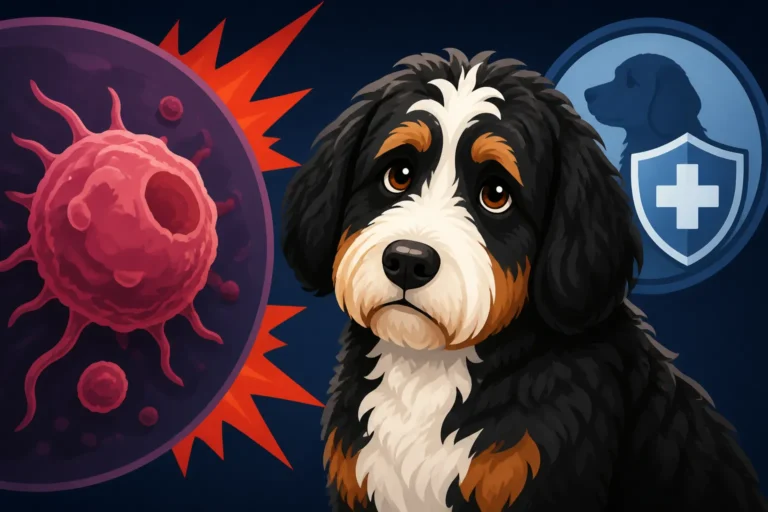
Histiocytic Sarcoma in Bernese Mountain Dogs commonly strikes in middle to older age, presenting significant health risks.

Histiocytic sarcoma causes twenty-five to thirty percent of Bernese Mountain Dog deaths, presenting localized and disseminated forms.

An unknown Bernedoodle pedigree obscures health screening history, increasing the risk of inheriting genetic conditions and shortening lifespan.

Standard Bernedoodle senior care and health management strategies help large dogs live comfortably past ten years of age.
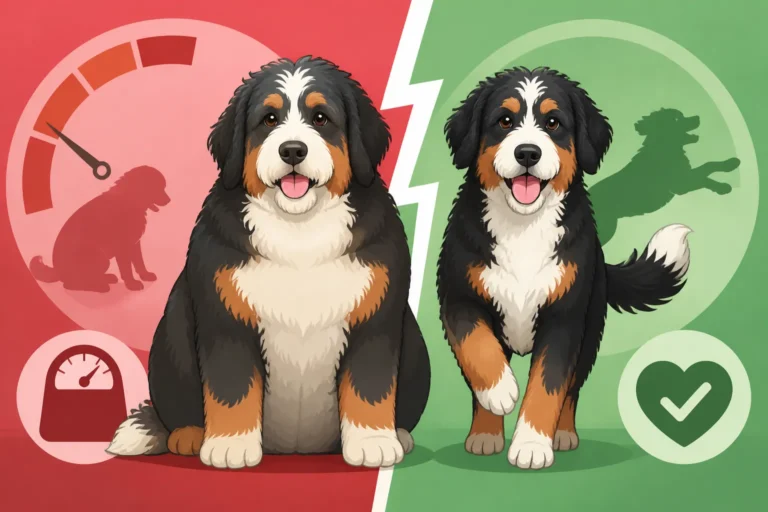
Excess weight in Bernedoodles causes joint strain, organ pressure, and chronic diseases like diabetes and cancer that shorten lifespan.

Neutering age affects Bernedoodle skeletal development, growth plate closure, and orthopedic health risks like joint dysplasia.

Canine graying explains why Bernedoodles develop white facial hair between ages three and seven, and identifies stress causes.
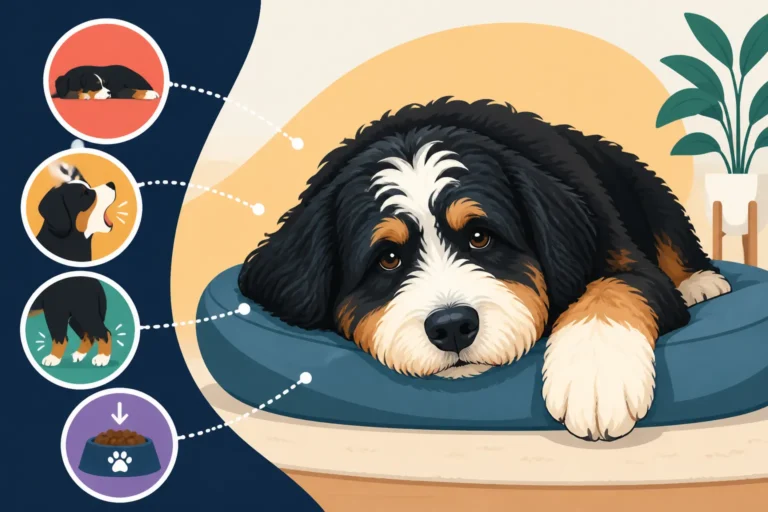
Senior Bernedoodle physical changes include morning stiffness, graying muzzles, and mobility shifts that indicate aging.