Whether a Bernedoodle Copes in a Busy House
It’s a truly understandable worry: you’re head-over-heels for the charm and reputation of a Bernedoodle, but your home life is anything but quiet. Maybe you have boisterous kids, frequent visitors, a work-from-home setup with constant video calls, or perhaps just a general hum of activity that never quite seems to cease. You're left wondering, "Can a Bernedoodle really thrive, or even just cope, in a busy house like mine?" This comprehensive guide will explore the unique Bernedoodle temperament, offer practical strategies for integrating them into a bustling household, and help you create an environment where your furry family member feels secure and loved, no matter how much is going on.
The Bernedoodle Blend: Temperament and Adaptability in a Bustling Home
When considering how a Bernedoodle will fare in a busy home, it's crucial to look at the two parent breeds: the Bernese Mountain Dog and the Poodle. Each brings distinct traits to the table, creating a wonderful, albeit sometimes complex, mix that can either embrace or struggle with constant activity, depending on individual personality and early experiences.
The Bernese Influence: Calmness and Potential Shyness
From the Bernese Mountain Dog side, Bernedoodles inherit a wonderful sense of calm and an affectionate, loyal nature. Bernese are generally known for being quite laid-back, gentle giants who adore their families. They often prefer to be close to their people, a trait that translates into the "velcro dog" tendency many Bernedoodles exhibit. This can be a huge plus in a busy home, as a dog that enjoys being near you might feel more connected even amidst chaos, rather than becoming isolated.
However, the Bernese side also brings a potential for shyness or reservedness, especially towards strangers. A Bernedoodle with a stronger Bernese leaning might find a constantly rotating door of new people or loud, unpredictable situations overwhelming. While they might be calm with their immediate family, a flurry of unfamiliar faces and sounds could trigger anxiety or cause them to retreat. Understanding this potential for The Shyness a Bernedoodle Gets From the Bernese is vital, as it means you'll need to be extra diligent in early socialization and creating secure spaces for your dog.
The Poodle Contribution: Intelligence and Sensitivity
The Poodle half of the Bernedoodle equation contributes intelligence, athleticism, and a surprisingly sensitive nature. Poodles are incredibly smart and quick to learn, which can be a huge asset in navigating a busy home. They can be trained to respond to cues, settle down, or go to their safe space even when things are hectic. This mental agility means they often pick up on routines and expectations quickly, which can help them adjust.
However, Poodles are also quite sensitive and can be prone to anxiety or overstimulation if not properly managed. A Bernedoodle with a stronger Poodle influence might react more intensely to loud noises, sudden movements, or a chaotic environment. Their intelligence means they absorb a lot, both good and bad, from their surroundings. This sensitivity, combined with the potential Bernese shyness, means a busy house isn't just about noise, but about managing sensory input and emotional responses for your dog.
How the Blend Handles Constant Activity
Ultimately, how a Bernedoodle handles constant activity depends heavily on the individual dog's personality and how well they are socialized and managed from a young age. Some Bernedoodles are incredibly outgoing and will thrive on the constant stimulation and attention a busy home provides. They'll be the life of the party, greeting every guest with a wagging tail and happy to be involved in whatever the family is doing.
Others, particularly those with a stronger propensity for shyness or sensitivity, might find the same environment draining. They might cope by retreating, becoming more prone to barking, or even developing anxiety behaviors like excessive licking or destructive chewing. It's not a one-size-fits-all answer. The key is to understand the spectrum of Bernedoodle temperaments and be prepared to tailor your approach to your specific dog. If you’re introducing a puppy, early exposure to controlled, positive experiences within a busy setting is paramount to help them build resilience.
Preparing Your Home: Creating a Haven in the Hubbub
Bringing a Bernedoodle into a busy home isn't about eliminating all activity (which is often impossible!), but about strategic preparation. By creating thoughtful spaces and implementing clear routines, you can help your Bernedoodle feel secure and understood, even when life gets a little wild.
Dedicated Safe Spaces and Retreats
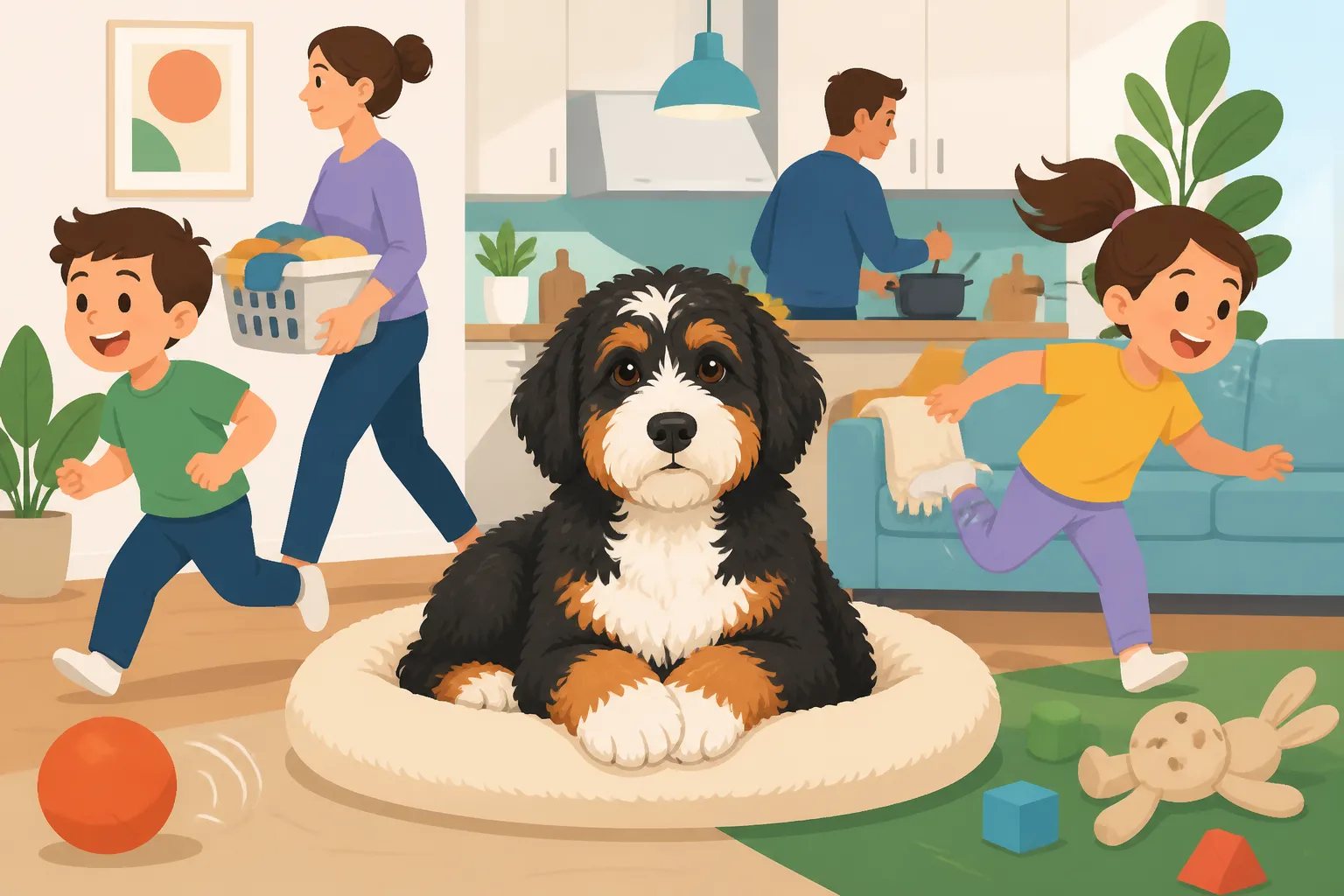
One of the most crucial things you can do for a Bernedoodle in a busy home is to provide dedicated safe spaces where they can retreat and feel completely undisturbed. Think of it as their "den" – a place to decompress, nap, or just get away from the action. This could be a crate in a quiet corner of a room, under a desk, or even a dog bed tucked away in a low-traffic area. Ensure this spot is always accessible and never used for punishment. It should be a positive, comforting sanctuary.
For larger Bernedoodles, a spacious crate can be a godsend. Look for durable, well-ventilated options, readily available on platforms like Amazon. Fill it with soft bedding, a comforting blanket that smells like you, and a favorite chew toy. You might even consider covering the crate with a blanket to make it feel more den-like, blocking out visual stimuli. Teaching your Bernedoodle to voluntarily go to their "place" is a skill that can be invaluable when the doorbell rings or the kids get particularly rowdy. Whether a Crate Suits a Ninety Pound Bernedoodle is an important consideration, ensuring it's appropriately sized and comfortable.
Establishing Predictable Routines and Boundaries
Even amidst general busyness, dogs thrive on predictability. Establishing clear routines for feeding, potty breaks, exercise, and quiet time can significantly reduce anxiety. If your Bernedoodle knows when to expect their walk, when they'll eat, and when it's time for a long chew in their quiet space, they'll feel more in control and less stressed by the unpredictable elements of a busy home. A predictable routine acts as an anchor in a sea of activity.
It’s also essential to set clear boundaries from day one. Decide what areas of the house are off-limits, who the Bernedoodle interacts with and when, and what behaviors are acceptable. Use baby gates (again, easily found on Amazon) to manage access to certain rooms or to create temporary barriers when you need to contain your dog in a safe zone during high-traffic times. Consistent rules, enforced by all family members, help your Bernedoodle understand their role and expectations within the bustling environment. This helps prevent them from feeling overwhelmed or constantly trying to figure out what's happening.
Essential Tools for Managing a Busy Environment
Beyond crates and gates, several tools can make living in a busy home with a Bernedoodle much smoother. Puzzle toys and long-lasting chews are fantastic for mental stimulation and quiet occupation, diverting their attention from household noise. When you have guests over or are busy with tasks, these can keep your dog happily engaged.
Consider white noise machines or calm music played softly in your Bernedoodle’s safe space. This can help mask sudden, startling noises from outside or within the home, creating a more serene environment for them. For dogs that get overstimulated by visual cues, window film or strategically placed dog beds away from high-traffic windows can also be beneficial. Remember, the goal is to reduce overall stress and give them tools to cope, not to eliminate the world around them entirely.
Proactive Strategies: Training and Socialization for a Busy Lifestyle
Merely setting up physical barriers isn't enough; active engagement through training and socialization is paramount for a Bernedoodle to genuinely thrive in a busy home. These proactive strategies equip your dog with the confidence and coping mechanisms needed to navigate the challenges of a bustling environment.
Early and Consistent Socialization is Paramount
For a Bernedoodle to be well-adjusted to a busy household, early and consistent socialization is absolutely critical. From the moment you bring your puppy home, expose them to a wide variety of sights, sounds, people, and (vaccinated, friendly) dogs in a controlled, positive way. This means not just exposing them, but pairing these experiences with high-value treats and praise, so they form positive associations. Think about the specific kinds of "busy" your home experiences: children playing, delivery drivers, loud appliances, visitors coming and going. Systematically introduce your puppy to these elements.
For instance, if your house regularly has children playing loudly, start with short, supervised exposures while your puppy is on a leash and receiving treats. Gradually increase the duration and intensity as they remain calm. Socializing a Bernedoodle Before Twelve Weeks is often emphasized for good reason – this critical window shapes their perception of the world. A well-socialized Bernedoodle puppy is more likely to grow into an adult who views the unpredictable nature of a busy home as normal, rather than frightening. Without this, a potentially shy Bernedoodle might develop anxieties.
Structured Training for Calmness and Focus
Training isn't just about obedience; it's about building a strong bond and teaching your Bernedoodle how to behave appropriately in various situations. For a busy home, commands like "place," "stay," "leave it," and a solid recall are invaluable. "Place" teaches your dog to go to their designated spot and remain there, even when distractions abound. This is especially useful when guests arrive or during meal times.
Structured training also provides mental exercise, which can be just as tiring and fulfilling as physical exercise. An intelligent dog like a Bernedoodle needs a job, and learning new commands or practicing existing ones can help them focus their energy. Online training programs, such as those offered by BAXTER & Bella, can be a fantastic resource for owners in busy homes. They provide step-by-step guidance you can follow at your own pace, fitting training sessions into your family's schedule and addressing specific behavioral challenges that might arise in a chaotic environment. Consistency is key; short, frequent training sessions are more effective than sporadic long ones. What a Bernedoodle Will Work For often includes positive reinforcement, which is crucial in these training scenarios.
Managing Interactions with People and Other Pets
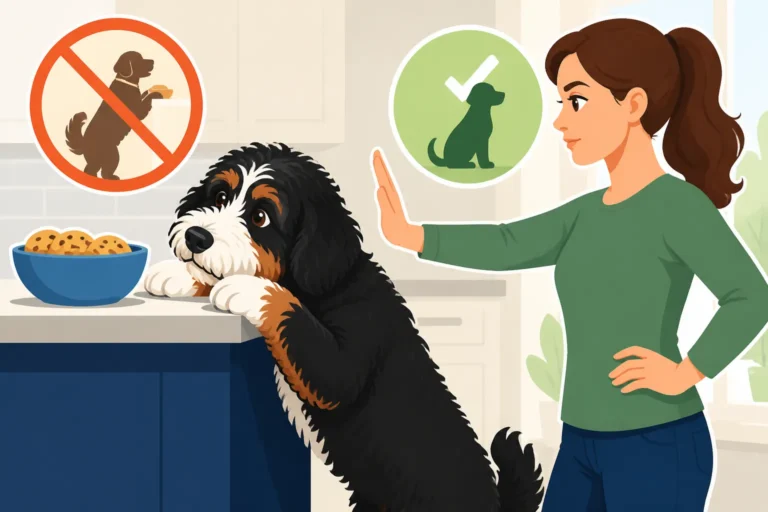
In a busy household, managing interactions is key to preventing overstimulation and stress. When guests come over, decide if your Bernedoodle will greet them or go to their "place" for a designated quiet time. If they are greeting, ensure it's a calm, supervised interaction. Teach your dog not to jump on people and to wait for attention. If you have children, teach them how to interact respectfully with the dog, especially when the dog is in their safe space.
For homes with multiple pets, ensure each animal has their own space and resources (food bowls, beds, toys) to prevent competition or stress. Supervised interactions, especially during the initial introduction, are vital. Even a naturally friendly Bernedoodle can become overwhelmed if constantly bothered by other pets or children without an escape route. Remember, even if your Bernedoodle is Introducing a Bernedoodle to the Dog You Already Have, it's important to control the pace of interaction, especially in a busy home.
Recognizing and Responding to Stress in a Busy Bernedoodle
Even with the best preparation and training, a busy home can sometimes be overwhelming for a Bernedoodle. It’s crucial for owners to be attuned to their dog’s body language and recognize the subtle (and not-so-subtle) signs of stress or discomfort. Ignoring these signals can lead to chronic anxiety and unwanted behavioral issues.
Signs Your Bernedoodle Might Be Overwhelmed
Dogs communicate their feelings through their body language, and it’s up to us to learn their cues. A Bernedoodle who is feeling overwhelmed in a busy house might exhibit several signs. These can include:
- Lip licking or yawning (when not tired): These are often appeasement gestures, indicating mild stress.
- Turning head away or avoiding eye contact: They might be trying to disengage from the situation.
- Panting (when not hot or exercised): This can be a sign of anxiety.
- Excessive shedding or drooling: Physical manifestations of stress.
- Tucked tail or ears pinned back: Classic signs of fear or apprehension.
- Restlessness or pacing: Unable to settle down in a noisy environment.
- Seeking solitude: Repeatedly retreating to their safe space.
- Unusual vocalizations: Excessive barking, whining, or growling at stimuli they usually tolerate.
- Destructive chewing: Redirecting anxiety into inappropriate outlets.
- Potty accidents: A sudden regression in house training can be stress-related.
It's easy to dismiss some of these as "just being a dog," but observing a cluster of these behaviors, especially in response to increased activity, should prompt you to investigate further. A Bernedoodle that is An Old Bernedoodle That Stares at Walls might be experiencing cognitive decline, but for a younger dog, it could be a sign of being overwhelmed.
Adjusting Your Approach to Support Your Dog
Once you recognize that your Bernedoodle is struggling, it’s time to make adjustments. This might mean actively managing the environment during peak busy times. For instance, when guests are coming, ensure your Bernedoodle has had plenty of exercise beforehand, then put them in their designated quiet space with a high-value chew before people arrive. This prevents them from being thrown into the thick of it.
You might need to be more proactive in scheduling quiet downtime for your dog, especially if your home is consistently busy. Build in periods where the house is calm, and your Bernedoodle can truly relax. If certain sounds or events trigger stress, try to desensitize them to those triggers gradually and positively. For example, if the doorbell causes panic, practice ringing it softly, giving a treat, then slowly increasing the volume. Remember, you are your dog's advocate, and sometimes that means politely asking guests or family members to give your Bernedoodle space.
Seeking Professional Guidance When Needed
If your Bernedoodle's stress levels are high, persistent, or manifesting in concerning behaviors like aggression, excessive fear, or separation anxiety, don't hesitate to seek professional help. A certified professional dog trainer or a veterinary behaviorist can provide invaluable guidance. They can help you identify the root causes of the stress, create a tailored behavior modification plan, and teach you advanced techniques for managing your specific home environment.
Sometimes, despite all best efforts, a busy home might genuinely be too much for an individual Bernedoodle, particularly if they have a highly sensitive personality or past trauma. While most Bernedoodles can adapt with the right support, there are rare cases where a quieter environment might truly be in the dog's best interest. However, with consistent positive reinforcement, smart management, and a deep understanding of your Bernedoodle's unique needs, most can thrive in active, loving homes, finding their peace within the rhythm of your family life. The key is to commit to meeting their needs, ensuring they feel secure, understood, and cherished.
| Strategy Component | Description | Benefit in Busy Home |
|---|---|---|
| Dedicated Safe Spaces | Crate or quiet corner with comfy bedding, toys, and water. | Provides a low-stimulus retreat, reduces overstimulation. |
| Predictable Routines | Consistent schedule for meals, walks, training, and potty breaks. | Creates a sense of security and control, reduces anxiety from unpredictability. |
| Early Socialization | Controlled, positive exposure to various sights, sounds, people, and dogs from a young age. | Builds confidence and resilience to new or chaotic situations. |
| Structured Training | Teaching commands like "place," "stay," "settle," and leash manners. | Improves impulse control, provides mental stimulation, aids management. |
| Mental Stimulation | Puzzle toys, chews, short training sessions. | Keeps dog engaged, prevents boredom, redirects anxious energy. |
| Observing Body Language | Learning to recognize signs of stress (lip licking, yawning, tucked tail, panting). | Allows timely intervention, prevents escalation of anxiety. |
| Managing Interactions | Supervising greetings, teaching children respect for dog's space, using gates for boundaries. | Prevents overstimulation, ensures safe and positive interactions. |
Disclaimer
This article is for general informational purposes only and does not constitute professional advice. Laws, prices and regulations vary by location and change over time. Consult a qualified professional for guidance on your specific situation.