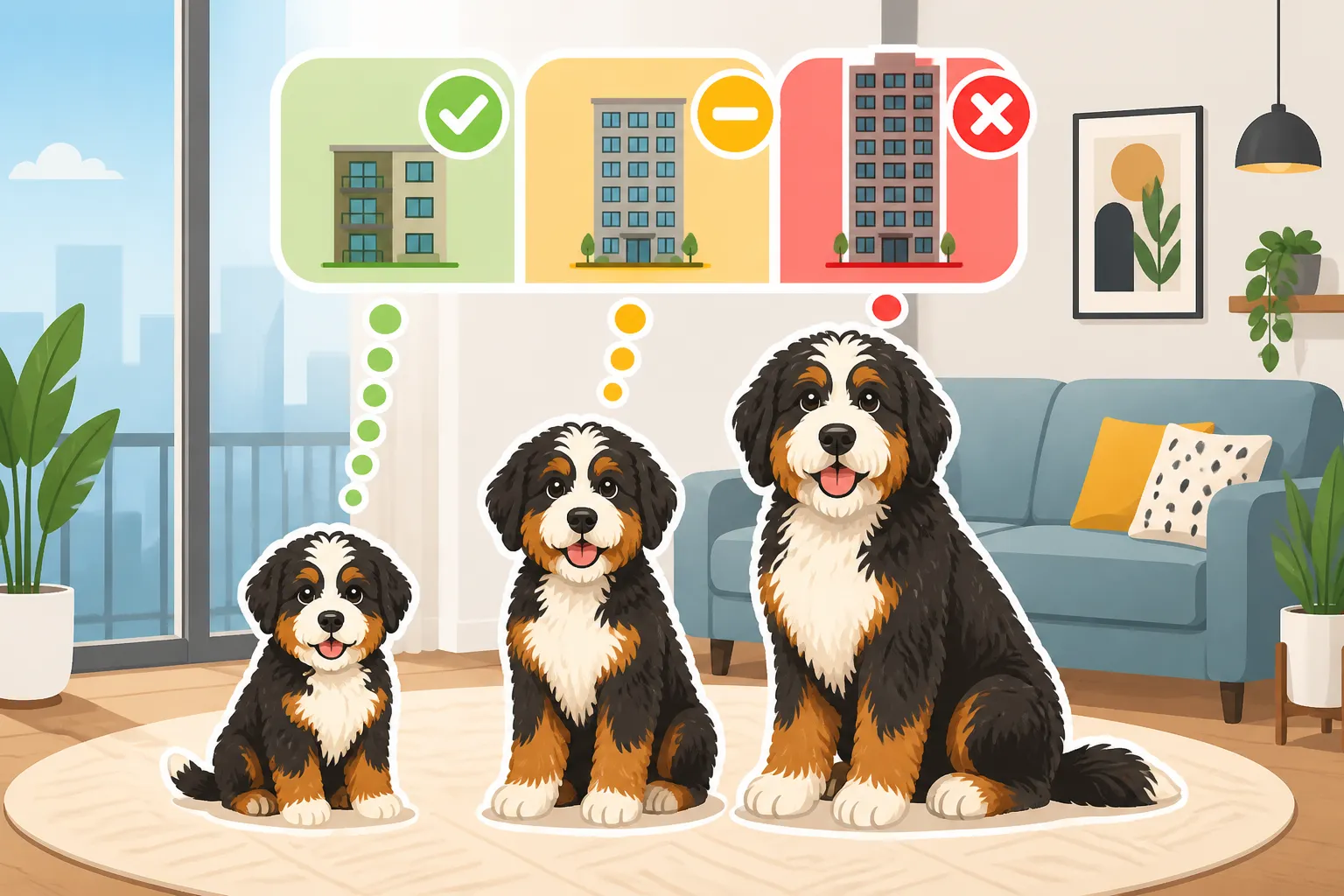
Which Bernedoodle Size Fits an Apartment
Choosing a Bernedoodle for an apartment can feel like a puzzle: a tiny dog may fit through the doorway more easily, but every size still needs exercise, training, and room to settle. This guide compares Tiny, Mini, and Standard Bernedoodles for apartment life, including practical space needs, daily routines, building rules, and the trade-offs that matter more than square footage alone.
How Bernedoodle size affects apartment living
Tiny, Mini, and Standard are useful labels, not guarantees
Bernedoodles are commonly described as Tiny, Mini, or Standard, but those labels do not always mean the same thing from one breeder to another. A Mini from one program may be close in size to a small Standard from another. Adult weight also depends on the parents and the individual dog, so ask about the expected range and the sizes of both parents rather than choosing based on a label alone. The Three Bernedoodle Sizes and What Sets Them
As a general guide, a Tiny Bernedoodle is the smallest size category, a Mini is in the middle, and a Standard is the largest. A Standard may grow into a substantial dog whose bed, crate, and turning space take up more room than a puppy’s supplies suggest. Even so, a small dog is not automatically an easy apartment dog: a Tiny Bernedoodle may be lively, vocal, or uncomfortable with long stretches alone.
Think about the dog’s adult shape as well as its weight. A tall Standard can need room to stretch out, walk through narrow hallways, and turn around without bumping furniture. A compact Mini may fit more easily around a dining table, but still needs a regular walking routine and a place where it can rest undisturbed. The Standard Bernedoodle at Seventy to Ninety Pounds
Which size is usually the easiest fit
For many apartments, a Mini Bernedoodle is a practical middle ground. It is generally easier to accommodate than a Standard, yet sturdier than the smallest size category. That can be useful in a home where the dog will need to navigate stairs, ride in an elevator, or walk through crowded entryways. Still, “easier to fit” is not the same as “easy to care for.” A Mini needs training, movement, grooming, and company just as much as a larger dog.
A Tiny Bernedoodle can be a good match when the apartment has limited floor space or when lifting and carrying a dog may be part of the routine. But small size does not remove the need for a comfortable resting area, frequent bathroom trips, and appropriate activity. Tiny dogs can also be vulnerable to being accidentally stepped on in a busy household, so a clear resting spot matters.
A Standard Bernedoodle can live in an apartment if the household can meet its needs and the building permits it. The tougher fit is often the daily logistics: getting a large dog outside quickly, navigating a small elevator, arranging a suitably sized crate, and providing enough activity without relying on a yard. Which Bernedoodle Size Suits Which Household
| Size category | Potential apartment advantage | Common practical challenge | Best questions to ask |
|---|---|---|---|
| Tiny | Takes up less floor space and may be easier to transport | Still needs regular outings, training, and a protected resting area | What adult size range do the parents suggest? |
| Mini | Often balances manageable size with a sturdy build | Size can vary, and grooming needs remain significant | How large are the parents, and what range is realistic? |
| Standard | May suit an active household that can provide reliable exercise | Needs more room for supplies and can be harder to manage in tight shared spaces | Does the building allow this dog’s expected adult size? |
Look beyond square footage
Measure the real pinch points in your home
A floor plan can look spacious while daily life feels cramped. Measure the areas the dog will use: the route from the entrance to its bed, the space beside the dining table, and the spot where a crate or pen could go. Check whether the dog can lie down fully, stand up, and turn around without blocking a doorway or the path to the kitchen. A crate that fits a puppy may not work once the dog reaches adult size.
Pay attention to shared spaces, too. A narrow hallway, a tight elevator, or a steep stairwell can change what feels manageable. Picture carrying a bag of groceries while guiding a dog past a neighbor or waiting for an elevator with a dog that is still learning leash manners. A large dog that is calm and trained may handle this routine smoothly; a smaller adolescent who pulls or jumps may make it stressful.
Flooring and sound deserve a place in the decision. Slippery floors can make it harder for a dog to move confidently, especially when it is excited or growing. Rugs or runners may help create safer paths, as long as they do not become a tripping hazard. In an apartment building, barking, door-alerting, and the sound of paws can also affect neighbors. Plan for training and enrichment rather than assuming a smaller dog will automatically be quieter.
Check building rules before choosing a puppy
Ask your landlord or building manager about dog policies before placing a deposit. Rules may address size, weight, breed descriptions, the number of pets, elevator use, or designated outdoor areas. Get the requirements in writing where possible, and make sure you understand how the policy applies to an adult Bernedoodle rather than a puppy that currently fits comfortably under your arm.
Also think through the route to a bathroom area. If the closest suitable outdoor spot is several blocks away, a young puppy will need frequent trips and close supervision. That may be manageable for someone working from home, but much harder for a household that cannot leave quickly during the day. A third-floor walk-up in Brooklyn presents a different routine from an elevator building with a landscaped courtyard, even if both apartments have similar square footage.
If you are comparing puppies, ask how the breeder estimates adult size and what happens if the dog grows beyond the expected range. An estimate is not a guarantee. A useful discussion should include the parents’ sizes, the puppy’s growth, and the uncertainty that comes with predicting an individual dog. For more on that uncertainty, see Whether a Bernedoodle's Adult Size Can Be Predicted and Whether a Bernedoodle Ends Up Bigger Than Promised.
Match the dog’s routine to apartment life
Exercise and bathroom access matter at every size
A Bernedoodle does not need a yard to thrive, but it does need regular opportunities to move, sniff, explore, and relieve itself. Apartment life means the owner has to create those opportunities deliberately. A walk around the block may be enough for a quick bathroom break, but it does not necessarily provide the mental engagement or activity a particular dog needs. The right routine depends on age, health, temperament, and energy.
Puppies require a different schedule from adults. They need frequent bathroom breaks, short and age-appropriate activity, and chances to learn about the world without being overwhelmed. If you live several floors up, plan how you will handle those trips during house-training, bad weather, and late-night wake-ups. Carrying a Tiny puppy may be possible; carrying a growing Standard may stop being practical sooner than expected.
Adults also need consistent activity, but the goal is not to exhaust a dog with long, repetitive exercise. Walks, sniffing, training games, and calm indoor enrichment can all contribute to a balanced day. If your apartment has no nearby green space, think ahead about where you will walk and how you will vary the routine. The Exercise a Standard Bernedoodle Needs Daily
Create a calm indoor setup
A dog-friendly apartment does not need a dedicated dog room. It does need a predictable place where the dog can rest, a safe way to manage visitors and deliveries, and a plan for time alone. A bed tucked away from the busiest part of the room may help a dog settle, while a crate or pen can be useful when introduced positively and sized for the dog’s adult needs.
Apartment dogs often hear hallway footsteps, doors closing, and neighbors coming and going. Some respond by barking or racing to the entrance. Practice calm behavior around ordinary sounds before the dog has rehearsed a habit of sounding the alarm every time someone walks past. Short training sessions and food puzzles can help occupy a dog indoors; retailers such as Chewy carry general pet supplies, but choose enrichment items based on your dog’s size, chewing style, and safety needs rather than buying by breed label.
Plan for grooming as part of the indoor setup. Bernedoodle coats can require regular brushing and professional care, and loose hair, damp coats, and grooming tools take up space. Keep a brush, towels, and basic supplies in one easy-to-reach place so grooming does not become a last-minute scramble. Chewy can be one place to compare routine supplies such as brushes and washable bedding, but ask a groomer what tools suit your dog’s actual coat texture. A curly or wavy coat may need a different approach from a straighter one. The Coat a Bernedoodle Gets From Two Heavy Coated Parents
Choose based on your household, not just the apartment
When a Mini may be the most balanced choice
A Mini may suit an apartment household that wants a dog large enough for regular walks and shared activities but not as physically imposing as a Standard. It can be a sensible option for people who use elevators, have moderate indoor space, and can offer daily outings. Its middle size does not eliminate training or grooming demands, but it may make equipment, transport, and close-quarters handling more manageable.
Consider your schedule honestly. If everyone is away for long periods, the main question is not whether a Mini fits in the apartment; it is who will provide bathroom breaks, companionship, and activity. If your workday is flexible and you enjoy walking, training, and brushing, apartment life may be quite workable. If you are hoping a smaller dog will require little attention, a Mini Bernedoodle may not match that expectation.
It can help to meet adult dogs of the size you are considering. Notice how they move through a doorway, settle in a room, and respond to city sounds. Ask owners what they found unexpectedly difficult, and ask breeders about adult temperament as well as size. Meeting a Bernedoodle in Person First
When a Tiny or Standard may still make sense
A Tiny Bernedoodle may suit someone who needs a compact dog and can provide frequent care, gentle handling, and suitable activity. It may be easier to fit a bed or carrier into a smaller home, but it still needs a stable routine and training. Consider whether your household includes young children, other pets, or busy foot traffic, and whether everyone can protect the dog from accidental bumps.
A Standard Bernedoodle can make sense in a larger apartment or a smaller apartment with an owner who has the time, strength, and routine to manage a big dog. A nearby park, reliable outdoor access, and good leash skills can matter more than having a private yard. Before committing, check that the building accepts the expected adult size and that you can manage the dog in elevators, stairwells, and crowded sidewalks.
Whichever size you prefer, prepare for the dog you may have rather than the puppy you see today. Ask the breeder about parent sizes, health screening, and the range of adult weights they have observed. A retailer such as Chewy may help you find everyday supplies, but the most important purchases are the ones that fit the dog as it grows and keep daily care manageable. For a broader look at the realities new owners sometimes underestimate, read What Bernedoodle Owners Wish They Had Known.
Disclaimer
This article is for general informational purposes only and does not constitute professional advice. Laws, prices and regulations vary by location and change over time. Consult a qualified professional for guidance on your specific situation.