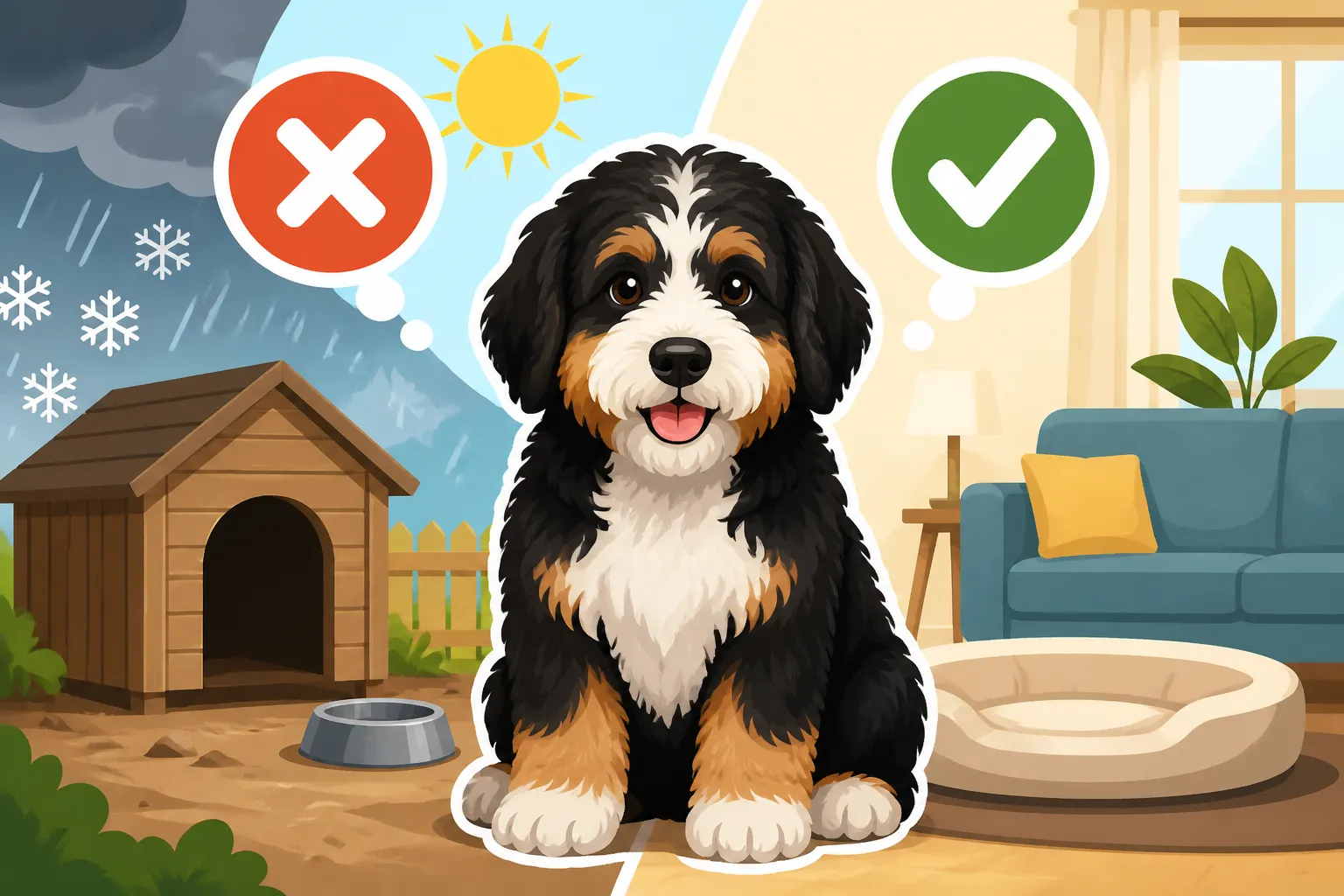
Whether a Bernedoodle Should Live Outdoors
It's a common thought when you see a big, fluffy Bernedoodle, especially one with that classic thick coat – surely they'd be happiest living out in the fresh air, right? Many of us instinctively picture them romping in a big yard all day. But the truth is, while Bernedoodles absolutely adore being outdoors and need plenty of exercise, making them live outdoors is a vastly different story that often leads to unexpected challenges and unhappiness for these wonderfully social dogs. This guide is here to shed light on why a Bernedoodle truly thrives as an integral part of your indoor family, rather than an outdoor resident.
Understanding the Bernedoodle's Core Nature and Needs
Bernedoodles are a unique blend, inheriting traits from both the sturdy Bernese Mountain Dog and the intelligent Poodle. This mix creates a dog that's not just physically imposing but deeply affectionate and mentally engaged. Understanding these inherent traits is crucial to providing them with the best possible home environment.
The Bernedoodle's Affectionate and Social Temperament
If there's one thing Bernedoodle owners will tell you, it's that these dogs are "Velcro dogs" in the best possible way. They thrive on companionship and want to be right where you are, whether that's curled up on the couch while you read, watching you cook dinner, or even just lying at your feet while you work. This isn't just a preference; it's a fundamental part of their well-being. Leaving a Bernedoodle isolated outdoors, even in a comfortable setup, can lead to severe loneliness and anxiety. They don't just tolerate human presence; they actively seek it out and consider themselves full-fledged family members.
Imagine a Bernedoodle, intelligent and keen to please, watching through a window as their family enjoys indoor activities. This isolation can be incredibly stressful for them. They are bred to be companion animals, and that means being with their people. This deep-seated need for connection makes them ill-suited for a life spent primarily alone, outside the hustle and bustle of family life. Their cheerful, sometimes goofy demeanor truly shines when they feel secure, loved, and included.
The Poodle and Bernese Mountain Dog Influence
Both parent breeds contribute significantly to the Bernedoodle's desire for an indoor life. The Poodle, known for its keen intelligence and often sensitive nature, forms strong bonds with its family. Poodles thrive on mental stimulation and human interaction, often becoming anxious or destructive if left to their own devices for too long. They are not dogs that are content to simply exist; they want to learn, play, and engage.
Similarly, the Bernese Mountain Dog, while robust and originally a working breed, is renowned for its gentle, affectionate temperament and deep loyalty to its family. Bernese are known for their calm, loving nature and their desire to be close to their human companions. They often lean into their people, literally, seeking physical connection. This combination of Poodle brains and Bernese heart means your Bernedoodle will feel most secure and happy when they are a true part of your indoor life. The Bernedoodle Against a Purebred Bernese touches on these temperament differences. They don't just "tolerate" being inside; they genuinely flourish there, soaking up all the attention and interaction they can get.
Environmental Factors and Health Considerations for Outdoor Living
While a Bernedoodle's fluffy coat might make them seem perfectly suited for outdoor living, the reality is far more complex. Their physical makeup and genetic predispositions present significant challenges when exposed to the elements for extended periods.
Climate Challenges: Heat, Cold, and Humidity
Despite their thick, luxurious coats, Bernedoodles are surprisingly susceptible to extreme temperatures. In warmer climates or during hot summer months, their dense fur, especially on darker-coated Bernedoodles, can quickly lead to overheating. Why a Black Tri Bernedoodle Overheats explains how their coat absorbs and traps heat, making them prone to heatstroke, a serious and potentially fatal condition. Even with access to shade and water, constant exposure to high temperatures can be dangerous. They need to be in a climate-controlled environment when the mercury rises.
Conversely, while they may seem built for cold weather, prolonged exposure to freezing temperatures, especially with wet fur, can still lead to hypothermia. Their paws, ears, and tails are vulnerable to frostbite. Heavy rain or damp conditions can quickly soak their thick coats, making them much colder and prone to skin issues. Humidity, regardless of temperature, can also make it harder for them to cool down and can exacerbate skin problems. Even if you provide a doghouse, it's difficult to maintain a truly safe and comfortable microclimate year-round that addresses all these issues.
Parasites, Pests, and Environmental Hazards
An outdoor-living Bernedoodle faces a constant barrage of potential health threats. Fleas, ticks, and mosquitoes are more prevalent in outdoor environments, bringing with them the risk of skin irritations, allergic reactions, and serious diseases like Lyme disease, ehrlichiosis, and heartworm. Even with preventative medications, the sheer exposure can be overwhelming.
Beyond parasites, the outdoor world is full of other dangers. Ingesting toxic plants, fertilizers, pesticides, or even antifreeze from a leaking car can be fatal. Encounters with wild animals, from raccoons and skunks to more dangerous predators, pose a risk of injury or disease. A Bernedoodle left unsupervised outdoors could also be exposed to dangerous debris, sharp objects, or even inadvertently dig into something hazardous. Indoor living significantly reduces these risks, allowing you to control their environment and keep them safe from unseen threats.
Joint Health and Appropriate Surfaces
Bernedoodles, particularly the standard size, are large breed dogs and are prone to orthopedic issues like hip and elbow dysplasia. Hips on a Ninety Pound Bernedoodle and Elbow Dysplasia in a Growing Bernedoodle are serious concerns for this breed. While they need exercise, constantly living on hard, uneven surfaces like concrete, rocky ground, or even perpetually damp earth can put undue stress on their developing and aging joints.
Indoor environments typically offer softer surfaces, like carpets, rugs, or even just smooth flooring, which are much gentler on their joints. Providing orthopedic dog beds inside also gives them a truly supportive place to rest and recover. An outdoor doghouse, even with bedding, rarely offers the consistent support and comfort needed to protect their heavy frames. As they get older, managing arthritis in an older Bernedoodle requires a soft, warm, and predictable environment, making indoor living paramount for their long-term comfort and mobility. Keeping a Standard Bernedoodle Sound Past Ten is a testament to the care they need.
Behavioral and Training Implications of Outdoor Living
Beyond their physical needs, a Bernedoodle's mental and behavioral well-being is intrinsically linked to their environment and the amount of human interaction they receive. Leaving them outside can inadvertently create significant training challenges and undesirable behaviors.
The Importance of Socialization and Training
Bernedoodles are intelligent and eager to please, making them highly trainable. However, effective training and socialization require consistent, positive interaction with their human family and exposure to a variety of sights, sounds, and experiences. A Bernedoodle confined to an outdoor space misses out on crucial early socialization experiences, like meeting new people, encountering different household noises, and understanding household routines. Socializing a Bernedoodle Before Twelve Weeks is critical, and it's best done in diverse environments that include indoor settings.
Limited human interaction can hinder house-training, as they won't learn the cues and expectations of an indoor living space. Furthermore, a lack of consistent training can lead to issues like excessive barking (from boredom, anxiety, or territoriality), destructive chewing (on fences, landscaping, or anything they can reach), or digging. They need to be active participants in the family to learn appropriate behavior and develop into well-adjusted companions.
Enrichment and Mental Stimulation Needs
Bernedoodles are smart cookies, inheriting the Poodle's intelligence and the Bernese's problem-solving aptitude. This means they need more than just physical exercise; they crave mental stimulation. A fenced yard, while providing space, quickly becomes boring without interaction. Dogs left outdoors for long periods often develop destructive behaviors born out of boredom and frustration. They might start digging craters, chewing up outdoor furniture, or even attempting to escape.
Providing a rich indoor environment filled with puzzle toys, interactive games, and consistent training sessions addresses this mental need. You can find a fantastic array of brain-game toys and enrichment feeders on platforms like Chewy or Amazon that keep them engaged. Regular training, fetch, tug-of-war, or even just learning new tricks indoors are vital for their mental health. An outdoor-only existence simply cannot provide the consistent, varied mental workout a Bernedoodle requires to prevent these problematic behaviors. Their minds are active, and they need appropriate outlets for that energy.
Safety and Security Concerns
Leaving a Bernedoodle outdoors for extended periods also raises significant safety and security concerns. The risk of theft for a desirable breed like the Bernedoodle is unfortunately real, especially if they are visible and unattended in a yard. Secure fencing is a must, but even the best fence can be breached or overcome by a determined dog (or person). A Bernedoodle could also accidentally escape through a gate left ajar or dig under a fence, putting them at risk of traffic accidents, getting lost, or encountering aggressive animals.
Furthermore, environmental factors can turn dangerous unexpectedly. Sudden severe weather, a loose wild animal, or a neighborhood incident could put your dog in harm's way before you even realize it. An indoor dog is inherently safer, more secure, and immediately accessible in an emergency. Microchipping and proper identification are always important, but proactive supervision and indoor housing are the first lines of defense against many of these external threats.
Providing a Comfortable and Enriched Indoor Life
So, if outdoor living isn't ideal, what does a truly comfortable and enriched indoor life for a Bernedoodle look like? It's all about integration, thoughtful design, and understanding their need for both comfort and activity.
Creating a Dedicated Indoor Space
An indoor Bernedoodle doesn't need a mansion, but they do need their own comfortable, designated spaces within your home. This might include a spacious crate with soft bedding in a quiet corner, or an orthopedic dog bed strategically placed in a family room where they can feel included without being underfoot. Bernedoodles appreciate a soft, supportive place to rest, especially as they grow into large adults. You can find excellent orthopedic beds designed for large breeds on Chewy or Amazon, which are particularly beneficial for protecting their joints.
The key is that this space is within the home, not separate from it. They should have easy access to fresh water and feel like a part of the family's daily rhythm. This allows them to retreat when they need quiet time, but still be close to their loved ones. A happy Bernedoodle is one that feels secure, knowing they have a place to call their own right there with their people.
Balancing Indoor Comfort with Outdoor Exercise
The answer isn't to keep your Bernedoodle perpetually indoors; it's to provide them with robust, supervised outdoor exercise. Bernedoodles absolutely need regular walks, playtime in a securely fenced yard, or trips to a dog park to burn off energy and explore. The Exercise a Standard Bernedoodle Needs Daily is significant, often requiring 60-90 minutes of active movement. This physical activity is crucial for their physical health, mental well-being, and joint health.
However, once their exercise needs are met, they should return to the comfort, safety, and companionship of their indoor home. Outdoor time is for activity, not for living. This balance allows them to enjoy the benefits of fresh air and movement without the risks and isolation of permanent outdoor residency. It's about integrating their outdoor needs into a predominantly indoor lifestyle, ensuring they get the best of both worlds.
Nutrition and Hydration Considerations
Managing a Bernedoodle's diet and hydration is much simpler and safer when they live indoors. You can monitor their food intake, ensuring they're eating appropriately and not scavenging anything potentially harmful from the yard. Consistent access to fresh, clean water is also easier to maintain indoors, where it's less likely to freeze in winter, become stagnant, or be contaminated by pests or debris.
For a large, active breed, quality nutrition is paramount. Brands like Ollie offer fresh, balanced meals that can be a great option for maintaining their health and energy levels. Indoor living also makes it easier to manage portion control and track their weight, which is vital for preventing obesity and reducing strain on their joints. Regular check-ins with your vet, alongside a well-managed indoor diet, ensure your Bernedoodle stays healthy and happy for many years to come. Caring for a Bernedoodle Past Eight also highlights the importance of consistent care throughout their life.
Bernedoodle Living: Indoor vs. Outdoor Considerations
Let's lay it out clearly with a comparison of what living indoors versus living outdoors generally means for a Bernedoodle.
| Feature / Aspect | Primarily Indoor Living | Primarily Outdoor Living |
|---|---|---|
| Companionship Needs | Fulfilled; integral part of the family, constant human interaction. | Unfulfilled; often leads to loneliness, separation anxiety, and destructive behaviors. |
| Environmental Protection | Climate-controlled comfort; protection from extreme heat/cold, humidity, storms. Whether a Bernedoodle Needs the House Air Conditioned is often yes. | Vulnerable to heatstroke, hypothermia, frostbite, skin issues from dampness; difficult to provide consistent comfort. |
| Health Risks | Lower exposure to parasites (fleas, ticks, mosquitoes), toxins, wild animals; easier to monitor health. | Higher risk of parasites and associated diseases, accidental ingestion of toxins, encounters with wildlife, exposure to hazards. |
| Joint Health | Softer indoor surfaces, orthopedic beds, protection from hard, uneven ground; vital for Hips on a Ninety Pound Bernedoodle. | Constant stress on joints from hard surfaces, damp ground; exacerbates conditions like Elbow Dysplasia in a Growing Bernedoodle and arthritis. |
| Training & Behavior | Consistent training and socialization; integration into household routines; mental stimulation. Leads to a well-adjusted dog. | Lack of consistent training/socialization; boredom, barking, digging, chewing, escape attempts. Leads to behavioral issues. |
| Safety & Security | More secure from theft, escape, traffic accidents, aggressive animals, environmental dangers. | Higher risk of theft, accidental escape, getting lost, traffic accidents, encounters with aggressive animals or people. |
| Monitoring & Care | Easy to monitor food/water intake, notice health changes, administer medication, regular grooming. | Difficult to monitor health and well-being; food/water may be contaminated or spoil; grooming needs (especially for The Coat a Bernedoodle Gets From Two Heavy Coated Parents) are neglected. |
| Overall Well-being | High potential for a happy, healthy, well-adjusted companion that thrives on interaction. | High potential for a stressed, unhealthy, and poorly socialized dog, regardless of good intentions. |
Ultimately, while a Bernedoodle will absolutely relish their time outdoors for walks, playtime, and potty breaks, their core needs for companionship, safety, and comfort firmly place them as indoor family members. They are not simply outdoor dogs with a thick coat; they are sensitive, intelligent, and deeply social creatures who thrive on being an active, beloved part of your everyday life. Providing them with a loving indoor home and plenty of supervised outdoor activity is truly the best way to ensure your Bernedoodle lives a long, happy, and fulfilling life by your side. What a Bernedoodle Asks of a First Time Owner highlights these extensive care requirements.
Disclaimer
This article is for general informational purposes only and does not constitute professional advice. Laws, prices and regulations vary by location and change over time. Consult a qualified professional for guidance on your specific situation.