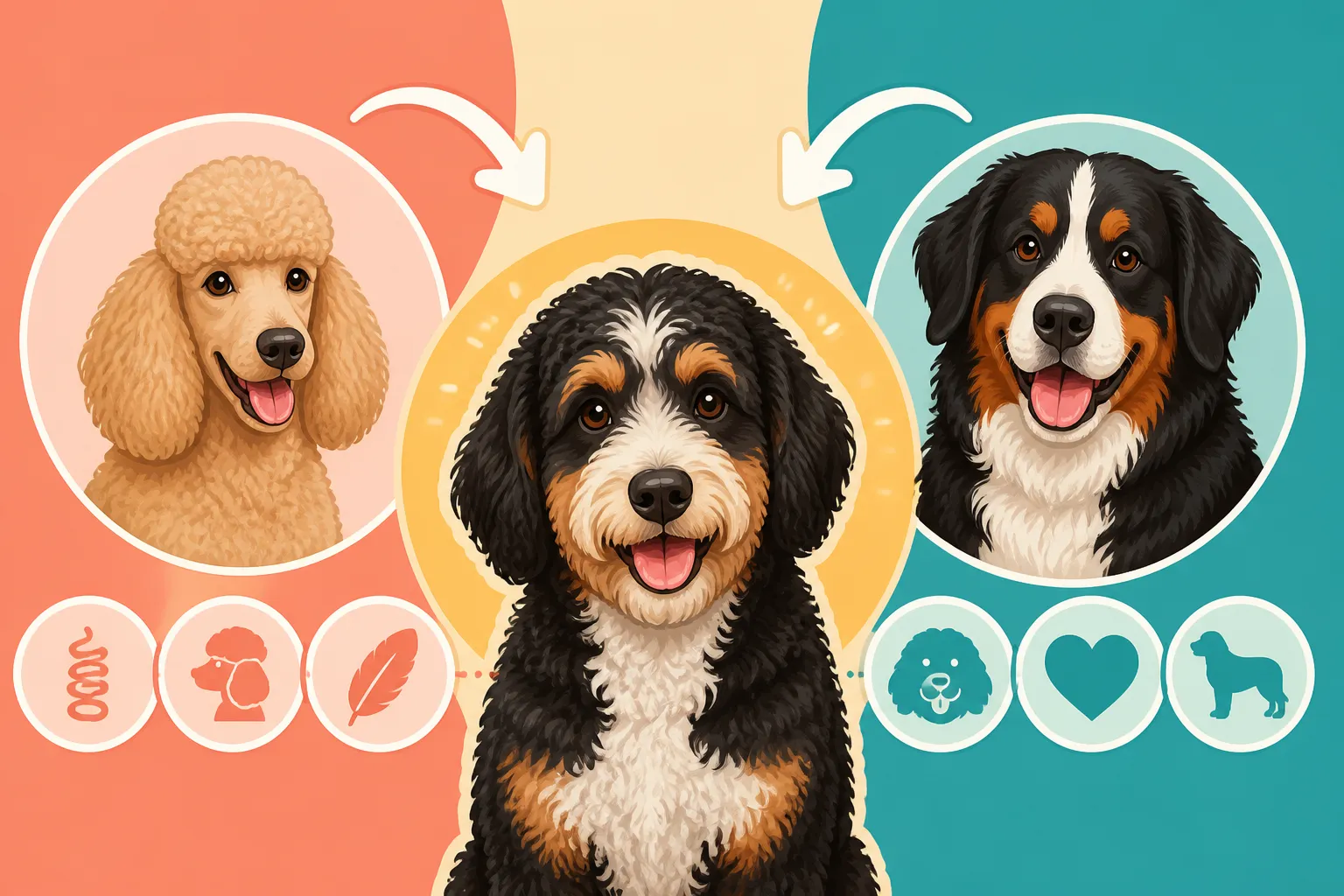
What the Poodle Contributes to a Bernedoodle
Many people fall in love with the Bernedoodle's charming looks and sweet reputation, envisioning a fluffy, friendly companion. But beneath those adorable curls and gentle eyes, a rich genetic tapestry is woven from two distinct breeds: the Bernese Mountain Dog and the Poodle. Understanding what each parent breed brings to the table is crucial, and the Poodle's influence often goes far beyond just a low-shedding coat. This guide will delve deep into the specific contributions the Poodle makes to your Bernedoodle, shedding light on everything from their intelligence to their health predispositions, helping you understand the unique blend that makes your dog so special.
The Poodle's Impact on the Bernedoodle Coat: Shedding and Allergies
One of the primary reasons the Poodle was chosen for the Bernedoodle cross was its unique coat. The desire for a large, affectionate family dog without the heavy shedding associated with the Bernese Mountain Dog drove many of the initial breeding decisions. The Poodle's coat is truly a marvel, and its genetics play a massive role in what kind of coat your Bernedoodle will have.
The Myth of the "Hypoallergenic" Bernedoodle
While Poodles are often lauded as hypoallergenic, it's more accurate to say they are "low-shedding." No dog is truly 100% hypoallergenic, as allergens are present in dander, saliva, and urine, not just the hair itself. However, because Poodles don't shed their hair extensively, they release significantly less dander into the environment, which is often what triggers allergic reactions in people. This non-shedding trait is highly desirable for many families.
When a Poodle is crossed with a Bernese, which is a heavy shedder with a thick double coat, the outcome can vary. Many Bernedoodles, especially first-generation (F1) crosses, inherit the Poodle's wavy or curly coat, which tends to shed minimally. This is great news for allergy sufferers and those who dread sweeping up dog hair daily. However, it's not a guaranteed trait, and some Bernedoodles can still lean more towards the Bernese coat type, resulting in more shedding than anticipated. Whether any Bernedoodle is truly non shedding is a common question, and the answer is usually "mostly."
Grooming Demands of a Poodle-Influenced Coat
The Poodle's coat might be low-shedding, but it is far from low-maintenance. This is a crucial point that many prospective Bernedoodle owners underestimate. The curly or wavy texture, designed to trap shed hair rather than release it, means that without diligent daily or every-other-day brushing, your Bernedoodle's coat will quickly become a matted mess. Mats can be incredibly painful for a dog, pulling at their skin and creating hotspots for skin infections.
Professional grooming every 6-8 weeks is not just a luxury; it's a necessity for most Bernedoodles to keep their coats healthy and manageable. This involves thorough brushing, bathing, drying, and clipping. If you're planning on a Bernedoodle, prepare for significant grooming costs or a substantial time commitment to home grooming. You'll need specialized brushes, detangling sprays, and a high-velocity dryer, perhaps ordered conveniently from retailers like Chewy, to ensure their coat is properly maintained. The Volume of Coat a Bernedoodle Owner Brushes Weekly is often surprising, and it's definitely a Poodle legacy.
Intelligence and Trainability: The Poodle Brain in a Bernedoodle Body
Poodles are renowned for their exceptional intelligence and eagerness to please, often ranking among the smartest dog breeds. This mental prowess is a significant contribution to the Bernedoodle, influencing their capacity for learning and problem-solving.
Quick Learners, Eager to Please
The Poodle's intelligence often manifests in a Bernedoodle as a dog that is quick to pick up new commands and enjoys mental stimulation. They thrive on having a "job" to do, whether that's learning complex tricks, participating in dog sports like agility or rally, or simply engaging in interactive puzzle toys. This makes them highly trainable, especially when positive reinforcement methods are used. They generally respond very well to treats and praise, and often aim to please their owners.
However, this intelligence isn't always a walk in the park. A smart dog can also be a mischievous dog if not given enough outlets for their brainpower. Bored Bernedoodles, thanks to their Poodle heritage, can become adept at counter-surfing, opening cabinets, or devising creative ways to get into trouble. Early and consistent training is key, leveraging that Poodle brain to mold a well-behaved companion. You'll often find yourself amazed at how quickly they connect the dots, especially when you're working on complex sequences or behaviors. The Stubborn Streak Under a Bernedoodle's Poodle Brain is something to be aware of, but with patience, that Poodle intelligence usually wins out.
The Importance of Mental Stimulation
Just as physical exercise is crucial, mental exercise is paramount for a Poodle-brained Bernedoodle. Without it, they can develop undesirable behaviors born out of boredom and frustration. This could include excessive barking, destructive chewing, or becoming overly clingy. Providing a variety of toys, rotating them regularly, and engaging in brain games can make a huge difference.
Consider incorporating regular training sessions into your daily routine, even short 10-15 minute bursts. Puzzle feeders, lick mats, and snuffle mats are excellent tools to engage their minds during meal times, turning eating into a mental challenge. Many pet supply stores, including online options like Chewy, offer a wide array of interactive toys specifically designed for intelligent breeds. Keeping them mentally satisfied can be just as tiring for them as a long walk, and it helps prevent that clever Poodle brain from focusing its energy on household mischief.
Temperament and Personality Traits from the Poodle Side
While the Bernese Mountain Dog is known for its calm, gentle, and somewhat reserved nature, the Poodle contributes a different set of personality traits that can create a wonderfully balanced or sometimes a surprisingly energetic Bernedoodle.
Playfulness and Activity Levels
Poodles, especially Standard Poodles, are active, athletic dogs with a playful streak. They can be quite goofy and enjoy engaging in games with their families. This often translates to a Bernedoodle that is more energetic and playful than a purebred Bernese. While Bernedoodles generally enjoy lounging with their families, they also have a strong need for daily exercise and playtime to burn off energy. They love to run, fetch, and engage in vigorous play sessions.
This Poodle-inherited playfulness can be a joy, making your Bernedoodle a fun-loving companion who's always up for an adventure. However, it also means that they aren't content to be couch potatoes all day. A Bernedoodle with a strong Poodle influence will need consistent opportunities for physical activity, whether that's long walks, trips to the dog park, or structured play in a secure yard. Neglecting their exercise needs can lead to restless behavior and frustration for both dog and owner. The Exercise a Standard Bernedoodle Needs Daily is significant, and that active Poodle DNA plays a big role.
Sensitivity and Social Needs
Poodles are generally sensitive and people-oriented dogs who thrive on companionship. They form strong bonds with their families and can be quite affectionate. This deep attachment is often passed on to Bernedoodles, making them incredibly loving and devoted pets. They tend to want to be where their people are, often leaning into their owners for comfort and closeness. A Bernedoodle That Leans on Everyone is a common sight and a trait likely amplified by the Bernese, but the Poodle's desire for closeness contributes significantly.
However, this sensitivity can also mean that Poodles are prone to separation anxiety if left alone for extended periods without proper training and preparation. Bernedoodles, too, can inherit this tendency. They do best in homes where they receive ample attention and are not left isolated for too long. Early socialization and positive experiences with different people, places, and other animals are essential to ensure a well-adjusted and confident Bernedoodle, mitigating any potential shyness that can also come from the Bernese side.
Poodle Health Contributions and Concerns for Bernedoodles
One of the most compelling reasons for creating the Bernedoodle was to introduce healthier genetics, specifically to address the notoriously short lifespan and high cancer rates of the Bernese Mountain Dog. The Poodle's generally robust health profile and longer lifespan are key contributions.
Extending Lifespan and Reducing Cancer Risk
Standard Poodles typically have a lifespan of 10-14 years, significantly longer than the 6-8 years often seen in Bernese Mountain Dogs. By crossing the two breeds, breeders hoped to introduce hybrid vigor and dilute some of the genetic predispositions to serious health conditions, particularly cancer, that plague the Bernese. Many Bernedoodles do enjoy a longer lifespan than their Bernese parent, often living 10-12 years, sometimes even more. Whether a Bernedoodle Beats Its Bernese Parent's Lifespan is a question many hope the Poodle answers positively.
While Bernedoodles are not immune to cancer, the Poodle's genetic input is thought to reduce the overall incidence, especially for types like histiocytic sarcoma, which is devastatingly common in Bernese. However, this doesn't mean Bernedoodles are cancer-free. They can still develop various cancers, some of which are common in Poodles, such as sebaceous adenomas or certain types of lymphoma. Diligent screening by ethical breeders and regular veterinary check-ups throughout a Bernedoodle's life remain crucial. Whether the Bernedoodle Cross Actually Reduced Cancer is a complex question breeders and owners are constantly evaluating.
Poodle-Specific Health Concerns in Bernedoodles
While the Poodle helps mitigate some Bernese health risks, it also introduces its own set of potential genetic predispositions that Bernedoodle owners need to be aware of. Ethical breeders will conduct extensive health testing on both parent breeds to minimize these risks.
Some common health concerns in Poodles that can be passed to Bernedoodles include:
- Hip and Elbow Dysplasia: Although often associated with large breeds like the Bernese, Poodles can also suffer from hip and elbow dysplasia. Careful screening of both parents' hip and elbow scores is essential.
- Eye Conditions: Progressive Retinal Atrophy (PRA) is a degenerative eye disease that can lead to blindness and is found in Poodles. Responsible breeders will test for this. Other eye issues like cataracts can also appear. The Eye Conditions a Bernedoodle Is Tested For highlights the importance of this.
- Addison's Disease: This adrenal gland disorder is more prevalent in Standard Poodles. Symptoms can be vague, but early diagnosis is important.
- Bloat (Gastric Dilatation-Volvulus): Standard Poodles, like other deep-chested breeds, are at a higher risk of bloat, a life-threatening condition. The Bernese also contributes to this deep-chested conformation, making Bernedoodles particularly susceptible. Bloat in a Standard Bernedoodle's Deep Chest is a critical concern for larger Bernedoodles.
- Von Willebrand's Disease (vWD): This is a bleeding disorder that Poodles can carry, though it's also present in Bernese. Testing for vWD is crucial before any surgical procedures.
Understanding these Poodle-specific health risks means you can work with your vet to monitor for symptoms and provide the best preventative care for your Bernedoodle. Always ask breeders for proof of health clearances for both parent dogs.
Size and Structure: How the Poodle Influences a Bernedoodle's Build
The Poodle comes in three distinct sizes – Standard, Miniature, and Toy – which directly impacts the size variations seen in Bernedoodles. This allows for a much wider range of Bernedoodle sizes than if only one type of Poodle were used.
Creating the Different Bernedoodle Sizes
The use of different Poodle sizes is what gives us the Standard, Mini, and Tiny Bernedoodles. A Standard Poodle, crossed with a Bernese, typically produces a Standard Bernedoodle, often weighing 70-90+ pounds. When a Miniature Poodle is used, the result is a Mini Bernedoodle, generally falling into the 25-50 pound range. And for the smallest Bernedoodles, a Toy Poodle is bred with a smaller Bernese or a Mini Bernedoodle, creating Tiny Bernedoodles under 25 pounds. The Three Bernedoodle Sizes and What Sets Them explains this lineage.
This intentional sizing allows prospective owners to choose a Bernedoodle that fits their living situation and lifestyle. Someone living in an apartment might opt for a Tiny or Mini Bernedoodle, while a family with a large yard might prefer a Standard. The Poodle's lean, athletic build, especially the Standard Poodle, also often tempers the Bernese's more stocky, heavy bone structure, resulting in a Bernedoodle that is still substantial but often a bit more agile.
Conformation and Movement
Poodles are known for their elegant, athletic conformation and graceful movement. They are strong, well-proportioned dogs built for activity. This influences the Bernedoodle's overall structure, often lending a more refined and less cumbersome build than a pure Bernese. While a Bernedoodle still retains the robust build and substantial bone of the Bernese, the Poodle influence often contributes to longer legs, a more tucked-up abdomen, and a lighter, more springy gait.
This can be beneficial for joint health, as a more athletic frame might put less strain on developing joints compared to a heavier, more squarely built dog. However, it's still crucial to ensure a Bernedoodle puppy grows at an appropriate, slow rate to protect those still-developing joints. Over-exercising a young, large-breed Bernedoodle, even one with Poodle agility, can still contribute to orthopedic issues like hip and elbow dysplasia. Growing a Standard Bernedoodle Slowly on Purpose is vital, regardless of Poodle influence.
The Poodle's Gift of Longevity: How it Boosts Bernedoodle Health
While touched upon in the health section, the Poodle's contribution to a Bernedoodle's potential lifespan deserves its own detailed focus. It's one of the most compelling arguments for the crossbreed.
The Desire for a Longer-Lived Companion
The heartache of losing a Bernese Mountain Dog too soon is a common experience for many owners. Their sweet, loyal nature makes their tragically short lifespan particularly devastating. This was a primary motivator for the initial Bernedoodle breeders; they wanted to create a dog with the beloved temperament and appearance of the Bernese but with a significantly longer, healthier life. The Poodle, with its excellent average lifespan, was the ideal candidate to introduce this longevity. The Seven Years a Bernese Lives and the Twelve a Bernedoodle Might truly highlights this driving factor.
The concept of "hybrid vigor" suggests that crossing two genetically distinct purebred lines can result in offspring that are generally healthier and more robust than either parent breed, potentially leading to increased longevity. While not a guaranteed outcome for every individual Bernedoodle, the Poodle's genetic contribution generally moves the needle towards a longer life for the mixed breed. It's a key hope for many families seeking a dog that will be with them for well over a decade.
Managing Age-Related Decline
Even with the Poodle's gift of longevity, Bernedoodles will eventually face age-related health challenges, just like any dog. However, a longer lifespan means owners have more years to manage these issues. Conditions like arthritis, cognitive decline, and changes in metabolism become more prevalent as a dog ages. The Poodle's genetics can potentially push the onset of these conditions later in life compared to a Bernese.
Caring for a senior Bernedoodle involves paying close attention to their diet, providing appropriate low-impact exercise, and ensuring regular veterinary check-ups to catch any emerging health issues early. Joint supplements, mobility aids like ramps (which can be found at Chewy), and comfortable orthopedic beds become essential. While no dog lives forever, the Poodle's influence offers the hope of many more cherished years with your Bernedoodle, giving you more time to prepare for and manage the natural process of aging. Caring for a Bernedoodle Past Eight is a conversation we're thankfully having more often thanks to the Poodle.
| Feature | Bernese Mountain Dog Contribution | Poodle Contribution | Bernedoodle Outcome (Typical) |
|---|---|---|---|
| Coat | Thick double coat, heavy shedding | Curly/wavy, non-shedding | Wavy to curly, low-shedding |
| Temperament | Calm, gentle, loyal, sometimes shy | Intelligent, playful, active, sensitive | Intelligent, affectionate, playful, potentially sensitive |
| Intelligence | Moderate, eager to please | Very high, quick learner | High, trainable, needs mental stimulation |
| Lifespan | Short (6-8 years) | Longer (10-14 years) | Medium-long (10-12+ years) |
| Size | Large, stocky build | Various sizes (Standard, Mini, Toy), athletic build | Varied (Standard, Mini, Tiny), generally athletic build |
| Health Risks | Cancer, hip/elbow dysplasia, bloat | Addison's, PRA, bloat, hip/elbow dysplasia | Reduced cancer risk (compared to Bernese), still predisposed to some joint/eye issues, bloat |
Disclaimer
This article is for general informational purposes only and does not constitute professional advice. Laws, prices and regulations vary by location and change over time. Consult a qualified professional for guidance on your specific situation.