What the Bernese Contributes to a Bernedoodle
Many aspiring Bernedoodle owners fall in love with their fluffy, friendly appearance, often without fully understanding the rich tapestry of traits inherited from both parent breeds. It's a common frustration to expect one thing and get another, especially when it comes to temperament or unexpected health quirks. This guide is here to shed light specifically on what the magnificent Bernese Mountain Dog contributes to your beloved Bernedoodle, helping you appreciate the unique blend that makes these dogs so special.
The Foundation of Temperament: Calmness and Affection
The Bernese Mountain Dog is renowned for its gentle, loyal, and affectionate nature. These aren't just pretty words on a breed description; they're deeply ingrained characteristics that significantly shape the Bernedoodle's personality. When you see a Bernedoodle melting into your side, or patiently tolerating a child's clumsy affection, you're witnessing the Bernese influence shining through. This calm demeanor is often what draws families to the Bernedoodle, hoping for a dog that's not overly hyper but still playful.
The Gentle Giant's Demeanor
One of the most cherished contributions from the Bernese side is an inherent sense of calm. Bernese Mountain Dogs, despite their imposing size, are often described as gentle giants. They possess a steady, unruffled temperament that can be a true blessing in a family dog. This translates into Bernedoodles who are generally less prone to frantic energy bursts than some other doodle mixes, though the Poodle parent can definitely inject some zest! You'll often find Bernedoodles content to lounge nearby, observing the household activity rather than needing to be the center of attention every second. They bring a grounded, peaceful presence that can make a bustling home feel a little more serene.
However, this calmness doesn't mean they're couch potatoes. It simply means their energy is often expressed in a more measured way. They're happy for a good walk or a romp in the yard, but they're equally thrilled to cuddle up for an evening of TV. This balance is a huge draw for many owners who want an active companion without the relentless demands of a high-drive breed. It’s this gentle nature that often makes them excellent companions for children and other pets, provided they are properly socialized and trained from a young age.
Unwavering Loyalty and Family Focus
The Bernese Mountain Dog is, at its heart, a devoted family dog. They form incredibly strong bonds with their human companions and thrive on being an integral part of the family unit. This profound loyalty is a hallmark trait you'll almost certainly see in your Bernedoodle. They often become shadows, following their favorite people from room to room, just wanting to be in the same space. This isn't clinginess in an anxious way, but rather a deep desire for connection and companionship.
This loyalty also often manifests as a protective instinct, though typically a gentle one. A Bernedoodle with strong Bernese genes might be observant of strangers, perhaps giving a soft bark to announce an arrival, but rarely showing aggression. They are generally more interested in being loved and included than in guarding. For families seeking a dog that will truly be a member of the household, involved in daily life and offering unconditional affection, the Bernese contribution to the Bernedoodle’s loyalty is invaluable. They live for their people, making them incredibly rewarding companions.
The Reserved Side: Shyness and New Experiences
While generally friendly, Bernese Mountain Dogs can sometimes exhibit a degree of shyness or reservation, particularly towards strangers or in new situations. This isn't aggression, but rather a cautious, watchful nature. This trait can certainly pass on to Bernedoodles. You might notice your Bernedoodle puppy, even after careful socialization, taking a moment to assess new people or environments before fully relaxing and engaging. It’s important not to confuse this initial reservation with fear or hostility; it's simply their way of processing the world.
For owners, this means that early and ongoing socialization is absolutely critical for a Bernedoodle. Exposing your puppy to a wide variety of sights, sounds, people, and other well-mannered dogs in a positive way helps them build confidence. Without it, a naturally reserved Bernedoodle could become overly timid. You might find yourself needing to gently encourage your dog to interact, rather than expecting them to be an instant social butterfly like some Poodle-dominant Bernedoodles might be. Patience and positive reinforcement are key to helping a Bernedoodle with this Bernese-influenced shyness blossom into a confident, well-adjusted adult. You can learn more about this in The Shyness a Bernedoodle Gets From the Bernese.
Physical Traits: Size, Coat, and Markings
Beyond temperament, the Bernese Mountain Dog makes significant contributions to the Bernedoodle's physical appearance. From their impressive stature to their distinctive coloring and plush coats, many of the visual characteristics people adore in Bernedoodles trace directly back to the Bernese side of the family tree. It’s this beautiful blend of traits that creates such a striking and beloved dog.
The Majestic Size and Sturdy Build
The Bernese Mountain Dog is a large, sturdy breed, and this substantial size is a primary contribution to the standard Bernedoodle. While the Poodle side can influence size downwards (leading to mini and tiny Bernedoodles), a standard Bernedoodle will carry the Bernese's impressive frame. These dogs grow to be truly magnificent, often weighing between 70 to 90 pounds, sometimes even more. Their build is solid and well-muscled, giving them a robust appearance that speaks to their heritage as working dogs from the Swiss Alps.
This substantial size means that Bernedoodles require space, both in your home and your vehicle. They can be quite powerful, even in play, so early training in leash manners and appropriate interactions is crucial, especially if they'll be around small children or elderly family members. Hips on a Ninety Pound Bernedoodle and Elbow Dysplasia in a Growing Bernedoodle are important topics for owners of large Bernedoodles to understand, as their size can put stress on developing joints. Planning for their eventual adult size from puppyhood, including appropriate large breed puppy food from Chewy, is vital for healthy growth.
The Double Coat and Shedding Tendencies
Perhaps one of the most recognizable Bernese contributions to the Bernedoodle is the coat. Bernese Mountain Dogs have a thick, luxurious double coat, designed to protect them from harsh mountain climates. This coat type is usually inherited to some degree by the Bernedoodle, even with the Poodle's influence. While the Poodle's genes aim for a non-shedding, curly coat, many Bernedoodles end up with a wavy or fleece coat that still has significant density and a tendency to shed some, especially during seasonal changes. It’s rarely truly non-shedding, and the degree of shedding depends heavily on the specific genetic combination.
This thick coat provides wonderful insulation but also requires dedicated grooming. It's prone to matting, particularly in areas of friction like armpits, behind the ears, and in the "britches." Owners need to be prepared for regular brushing sessions to prevent painful mats and keep the coat healthy. You can learn more about this in The Coat a Bernedoodle Gets From Two Heavy Coated Parents. Even if your Bernedoodle leans more towards the Poodle's curl, the underlying Bernese density means you'll still be spending quality time with a slicker brush and comb, perhaps from Chewy, to keep them looking their best.
The Iconic Tri-Color Pattern
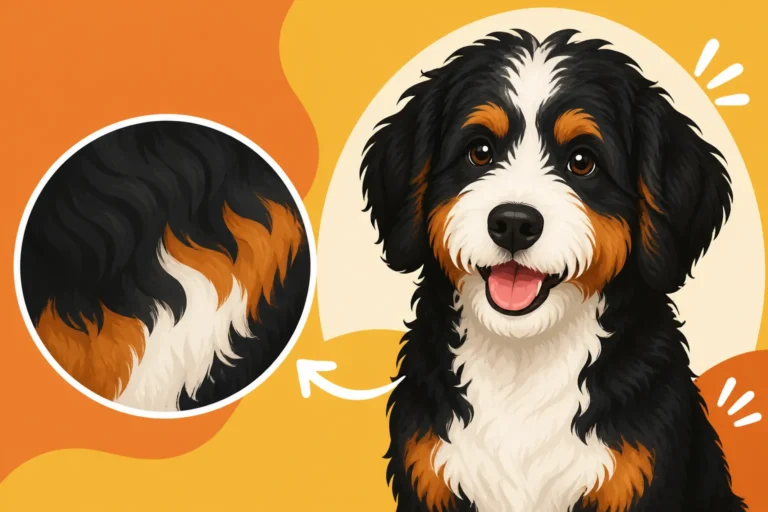
The striking tri-color pattern is arguably the Bernese Mountain Dog's most iconic visual contribution, and it's what many people first picture when they think of a Bernedoodle. This classic pattern features a jet black base coat with rust-colored markings on the legs, chest, cheeks, and under the tail, complemented by clear white markings on the chest, muzzle, and often a blaze up the forehead. It's a truly breathtaking combination that makes each tri-color Bernedoodle feel like a work of art.
While Bernedoodles come in many colors due to the Poodle's diverse genetics (black, phantom, sable, merle, bi-color), the traditional tri-color is highly sought after and commands a premium. It's a complex genetic puzzle to achieve, often requiring specific breeding pairings. Seeing a Bernedoodle with that perfect "Bernese mask" and rust points is a testament to the strong genetic influence of their Bernese parent. If you're hoping for this specific look, discussing the parentage and genetics with your breeder is essential. What a Traditional Tri Color Bernedoodle Looks Like goes into more detail on this beautiful coloration.
Health Considerations: Both Strengths and Weaknesses
No discussion of breed contributions would be complete without acknowledging health. The Bernese Mountain Dog, while magnificent, does come with certain breed-specific health challenges, and these are important for any potential Bernedoodle owner to understand. While hybrid vigor can potentially reduce the incidence of some issues, it doesn't eliminate the genetic predisposition entirely.
Predispositions to Orthopedic Issues
Like many large breeds, Bernese Mountain Dogs are unfortunately prone to certain orthopedic conditions, particularly hip and elbow dysplasia. These are developmental abnormalities of the joints that can lead to pain, arthritis, and mobility issues later in life. The Bernese contribution means that Bernedoodles are also at risk for these conditions. Responsible breeders will perform extensive health clearances on their parent dogs, including OFA (Orthopedic Foundation for Animals) certifications for hips and elbows, to try and minimize the risk.
Even with careful breeding, environmental factors play a role. Rapid growth in puppies, excessive jumping, or strenuous exercise on developing joints can exacerbate these predispositions. This is why growing a large Bernedoodle slowly and carefully is often recommended, as discussed in Growing a Standard Bernedoodle Slowly on Purpose. Providing appropriate nutrition, perhaps a large breed puppy food from Chewy formulated for slow growth, and managing exercise during their first year are crucial steps owners can take to support their Bernedoodle's joint health.
The Shadow of Cancer Risk
One of the most heartbreaking realities for Bernese Mountain Dog owners is the breed's significantly elevated risk for certain types of cancer, particularly histiocytic sarcoma. This aggressive cancer is a primary reason for the Bernese's relatively short lifespan compared to other large breeds. When a Bernese is bred with a Poodle to create a Bernedoodle, the hope is often to introduce hybrid vigor and potentially reduce this cancer risk. However, it's a complex genetic lottery.
While Bernedoodles may statistically have a lower incidence of some cancers than purebred Bernese, they are not immune. The genetic predisposition still exists. Owners should remain vigilant for any lumps, unusual swelling, or unexplained changes in their Bernedoodle's health. Early detection is always key. It's a conversation you'll often have with your vet as your Bernedoodle ages, and something to be aware of from the start. You can find more information on this serious concern in Histiocytic Sarcoma and Whether a Bernedoodle Escapes It.
Other Bernese-Linked Health Concerns
Beyond orthopedic issues and cancer, the Bernese Mountain Dog can contribute other health predispositions to the Bernedoodle. These include conditions like Von Willebrand's Disease, a bleeding disorder, and Degenerative Myelopathy (DM), a progressive neurological disease affecting the spinal cord. Reputable Bernedoodle breeders will screen their Bernese parent dogs for these inheritable conditions as well. For example, both Bernese and Poodles can be carriers for DM, making it particularly important for both parents of a Bernedoodle to be tested. Degenerative Myelopathy Both Bernedoodle Parents Can Carry sheds more light on this specific challenge.
Additionally, certain Bernedoodles with more Bernese influence might be predisposed to conditions common in large breeds with deep chests, such as bloat (gastric dilatation-volvulus). This life-threatening condition requires immediate veterinary attention. Awareness of these potential health issues allows owners to partner with their veterinarian for proactive care, screenings, and emergency preparedness. It’s about being informed and taking the best possible steps to ensure a long, healthy life for your furry companion.
Working Dog Heritage: Strength and Instincts
The Bernese Mountain Dog's history as a versatile farm dog in the Swiss Alps profoundly influences certain aspects of the Bernedoodle's character and capabilities. They weren't just pretty faces; they were workers, used for herding, guarding, and pulling carts. This strong working heritage contributes a unique blend of strength, patience, and a grounded instinct to the Bernedoodle.
Natural Guardians and Leaning Instincts
Bernese Mountain Dogs were bred to guard farm animals and families, and this protective instinct often carries over to the Bernedoodle. While they are not typically aggressive guard dogs, they tend to be alert and aware of their surroundings. They might bark to announce strangers or unusual activity, making them decent alert systems, but usually welcome friendly visitors once introduced. This protective nature is often coupled with their profound loyalty, creating a dog that feels very invested in its family's well-being.
Another charming Bernese quirk that often pops up in Bernedoodles is the famous "Bernese lean." This isn't just a cute habit; it's thought to be a leftover instinct from their herding days, a way of gently asserting their presence and perhaps guiding sheep. When your Bernedoodle presses their entire body weight into your legs, they're not just trying to knock you over; they're showing affection and connection, and possibly trying to "herd" you closer. It's an endearing trait that speaks volumes about their desire for physical closeness and their deep bond with their people.
A Penchant for Draft Work and Strength
Given their history, Bernese Mountain Dogs are exceptionally strong and possess a natural aptitude for draft work – pulling carts or sleds. This impressive physical capability and willingness to work can be a surprising trait in some Bernedoodles. While most Bernedoodle owners won't be asking their dogs to pull logs, this inherent strength and desire to have a "job" can manifest in other ways. Many Bernedoodles excel at canine sports like obedience, rally, or even novice carting, especially if their Poodle parent also contributes a strong work ethic.
If you're looking for an activity to do with your Bernedoodle that taps into this Bernese heritage, exploring draft work or other strength-based activities can be incredibly rewarding. It provides mental and physical stimulation, helping to keep your dog happy and well-behaved. Finding appropriate harnesses and equipment, possibly through retailers like Chewy, is the first step. The Draft Dog Work a Bernedoodle Can Still Do explores how Bernedoodles can engage in this traditional activity. Even if they don't pull a cart, their physical prowess means they need consistent, appropriate exercise to stay healthy and fit.
The Slower Pace of Maturity
One aspect of the Bernese contribution that can surprise first-time Bernedoodle owners is their slower pace of mental maturity. Bernese Mountain Dogs are known for taking longer to "grow up" than many other breeds of a similar size. While they might reach their physical size relatively quickly, their minds often remain in a puppy-like or adolescent state for longer, sometimes until they are two or even three years old. This means a longer period of exuberance, learning, and testing boundaries.
For a Bernedoodle, this can translate into a longer "goofy" phase. You might find yourself saying, "He's still a puppy!" long after he's outgrown his puppy collar. This extended adolescence means that consistent training, patience, and clear boundaries are essential throughout their early years. They'll retain their playful spirit, but it requires a commitment to continued guidance to ensure they develop into well-mannered adult companions. It’s part of their charm, but it does require understanding and a consistent approach to training.
Living with the Bernese Influence: What to Expect
Understanding the Bernese contributions helps set realistic expectations for life with a Bernedoodle. From the grooming demands to managing their impressive size and nurturing their sensitive nature, being prepared for these Bernese-influenced traits ensures a harmonious and joyful companionship.
Grooming the Bernedoodle with a Bernese Coat
The Bernese double coat, even when mixed with the Poodle's hair, means that your Bernedoodle will likely require significant grooming. If your Bernedoodle inherits more of the Bernese coat type (straighter, flatter, or very dense wavy), you should be prepared for shedding, particularly seasonally. Even the wavier or curlier coats will be dense and prone to matting because of that Bernese undercoat. This isn't just about aesthetics; mats can be incredibly painful and lead to skin infections.
Regular brushing, ideally daily or every other day, is non-negotiable. This involves line brushing down to the skin to ensure no mats are forming underneath the top layer. Professional grooming every 6-8 weeks is also usually a necessity for maintaining a healthy coat. You’ll need a good quality slicker brush, a metal comb, and potentially a dematting tool, all readily available from Chewy. Be prepared for dedicated time and possibly significant grooming expenses to keep your Bernedoodle comfortable and looking their best. Whether a Bernedoodle Sheds Less Than a Bernese delves into these coat realities.
Managing Size and Exercise Needs
The Bernese contribution means that a standard Bernedoodle will be a large, powerful dog. This has implications for everything from the size of your car to the strength of your leash. While their temperament is often calm, they still require adequate exercise to prevent boredom and maintain their physical health. A couple of good walks or active play sessions daily, totaling at least an hour, will usually suffice, though individual needs vary. They are not typically high-strung dogs that need to run for miles every day, but they do enjoy being active companions.
For their well-being, especially concerning their joints, it’s important to provide appropriate exercise that is low-impact during their growth phase. Avoid excessive jumping or long, strenuous runs on hard surfaces when they are puppies. As adults, swimming can be an excellent low-impact exercise option. Furthermore, managing their size around small children and ensuring they understand basic commands like "off" or "stay" is crucial for safety and harmony in the home. A good, sturdy harness, like those found on Chewy, is essential for walking a powerful Bernedoodle.
Nurturing a Confident Companion
The Bernese tendency towards being a bit reserved means that nurturing confidence in your Bernedoodle is paramount. While they are loyal and loving, their initial caution with new experiences needs careful handling. Early, positive socialization experiences are the bedrock of a well-adjusted Bernedoodle. This means safely introducing them to various people, places, sounds, and other dogs during their critical developmental period.
Continued positive reinforcement training, focusing on building a strong bond and mutual trust, will help them thrive. Avoid harsh training methods, as their sensitive Bernese side can easily become withdrawn or fearful. Instead, celebrate their successes, be patient with their learning curve, and always provide a safe and predictable environment. Your dedication to their emotional well-being will result in a confident, affectionate, and truly wonderful companion who embodies the very best of their Bernese heritage. You’ll find that a well-socialized Bernedoodle with a strong Bernese influence is a loyal and loving member of the family, as discussed in The Bernedoodle Against a Purebred Bernese.
Here's a quick overview of some key Bernese traits and how they typically manifest in a Bernedoodle:
| Trait Category | Bernese Mountain Dog Contribution | Typical Bernedoodle Manifestation | Management/Consideration |
|---|---|---|---|
| Temperament | Calm, gentle, affectionate, loyal | Balanced, family-oriented, can be goofy but also mellow | Early socialization, consistent positive training |
| Temperament | Can be reserved/shy with strangers | May be cautious; needs careful, positive introductions | Continue socialization, build confidence |
| Physical | Large, sturdy build | Standard Bernedoodles are substantial in size and weight | Space requirements, mindful of joint development |
| Physical | Thick double coat | Dense, wavy to curly coat; requires significant grooming to prevent matting | Daily brushing, professional grooming every 6-8 weeks |
| Physical | Tri-color markings | Highly sought-after black, rust, and white pattern | Genetic testing by breeder, understand variations |
| Health | Prone to hip/elbow dysplasia | Risk remains; careful breeding and puppy care vital | Large breed puppy food, limit strenuous exercise in growth |
| Health | High cancer risk (e.g., histiocytic sarcoma) | Risk reduced but not eliminated; vigilance and vet care | Regular check-ups, awareness of lumps/changes |
| Instincts | Natural guardian, leaning behavior | Observant, protective; expresses affection by leaning | Redirect unwanted barking, appreciate their bond |
| Maturity | Slower mental maturity (longer puppy phase) | Can be "goofy" and playful into their second or third year | Patience, consistent training, continued mental stimulation |
Disclaimer
This article is for general informational purposes only and does not constitute professional advice. Laws, prices and regulations vary by location and change over time. Consult a qualified professional for guidance on your specific situation.