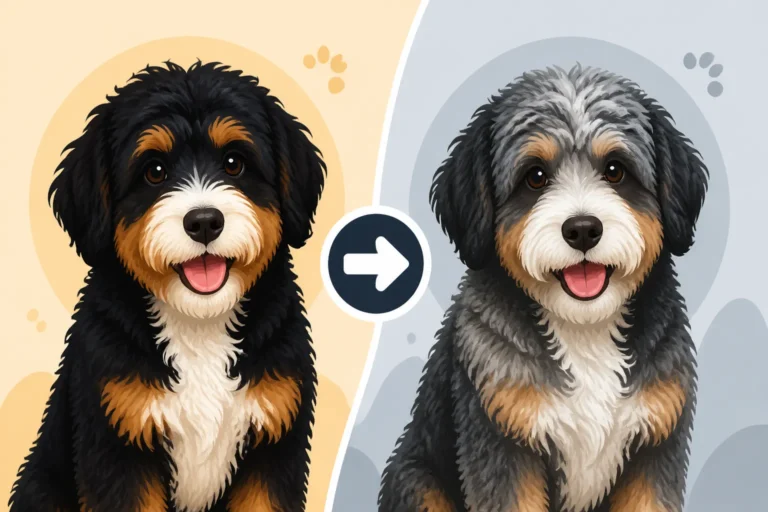
Which AKC Events a Bernedoodle Can Enter
A Bernedoodle may not be eligible for the AKC’s traditional conformation shows, but that does not shut the door on AKC activities. Mixed-breed dogs can take part in many sports and earn titles through the AKC Canine Partners program. The key is knowing which events welcome them, what registration involves, and how to choose an activity that suits your dog.
How a Bernedoodle can participate in AKC events
AKC Canine Partners is the usual route
The AKC does not register a Bernedoodle as a purebred breed. A Bernedoodle owner who wants to enter eligible AKC sports will generally need to enroll the dog in the AKC Canine Partners program, which is designed for mixed-breed dogs. Enrollment gives a dog an AKC number for participating in eligible events and recording achievements.
That number does not turn a Bernedoodle into an AKC-registered breed, and it does not make the dog eligible for every event. It provides a way for a mixed-breed dog to compete in activities that allow Canine Partners participants. Check the AKC’s current enrollment requirements before applying, including any rules about spay or neuter status, and make sure the dog’s identification details are correct.
You may also hear people use the term “All-American Dog” for mixed-breed dogs in some AKC sport settings. That refers to how the dog is classified for participation; it is not a recognized breed designation. For background on the distinction between a popular cross and an AKC-recognized breed, see Whether the Bernedoodle Counts as a Breed Yet and Whether the AKC Registers a Bernedoodle.
Eligibility depends on the event, not just the dog
A Bernedoodle’s Canine Partners enrollment is a starting point, not a blanket pass. Each sport has its own rules about eligible dogs, classes, equipment, age, and entry procedures. Even when mixed breeds are welcome, the event may require a particular registration number, qualifying scores, or prior experience before a dog can enter a higher-level class.
Before you commit to a trial, read the event’s premium or entry information and confirm that Canine Partners dogs are eligible for the specific class you have in mind. If something is unclear, contact the event secretary. That small check can save a frustrating morning of travel, paperwork, and discovering that the class you chose has a restriction you didn’t expect.
AKC events a Bernedoodle can often enter
Many AKC activities welcome mixed-breed dogs enrolled in Canine Partners. The list below gives a practical starting point, but rules and available classes can vary by sport and event.
| AKC activity | What your Bernedoodle does | A good fit if your dog enjoys |
|---|---|---|
| Agility | Navigates a course of jumps, tunnels, and other obstacles with a handler | Movement, problem-solving, and working as a team |
| Rally | Follows a course of signs describing obedience skills | Learning cues and staying engaged with you |
| Obedience | Performs trained behaviors such as stays, recalls, and heeling | Focus, repetition, and structured training |
| Scent Work | Searches for target odors in designated search areas | Sniffing, investigating, and working independently |
| Tracking | Follows a scent trail laid by a person | Concentrated nose work outdoors |
| Trick Dog | Demonstrates trained tricks to meet title requirements | Short, upbeat training sessions |
| Fast CAT | Runs a straight course chasing a moving lure | Sprinting and high-energy play |
| Dock Diving | Jumps from a dock into water after a toy | Swimming, retrieving, and water play |
| Canine Good Citizen evaluations | Demonstrates everyday manners and handling skills | Practicing calm, useful behavior in public |
This is not a promise that every local club offers every activity or that every Bernedoodle will enjoy every sport. Your dog’s age, health, confidence, coat care, and training history all matter. A dog who loves scent games but finds a noisy competition venue overwhelming may be happier starting with scent work classes before entering a trial.
Agility, rally, and obedience
Agility can be a thrilling choice for a Bernedoodle that likes to move and solve problems. The dog learns to travel through a course while responding to your cues, but the goal is not simply to run as fast as possible. Safe foundations matter: your dog needs to understand basic handling, be comfortable around equipment, and be physically ready for the activity. For a large or still-growing dog, ask your veterinarian and a qualified trainer about appropriate exercise before introducing impact-heavy work.
Rally and obedience are more structured options. In rally, the handler and dog follow a course of signs that indicate behaviors to perform. Obedience focuses on trained responses and teamwork under specific rules. These activities can suit dogs who enjoy learning with a person, but a lively adolescent Bernedoodle may need patient practice around distractions before a competition setting feels manageable. The developmental pace of a big dog can be a surprise; Why a Bernedoodle Matures Slower Than It Grows offers useful context for setting training expectations.
Nose work, tracking, and trick training
Scent Work and tracking give a Bernedoodle an opportunity to use its nose rather than relying on speed or flashy movement. In Scent Work, dogs search for target odors in defined areas. Tracking asks a dog to follow a scent trail. Both can be rewarding for dogs who like to investigate, and they can be adapted to a dog’s pace as skills develop.
Trick Dog is another accessible way to build confidence and communication. A dog can learn behaviors in small pieces—such as spinning, backing up, or putting its paws on a target—and work toward the applicable AKC title requirements. Keep practice brief enough that your dog stays interested, and reward effort generously. If you are putting together a basic training kit, Chewy is one place to compare treat pouches, clickers, and training rewards; choose items that fit your dog’s size and the way you actually train.
Sports and activities that may have restrictions
Traditional conformation and breed-specific events
A Bernedoodle generally cannot compete in AKC conformation classes as a Bernedoodle. Conformation competition is organized around eligible breeds and breed standards, and the AKC does not recognize the Bernedoodle as a registered purebred breed. A Canine Partners number does not change that.
Some other AKC events are also restricted to particular breeds or to dogs that meet specific breed-based qualifications. Herding, earthdog, and certain field events are examples where eligibility can depend on the breed’s recognized purpose or a defined list of eligible breeds. Don’t assume that because an event is run by an AKC club, every AKC-enrolled dog can enter it. The event’s rules are the deciding factor.
Check carefully before choosing a sport
A Bernedoodle’s size and coat can affect the practical experience, even when the dog is eligible. A standard-size dog may need more room to move through a course, and a thick coat can make hot weather activity uncomfortable. A mini or tiny Bernedoodle may face different physical considerations. For a general look at size differences, see The Three Bernedoodle Sizes and What Sets Them.
Think about your dog’s temperament, too. Some Bernedoodles are eager to greet everyone; others need time to feel at ease in a busy venue. Watching a class or trial before entering can help you see how loud the space is, how dogs wait between turns, and whether the environment seems manageable. For a dog who feels unsure around unfamiliar people or settings, Building Confidence in a Timid Bernedoodle may help you plan a gentler start.
Choosing an event and getting ready
Match the activity to your dog
Start with what your dog already enjoys. If your Bernedoodle naturally investigates every hedge and patch of grass, scent work may be more appealing than a fast-moving sport. If your dog loves to retrieve and swims comfortably, dock diving might be worth exploring. If your dog enjoys learning cues in the living room, rally or trick training can build on skills you already practice.
Be realistic about physical readiness. Jumping, turning, sprinting, and repeated movement can put demands on a dog’s body. Puppies and young dogs should not be pushed into strenuous sport before they are ready, and dogs with lameness, joint concerns, or other health issues need individualized veterinary guidance. For age-appropriate activity ideas, The Exercise a Standard Bernedoodle Needs Daily is a useful companion topic.
Build skills before entering a trial
A smooth first event often starts with ordinary preparation, not a last-minute burst of training. Teach foundational cues in calm settings, then practice in gradually more distracting places. For example, a dog learning rally might first practice a sit, down, and turn at home, then repeat those skills in a quiet park before trying them near other dogs.
Get your dog comfortable with the practical parts of event day as well: waiting on a mat, being handled, hearing unfamiliar sounds, and taking rewards in a new place. Bring water, a leash, cleanup supplies, and whatever the event rules require. Chewy can be useful for comparing everyday supplies such as portable water bowls or treat pouches, but check the event’s equipment rules before buying anything intended for competition. A toy or treat that works beautifully at home may not be permitted in the ring or search area.
If your dog is new to training, consider a class led by an instructor familiar with the sport. A good instructor can help you read your dog’s body language, adjust the difficulty, and avoid turning practice into a struggle. That matters especially with a large, enthusiastic dog who may physically outgrow a handler’s ability to manage pulling before leash skills are solid. Teaching a Bernedoodle to Walk Beside You has relevant foundations for building more comfortable handling.
A practical entry checklist
Before signing up, work through these steps:
- Confirm eligibility. Check that your dog’s Canine Partners enrollment is complete and that the specific event accepts dogs in the program.
- Read the event details. Review entry requirements, class descriptions, equipment rules, and any instructions for first-time competitors.
- Check your dog’s readiness. Consider training, confidence, physical condition, and comfort around other dogs and people.
- Prepare the basics. Practice the required skills and make a plan for water, rest, transport, and safe handling.
- Start at a manageable level. Choose an introductory class or low-pressure event when available, rather than making the first outing a test of everything your dog has learned.
- Ask questions early. Contact the event organizer if you are unsure about registration, class placement, or what to bring.
A Bernedoodle can enjoy a surprisingly wide range of AKC activities, even without purebred registration. The best first event is not necessarily the most impressive one; it is the one that gives your dog a fair chance to feel safe, learn, and enjoy working with you. If you are building a sport routine, keep the equipment practical and suited to your dog. Chewy may help you compare basic supplies, while the event organizer and instructor can clarify what is appropriate for the activity itself.
Disclaimer
This article is for general informational purposes only and does not constitute professional advice. Laws, prices and regulations vary by location and change over time. Consult a qualified professional for guidance on your specific situation.