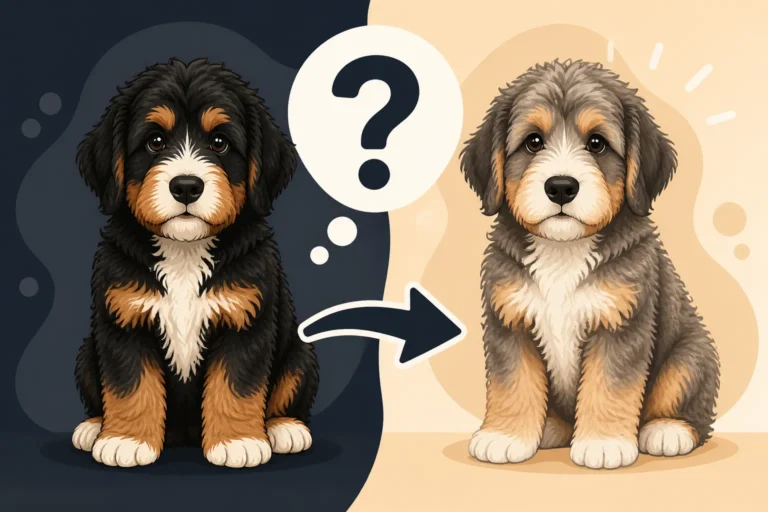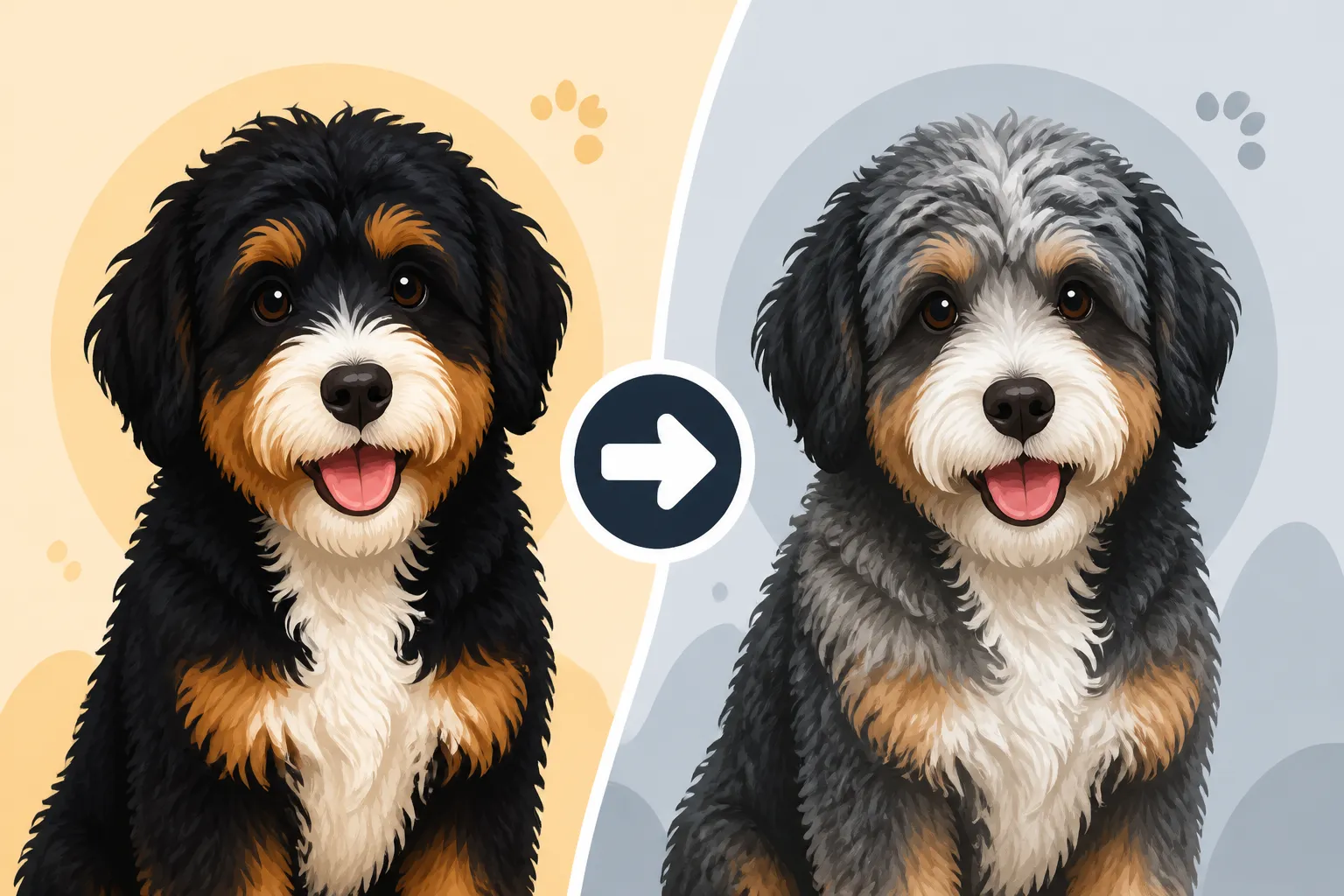
Whether a Black Bernedoodle Turns Gray
It’s a truly wonderful moment when you bring home your new Bernedoodle puppy, especially if you’ve chosen one with that stunning, sleek black coat. There’s something so elegant and striking about that deep, dark fur, and it’s natural to hope it stays exactly that way forever. But many Bernedoodle owners find themselves wondering if that beautiful black will actually last, or if, like a fine wine, it will change and mature, perhaps even turning gray. This guide is here to shed some light on that very common question, helping you understand the fascinating genetics behind Bernedoodle coat changes and what you can realistically expect as your puppy grows.
The Expectation vs. Reality of Bernedoodle Colors
When you first lay eyes on a solid black Bernedoodle puppy, it's often love at first sight. That rich, dark coat is so captivating, promising a majestic companion whose appearance will always turn heads. It's a perfectly natural expectation to want that striking black to remain as vibrant as it was the day you brought them home, but the reality for many Bernedoodles, particularly those with strong Poodle genetics, can be a little different.
The Allure of a Solid Black Bernedoodle Puppy
Many of us are drawn to the distinct beauty of a solid black Bernedoodle. They often look incredibly plush, almost like a walking shadow, with a depth of color that's truly impressive. You might spend hours picturing them, sleek and elegant, running through a field, their dark coat gleaming in the sun. It's this vision of enduring elegance that often motivates families to specifically seek out a black Bernedoodle. You might even pick a name that reflects their dark, mysterious beauty, like "Midnight" or "Raven," hoping their appearance will perfectly match.
Imagine holding your brand-new, jet-black Bernedoodle puppy in your arms. Every strand of fur is a deep, unblemished black. You can almost feel the anticipation of watching them grow into a magnificent adult dog, retaining that same intense color. This desire for a consistently dark coat is completely understandable; it's part of the initial appeal and a characteristic you've likely fallen in love with. However, what often surprises new owners is that this initial, perfect black isn't always a permanent fixture, leading to a gentle shift in expectations over time.
Understanding Coat Fading and "Greying" in Doodles
The concept of coat fading or "greying" in Doodles, including Bernedoodles, is a topic that often sparks curiosity and sometimes a little confusion among owners. It's important to clarify that we're usually not talking about the kind of graying you see on an older dog's muzzle, which is a universal sign of aging. Instead, with Bernedoodles, it's often a genetic phenomenon, largely inherited from their Poodle parentage, where the actual body coat pigment dilutes or lightens over time. Whether a Bernedoodle's Color Changes After the Puppy Coat discusses this broader topic.
This genetic fading means that a deep black coat can gradually soften into various shades of charcoal, silver, or even a smoky blue-gray. It's a process that can begin surprisingly early in a Bernedoodle's life, sometimes as soon as they shed their puppy coat and their adult fur starts to come in. This isn't a flaw or a sign of poor health; rather, it’s a fascinating characteristic tied directly to their Poodle genetics, which often carry genes for progressive lightening of coat color. So, while your black Bernedoodle may not turn truly "gray" in the way a human might, their rich black can certainly evolve into a beautiful spectrum of lighter, softer hues.
Why Black Coats Change: The Science Behind the Gray
The reason your black Bernedoodle might transition from a deep raven shade to a softer charcoal or silver is rooted deeply in their genetics. It's not magic, but rather the fascinating interplay of genes, particularly those inherited from the Poodle side of their family tree. Understanding this genetic blueprint can help you appreciate the beautiful evolution of your dog's coat.
The Genetics of Coat Color and Fading
At the heart of a Bernedoodle's coat color transformation is a specific genetic locus, or gene, often referred to as the "G" (greying) gene, which is prevalent in Poodles. This gene is responsible for what's called "progressive greying" or "progressive silvering," meaning it causes the dilution of eumelanin (the black pigment) over the dog's early life. Puppies with this gene are born their intended color (black, brown, blue, etc.), but as they mature, the gene actively works to lighten that pigment.
If your Bernedoodle inherits even one copy of the dominant 'G' allele (Gg or GG), their initial black pigment will gradually fade. They might be born a stunning, inky black, but over the first few years, this gene will cause the black hairs to progressively lighten. It’s not that the pigment disappears, but rather its intensity diminishes, leading to those gorgeous shades of gray or silver. The Bernese Mountain Dog parent typically carries genes for stable, unchanging coat colors, but the Poodle’s influence often introduces this dynamic fading trait into the Bernedoodle mix. This makes predicting the exact adult shade of a black Bernedoodle a little like watching a painting slowly reveal its full spectrum of tones.
Age-Related Greying vs. Genetic Fading
It's easy to confuse the two distinct ways a Bernedoodle's coat can lighten, but understanding the difference is key to knowing what's happening with your dog. First, there's age-related greying, which is something all dogs experience to some degree. Just like us, as dogs get older, typically into their senior years, they develop white or gray hairs, most noticeably around their muzzle, chin, and sometimes around their eyes or on their paws. This is a natural, physiological process that comes with time and is an endearing sign of a dog's wisdom and maturity. Whether a Graying Bernedoodle Face Means Much delves into these age-related changes.
Then, there's genetic fading, which is the primary reason many black Bernedoodles' body coats turn gray. This isn't about getting old; it's a programmed genetic trait, primarily from the Poodle side. This fading can begin surprisingly early, sometimes as young as six months to a year old, and often becomes most apparent between one and three years of age. Instead of just the muzzle, this genetic fading affects the entire body coat, transforming a deep black into a beautiful charcoal, silver, or blue-gray. If your young Bernedoodle's back and sides are lightening, it’s almost certainly this genetic fading at play, not premature aging. This distinction helps owners manage their expectations and celebrate the unique evolution of their Bernedoodle's coat.
Factors Influencing a Black Bernedoodle's Graying Process
While genetics are undoubtedly the primary driver behind whether a black Bernedoodle's coat will turn gray, there are other considerations that can subtly influence the process or the overall health and appearance of their evolving fur. It’s a bit like baking a cake – the recipe (genetics) is crucial, but the oven temperature (environment) and ingredients (diet) still play a part.
Inherited Genes: The Biggest Predictor
As we've explored, the absolute biggest factor determining if your black Bernedoodle will turn gray is the specific genes they inherited from their parents, especially from the Poodle lineage. If your Bernedoodle carries the dominant 'G' (greying) gene, the chances are exceptionally high that their deep black coat will lighten over time. This isn't something you can change through diet or grooming; it's a pre-programmed genetic trait that will express itself as your dog matures.
Many reputable Bernedoodle breeders will have an understanding of the greying tendencies within their Poodle lines, and sometimes they can give you an idea of the likelihood of fading. While DNA tests can confirm the presence of the 'G' gene, most owners first notice these changes visually as their puppy transitions from its soft baby fur to its coarser adult coat. For those who are specifically hoping for a jet-black Bernedoodle that retains its color, looking for lines known for "holding" their color might be beneficial, though even then, with hybrid vigor, there are no absolute guarantees. Regardless, the presence of this gene is the most significant indicator of a future color change.
Diet, Environment, and Health Considerations
While genetics are the main architect of your Bernedoodle’s coat color, diet, environment, and overall health can certainly influence the quality and vibrancy of their fur, even if they won't stop a genetically programmed fading process. A high-quality diet, rich in essential fatty acids like Omega-3 and Omega-6, is crucial for maintaining a healthy, shiny coat. Think of foods that you might find on Chewy that are formulated for skin and coat health; these can ensure your dog's fur is as lustrous as possible, whether it's black, gray, or somewhere in between.
Environmental factors, particularly sun exposure, can also play a role. Just as our hair can lighten in the sun, a dog's coat can also experience a degree of sun bleaching. Prolonged time spent outdoors in bright sunlight can cause black fur to take on reddish or brownish tones, or to appear even lighter if it's already undergoing genetic fading. Whether a Black Bernedoodle Absorbs More Heat touches on how sun can affect dark-coated dogs. Furthermore, a dog's overall health significantly impacts coat condition. Underlying health issues, such as hypothyroidism or certain nutritional deficiencies, can lead to a dull, dry, or brittle coat, and in some rare cases, might even affect pigment. Ensuring regular vet check-ups and providing excellent nutrition will always support the healthiest possible coat for your Bernedoodle, whatever beautiful color it decides to be.
The Puppy Coat vs. Adult Coat Transition
One of the most noticeable periods for coat color change in a black Bernedoodle occurs during the transition from their soft, fluffy puppy coat to their more mature, adult fur. That adorable, dense puppy coat, often a uniform, deep black, is typically quite different in texture and often in color intensity from the coat that will eventually replace it. This significant coat change usually begins around 6 to 9 months of age and can continue until your Bernedoodle is 18 months or even two years old.
As the coarser, more developed adult hair starts to grow in, it’s not uncommon for owners to observe that this new growth is already showing signs of the genetic fading. A once jet-black puppy might reveal charcoal-colored roots or a less intense black across their back and sides. This isn't a sign of premature aging, but rather the adult coat expressing the inherent genetic "greying" trait that was simply hidden beneath the initial puppy fluff. The Month a Bernedoodle Puppy Starts Matting Daily notes that this transition period is also a time when matting can become particularly challenging due to the mixing textures of old and new fur. This means increased vigilance with brushing is needed, and you might even want to consult with a groomer or check out grooming supplies on Chewy to help manage their evolving coat during this critical developmental phase.
Embracing the Evolving Coat: What to Expect Over the Years
Watching your Bernedoodle's coat evolve is truly part of the unique journey of owning this wonderful breed. While the initial surprise of a changing black coat might give way to questions, many owners ultimately come to adore the unique shades and patterns that emerge. It's not just a color change; it's a transformation that makes your dog even more distinctive.
Stages of Coat Transformation
The journey of a black Bernedoodle's coat, especially one with the greying gene, is a gradual and often beautiful process. It typically begins with the puppy stage (0-6 months), where their coat is a deep, unblemished black. This is the period when you might assume their color is set for life.
As they move into adolescence (6-18 months), subtle changes often begin to appear. You might notice a slight softening of the black, a few lighter hairs, or a hint of charcoal emerging, particularly in areas like their legs, chest, or along their back. This is the initial whisper of the genetic fading taking hold.
The most significant changes usually occur during their young adult years (1-3 years). This is when the fading becomes much more pronounced, transforming that initial black into a striking charcoal gray, a beautiful smoky silver, or even a unique blue-gray. This is the peak period for the "greying" gene to express itself fully. The Age a Bernedoodle Reaches Full Height also happens during this general timeframe. After about three years, the color tends to stabilize, becoming their permanent adult shade, though some subtle shifts might continue. It’s truly a testament to their genetic diversity and an opportunity to appreciate the unique palette your Bernedoodle develops.
The Beauty of a Faded Black Bernedoodle
While the idea of a black Bernedoodle turning gray might initially seem like a deviation from what you expected, many owners quickly discover a profound appreciation for the unique beauty of a faded coat. Instead of a uniform black, these Bernedoodles often sport a coat rich with varying tones of charcoal, silver, and sometimes even hints of blue or brown. This multi-tonal effect adds incredible depth and character, making their fur look sophisticated and strikingly beautiful.
Imagine a Bernedoodle whose coat has softened into a stunning silver-gray, catching the light in a way that a solid black simply wouldn't. This evolution creates a truly one-of-a-kind appearance for your dog. Some might even develop a "phantom" look, where lighter shades emerge in the traditional Bernese markings, even if they started as solid black. It’s an ongoing discovery, celebrating the individuality of your companion as their coat matures. Embracing these changes allows you to appreciate a beauty that is distinct and often more nuanced than the initial puppy coat.
Coat Maintenance for Fading Coats
Regardless of whether your black Bernedoodle's coat remains deeply black or transitions into a lovely shade of gray or silver, the commitment to regular grooming remains paramount. The Poodle influence means their coats are often curly or wavy and prone to matting, which can become uncomfortable and lead to skin issues if not managed properly. Consistent line brushing, getting down to the skin several times a week, is absolutely crucial to prevent mats from forming and to keep their coat healthy and flowing.
Professional grooming appointments, typically every 6-8 weeks, are a non-negotiable part of Bernedoodle ownership. Your groomer can expertly trim and maintain their coat length, making at-home brushing much more manageable. They can also recommend specialized shampoos, conditioners, and detangling sprays—many of which are readily available from retailers like Chewy—that can help maintain the integrity and shine of their evolving fur. The Volume of Coat a Bernedoodle Owner Brushes Weekly is a reminder of this consistent need. Ultimately, a fading coat is a beautiful coat that deserves the same attentive care and love as any other, ensuring your Bernedoodle always looks and feels their best, no matter their shade of gray.
| Age Range | Typical Coat Appearance (Black Bernedoodle with Fading Gene) | Primary Cause | What to Expect |
|---|---|---|---|
| 0-6 Months | Deep, rich, solid black puppy coat | Initial pigment expression | Gorgeous, dark fluff |
| 6-18 Months | Subtle lightening begins; charcoal roots, muted black | Puppy coat sheds, adult coat with G-gene grows | First signs of color softening |
| 1-3 Years | Noticeable fading to charcoal, silver, or blue-gray | Progressive action of the G (greying) gene | Full adult faded color develops |
| 3+ Years | Stabilized adult faded color; potential for age-related gray | Genetic fading complete; age-related signs | Color settled, muzzle may start to whiten |
Disclaimer
This article is for general informational purposes only and does not constitute professional advice. Laws, prices and regulations vary by location and change over time. Consult a qualified professional for guidance on your specific situation.