Hot Spots Under a Bernedoodle’s Thick Coat
Few things are more disheartening for a Bernedoodle parent than discovering a red, raw, angry patch on their beloved dog’s skin, seemingly out of nowhere. These rapidly appearing lesions, often hidden under that glorious, thick Bernedoodle coat, are known as "hot spots," or technically, acute moist dermatitis. They're painful, itchy, and if you’ve dealt with them before, you know how quickly they can escalate from a small irritation to a significant problem, often leaving you feeling helpless and frustrated. This guide is here to walk you through exactly what hot spots are, why your Bernedoodle is particularly prone to them, and, most importantly, how to prevent and manage these vexing skin woes.
Understanding What Hot Spots Are and Why Bernedoodles Get Them
Imagine an itch that just won't quit, an itch so intense that scratching it brings only temporary relief before making it even worse. That's essentially what triggers a hot spot for your Bernedoodle. These aren't just minor irritations; they're an inflammatory skin condition that can grow at an astonishing rate.
The Anatomy of a Hot Spot
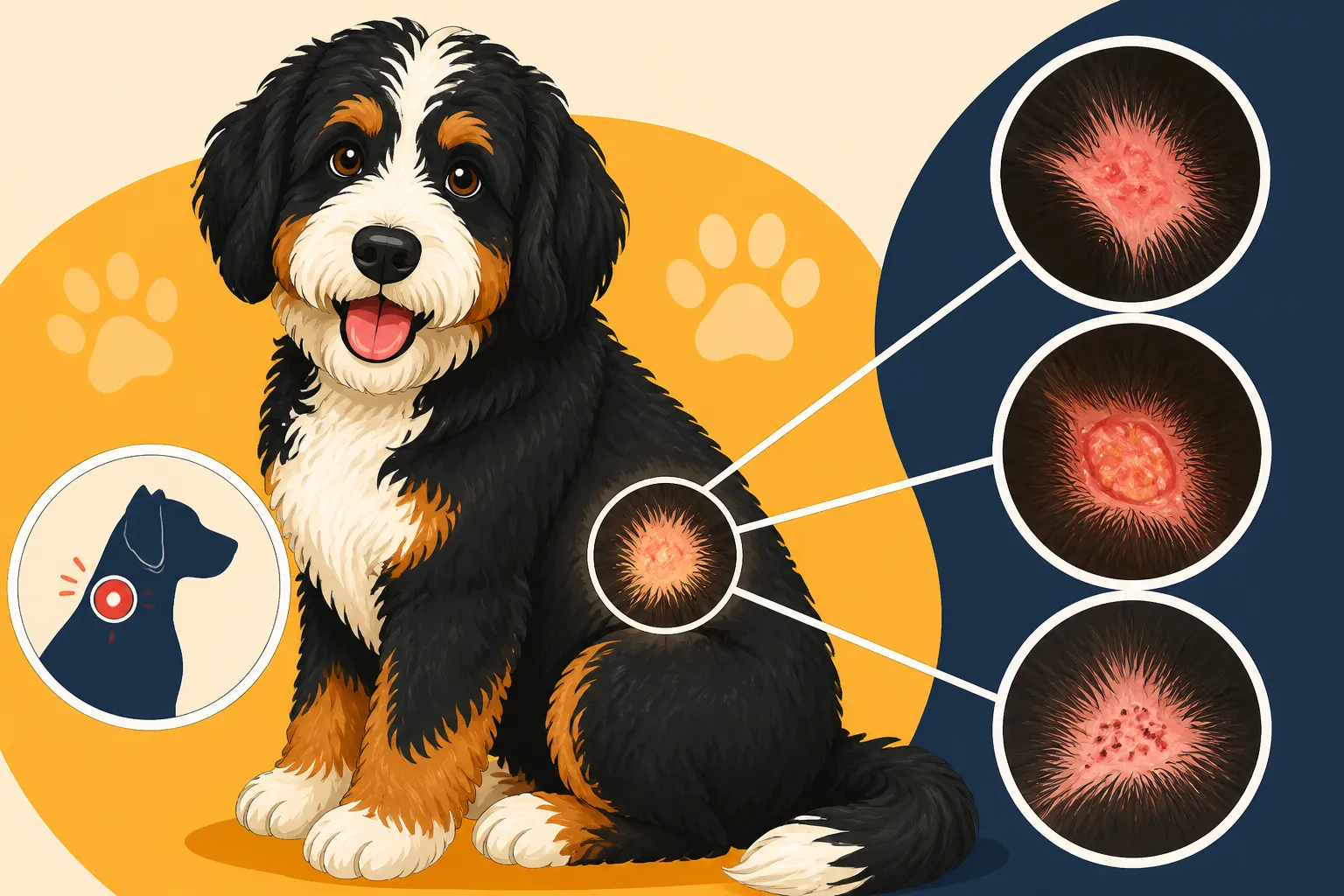
A hot spot typically starts as a small, red, inflamed area on your dog's skin. But here's the kicker: because of that constant scratching, licking, or chewing by your Bernedoodle trying to find relief, the skin barrier breaks down. Bacteria, which are naturally present on the skin, seize this opportunity to proliferate in the warm, moist environment created by the constant irritation and lack of airflow. This bacterial overgrowth then leads to a secondary infection.
What you'll see is a lesion that is often oozing pus or serum, matted with sticky hair, and intensely painful to the touch. The skin beneath will be raw, red, swollen, and very angry-looking. It’s called "acute moist dermatitis" because it's precisely that: an acutely (sudden) appearing, moist (weepy) inflammation of the skin. Owners are often shocked by how rapidly a tiny itch can transform into a dinner-plate-sized sore in a matter of hours. The sheer speed of their development is one of the most frustrating aspects for pet parents.
The Bernedoodle's Predisposition
Now, why are Bernedoodles, with their charming personalities and teddy-bear looks, so susceptible to these miserable spots? It largely comes down to their magnificent, albeit high-maintenance, coat and genetic predispositions. Bernedoodles inherit traits from both the Bernese Mountain Dog and the Poodle. Both breeds contribute to a dense, often wavy or curly coat that can be a perfect breeding ground for skin issues if not properly managed.
The Poodle side, while providing the low-shedding quality many seek, often brings a dense, tightly curled coat. The Bernese side adds incredible thickness and sometimes a double coat. The combination results in a deep, insulated layer of fur that, while beautiful, easily traps moisture and heat against the skin. Imagine getting wet and not being able to properly dry off; your Bernedoodle lives in that kind of environment under their thick fur if grooming isn't meticulous. This trapped moisture, combined with poor air circulation, creates an ideal warm, humid microclimate for bacteria to thrive once an itch starts. It’s a vicious cycle: something irritates the skin, the Bernedoodle licks/chews/scratches, the skin breaks, bacteria move in, and the thick coat holds all that moisture and infection close, accelerating the problem. This is a common part of the broader category of Skin Problems Under a Bernedoodle's Heavy Coat.
Common Causes and Triggers for Bernedoodle Hot Spots
It’s easy to feel like hot spots appear out of nowhere, but there’s almost always an underlying trigger that sets off that initial itch. Understanding these common culprits is the first step toward effective prevention and treatment.
Moisture and Lack of Airflow
This is perhaps the most straightforward cause, yet it's often overlooked. Bernedoodles love water. They love splashing in puddles, swimming in lakes, and getting soaked in the rain. But if that thick, dense coat isn't dried thoroughly and immediately, moisture becomes trapped against the skin. Think about it: water can penetrate deep into their dense undercoat, and without diligent towel-drying and ideally, force-drying, it can take hours for their skin to fully air out. During those damp hours, bacteria have a field day.
Even high humidity in the air can be enough to keep their skin from breathing properly, especially if they spend a lot of time outdoors in warm, muggy climates. Imagine a hot summer day after a dip in the creek; if you just let your Bernedoodle air dry, you're practically inviting a hot spot. The lack of proper airflow also means any minor skin irritation, like a scratch or bug bite, stays moist and quickly escalates.
Allergies and Irritants
Just like people, Bernedoodles can suffer from various allergies that manifest as itchy skin. These allergies are a huge instigator of hot spots.
- Environmental Allergies (Atopy): Pollen, dust mites, mold spores – these are common allergens that can cause generalized itchiness, especially on the belly, paws, ears, and armpits. When your Bernedoodle starts scratching relentlessly at an itchy spot, a hot spot can form quickly. You might notice your Bernedoodle constantly licking their paws or rubbing their face, which can lead to hotspots in those areas. This is often the case when a Bernedoodle Whether a Bernedoodle Itches From Atopy or Fleas.
- Food Allergies: While less common than environmental allergies, certain proteins in food can also cause itchy skin. These often present as chronic ear infections, anal gland issues, and generalized skin irritation, which can then lead to hot spots if the dog starts to over-groom.
- Contact Dermatitis: Less frequent, but possible, is an allergic reaction to something your Bernedoodle comes into direct contact with, like certain plants, cleaning products, or even specific fabrics. If your dog lies on a newly treated lawn, for instance, and develops a rash, that could be contact dermatitis.
Parasites and Underlying Skin Issues
Fleas, ticks, and mites are classic hot spot triggers. A single flea bite can cause an intensely itchy reaction in a flea-allergic Bernedoodle, prompting them to chew and scratch furiously at the spot, leading to rapid hot spot development. Even if your dog isn't allergic, the constant irritation from a flea infestation can be enough to start the cycle. Mites, like Sarcoptes or Demodex, also cause intense itching and skin inflammation, setting the stage for these moist lesions.
Beyond parasites, other underlying skin conditions can weaken the skin barrier or cause chronic itching, making hot spots more likely. This could include issues like seborrhea, which causes oily or flaky skin, or even fungal infections. Anything that compromises the skin's integrity or makes it chronically itchy can lead to your Bernedoodle creating a hot spot through self-trauma.
Stress, Boredom, and Self-Trauma
Sometimes, the trigger isn't external at all, but rather internal. Bernedoodles are intelligent and sensitive dogs, and like all canines, they can experience stress, anxiety, or boredom. When under stress, anxious, or not getting enough mental and physical stimulation, some dogs develop compulsive behaviors, including excessive licking, chewing, or scratching. This self-trauma can be directed at a specific spot, even without an initial irritant, creating the perfect conditions for a hot spot to emerge.
For example, a Bernedoodle left alone for long periods without adequate enrichment might start obsessively licking a paw or flank. Over time, this constant licking traumatizes the skin, leading to inflammation and then bacterial overgrowth, resulting in a full-blown hot spot. It's a way for them to cope with their feelings, but unfortunately, it has physical consequences.
First Aid and Management When You Spot a Hot Spot
Discovering a hot spot can be alarming because of how quickly it develops and how raw it looks. Your immediate reaction might be to panic, but a calm, methodical approach is crucial.
Immediate Steps at Home
Once you spot a suspicious patch, time is of the essence. The goal is to dry out the area, prevent further self-trauma, and reduce inflammation.
- Safety First: Hot spots are painful. Your Bernedoodle might snap or react defensively when you try to examine or treat it. Approach gently, speak in a soothing voice, and consider using a muzzle if you’re unsure of their reaction. It's better to be safe than sorry, especially when they're in pain.
- Trim the Hair: This is absolutely critical. The thick Bernedoodle coat traps moisture and hides the full extent of the lesion. Carefully use blunt-nosed scissors or electric clippers (a #10 blade is good) to trim the hair away from and around the entire affected area. You want to create a clean margin of healthy skin around the hot spot. This allows air to reach the skin, helps the area dry, and makes it easier to clean and apply medication. You might be surprised by how much larger the hot spot truly is once the hair is gone.
- Clean the Area: Once trimmed, gently clean the hot spot with an antiseptic solution. Chlorhexidine wipes or spray (available at pet stores or your vet) or a dilute povidone-iodine solution (mixed to the color of weak tea) are excellent choices. Avoid alcohol, which can sting and further irritate already raw skin. Blot the area gently; do not scrub. The goal is to remove any crust, pus, or debris.
- Dry the Area Thoroughly: After cleaning, ensure the area is completely dry. You can use a clean towel to blot, or a cool setting on a hairdryer (held at a distance) to help. Airflow is your friend.
- Prevent Further Licking/Chewing: This is non-negotiable. An Elizabethan collar (e-collar, "cone of shame") or a soft recovery cone is essential to stop your Bernedoodle from aggravating the wound. Without it, all your efforts will be undone the moment your back is turned. There are softer, more comfortable donut-style collars available now that many dogs tolerate better than traditional plastic cones.
When to Seek Veterinary Care
While initial home care can be effective for very small, mild hot spots, it's often best to consult your vet, especially with a Bernedoodle's dense coat. You should absolutely seek veterinary attention if:
- The hot spot is large or rapidly expanding: If it's bigger than a quarter or spreading quickly despite home care, it needs professional attention.
- It's deeply infected or oozing profusely: Significant pus, foul odor, or deep redness suggests a more serious bacterial infection that requires prescription medication.
- Your Bernedoodle is in significant pain: If they are whimpering, reluctant to be touched, or showing signs of discomfort beyond mild itchiness.
- The hot spot is in a sensitive area: Near the eyes, ears (which can also suffer from Ear Infections in a Bernedoodle's Drop Ear), mouth, or genitals.
- It’s a recurring problem: If your Bernedoodle frequently develops hot spots, a vet can help identify the underlying cause, whether it's allergies, parasites, or another issue, to prevent future occurrences.
- Fever or lethargy: Any systemic signs of illness accompanying the hot spot warrant immediate vet attention.
Medications and Professional Treatments
Your veterinarian will confirm the diagnosis, possibly take a swab for cytology (to identify bacteria and yeast), and prescribe appropriate treatment. This often includes:
- Oral Antibiotics: Most hot spots have a secondary bacterial infection. A course of oral antibiotics, usually for 2-4 weeks, is common to clear up the infection from the inside out.
- Topical Treatments: Prescription creams, ointments, or sprays containing antibiotics, steroids, or anti-itch medications will be applied directly to the shaved and cleaned hot spot. These help reduce inflammation, kill bacteria, and alleviate itching.
- Corticosteroids: Oral steroids might be prescribed for a short course to quickly reduce severe inflammation and itchiness, providing your Bernedoodle much-needed relief and breaking the itch-scratch cycle.
- Medicated Shampoos: Your vet might recommend regular bathing with a medicated shampoo (e.g., chlorhexidine-based) to cleanse the skin, kill bacteria, and prevent further spread, especially if there are multiple or widespread lesions.
- Pain Management: If the hot spot is particularly painful, your vet may prescribe pain relief medications to keep your Bernedoodle comfortable during recovery.
Remember, following your vet's instructions precisely, especially regarding the duration of antibiotics and the use of the e-collar, is crucial for successful treatment and preventing recurrence.
Preventing Hot Spots in Your Bernedoodle
While treating hot spots is important, prevention is always the best medicine, especially for a breed like the Bernedoodle. A proactive approach to grooming, hygiene, and overall health can significantly reduce their risk.
Regular Grooming and Coat Care
This is perhaps the single most important preventative measure for Bernedoodles. Their coats are beautiful but demanding.
- Daily Brushing: Commit to regular, thorough brushing. This isn't just about making them look pretty; it's about getting down to the skin to remove loose hair, tangles, and prevent matting. Mats are notorious for trapping moisture and creating the perfect hot spot environment. You need to line brush, ensuring your comb can easily pass through the coat all the way to the skin. This routine will also help you detect any skin irritations early. If you're wondering how much time this commitment takes, consider The Volume of Coat a Bernedoodle Owner Brushes Weekly.
- Professional Grooming: Schedule regular professional grooming appointments, typically every 6-8 weeks. A professional groomer can properly bathe, dry, and trim your Bernedoodle's coat, paying special attention to areas prone to matting like armpits, behind the ears, and the britches. They have high-velocity dryers that ensure the coat and skin are completely dry. Don't underestimate how much a matted coat can lead to problems; it's why Whether a Matted Bernedoodle Develops Skin Infections is such a concern. In warmer months, consider a shorter clip, often called a "summer cut," to enhance airflow and ease drying.
- Thorough Drying After Getting Wet: If your Bernedoodle swims, gets a bath, or plays in the rain, you must dry them completely. Towel drying is a start, but a high-velocity force dryer (designed for dogs) is truly invaluable for getting moisture out of their dense undercoat. If you can't get them completely dry, a hot spot could easily form.
Addressing Allergies and Parasites
Proactive management of potential irritants is key.
- Flea and Tick Prevention: Use year-round, vet-recommended flea and tick prevention. Even indoor dogs can get fleas, and a single bite can trigger a severe reaction. Products like Bravecto, NexGard, or Simparica are highly effective.
- Allergy Management: If your Bernedoodle suffers from environmental allergies, work with your vet to manage them. This might involve antihistamines, allergy shots (immunotherapy), special diets, or medicated baths. Identifying and minimizing exposure to specific allergens (e.g., wiping paws after walks, air purifiers) can also help. For suspected food allergies, a strict elimination diet under veterinary guidance is often necessary.
- Clean Environment: Regularly vacuum, dust, and wash your dog's bedding to reduce environmental allergens and dust mites.
Environmental Management
Helping your Bernedoodle stay cool and dry is crucial, especially in warm or humid climates.
- Provide Shade and Water: When outdoors, always ensure access to shade and fresh, cool water. Avoid exercising during the hottest parts of the day.
- Cooling Aids: In hot weather, consider using cooling vests, cooling mats, or even a kiddie pool with a few inches of water for your Bernedoodle to splash in. These can help keep their body temperature down and prevent overheating, which can exacerbate skin issues. For more tips on keeping your furry friend comfortable, check out our guide on Cooling a Bernedoodle Down Safely.
- Air Conditioning: If you live in a warm, humid climate, keeping your Bernedoodle in an air-conditioned environment during peak heat can make a big difference in preventing skin issues.
Routine Health Checks
Regular veterinary check-ups are vital for catching underlying health issues before they become major problems. During these annual visits, your vet can examine your Bernedoodle's skin and coat, discuss any concerns you have, and identify early signs of potential hot spot triggers. This is part of The Screening a Bernedoodle Should Have Yearly that helps ensure their overall well-being, including skin health.
Living With a Bernedoodle Prone to Hot Spots
If your Bernedoodle seems to be a "hot spot magnet," don't despair. It means you'll need to be extra vigilant and perhaps adapt your routine, but it's entirely manageable with consistent effort and a good partnership with your vet.
Long-Term Management Strategies
For Bernedoodles with chronic or recurrent hot spots, a more comprehensive, long-term strategy is necessary. This isn't about quick fixes but about sustainable habits.
- Consistent Grooming Schedule: This cannot be stressed enough. Stick to a strict grooming schedule, whether it's daily brushing at home, professional grooms every 4-6 weeks (instead of 6-8), or even a shorter, more manageable coat style year-round. Don't wait until you see mats to address grooming.
- Proactive Allergy Management: If allergies are the root cause, commit to the long-term allergy management plan your vet has outlined. This might include daily oral medications, regular injections, or dietary restrictions. Managing the underlying allergy prevents the initial itch that triggers the hot spot.
- Environmental Control: Be mindful of your Bernedoodle's environment. If pollen is a trigger, limit outdoor time during peak season, wipe them down after walks, and keep windows closed. If humidity is an issue, ensure good ventilation indoors or invest in a dehumidifier.
- Behavioral Enrichment: If stress or boredom contributes to licking, ensure your Bernedoodle gets plenty of physical exercise and mental stimulation. Puzzle toys, training sessions, regular walks, and interactive play can help redirect their energy and reduce compulsive behaviors.
The Role of Diet and Supplements
Nutrition plays a significant role in skin health. A high-quality diet provides the building blocks for healthy skin and a robust immune system.
- High-Quality Diet: Feed a premium dog food that is complete and balanced. If food allergies are suspected, your vet might recommend a prescription hypoallergenic diet.
- Omega Fatty Acid Supplements: Omega-3 and omega-6 fatty acids are fantastic for skin and coat health. They help reduce inflammation and improve the skin barrier function, making it more resilient to irritation. Fish oil supplements (like salmon oil) are a popular and effective way to boost these essential fatty acids. Always discuss dosage with your vet.
- Probiotics: A healthy gut contributes to overall immune function and can sometimes help with allergy management, indirectly supporting skin health.
Understanding Insurance Coverage
Dealing with recurrent hot spots or chronic skin conditions can unfortunately add up in veterinary bills. This is where pet insurance can be a real lifesaver. Companies like Healthy Paws offer comprehensive plans that can cover diagnostics, medications, and treatments for hot spots, especially if they are a recurring issue.
Having a policy from Healthy Paws can give you peace of mind, knowing that you can afford the best possible care for your Bernedoodle without having to make difficult financial decisions. Whether it's the cost of a veterinary visit for a severe infection, a course of antibiotics, or ongoing allergy management, pet insurance can significantly offset these expenses. It's definitely something to consider, especially given the Bernedoodle's predisposition to skin issues and the potentially high costs associated with chronic conditions. For an idea of the monthly premium, you might want to look into What Insuring a Standard Bernedoodle Runs.
| Feature | Home Treatment (Mild Cases) | Veterinary Treatment (Moderate to Severe Cases) |
|---|---|---|
| Initial Action | Trim hair, clean with antiseptic, dry | Vet examination, potential cytology, professional shave |
| Common Products | Chlorhexidine wipes, mild topical sprays | Oral antibiotics, steroids, prescription topicals |
| Benefit | Immediate relief, prevents minor escalation | Resolves infection, reduces inflammation quickly |
| Cost | Low (supplies) | Moderate to High (exams, meds, diagnostics) |
| Risks | Incomplete treatment, spread of infection | Side effects from medication, potential for recurrence |
| Necessity | For very small, new spots only | For large, painful, infected, or recurring hot spots |
Disclaimer
The information provided in this article is for educational and informational purposes only and does not constitute medical advice. Always consult with a qualified veterinarian for any health concerns or before making any decisions related to your pet's health or treatment.