Whether a Bernedoodle Breeder Should Show OFA Numbers
One of the most confusing and often frustrating parts of finding a Bernedoodle puppy is sifting through breeder claims. You'll hear things like "our dogs are health tested!" or "vet checked!" but what does that really mean for your future furry family member? This guide is going to cut through the jargon and explain exactly why a responsible Bernedoodle breeder should not just do health testing, but openly and transparently show you the Orthopedic Foundation for Animals (OFA) numbers for their breeding dogs.
The Critical Role of OFA Numbers in Responsible Bernedoodle Breeding
When you're looking for a Bernedoodle, you're investing in more than just a cute face; you're hoping for a healthy companion that will be with you for many years. Unfortunately, without proper health screening, you could unknowingly be setting yourself up for significant heartbreak and massive veterinary bills down the line. This is where OFA numbers come in – they are the gold standard for verifiable, transparent health testing in breeding dogs.
Why "Health Tested" Isn't Enough on Its Own
Any breeder can say their dogs are health tested. They might even have a vet check a dog for basic soundness. But a routine vet check-up, while important, isn't the same as comprehensive genetic health screening for specific inheritable conditions common in the parent breeds. A vet might give a clean bill of health on a quick exam, but that doesn't tell you if a dog carries genes for hip dysplasia, elbow dysplasia, or a host of other debilitating conditions that could manifest later in a puppy's life.
OFA, or the Orthopedic Foundation for Animals, is a non-profit organization that has spent decades working to improve the health of companion animals through objective health screening. When a breeder provides OFA numbers, they're not just making a claim; they're offering public, verifiable proof that their dogs have undergone specific, rigorous examinations by veterinary specialists and the results have been cataloged in a central database. This level of transparency is absolutely crucial, especially when dealing with breeds prone to certain genetic issues.
The Bernedoodle's Inherited Health Landscape
The Bernedoodle is a cross between a Bernese Mountain Dog and a Poodle. Both of these breeds, while wonderful, come with their own set of potential genetic health challenges that responsible breeders work diligently to screen for.
From the Bernese side, concerns like hip and elbow dysplasia, certain cancers (like histiocytic sarcoma), and Von Willebrand's Disease (a bleeding disorder) are paramount. For example, understanding Hips on a Ninety Pound Bernedoodle means knowing the genetic foundation is strong.
The Poodle side brings concerns like hip dysplasia too, but also eye conditions (like Progressive Retinal Atrophy), Von Willebrand's Disease, and sometimes sebaceous adenitis or other skin issues.
By crossing these breeds, the hope is to reduce the incidence of some of these problems, a concept often referred to as "hybrid vigor." However, this vigor isn't guaranteed if the parent dogs aren't properly screened. Without OFA numbers, you have no way to verify that a breeder is actively trying to breed healthier dogs, rather than just producing puppies.
Decoding the Numbers: What OFA Clearances Actually Tell You
So, a breeder shows you OFA numbers – fantastic! But what do those numbers and associated terms actually mean? Understanding the results is just as important as knowing they exist. This isn't just a pass/fail system; there are nuances, especially with conditions like hip dysplasia.
Hip and Elbow Dysplasia: The Big Ones
These are arguably two of the most critical screenings for a large breed like the Bernedoodle. Both hips and elbows can suffer from developmental abnormalities that lead to pain, arthritis, and significantly reduced quality of life for a dog, often requiring expensive surgeries.
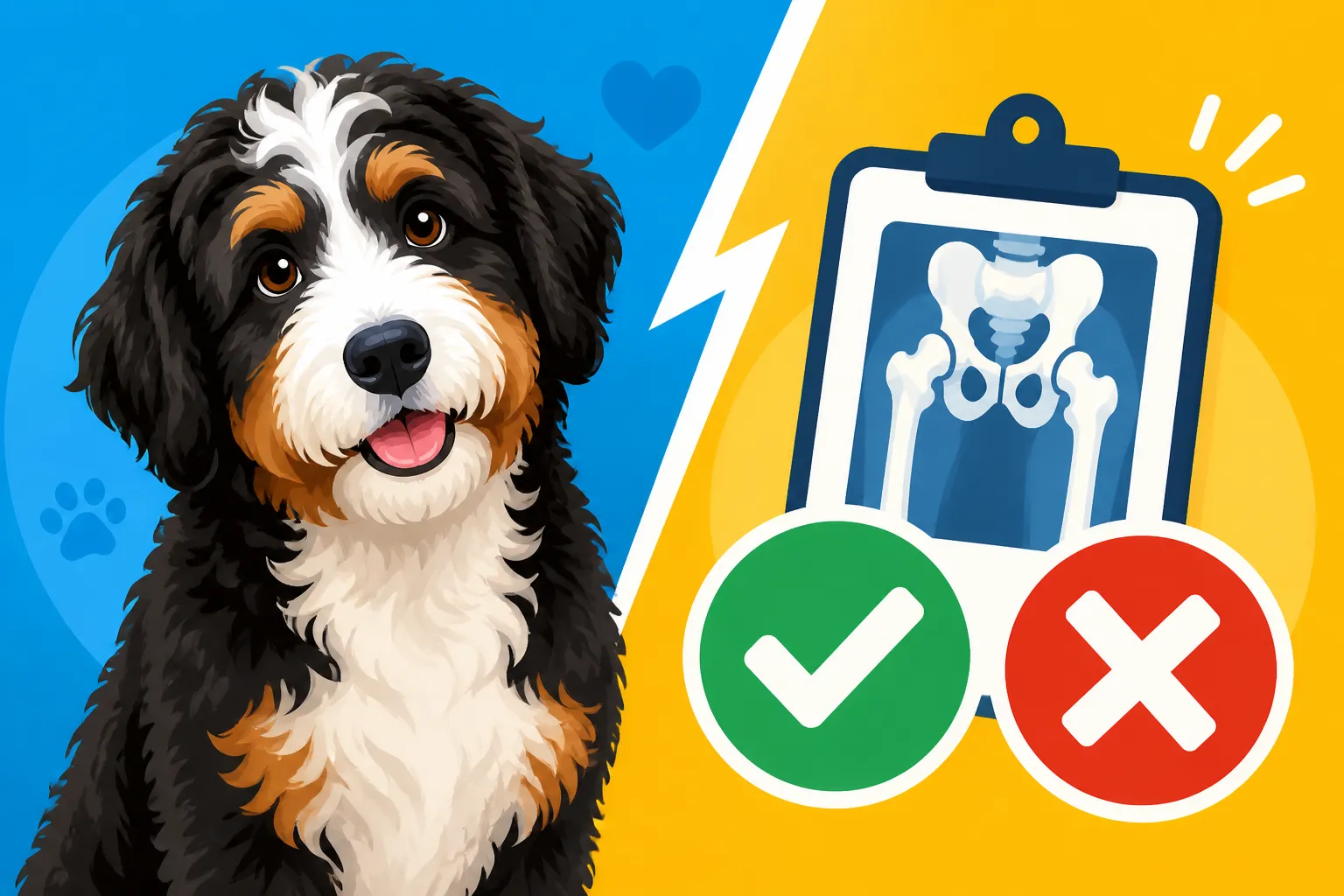
- Hip Dysplasia: OFA evaluates hip radiographs (X-rays) by a panel of three independent, board-certified veterinary radiologists. The hips are graded as Excellent, Good, Fair, Borderline, Mild, Moderate, or Severe. For breeding purposes, a dog should ideally have hips graded as Excellent, Good, or Fair. Anything Borderline or below carries a risk that responsible breeders typically avoid. If a breeder shows you an OFA certificate for hips, it will clearly state one of these grades.
- Elbow Dysplasia: Similar to hips, elbows are X-rayed and evaluated for evidence of dysplasia. The grading system for elbows is 0 (normal), Grade 1, Grade 2, or Grade 3. A dog with Grade 0 elbows is considered clear and suitable for breeding. Any other grade indicates some degree of dysplasia, and a responsible breeder will not breed a dog with elbow dysplasia. It's vital to see The Elbow Grades a Bernedoodle Breeder Should Show to understand what's acceptable.
Beyond Hips and Elbows: A Holistic View of Health
While hip and elbow scores are critical, they are far from the only health concerns. A truly comprehensive health panel for Bernedoodle parents will include several other important screenings:
- Eye Certifications (CAER): This stands for Companion Animal Eye Registry. A board-certified veterinary ophthalmologist examines the dog's eyes for inherited eye diseases like Progressive Retinal Atrophy (PRA) or cataracts. This exam should ideally be done yearly, as some conditions can develop over time.
- Cardiac Evaluation: A board-certified veterinary cardiologist should examine the heart for congenital heart disease. For large breeds, this is an important screening to identify conditions that could lead to heart failure.
- Thyroid: Hypothyroidism is a condition where the thyroid gland doesn't produce enough hormones, affecting metabolism, coat quality, and energy levels. OFA provides a system for grading thyroid health.
- Von Willebrand's Disease (vWD): This is a genetic bleeding disorder, especially relevant as it's common in both Poodles and Bernese Mountain Dogs. There's a DNA test for vWD. A dog can be clear, a carrier, or affected. Responsible breeders will test for this, and avoid breeding affected dogs or breeding two carriers together, which could produce affected puppies. For more, see Von Willebrand's Disease in a Bernedoodle.
- Degenerative Myelopathy (DM): Another neurological disease primarily affecting the spinal cord, causing progressive weakness and paralysis in the hind limbs. Like vWD, there's a DNA test for DM, allowing breeders to identify clear, carrier, and at-risk dogs. It's crucial that The SOD1 Test Both Bernedoodle Parents Need has been performed.
The Problem with "Cleared by Parentage"
Sometimes breeders will claim a puppy is "clear by parentage" for certain conditions. This means that if both parents are tested and found to be clear of a recessive genetic disease, then their offspring should also be clear. While this can be true for some simple recessive traits, it's not a substitute for individual testing for every condition, especially if the parents were only tested for some issues, or if one parent was a carrier. Relying solely on parentage can be risky and isn't the same as having direct OFA certifications for the breeding dogs themselves.
How to Verify OFA Numbers and Spot Red Flags
Now that you understand what OFA numbers represent, the next step is knowing how to verify them. Don't be shy about asking questions and doing your homework – this is an important decision!
Asking Your Breeder for Proof
A responsible, transparent Bernedoodle breeder will not hesitate to provide you with the OFA clearances for their breeding dogs. They'll typically have copies of the certificates or, even better, provide you with the registered names of the parent dogs and their OFA numbers. They should be proud of the health testing they do. If a breeder gives you any of the following responses, consider it a significant red flag:
- Evasion: "Oh, our vet has all that information." "We don't share specific numbers."
- Excuses: "We believe in natural breeding, not all those tests." "It's too expensive."
- Vague Claims: "Our lines are healthy." "The parents are completely clear." (Without specific documentation.)
- "Vet Checked" only: As discussed, a general vet check is not specific genetic health testing.
They should be able to give you the registered names and numbers for both the Bernese Mountain Dog parent and the Poodle parent.
Checking the OFA Public Database
The best part about OFA certifications is that they are public record. You don't have to just take a breeder's word for it. Here's how you can verify:
- Get the Registered Name: Ask the breeder for the full, registered name of both the sire (father) and dam (mother) of the litter you're interested in. This isn't their "call name" like "Buddy" or "Bella," but their official name used for registration and health clearances (e.g., "Maple Lane's Grand Duke Sterling").
- Visit the OFA Website: Go to the Orthopedic Foundation for Animals' official website. They have a public search function.
- Search by Name or Number: Enter the registered name of the dog. If the breeder gave you the specific OFA number for an individual test (e.g., a hip number), you can search by that as well.
- Review the Results: The search results will show you all the OFA-recorded health clearances for that specific dog, including hip and elbow grades, eye certifications, cardiac results, and any DNA tests like vWD or DM. You can see the date of testing and the specific results. This is where you can confirm that the dogs have acceptable scores for breeding.
It's empowering to be able to verify this information yourself. This due diligence helps you ensure you're working with a truly responsible breeder who prioritizes the long-term health of their puppies.
The Long-Term Value of Investing in Health-Tested Lines
Choosing a Bernedoodle puppy from parents with clear and verifiable OFA numbers isn't just about avoiding a "bad" breeder; it's about making a proactive choice for a healthier, happier life with your dog. The impact of this initial diligence reverberates throughout your dog's entire lifespan.
Minimizing Future Vet Bills and Emotional Strain
While no amount of testing can guarantee a dog will never have a health issue – life happens, and accidents or unexpected illnesses can occur – proper genetic screening significantly reduces the risk of inheritable conditions. Hip and elbow surgeries, for instance, are incredibly expensive, often running into many thousands of dollars per joint. Managing chronic pain from conditions like severe arthritis due to dysplasia can be a lifelong burden for both you and your dog.
By selecting a puppy from parents with excellent OFA scores, you're stacking the odds in your favor. This proactive step can save you considerable financial stress and, more importantly, a tremendous amount of emotional anguish that comes with watching a beloved pet suffer from preventable genetic conditions. Many pet insurance providers, such as Healthy Paws or Chewy's own pet insurance options, are fantastic safeguards for unexpected incidents, but preventing known inheritable conditions through responsible breeding is always the first line of defense.
Supporting Ethical Breeding Practices
Every time a prospective owner insists on seeing OFA numbers and doing their due diligence, they are sending a powerful message to the breeding community. They are telling breeders that transparency, health, and ethical practices are valued and expected. This helps to elevate the standards for the entire Bernedoodle breed and discourages irresponsible breeding practices that prioritize profit over the welfare of the dogs. It contributes to a future where more Bernedoodles are born with the best possible genetic start to life.
The Peace of Mind is Priceless
Ultimately, the decision to choose a Bernedoodle from a breeder who openly provides and encourages the verification of OFA numbers comes down to peace of mind. Knowing that you've done everything in your power to select a puppy with a sound genetic foundation allows you to focus on the joy of companionship, training, and making wonderful memories. You'll be able to enjoy all the wonderful qualities of the Bernedoodle, from their goofy antics to their loving leans, without the constant worry of an impending genetic health crisis. Ensuring a strong foundation also helps with their overall wellness, so you can focus on things like finding nutritious food options, perhaps exploring brands like Ollie for their diet, and ensuring they have plenty of exercise. For additional reading on preventative care and identifying issues early, you might find articles like The Screening a Bernedoodle Should Have Yearly or What Changes in a Bernedoodle After Eight helpful.
Bernedoodle Health Clearances Overview
| Health Condition | OFA Test Type | Desirable OFA Result for Breeding | Common Parent Breed Concern |
|---|---|---|---|
| Hip Dysplasia | Radiographic Evaluation | Excellent, Good, or Fair | Bernese, Poodle |
| Elbow Dysplasia | Radiographic Evaluation | Grade 0 (Normal) | Bernese, Poodle |
| Eye Conditions | CAER (Ophthalmologist Exam) | Normal, no inherited disease noted | Poodle, Bernese |
| Cardiac Disease | Cardiologist Evaluation | Normal, no congenital disease noted | Bernese, Poodle |
| Von Willebrand's Disease (vWD) | DNA Test | Clear or Carrier (bred to clear) | Bernese, Poodle |
| Degenerative Myelopathy (DM) | DNA Test | Clear or Carrier (bred to clear) | Bernese |
| Thyroid Disease | Thyroid Panel (Blood Test) | Normal | Poodle, Bernese |
Disclaimer
This article is for general informational purposes only and does not constitute professional advice. Laws, prices and regulations vary by location and change over time. Consult a qualified professional for guidance on your specific situation.