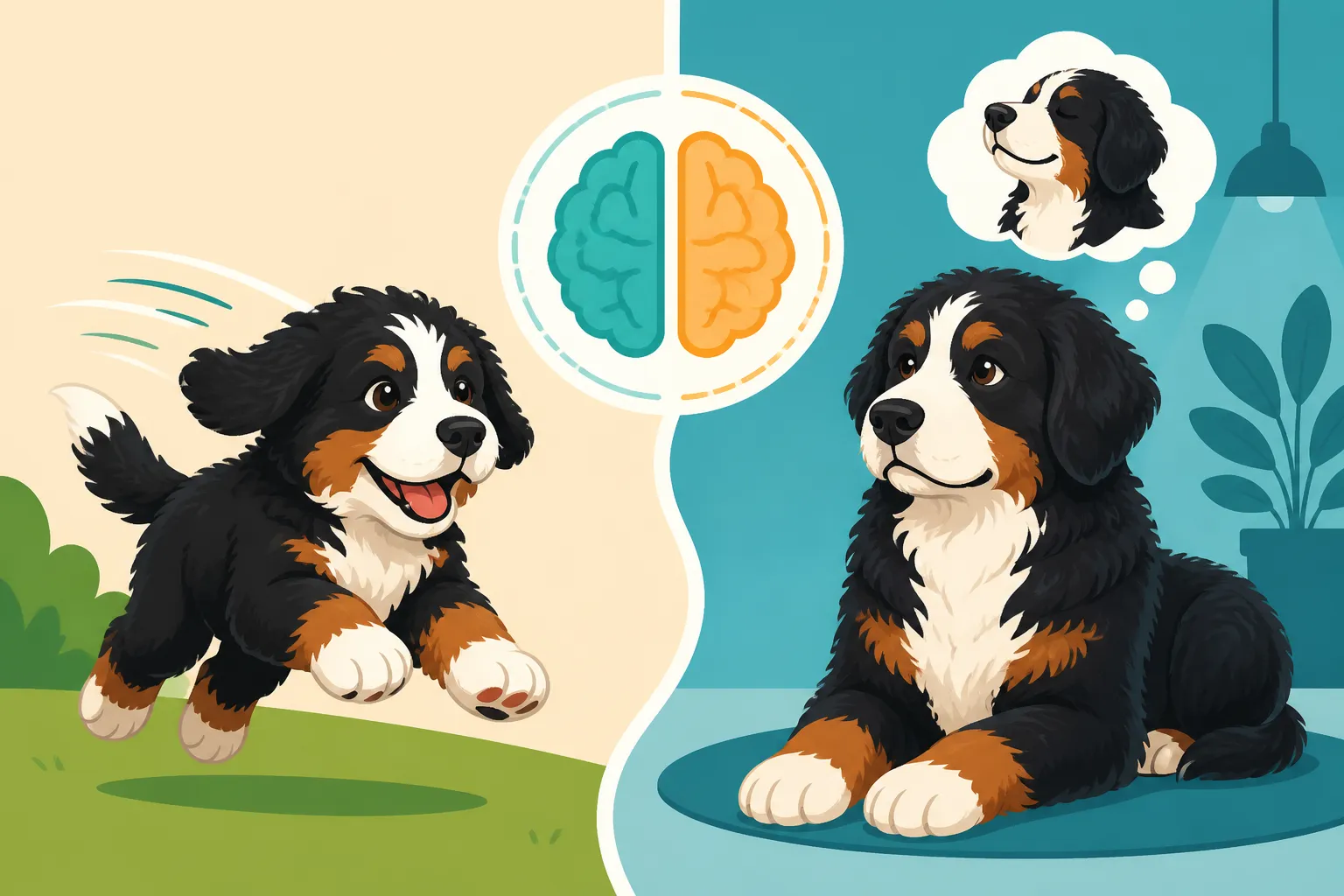
Why a Bernedoodle Matures Slower Than It Grows
It's a common, and often frustrating, experience for Bernedoodle owners: you have this magnificent, rapidly growing fluffball that suddenly weighs 60, 70, even 90 pounds, yet still acts every bit the goofy, uncoordinated puppy it was just a few months ago. This guide dives deep into exactly why your Bernedoodle seems to mature at a snail's pace compared to its physical growth, exploring the unique blend of its parent breeds and offering practical insights to help you navigate this extended adolescence with patience and understanding.
Understanding Bernedoodle Growth vs. Maturity
When we talk about a dog "growing up," it's easy to conflate two very different processes: physical development and mental-emotional maturity. For many breeds, these timelines are relatively synchronized, but with Bernedoodles, there's often a significant lag that can catch owners off guard.
The Rapid Physical Growth Spurt
Bernedoodles, especially standard sizes, are powerhouse growers. They can pack on pounds at an astonishing rate in their first year. Imagine bringing home a tiny, eight-week-old bundle of fur that fits in your lap, and by six or eight months, that same pup is now a gangly, heavy adolescent dog. Their bones lengthen, their muscles develop, and their weight increases dramatically, giving them the appearance of a fully grown animal. This rapid physical development is largely inherited from their Bernese Mountain Dog parentage, a breed known for its substantial size and impressive growth trajectory. Owners often find themselves trying to wrangle a seventy-pound "puppy" who has no idea of its own strength. You might find yourself saying, "My dog looks like an adult, but acts like a baby!" and you wouldn't be wrong. This physical prowess, combined with an immature brain, is where many of the unique Bernedoodle challenges and charms originate.
Defining Mental and Emotional Maturity in Dogs
In contrast to their quick physical ascent, a Bernedoodle's mental and emotional maturity unfolds much more slowly. Mental maturity refers to a dog's cognitive development – their ability to learn, problem-solve, and respond to commands with consistency, even when distracted. Emotional maturity, on the other hand, involves their capacity for self-regulation, managing impulses, understanding social cues, and generally behaving in a calm, settled, and predictable manner. A mentally and emotionally mature dog is less prone to sudden bursts of energy, doesn't chew indiscriminately, and can settle down easily. They understand routines, can be left alone without significant anxiety, and have a more nuanced understanding of their place in the household. This isn't just about knowing commands; it's about having the self-control and understanding to apply them reliably in real-world situations, rather than simply reacting to every fleeting impulse.
The Bernese Influence on Development
The Bernese Mountain Dog, one half of the Bernedoodle equation, brings a significant genetic blueprint for a slower developmental pace, particularly in terms of their overall maturation.
The Bernese Mountain Dog's Slower Maturation
Bernese Mountain Dogs are known as "late bloomers" in the canine world. While they reach their imposing physical size relatively quickly, their minds often take a good two to three years to fully mature. This means you have a giant, powerful dog that, mentally and emotionally, is still very much in its adolescent phase for an extended period. This trait is a hallmark of many large and giant breeds; their bodies grow faster than their brains can catch up. They retain that playful, sometimes clumsy, and often boisterous puppy-like demeanor well into what other breeds would consider adulthood. This can be endearing, of course, giving you more years of joyous, playful interactions. However, it also means that the typical "puppy problems" – like chewing, boundless energy, and testing boundaries – can persist for longer in a Bernedoodle than in a smaller, faster-maturing breed. This extended period requires owners to maintain consistent training and patience, recognizing that their large dog isn't being "stubborn" as much as it is still developmentally young.
Impact on Size and Bone Development
The Bernese influence isn't just about delayed mental maturity; it also profoundly impacts the Bernedoodle's physical development, particularly their size and bone structure. Bernese Mountain Dogs are prone to conditions like hip and elbow dysplasia, which are often exacerbated by rapid growth and inappropriate exercise during puppyhood. Because Bernedoodles inherit this predisposition, responsible breeders and owners pay close attention to slow, steady growth. This means special large-breed puppy foods with carefully controlled calcium and phosphorus levels, and strict adherence to exercise guidelines to avoid stressing developing joints. While your Bernedoodle may look like a full-grown adult at a year old, its bones and joints are often still developing and vulnerable. Growing a Standard Bernedoodle Slowly on Purpose is a crucial aspect of their early care. This is a period where their bodies are large and strong, but their skeletal system is still "soft" and easily damaged by too much high-impact activity. This physiological reality often clashes with their youthful exuberance, making management of their exercise and activity levels a critical part of their upbringing.
The Poodle Contribution to Bernedoodle Adolescence
The Poodle, the other half of the Bernedoodle's genetic makeup, contributes its own set of traits that influence the unique growth-to-maturity timeline.
Poodle Intelligence and Its Double-Edged Sword
Poodles are renowned for their exceptional intelligence and eagerness to please. This is often why they are chosen for cross-breeding – they are highly trainable and quick learners. In a Bernedoodle, this Poodle intelligence can be a double-edged sword during their extended adolescence. On one hand, it means they can pick up commands very quickly, sometimes even astonishingly so. You might think, "Wow, my Bernedoodle is so smart!" and they are. However, this intelligence also means they can learn undesirable behaviors just as fast, and they can be incredibly adept at testing boundaries and finding loopholes in your rules. A smart, immature dog isn't just goofy; they can also be cunning. They might know "leave it," but their developing impulse control (or lack thereof) might lead them to try to snatch that dropped treat anyway, just to see if they can get away with it. This requires owners to be even more diligent and consistent in their training, ensuring that the Poodle brain is always directed towards positive, constructive behaviors. A program like BAXTER & Bella, with its structured, online approach, can be particularly helpful here, providing consistent guidance for channeling that intelligence positively.
The Poodle's Energetic Youth
While Bernese Mountain Dogs are known for their calm, even sometimes sluggish, demeanor as adults, Poodles, particularly Standard Poodles, often have a more spirited and energetic youth. This Poodle zest for life often translates into an active, playful Bernedoodle puppy and adolescent. This means that even with the Bernese influence, a Bernedoodle's early years can be filled with bursts of energy, zoomies, and a general enthusiasm for play that can feel overwhelming given their size. You might find your "grown-up" looking dog still bouncing off the walls like a much smaller puppy. This energetic drive, coupled with their increasing size, means that appropriate exercise is vital. Without sufficient mental and physical outlets, a bored and energetic Bernedoodle, especially one with a puppy brain, can easily resort to destructive behaviors. Think digging, chewing, or excessive barking – classic signs of an under-stimulated dog. Understanding The Exercise a Standard Bernedoodle Needs Daily is essential to manage this inherited energy.
Adolescence: The Extended Puppy Phase
Ah, canine adolescence! If you thought puppyhood was challenging, imagine it stretched out over a longer period, but with a dog that now outweighs you. This phase is particularly pronounced and extended in Bernedoodles.
Behavioral Hallmarks of Bernedoodle Adolescence
During adolescence, your Bernedoodle will likely exhibit a range of behaviors that might remind you vividly of their early puppy days, but with a grown-up body. Expect a resurgence of chewing – sometimes on things they never bothered with before, like furniture legs or remote controls. Their impulse control might take a nosedive, leading to jumping on guests, counter-surfing, or suddenly "forgetting" their potty training. They might also become more selective in their listening, choosing to ignore commands they once knew perfectly, particularly when distractions are high. This is not defiance in the human sense; it's a perfectly normal developmental stage where their brains are undergoing significant restructuring, similar to human teenagers. You might also notice a newfound confidence, or sometimes shyness, around new people or situations. A Bernedoodle That Backs Away From Strangers can be a concern if early socialization wasn't extensive or if they've had a negative experience. They're trying to figure out their place in the world, and sometimes that comes with awkward, inconsistent behavior.
The "Regression" Phenomenon
One of the most disheartening experiences for Bernedoodle owners during adolescence is the "regression" phenomenon. You spend months diligently training your puppy, and they're doing great – walking nicely on a leash, coming when called, sitting patiently. Then, seemingly overnight, it all goes out the window. Your Bernedoodle suddenly pulls like a freight train, acts deaf to your commands at the dog park, and might even have an accident inside after months of perfect house-training. This isn't a sign that you've failed as an owner, nor is your dog intentionally trying to spite you. It's a completely normal part of brain development during adolescence. Their hormones are fluctuating, their brains are reorganizing, and they're testing boundaries. It's like their hard drive gets wiped clean, and you have to re-install some of the basic programs. This is why consistency is paramount during this time, and why many owners find themselves revisiting basic obedience. This period can last for many months, and recognizing it as a phase, rather than a permanent change, is key to managing your own frustration.
Navigating the Challenges of a Physically Mature, Mentally Immature Dog
Having a large dog with a puppy brain presents unique challenges that require thoughtful management and proactive strategies.
Managing Size and Strength with Puppy Brains
The combination of a Bernedoodle's considerable size and strength with its extended puppy-like mentality means that owners must be extra vigilant. A standard Bernedoodle can easily weigh 70-90 pounds, and a playful lunge or an excited jump from such a large dog can inadvertently injure a small child or an elderly person. Even a friendly lean from A Bernedoodle That Leans on Everyone can knock someone off balance. This means that early training focusing on good manners around people, especially children, is not just advisable, but absolutely essential for safety. Teaching them to keep four paws on the floor, to greet people calmly, and to understand personal space needs to start early and be reinforced constantly. Utilizing tools like front-clip harnesses or head halters can be invaluable for teaching Leash Manners on a Bernedoodle Heading for Ninety Pounds, especially when they are still easily distracted and prone to pulling. A physically mature dog needs physically robust training tools to safely manage their strength.
Preventing Destructive Behaviors and Accidents
A Bernedoodle with a developing brain and powerful jaws can wreak havoc if left unsupervised or under-stimulated. Destructive chewing, counter-surfing, and indoor accidents are common issues during this phase. To prevent these problems, management is your best friend. Crating when you can't supervise fully is crucial, even for an older adolescent. Ensure they have a variety of appropriate chew toys – durable ones that can stand up to powerful jaws. Rotate toys frequently to keep things interesting. Puzzle toys and treat-dispensing toys can provide valuable mental stimulation, which is just as important as physical exercise for a smart breed like the Bernedoodle. For counter-surfing, keep all food out of reach. For potty accidents, return to a strict schedule, reward outside successes heavily, and supervise closely indoors, treating any regression like you would with a young puppy. Remember, a bored Bernedoodle is a destructive Bernedoodle. You might find a wide array of engaging toys and training aids on sites like Amazon that can help keep their active minds and mouths busy.
Training and Socialization Strategies for the Slow Maturation Process
Given the Bernedoodle's unique developmental timeline, a thoughtful approach to training and socialization is paramount. It’s not a one-and-done deal; it’s an ongoing commitment.
Consistency and Patience in Training
The extended adolescence of a Bernedoodle means that training is not a sprint, but a marathon. Consistency is the golden rule. Every family member needs to be on the same page with commands, rules, and expectations. If one person allows jumping and another corrects it, your Bernedoodle will become confused and inconsistent. Short, frequent training sessions are often more effective than long, infrequent ones, especially when dealing with a developing attention span. Keep training positive and reward-based; harsh corrections can damage your bond and make a sensitive Bernedoodle shut down. When your Bernedoodle "forgets" a command, don't get angry; simply go back to basics, rewarding even the smallest successes. Remember, their brain is still forming, and what seems like stubbornness is often just immaturity. Whether a Bernedoodle Ignores a Command It Knows is a common frustration, but consistent, patient reinforcement will pay off in the long run. Consider investing in an online training program like BAXTER & Bella, which offers structured lessons that can be followed consistently by all family members, helping bridge the gap between their physical size and mental readiness.
Continued Socialization Beyond Puppyhood
Many owners think socialization ends after the puppy vaccination series. For a Bernedoodle, with its potential for shyness from the Bernese side and its extended adolescence, continued socialization is absolutely vital well into their second year, if not beyond. This doesn't mean forced interactions; it means positive, controlled exposures to a wide variety of sights, sounds, people, and other dogs. Regular, supervised playdates with calm, well-mannered dogs can help them refine their social skills. Visits to dog-friendly stores, quiet parks, and even just sitting outside a busy cafe can help them learn to be comfortable and calm in various environments. The goal is not necessarily for them to greet every person or dog they see, but to be neutral and relaxed in their presence. This ongoing exposure helps prevent the development of fear-based behaviors or reactivity as they mature.
Environmental Factors and Lifestyle: Supporting Healthy Development
The environment in which a Bernedoodle grows up plays a significant role in how smoothly they navigate their extended path to maturity. Your home and lifestyle choices can either support or hinder their development.
Structured Routine and Enrichment
Bernedoodles thrive on routine and mental stimulation. A predictable daily schedule helps provide a sense of security and structure, which can be particularly grounding for an adolescent dog whose internal world might feel a bit chaotic. Consistent meal times, potty breaks, exercise, and training sessions teach them what to expect and when. Beyond routine, mental enrichment is paramount. These intelligent dogs need more than just physical exercise; their Poodle brains crave puzzles and challenges. Interactive toys, snuffle mats, training new tricks, scent work games, or even just regular walks in new places where they can sniff and explore can tire them out mentally in a way that physical activity alone cannot. A well-designed routine that balances physical activity with mental engagement will go a long way in preventing boredom-induced destructive behaviors and channeling their energy positively. Remember, a tired Bernedoodle is usually a well-behaved Bernedoodle.
The Importance of Appropriate Exercise
While Bernedoodles are large and can be energetic, especially in their youth, the type and amount of exercise they receive are critical, particularly during their rapid growth phase. As mentioned earlier, their bones and joints are still developing, and too much high-impact exercise can lead to long-term orthopedic issues like elbow or hip dysplasia. Activities like excessive running on hard surfaces, jumping off high furniture, or prolonged, strenuous fetch sessions should be limited, especially in their first 12-18 months. Instead, focus on moderate, sustained activities like leashed walks, gentle hikes on soft trails, and swimming if they enjoy it. Remember The Five Minute Rule on a Bernedoodle Puppy's Walks for younger pups. As they mature, their exercise needs will increase, but always prioritize joint health. Providing a variety of exercise types keeps them engaged and helps develop their bodies appropriately without unnecessary strain. Whether you're considering Whether a Bernedoodle Should Be Walked in Summer or simply a daily stroll, always be mindful of their physical stage of development.
Setting Realistic Expectations for Bernedoodle Maturity
Understanding when your Bernedoodle will truly "grow up" isn't about setting a fixed date, but about understanding a general timeline and being prepared for the journey.
Typical Age Ranges for Mental Maturity
Generally speaking, you can expect a Bernedoodle to begin settling into their full mental and emotional maturity somewhere between 18 months and 3 years of age. For some, particularly those with a stronger Bernese influence, it might even be a little later. This is a significant difference from many smaller breeds that might be considered fully mature by their first birthday. This means that you should anticipate having a large, adolescent dog for an extended period, potentially for the entirety of their second year. During this time, the "puppy brain" tendencies will gradually diminish, their impulse control will improve, and their consistency in training will become more reliable. They will become calmer indoors, more predictable in their reactions, and generally more "adult" in their demeanor. This gradual shift is often imperceptible day-to-day, but looking back over months, you'll notice significant changes.
| Bernedoodle Developmental Stage | Approximate Age Range | Key Characteristics |
|---|---|---|
| Puppyhood | 8 weeks – 6 months | Rapid physical growth, intense learning, high energy, frequent potty breaks, teething, basic socialization. |
| Adolescence (Physical Peak) | 6 months – 18 months | Nearing adult size, continued energy, "regression" in training, testing boundaries, fluctuating hormones, growing independence, sometimes clumsy due to size. |
| Early Adulthood (Mental Maturation) | 18 months – 3 years | Gradual settling, improved impulse control, increased consistency in training, less destructive, more predictable behavior, still prone to bursts of playfulness. |
| Full Maturity | 3 years + | Settled, reliable, confident, stable temperament, consistent behavior, deep bond with family, reduced energy levels compared to youth. |
Embracing the "Forever Puppy" Mentality
While the desire for a calm, fully mature adult dog is natural, many Bernedoodle owners eventually learn to embrace what often feels like a "forever puppy" mentality. Even well into adulthood, many Bernedoodles retain a charming, goofy, and playful streak that endears them to their families. They may always have a touch of that clumsy, affectionate nature. Rather than fighting against this natural inclination, learning to appreciate their joyful spirit can make the journey much more rewarding. It means understanding that while they may never be as stoic as some breeds, their enthusiasm and loving nature are part of their charm. This isn't to say training and boundaries aren't important; they absolutely are. But it's about shifting your expectations from a perfectly stoic, always-serious companion to a wonderfully loving, often comical, and eternally youthful friend. Enjoy the journey, for these formative years are precious, even if they sometimes test your patience.
Disclaimer
This article is for general informational purposes only and does not constitute professional advice. Laws, prices and regulations vary by location and change over time. Consult a qualified professional for guidance on your specific situation.