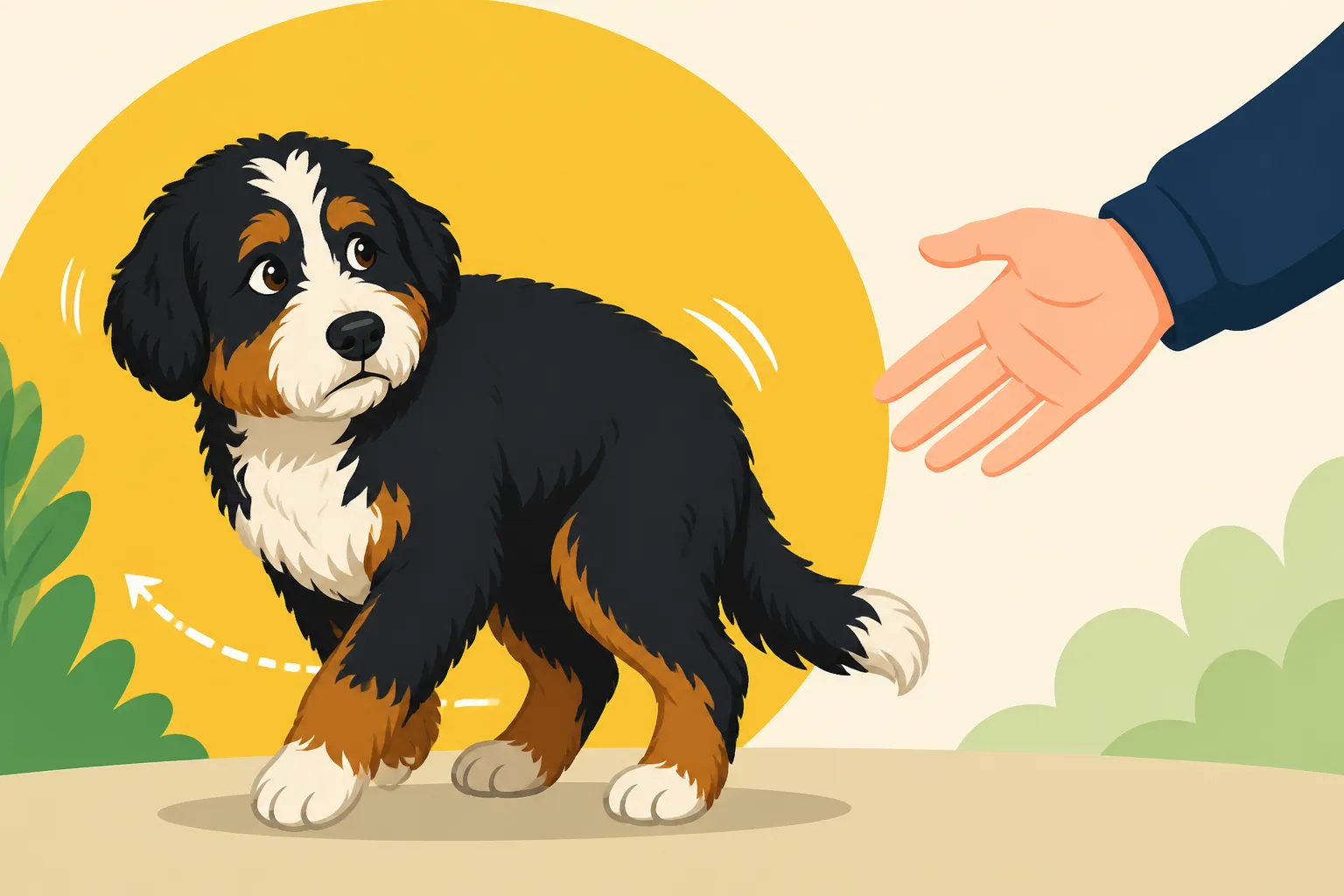
A Bernedoodle That Backs Away From Strangers
It can be incredibly disheartening, and sometimes even a little embarrassing, when your beloved Bernedoodle, a breed known for its friendly disposition, backs away from strangers or shies away from new situations. You want your dog to be confident and happy, not constantly retreating or showing fear. This comprehensive guide is here to help you understand why your Bernedoodle might be exhibiting this behavior and, more importantly, equip you with the strategies and tools to build their confidence and foster more positive interactions with the world around them.
Understanding the Roots of Bernedoodle Shyness
When you see your Bernedoodle retreating from a friendly hand or ducking behind your legs, it’s easy to feel confused. Aren’t Bernedoodles supposed to be these big, happy, social butterflies? While many are, shyness can absolutely be a trait that emerges in this wonderful hybrid breed. It’s not necessarily a sign that you've done something wrong; often, it's a complex mix of genetics and early experiences.
The Bernese Mountain Dog's Natural Reserve
One of the parent breeds, the Bernese Mountain Dog, can carry a natural predisposition towards being a bit reserved with strangers. While they are loyal and affectionate with their families, they aren't always the "everyone's best friend" type right off the bat. They can be watchful and take their time to warm up to new people, which isn't necessarily shyness, but a more discerning approach to social interaction. This inherent cautiousness is a protective trait that served them well as farm dogs guarding their homesteads. It's not about aggression, but about a "wait and see" attitude.
Imagine a Bernese in its traditional role: it wouldn't immediately rush to greet a stranger approaching the farm. It would observe, assess, and only offer trust once it deemed the person non-threatening. This deeply ingrained instinct can manifest in a Bernedoodle as a tendency to back away or be hesitant. They might seem perfectly fine with your immediate family but become noticeably uncomfortable when a new person enters the home or tries to pet them on a walk. This isn't a flaw; it's a part of their heritage. Understanding The Shyness a Bernedoodle Gets From the Bernese can give you valuable insight into these behaviors.
The Poodle's Potential for Sensitivity
The Poodle, the other half of the Bernedoodle equation, is often highly intelligent and sensitive. While confident Poodles are outgoing and bold, the breed as a whole can be quite attuned to their environment and the emotions of those around them. This sensitivity can sometimes translate into a nervous disposition if not properly managed with early socialization and positive reinforcement. A Poodle's sharp mind means they pick up on cues quickly, both good and bad. If they've had a negative experience, even a minor one, they can remember it and become wary.
Think about a sensitive Poodle encountering an overly exuberant child or a clumsy adult who accidentally steps on their paw. They might process this as a threat or an unpleasant interaction, and generalize that experience to similar future encounters. This sensitivity, when combined with the Bernese's natural reserve, can amplify the tendency towards shyness in a Bernedoodle. It's a double-edged sword: their intelligence makes them highly trainable, but also means they are very observant of new stimuli and can develop cautious behaviors if not guided appropriately.
The Impact of Early Life Experiences
Beyond genetics, a Bernedoodle's early experiences play a monumental role in shaping their personality and confidence. The period between 3 and 16 weeks, often referred to as the critical socialization window, is absolutely vital. Puppies who are not exposed to a wide variety of people, sights, sounds, and experiences during this time can develop fear and anxiety later in life. A puppy mill or backyard breeder situation, where puppies are often isolated or not handled much, can lay the groundwork for a lifetime of shyness.
Consider a Bernedoodle puppy raised in a quiet, isolated environment with minimal human interaction outside of the breeder. When this puppy suddenly enters a busy household with new sounds, smells, and frequent visitors, it can be completely overwhelming. Without a foundation of positive experiences, the puppy's natural instinct might be to retreat rather than engage. Even seemingly small events, like being startled by a loud noise or having an unpleasant interaction with a well-meaning but rough stranger, can leave a lasting impression on a young, impressionable Bernedoodle. The quality and breadth of their early exposure literally sculpt their brain and their perception of the world.
Identifying the Signs: Is It Shyness or Something Else?
It’s crucial to accurately interpret your Bernedoodle’s behavior when they encounter strangers. Sometimes, what looks like shyness might be something else entirely, or it might be a precursor to more significant fear-based reactions. Understanding the nuances of canine body language is your superpower here.
Reading Your Bernedoodle's Body Language
Dogs communicate primarily through their body language, and your Bernedoodle will tell you a lot about how they feel about a stranger if you know what to look for. When a Bernedoodle is truly shy or fearful, you might see a combination of these signals: a tucked tail, ears pinned back (or flattened against their head), a lowered body posture, avoiding eye contact, yawning (when not tired), lip licking, turning their head away, or even trying to put distance between themselves and the stranger. They might stand still, almost frozen, or actively back away.
For instance, if a guest reaches out to pet your Bernedoodle, and your dog yawns widely, licks its lips, then slowly backs away while keeping its head low, it’s a clear signal of discomfort and a desire to disengage. They aren't trying to be rude; they are trying to communicate their stress in a polite way. If these signals are ignored, the dog might feel compelled to escalate their communication, which could unfortunately lead to a growl or snap out of desperation. Learning to recognize these subtle cues early on can help you intervene and manage the situation before your dog becomes overwhelmed.
Distinguishing Fear from Simple Aloofness
It’s important to differentiate between genuine fear or shyness and a more typical reserved Bernese-like aloofness. Some Bernedoodles, like their Bernese parents, simply aren't gushy with every person they meet. They might observe a new person calmly, perhaps take a treat gently, and then choose to go lie down nearby without seeking further interaction. This isn't fear; it's just their personality. They're not distressed; they're simply not overly excited by the presence of a new person. Whether a Bernedoodle Is Naturally Reserved can vary greatly from dog to dog.
A truly fearful dog, on the other hand, will show those classic stress signals: a tucked tail, panting, trembling, attempts to hide, or even urination. Their entire demeanor will scream "I want this interaction to end." An aloof dog maintains a neutral or relaxed body posture, whereas a fearful dog appears tense. If your Bernedoodle is simply calm and chooses not to interact, but isn't showing any signs of stress, then it's likely aloofness and not something that needs "fixing," but rather respectful acknowledgment.
Understanding Progressive Behavior Escalation
One of the most critical things to understand about fear in dogs is that it often escalates. If a dog's subtle signals of discomfort (like lip licking or turning away) are ignored, they may resort to more overt warnings. This can start with a low growl, a stiff body, or a hard stare. If these are still ignored, the dog might feel they have no option but to snap or even bite to create distance and end the perceived threat. This is why paying attention to early body language is so vital.
Imagine your Bernedoodle shrinking away from a new visitor. The visitor, meaning well, tries to lean in closer, speak in a high-pitched voice, or even reach for them. If your dog has already communicated discomfort by backing away, and these attempts persist, they might then resort to a growl as a louder, clearer signal. If that is also ignored, a snap could follow. It's a dog's way of saying, "I warned you, and you didn't listen." Your role as their advocate is to recognize those first quiet warnings and prevent the situation from escalating, thereby building their trust in you to keep them safe.
Early Socialization: The Foundation for a Confident Bernedoodle
The absolute best defense against a shy Bernedoodle is proactive and thoughtful early socialization. This isn't just about letting your puppy meet other dogs; it's about carefully orchestrated, positive exposures to everything they'll encounter in their adult life.
The Critical Window: Weeks 3-16
The period from approximately 3 to 16 weeks of age is often called the "critical socialization window." During this time, a puppy's brain is like a sponge, rapidly absorbing information and forming associations about the world. Positive experiences during this phase teach your Bernedoodle that new people, places, sounds, and objects are safe and even enjoyable. This is when you should be introducing them to a wide variety of stimuli, always ensuring these experiences are pleasant and non-threatening.
This means gently introducing them to different types of people – men with beards, children, people wearing hats, people in uniforms, people of different ethnicities – all while pairing these introductions with high-value treats and praise. It also means exposing them to different sounds like vacuum cleaners, traffic, and sirens, always in a controlled way that doesn't startle them. Think of it as building a robust emotional immune system for your puppy. The more positive experiences they have in this window, the more resilient and confident they will be. Socializing a Bernedoodle Before Twelve Weeks is paramount for their future well-being.
Safe and Positive Exposure Experiences
The key word here is safe and positive. Socialization is not about throwing your puppy into a chaotic dog park or letting every stranger overwhelm them. It’s about controlled, short, and sweet encounters where your puppy always feels secure. For meeting people, this could mean having a friend come over who understands to let the puppy approach them, offer a treat, and then gently retreat. It should always be on the puppy’s terms.
One excellent strategy is using a long leash or a flexible lead (readily available on Amazon) in a safe, open area, allowing your Bernedoodle to observe people from a distance. As people pass by, calmly give your dog treats. They don't have to interact, just observe and associate people with good things. You can also join a well-run puppy class, which offers structured opportunities for safe exposure to other dogs and people under the guidance of a professional. Remember, the goal isn't to force interaction, but to create positive associations.
Avoiding Overwhelm and Negative Associations
Just as positive experiences are crucial, preventing negative or overwhelming experiences is equally important, especially during that critical socialization period. A single frightening event can undo weeks of careful socialization. Avoid situations where your puppy might be startled, intimidated, or physically hurt. This means politely asking strangers not to rush at your puppy, not to force interaction, or not to pick them up without permission.
If you notice your Bernedoodle showing signs of stress – tail tucking, lip licking, pulling away – immediately remove them from the situation. Don't push them to "get over it." Respect their boundaries. Overwhelm can lead to fear conditioning, where your dog learns that new things are scary rather than exciting. A program like BAXTER & Bella often emphasizes gradual, positive exposure and teaches owners how to read their dog's signals to prevent overstimulation. Always prioritize your dog's comfort and emotional well-being over social expectations.
Gentle Strategies for Building Confidence
For Bernedoodles that already exhibit shyness or fear, building confidence requires patience, consistency, and a very gentle approach. It’s about gradually shifting their emotional response from fear to curiosity and then to positive anticipation.
Creating Positive Associations with Strangers
The core principle here is classical conditioning: pair the presence of a stranger with something incredibly high-value and enjoyable for your Bernedoodle. This means every time a stranger appears, your dog gets a super tasty treat (think boiled chicken, cheese, or hot dogs – something they rarely get otherwise). The stranger shouldn't necessarily be the one giving the treat initially; you should. The goal is for your Bernedoodle to look at a stranger and think, "Oh, a stranger! That means good things are coming!"
Start with strangers at a distance where your Bernedoodle is aware of them but not yet stressed. As soon as a stranger comes into view, start delivering treats. Stop feeding treats once the stranger is out of sight. Gradually, over days or weeks, you can decrease the distance, always ensuring your dog remains comfortable and takes the treats readily. If they stop taking treats, you've moved too quickly. This process fundamentally changes their emotional response from apprehension to positive expectation.
Controlled Introductions and "Look at That" Game
When you're ready for closer interactions, these must be highly controlled. Inform your friends and family beforehand about your Bernedoodle's shyness and instruct them on how to behave. Advise them to ignore your dog at first, not make direct eye contact, and let the dog approach on their own terms. If the dog approaches, they can calmly offer a treat and a quiet word, but no forceful petting.
The "Look at That" (LAT) game, often recommended by positive reinforcement trainers, is excellent for shy dogs. When your Bernedoodle notices a stranger (but before they react negatively), say "Look at that!" and immediately give them a high-value treat. Repeat this. You're not asking them to interact, just to observe and then look to you for a reward. This helps them build a positive association and prevents them from rehearsing fearful reactions. Over time, your dog will see a stranger, look at you expectantly, and you can reward that calm observation.
Using Treats and Toys Effectively
High-value treats are your most potent tool for desensitization and counter-conditioning. These are not just any treats; they should be something your Bernedoodle absolutely loves and only gets during these specific training sessions. This elevates their value and makes the association with strangers stronger. Carry a pouch of these special treats with you on walks, ready to deploy the moment a stranger appears.
Toys can also be effective, especially for Bernedoodles who are toy-motivated. If a stranger is at a comfortable distance, you can engage your dog in a game of fetch or tug. This creates a positive and distracting activity in the presence of the stranger, helping to build their confidence and focus on you rather than their fear. Just ensure the toy isn't so exciting that it makes them overstimulated or forget their manners entirely. For a Bernedoodle that might eventually outweigh you, positive reinforcement with treats and toys is a much safer and more effective approach than any aversive training methods. Raising a Bernedoodle Puppy That Will Outweigh You comes with its own considerations for training.
Navigating Public Encounters and Guest Visits
Managing your Bernedoodle's shyness isn't just about training; it's also about proactively managing their environment and interactions. This means setting them up for success in everyday situations.
Managing Greetings on Walks
Walks can be a minefield for a shy Bernedoodle. Every corner turned can bring a new person, and constant unexpected interactions can be stressful. The first step is to advocate for your dog. If you see someone approaching, you have a few options:
- Create Distance: Cross the street, turn around, or step behind a bush to create space.
- "No Thank You": Politely inform approaching strangers, "He's in training, please don't pet him," or "She's a little shy, we're working on it." Most people will understand.
- Treat and Observe: If distance isn't an option, and your dog is calm, start feeding treats the moment the person comes into view until they pass.
Consider investing in a bright yellow "Do Not Pet" or "Nervous Dog" leash sleeve or vest (you can find these on Amazon) to give a visual cue to others. This removes the pressure of constant verbal explanations and helps manage expectations. Remember, every successful, calm walk, even if it involves avoiding people, builds your Bernedoodle's confidence that you will keep them safe.
Preparing for Visitors at Home
Having guests over can be particularly stressful for a shy Bernedoodle, as their personal space is invaded. Planning ahead is key.
- Exercise First: A tired Bernedoodle is often a calmer Bernedoodle. Take them for a good walk or engage them in some mental enrichment before guests arrive.
- Safe Space: Ensure your Bernedoodle has a designated "safe space" – a crate, a separate room, or a bed in a quiet corner – where they can retreat and not be disturbed. This space should be comfortable and always accessible.
- Managed Entry: When guests arrive, either put your Bernedoodle in their safe space or have them on a leash with you. Instruct your guests to ignore the dog upon entry. Let your dog observe from a distance, and once things have settled, you can slowly reintroduce them, allowing them to approach on their own terms, pairing it with treats.
- No Direct Eye Contact or Reaching: Remind guests that direct eye contact and reaching over a dog's head can be perceived as threatening. Instruct them to keep their interactions low-key and allow the dog to initiate contact. This is crucial for Building Confidence in a Timid Bernedoodle.
Establishing a "Safe Space" for Your Dog
A dedicated safe space is invaluable for any dog, but especially for a shy one. This might be a cozy crate covered with a blanket, a quiet bedroom, or even a designated corner behind a baby gate. The important thing is that this space is always available to your Bernedoodle and is respected by everyone in the household as their sanctuary. It should be a place where they can go to decompress and feel secure without being bothered.
You can make this space extra inviting with a comfortable bed, some favorite toys, and perhaps a long-lasting chew or a puzzle toy to occupy them. If guests are coming over, or if there's a lot of activity in the house, you can gently guide your Bernedoodle to their safe space. This prevents them from feeling trapped or overwhelmed and gives them an option to escape stressful situations. Over time, they will learn to seek out this space when they feel anxious, knowing it's their personal haven.
When to Seek Professional Help
While many shy behaviors can be managed with consistent positive reinforcement and environmental management, there are times when professional intervention is necessary. Recognizing these signs can make all the difference for your Bernedoodle's well-being.
Recognizing When DIY Is Not Enough
If your Bernedoodle's shyness is severe, impacting their daily life, or progressing to fear-based aggression (growling, snapping, biting when cornered), it's time to seek professional help. If you've been diligently applying positive reinforcement techniques for several weeks or months and aren't seeing significant improvement, or if the behavior seems to be getting worse, a professional can provide tailored guidance. Additionally, if your Bernedoodle is so fearful that they can't even go for walks without extreme stress, or they're constantly anxious even in familiar environments, this warrants expert attention.
Sometimes, the emotional toll on the owner, feeling frustrated or helpless, is also a sign that external support is needed. It’s okay to admit you need help; behavioral issues can be complex, and a professional has the experience and knowledge to assess the situation objectively and develop an effective plan. Whether a Bernedoodle Is Aloof Rather Than Shy can sometimes be hard to distinguish without an expert eye.
Finding a Qualified Force-Free Trainer or Behaviorist
When seeking professional help, it is absolutely vital to find a force-free trainer or certified veterinary behaviorist. Avoid anyone who suggests using aversive tools like choke chains, prong collars, or e-collars, or methods that involve punishment or "dominance." These methods can be incredibly damaging to a shy or fearful dog, often suppressing outward signs of fear while internally increasing their anxiety and potentially leading to aggression.
Look for trainers certified by organizations that emphasize humane, science-based methods, such as the Certification Council for Professional Dog Trainers (CCPDT), Karen Pryor Academy (KPA), or a Certified Applied Animal Behaviorist (CAAB). A good professional will start with a thorough assessment, create a customized training plan that focuses on positive reinforcement, and teach you how to work with your dog effectively and compassionately. They should never make you feel judged or inadequate. You can often find reputable trainers through referrals from your vet or by checking professional directories online. Whether a Bernedoodle Needs a Professional Trainer is a valid question, and the answer is often yes for complex behavioral issues.
Considering Veterinary Consultations
Before embarking on a behavioral modification plan with a trainer, it's always a good idea to consult your veterinarian. Sometimes, underlying medical conditions can manifest as behavioral changes, including increased fear or irritability. Pain, hormonal imbalances (like hypothyroidism, which Bernedoodles can be prone to), or neurological issues could contribute to or exacerbate shyness and anxiety. A vet can rule out any physiological causes for the behavior, ensuring that you're treating the right problem.
Your veterinarian might also be able to offer support in the form of anti-anxiety medication, if appropriate, to help your Bernedoodle manage their fear during the initial stages of behavior modification. Just like humans, some dogs benefit from medication to help them get into a state where they are receptive to learning and able to process new information without being completely overwhelmed by anxiety. This isn't a "cure-all" but can be a valuable tool when combined with a comprehensive behavioral plan developed with a qualified professional.
Common Signs of Shyness vs. Confidence in Bernedoodles
| Behavior | Indicates Shyness/Fear | Indicates Confidence/Neutrality |
|---|---|---|
| Tail Posture | Tucked tightly between legs, or low and still | Held naturally, wagging loosely, or slightly above back |
| Ear Position | Pinned back, flattened against head | Relaxed, slightly forward, or attentive |
| Body Posture | Lowered, hunched, attempting to hide or shrink | Upright, relaxed, even weight distribution |
| Eye Contact | Averted, looking away, darting | Calm, direct (but not staring), blinking |
| Mouth/Face | Lip licking, yawning (when not tired), tight mouth | Relaxed mouth, panting lightly (if warm/exercised) |
| Movement | Backing away, freezing, slow hesitant steps | Approaching with loose gait, exploring |
| Vocalization | Whining, growling (if stressed/cornered) | Quiet, or playful barks/grumbles |
Disclaimer
This article is for general informational purposes only and does not constitute professional advice. Laws, prices and regulations vary by location and change over time. Consult a qualified professional for guidance on your specific situation.