Whether a Bernedoodle Opens the Trash Can
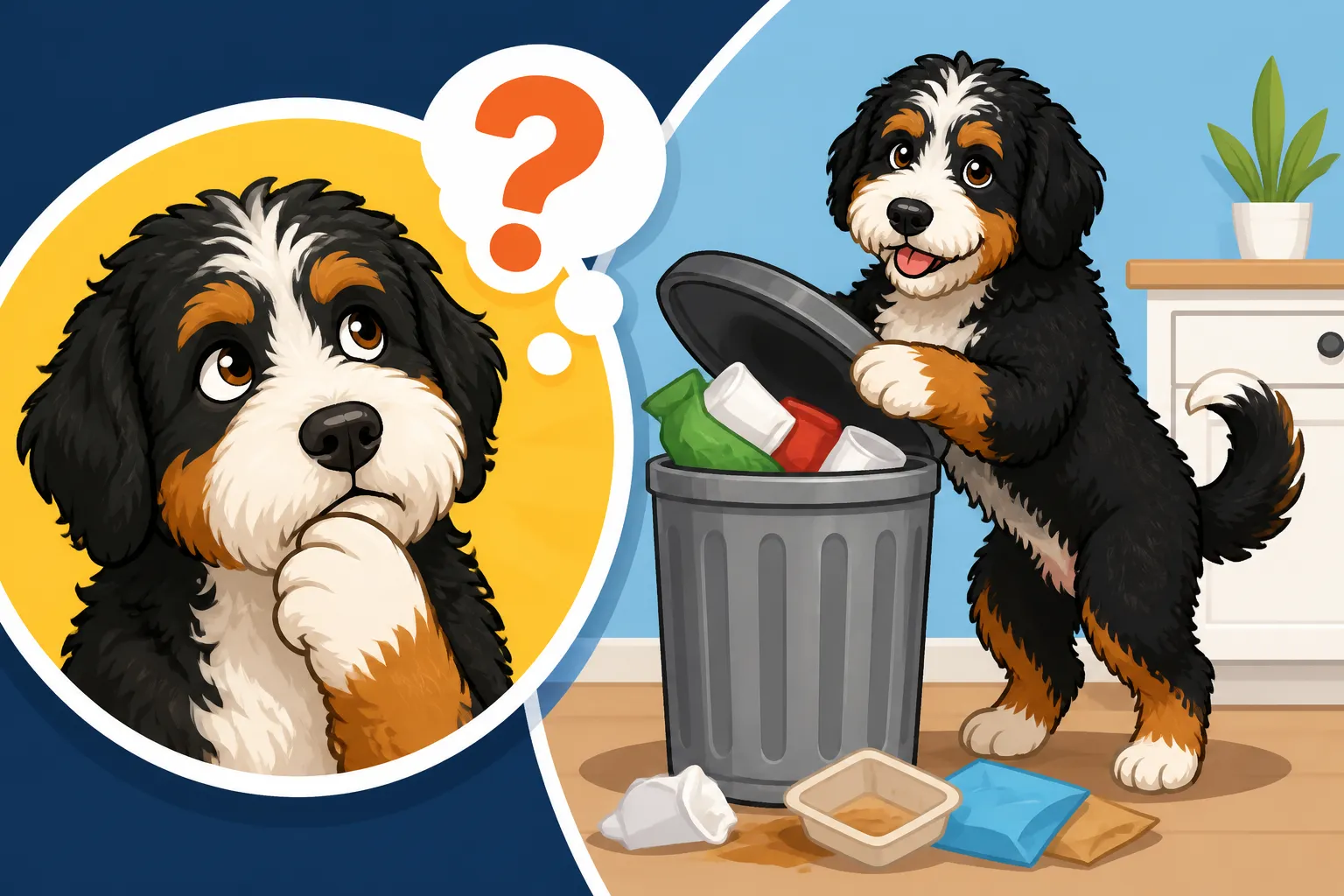
Coming home to a shredded trash bag, an overturned bin, and the tell-tale smell of last night's dinner spread across your kitchen floor is a frustration many dog owners know all too well. For those of us with Bernedoodles, their intelligence and often sizable stature can make them particularly adept at this culinary excavation. This guide will help you understand why your beloved Bernedoodle might be drawn to the garbage and, more importantly, how to implement practical strategies to keep your trash where it belongs and your dog safe.
The Irresistible Allure of the Trash Can for a Bernedoodle
It's easy to get upset when you find your Bernedoodle nose-deep in the garbage, but from their perspective, the trash can is a treasure trove. Understanding why they do it is the first step toward finding a lasting solution. They aren't trying to be naughty; they're simply being dogs, driven by instinct and curiosity.
The All-Powerful Scent Appeal
Imagine the incredible sense of smell your Bernedoodle possesses. While we might just smell "trash," they detect a complex symphony of delicious (to them) aromas: the lingering scent of that roast chicken, the crust from your pizza, even the banana peel you tossed in. To a dog, these aren't just remnants; they're potential food sources that their ancestors would have eagerly scavenged.
Their powerful noses are designed to find things, and the trash can is often broadcasting irresistible signals. They can smell through plastic bags, through bin liners, and sometimes even through the small gaps in a supposedly sealed lid. For a dog that's always on the hunt for something interesting, the garbage offers a constantly changing menu of novel and enticing smells. It's like an all-you-can-eat buffet that suddenly appears in their living space.
This strong olfactory drive means that simply asking them not to go near it isn't enough when their primal instincts are shouting "food opportunity!" It requires more than just a verbal command; it needs environmental management and consistent training to override that deeply ingrained drive.
Boredom and Curiosity: A Bernedoodle's Play
Bernedoodles are intelligent dogs, a wonderful trait that comes from both their Bernese Mountain Dog and Poodle heritage. However, that intelligence needs an outlet. If they're not adequately exercised, mentally stimulated, or left alone for long stretches, boredom can set in. And a bored Bernedoodle is a creative Bernedoodle.
For many dogs, rummaging through the trash becomes an exciting game. It's a puzzle to solve: how to get the lid off, how to pull the bag out, what interesting textures and objects are hidden inside. The sheer act of discovery, coupled with the reward of finding something edible (or just fun to chew), makes it a self-reinforcing activity. They might be genuinely curious about new smells and textures, leading them to explore anything new in their environment.
This often happens when they're left alone, as they look for ways to entertain themselves. If you suspect boredom is a factor, consider increasing their exercise, providing puzzle toys, or even enrolling in a positive reinforcement training class to give their clever brains a workout. A tired and mentally stimulated Bernedoodle is less likely to invent their own "games" involving the trash.
Attention-Seeking Behavior
Sometimes, a dog getting into the trash isn't just about hunger or boredom; it can also be a bid for attention. If you consistently react strongly when you catch them in the act – shouting, chasing, or even just giving them a lot of verbal feedback – they might learn that this behavior gets your focus. Even negative attention is still attention, and for some dogs, that's better than being ignored.
Consider if this behavior primarily happens when you're home but busy, or when you first arrive back. If they've been waiting for your interaction, a big mess might be their way of saying, "Hey, look at me! I need something!" This is especially true for Bernedoodles, who are often quite people-oriented and thrive on companionship and interaction.
While it's natural to react to a mess, try to keep your response calm and focused on cleaning up rather than scolding. Instead, actively seek out opportunities to reward them for good behavior and engage them in positive ways throughout the day, so they don't feel the need to create chaos for a reaction.
The Hidden Dangers Lurking in Your Bin
Beyond the sheer mess and the frustration, a Bernedoodle exploring the trash can poses significant health risks. It's not just about cleaning up; it's about protecting your furry family member from potentially serious harm. Many common household items are outright dangerous if ingested by a dog.
Health Hazards: Toxic Foods and Sharp Objects
Your kitchen trash can is a minefield of potential hazards for a curious Bernedoodle. Cooked bones, especially chicken bones, splinter easily and can cause internal perforations or blockages that require emergency surgery. Moldy food can contain tremorgenic mycotoxins, which can lead to neurological issues like tremors and seizures. Even seemingly innocuous items like coffee grounds, tea bags, and certain fruit pits are toxic. The Foods That Are Dangerous to a Bernedoodle is a great resource if you want to dive deeper into what your Bernedoodle should absolutely never eat.
Then there are the non-food items. Plastic wrappers and bags can become choking hazards or cause intestinal blockages. Aluminum foil, while not toxic, can have sharp edges after being crumpled. Batteries, cleaning supplies, human medications, and even dental floss pose severe risks. One wrong bite into a chemical or a sharp object could mean an expensive, urgent trip to the vet, or worse. The cost of such emergencies can be astronomical, not to mention the emotional toll of seeing your dog suffer.
It’s truly terrifying to think about what they might get their paws on. We often throw things away without a second thought, not realizing how appealing and dangerous they could be to a dog with an insatiable curiosity and powerful jaws.
Behavioral Issues: Resource Guarding and Counter Surfing
Allowing your Bernedoodle to successfully raid the trash can, even occasionally, reinforces a deeply undesirable behavior. Every time they succeed, they learn that the trash is a "resource" that can be obtained. This can easily lead to other problematic behaviors, such as resource guarding, where they become possessive over found items and might even growl or snap if you try to take them away. This can be a particularly tricky problem to undo, especially with a large, strong dog.
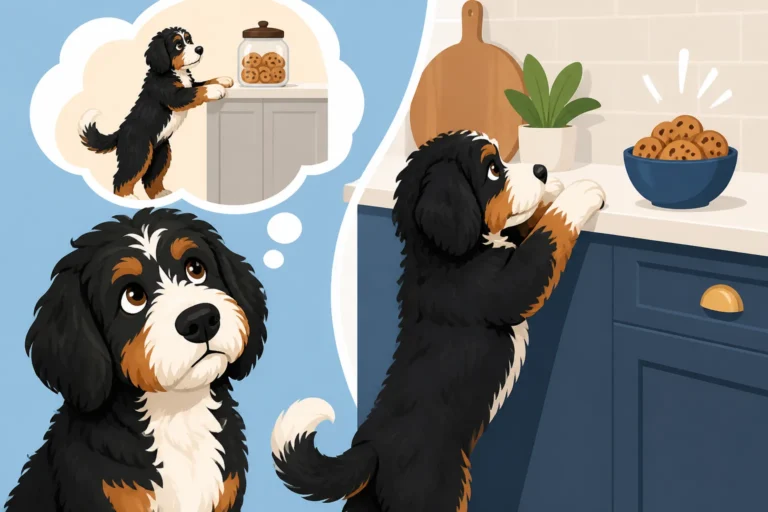
The trash can is often a gateway to other "forbidden" surfaces. If they can get into the low-lying kitchen bin, they might start testing their limits with kitchen counters, leading to frustrating counter surfing incidents. They learn that height isn't always a barrier when there's a tasty reward involved. Whether a Bernedoodle Steals Food talks more about this common issue.
Breaking these habits once they're established is much harder than preventing them in the first place. Consistency is key, because one successful trash raid can set back weeks of training and effort, undoing the perception that the trash is off-limits.
The Sheer Mess: Beyond Just Food Scraps
Let’s be honest, the aesthetic and hygienic nightmare of a trash can explosion is enough to drive anyone crazy. It’s not just the food scraps; it’s the coffee filters, the crumpled paper towels, the general detritus of daily life, all spread across your clean floor. And let's not forget the inevitable chewing and shredding that accompanies a successful trash raid.
Beyond the immediate mess, there's the lingering odor. Trash juice can soak into rugs and even wooden floors, leaving a smell that's incredibly difficult to eliminate. The risk of bacteria and germs being tracked through your home after your Bernedoodle has been playing in the garbage is also a significant concern, especially if you have young children or anyone with a compromised immune system in the house.
It’s a battle on multiple fronts: sanitation, safety, and your sanity. Knowing the potential consequences makes investing in effective prevention even more critical.
Strategies for a Trash-Proof Home
Preventing your Bernedoodle from getting into the trash requires a multi-faceted approach, combining environmental management with consistent training. It’s about making the wrong choice impossible or unattractive, and teaching them what is acceptable.
Securing Your Bins: The First Line of Defense
The absolute simplest and most effective way to prevent trash raids is to make the trash inaccessible. This might seem obvious, but many owners underestimate how clever and determined a Bernedoodle can be. A standard open-top bin or a flimsy lid simply won't cut it.
Invest in a heavy-duty, dog-proof trash can. Look for models with secure, locking lids or ones that require a specific action (like a foot pedal) that a dog can't easily mimic. Some bins have motion-sensor lids, which can deter casual sniffing, though a determined Bernedoodle might still figure out how to trigger it. Stainless steel bins with strong internal mechanisms are often a good bet, as they are too heavy to tip over easily and too robust to chew through. You can find many excellent options on Amazon, from pedal-operated to sensor-activated models. Remember, if your Bernedoodle is particularly persistent, even a good lid might not be enough if the bin itself can be knocked over.
Another option is to simply keep your trash in a cabinet with child-proof locks, or in a pantry or garage that your Bernedoodle cannot access. If you're out of the house, make it physically impossible for them to get to it. Even if you're home, getting into the habit of immediately putting smelly waste into an inaccessible location, like an outdoor bin, can reduce the temptation. This is about changing your habits as much as their behavior.
Training "Leave It" and "Off" Commands
While securing the trash is paramount, training your Bernedoodle solid "leave it" and "off" commands provides an invaluable backup plan for those moments when life happens, and a piece of trash ends up on the floor. These commands teach impulse control and respect for boundaries.
"Leave It" is taught by placing a low-value treat on the floor and covering it with your hand. When your dog investigates, say "Leave it." The moment they look away from the treat to you, praise them and reward them with a different, higher-value treat from your other hand. Gradually increase the value of the "forbidden" item and the distance. Practice this repeatedly in different environments. This teaches them that ignoring something good can lead to something even better from you. Whether a Bernedoodle Ignores a Command It Knows can offer insights into their learning style.
"Off" is for when they are on something they shouldn't be, like a counter or furniture. The goal is to get all four paws on the floor. Lure them off with a treat, say "Off" as they step down, and reward them. Make sure to reward them away from the forbidden surface. Consistency is key here; every time they jump up, they need to hear "Off" and be guided down. This takes patience, especially with a dog that loves to lean and be close to people, which Bernedoodles often do.
Managing the Environment: Setting Up for Success
Environmental management is more than just securing the bin; it's about minimizing opportunities for failure. This is especially critical when your Bernedoodle is young and still learning, or if they have a history of trash diving.
When you leave the house, even for a short time, consider crating your Bernedoodle or confining them to a dog-proofed room where no trash is accessible. This not only protects your belongings but, more importantly, keeps them safe from ingesting something harmful. If they suffer from separation anxiety, this can be a more complex issue, and What a Bernedoodle Wrecks When Left Alone offers additional strategies.
Regularly empty smaller bathroom or office trash cans, or ensure they also have secure lids. If you're cooking, immediately wipe up spills and dispose of scraps directly into an outdoor bin if possible, rather than letting them sit in the indoor trash. Don't leave grocery bags or shopping bags on the floor where they might contain interesting new smells that could lead your Bernedoodle to explore. Remember, a clean environment is a less tempting environment.
When All Else Fails: Advanced Management & Training
Sometimes, even with all the best intentions and initial strategies, Bernedoodles can be incredibly persistent. If your dog is still finding ways to outsmart your efforts, it's time to double down on management and consider more intensive training.
Consequences vs. Management: The Importance of Prevention
It's tempting to think that catching your Bernedoodle in the act and delivering a sharp "No!" will solve the problem. However, dogs don't always connect the punishment with the act itself, especially if the "consequence" comes moments after they've already enjoyed the illicit snack. They might learn to be sneakier or only get into the trash when you're not around. Punishing them after the fact often just teaches them to fear your return or to hide their behavior.
Instead of focusing on consequences, lean heavily into proactive management. This means making it impossible for them to fail. If your Bernedoodle is a master escape artist with bins, then the ultimate management is removing the bins from their accessible space entirely when you can't supervise. This might mean only having open bins in rooms they never enter, or moving all kitchen trash directly to an outdoor receptacle. It’s not about giving up, but about recognizing their strong instincts and setting them up for success.
Remember, every time they succeed in getting into the trash, they are rewarded by the "treasure" they find, reinforcing the behavior. Your goal is to break that cycle by eliminating the opportunity for self-reward.
Reinforcing Good Habits and Positive Outlets
While you're busy trash-proofing your home, don't forget to actively reward and encourage good behavior. When your Bernedoodle ignores the trash, even accidentally, offer praise and a treat. If they are lying calmly nearby while you dispose of something, acknowledge that good choice. This helps build positive associations with leaving the trash alone.
Consider enrolling your Bernedoodle in an online training program like those offered by BAXTER & Bella. These programs often provide structured lessons for impulse control, obedience, and mental stimulation that can directly address the underlying reasons for trash diving. A professional trainer, either in-person or online, can also offer tailored advice for your specific situation. Whether a Bernedoodle Needs a Professional Trainer is a good read if you're considering this step.
Ensure your Bernedoodle has plenty of appropriate outlets for their energy and intelligence. Regular exercise, interactive toys, chew items (like Kongs filled with frozen peanut butter), and regular training sessions can help satisfy their natural urges in constructive ways. A Bernedoodle that is well-exercised and mentally engaged is less likely to resort to raiding the trash out of boredom or frustration.
Here's a quick comparison of common trash bin types and their Bernedoodle-proofing effectiveness:
| Trash Bin Type | Bernedoodle-Proofing Level | Pros | Cons |
|---|---|---|---|
| Open Top Bin | Very Low | Cheap, easy access for humans | No barrier for dogs, easily tipped, high odor leakage |
| Swing Lid Bin | Low | Some visual barrier, slightly harder for quick grabs | Lids are often light and easily pushed/lifted, can still be tipped |
| Foot Pedal Bin | Medium | Hands-free operation, lid stays closed until pedal is pressed | Smart dogs can learn to press the pedal, larger dogs can tip easily |
| Latching Lid Bin | High | Requires a specific latch or lock mechanism | Can be inconvenient for frequent human use, latches can wear out |
| Motion Sensor Bin | Medium to High | Automatic opening/closing, can deter casual sniffing | Some dogs learn to trigger sensors, batteries needed, can be expensive |
| Heavy Duty Locking Bin | Very High | Designed to prevent animal access, durable, often large capacity | Can be bulky, more expensive, might require more effort to open/close |
| Cabinet/Pantry Bin | Very High | Completely out of sight and reach (if cabinet is secured) | Requires available cabinet space, cabinet might need child locks |
Ultimately, keeping your Bernedoodle safe and your home clean from trash invasions is a marathon, not a sprint. It takes vigilance, consistency, and a good understanding of your dog's motivations. With the right strategies, you can enjoy your wonderful companion without the constant worry of what they might pull out of the bin next.
Disclaimer
This article is for general informational purposes only and does not constitute professional advice. Laws, prices and regulations vary by location and change over time. Consult a qualified professional for guidance on your specific situation.