Teaching a Bernedoodle Not to Pull at Eighty Pounds
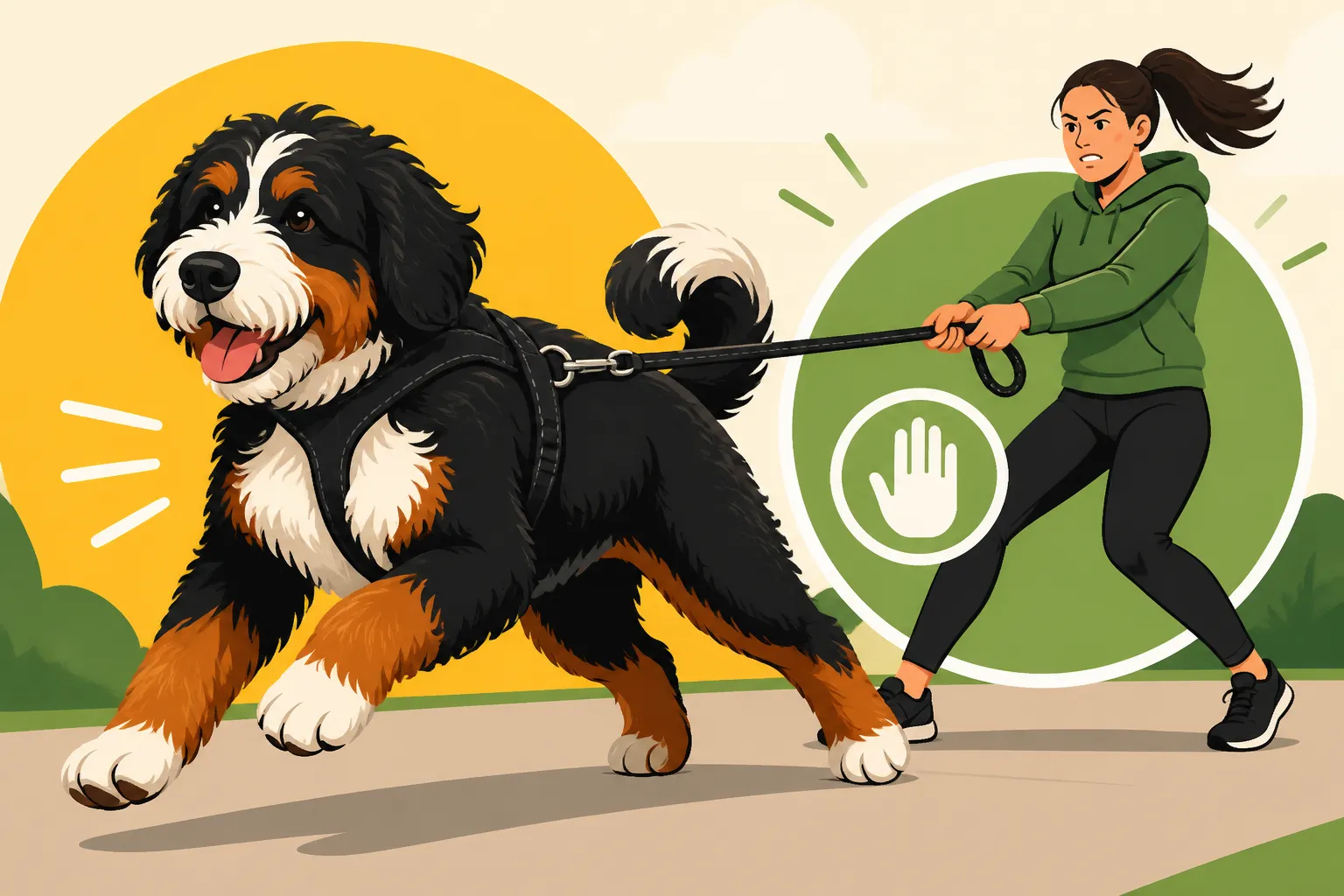
There's nothing quite like the feeling of being completely bowled over or having your shoulder wrenched out of its socket because your otherwise sweet, eighty-pound Bernedoodle decided a leaf was the most fascinating thing on the planet, and you were just along for the ride. It's frustrating, it's embarrassing, and honestly, it can be downright dangerous, especially if you're caught off guard or if there are other people or dogs around. This comprehensive guide is here to walk you through exactly how to teach your strong, joyful Bernedoodle to walk politely on a leash, transforming those tug-of-war sessions into enjoyable strolls for both of you.
Understanding Why Your Bernedoodle Pulls
Let's face it, your Bernedoodle isn't trying to be difficult. They're not actively plotting to dislocate your shoulder. Their world is a vibrant tapestry of smells, sounds, and sights, and their natural instincts, combined with their sheer enthusiasm and strength, often lead to pulling on the leash. Understanding the root causes of this behavior is the first step toward effectively addressing it.
The Instinct to Pull
Dogs are natural explorers, and their noses lead the way. For a Bernedoodle, with their intelligent Poodle heritage and the curious, often scent-driven Bernese Mountain Dog side, every walk is an adventure waiting to happen. They want to get to that interesting patch of grass, investigate the new scent left by another dog, or greet every person and squirrel they see. For them, pulling on the leash is simply the most efficient way to get where they want to go, or to experience what they want to experience, faster. They haven't learned that a loose leash means they get to move forward, and a tight leash means the fun stops. This isn't malicious; it's just pure, unadulterated dog logic.
Size and Strength vs. Training Gap
When you have a seventy, eighty, or even ninety-pound dog like a standard Bernedoodle, their physical strength is significant. Even a relatively small amount of pulling from a dog this size can feel like a major tug to a human. Many Bernedoodles grow very quickly, often reaching their full size before they've fully matured mentally or had extensive leash training. This creates a gap: a giant, strong puppy brain that still wants to explore everything with the physical capability to drag you along. It's not uncommon for owners to feel overwhelmed by their dog's power, leading to inconsistent training or simply resigning themselves to being pulled. The key is recognizing that their strength requires consistent and deliberate training, rather than just hoping they'll "grow out of it."
Excitement and Distractions on Walks
Walks are often the highlight of a Bernedoodle's day, especially if they spend a lot of time indoors. The sheer excitement of going outside, coupled with the myriad of new stimuli, can be overwhelming. A sudden sight of another dog, the smell of a discarded french fry, or a friendly passerby can instantly hijack their attention and trigger a strong surge forward. For a Bernedoodle, this excitement is a powerful motivator, often overriding any basic leash manners they might have learned in a quiet environment. It's why they might walk perfectly in your backyard but become a freight train the moment you hit a busy street. We have to teach them to manage that excitement and still pay attention to us, even amidst the chaos.
Essential Gear for Managing a Strong Puller
Before we even dive into training techniques, let's talk about gear. The right equipment can make a monumental difference in your ability to manage an eighty-pound Bernedoodle who pulls. It's not a substitute for training, but it's a vital tool to give you control and make training sessions safer and more effective for everyone.
Harnesses That Make a Difference
Forget the standard collar when you're dealing with a powerful puller; it can put undue pressure on your Bernedoodle's neck and throat, which is not only uncomfortable for them but also less effective for control. Front-clip harnesses are a game-changer. Unlike back-clip harnesses that simply give your dog a better leverage point to pull you forward, a front-clip harness redirects their forward momentum. When your Bernedoodle pulls, the leash attaches to a ring on their chest, causing them to turn to the side rather than allowing them to lean into the pull. This makes it much harder for them to gain traction and teaches them that pulling changes their direction in an undesirable way.
There are many styles out there, from simple nylon designs to more padded, ergonomic options. Brands like Easy Walk and Freedom No-Pull Harness are popular choices that many Bernedoodle owners swear by. You can find a wide variety of these options on platforms like Amazon, making it easy to compare features and read reviews from other large dog owners. When selecting one, ensure it fits properly—snug enough that they can't back out, but not so tight it chafes or restricts movement. The Harness That Holds a Ninety Pound Bernedoodle can provide more in-depth insights into choosing the right one.
Leash Choices for Control
While a standard six-foot nylon or leather leash is often perfectly adequate, when you're working with a strong puller, some specific considerations can help. Avoid retractable leashes entirely; they teach dogs that pulling extends their range, which is the exact opposite of what we want. A sturdy, non-extendable leash made of durable material like braided nylon or leather is ideal.
For a Bernedoodle, a thicker, more comfortable grip can also be beneficial, especially if your hands get sore from consistent pulling. Look for leashes with padded handles or those made from materials that won't dig into your hands. Some leashes also come with an extra loop closer to the clip, sometimes called a "traffic handle," which allows you to quickly shorten the leash for close control in busy areas without fumbling. The length is important too; six feet is standard for good reason, offering enough slack for sniffing while still allowing you to keep your dog close.
Head Halters for Extra Leverage
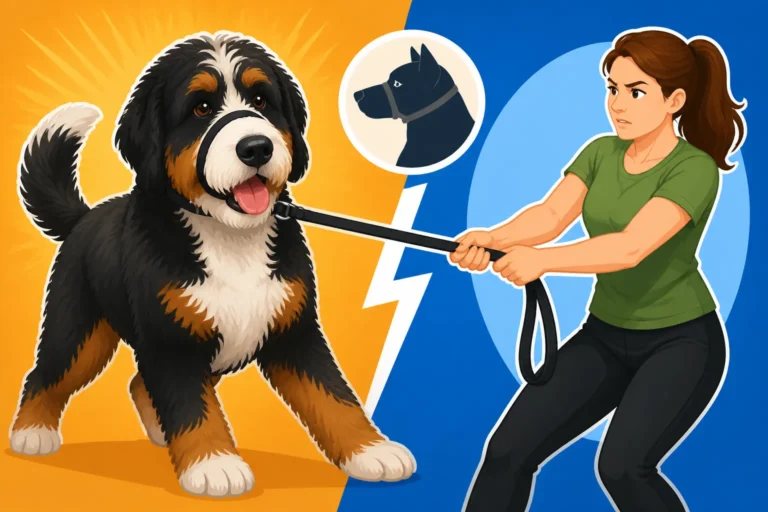
For some Bernedoodles, especially those with an extremely strong pull reflex or who are highly reactive to distractions, a head halter can be an invaluable tool. These halters, like the Gentle Leader or Halti, fit over your dog's snout and around their neck, giving you steering control much like a horse's halter. When your dog pulls, gentle pressure is applied to their muzzle, turning their head to the side and making it physically uncomfortable (though not painful) to pull forward.
It’s crucial to introduce a head halter slowly and positively. Many dogs initially resist them because they feel unusual on their face. Start by letting your Bernedoodle wear it for short periods with lots of treats and praise, gradually increasing the time. Never use a head halter as a punishment, and always pair it with positive experiences. For an eighty-pound Bernedoodle, the added leverage a head halter provides can give you the confidence and control you need to begin teaching polite leash manners effectively, especially if you feel completely overpowered by their strength.
Foundational Training Techniques to Stop Pulling
Now that we've covered the essential gear, it's time to dive into the nitty-gritty of training. Stopping a Bernedoodle from pulling requires patience, consistency, and a clear communication strategy. We're essentially teaching them a new language of walking, where a loose leash means good things happen, and a tight leash means progress halts.
Lure and Reward for Loose Leash Walking
This technique is all about positive reinforcement and making your presence the most rewarding thing on the walk. Start in a low-distraction environment, like your home or backyard. Hold a treat near your Bernedoodle's nose and lure them into position beside you. Take a single step. If they walk with a loose leash for that step, immediately mark the behavior with a verbal cue ("Yes!" or a clicker) and reward them with the treat. Repeat this, gradually increasing the number of steps you take before rewarding, always ensuring the leash remains loose.
The goal is to teach your Bernedoodle that staying beside you with a loose leash is what earns them treats, praise, and forward movement. If they pull, simply stop. Don't yank or scold; just become a "tree." Wait for the leash to go slack, even for a moment, then immediately reward and resume walking. This teaches them that pulling gets them nowhere, but a relaxed leash restarts the fun. This process takes time, especially for a dog whose default is to pull, but consistency is key. Think of it as building a strong foundation for future success. You might find resources like those offered by BAXTER & Bella helpful for structured online guidance on these foundational steps.
The "Tree" Method and Changing Direction
Building on the lure and reward, the "tree" method is an invaluable tool for correcting pulling in the moment. When your eighty-pound Bernedoodle lunges forward, pulling the leash taut, immediately stop walking. Become utterly still, like a tree rooted to the spot. Do not move forward, do not talk, do not yank the leash. Just stand there. Your Bernedoodle will likely be confused, turn to look at you, or eventually relax the tension on the leash. The instant the leash goes slack, even for a second, praise them softly and take a step forward. If they pull again, immediately stop again. Repeat, repeat, repeat. This teaches them that tension on the leash stops the walk, and a loose leash makes it continue.
Another effective technique is changing direction. If your Bernedoodle starts to pull, calmly turn and walk in the opposite direction, or make a sudden ninety-degree turn. This takes them by surprise and forces them to re-engage with you to figure out where you're going. Again, the moment they adjust and the leash slackens, reward them. The more unpredictable your path becomes when they pull, the more they learn that paying attention to your movement, rather than leading the way, is beneficial. This is particularly useful in environments where simply stopping as a tree might be impractical or dangerous, like a busy sidewalk.
Consistency and Practice in Different Environments
Training a Bernedoodle not to pull isn't a one-and-done deal. It's a continuous process that requires unwavering consistency from you. Every single walk, every time you attach that leash, is a training opportunity. If you let them pull "just this once" because you're in a hurry or tired, you're inadvertently reinforcing the pulling behavior. Think of it: they learn that sometimes pulling works, which makes them try it again next time.
Start your training in a quiet, familiar environment where distractions are minimal. Once your Bernedoodle is consistently walking nicely there, gradually introduce more stimulating environments. Take short walks around your block during quiet times, then eventually venture to slightly busier parks or trails. Each new environment is a chance to "proof" their training, showing them that the rules of loose-leash walking apply everywhere. Remember to keep early sessions in new places short and end on a positive note. Don't be discouraged if they regress a bit in a new, exciting place; that's normal. Just go back to basics, reduce distractions, and slowly build up again. The Exercise a Standard Bernedoodle Needs Daily should also include these structured, calm walks, not just high-energy romps.
| Leash Walking Aid | How it Works | Pros | Cons | Ideal For |
|---|---|---|---|---|
| Flat Collar | Attaches leash to a ring around the neck | Simple, common, good for ID tags | No control over pulling, can cause neck strain, easy to slip out | Dogs with excellent leash manners, short training sessions |
| Front-Clip Harness | Leash attaches to a ring on the chest | Redirects pulling motion, less strain on neck, better control | Can tangle legs if not fitted correctly, may chafe some dogs | Strong pullers, dogs with neck sensitivities |
| Back-Clip Harness | Leash attaches to a ring on the back | Comfortable, good for small dogs or those without pulling issues | Gives large dogs leverage to pull harder, less control | Small dogs, dogs learning to walk, non-pullers |
| Head Halter | Fits over snout and behind ears, like a horse halter | Excellent control, humane redirection of head and body | Requires careful introduction, some dogs strongly dislike it | Very strong pullers, reactive dogs, those needing maximum control |
| Martingale Collar | Loop tightens evenly when dog pulls, preventing escape | Prevents slipping out, humane correction when properly used | Not for constant pulling, can still cause neck pressure | Dogs with narrow heads, escape artists, secondary to training |
Addressing Common Challenges and Setbacks
Even with the best intentions and consistent training, you're going to hit roadblocks. It's completely normal when working with a large, intelligent, and sometimes The Stubborn Streak Under a Bernedoodle's Poodle Brain like a Bernedoodle. The key is to anticipate these challenges and have strategies ready to overcome them, rather than getting frustrated and giving up.
When Excitement Overwhelms Training
We've all been there: your Bernedoodle is walking beautifully, then suddenly, a squirrel darts across the path, a child squeals with delight, or another dog appears. Instantly, all your hard work seems to vanish as they lunge forward with surprising force. When excitement gets the better of your Bernedoodle, it means they've gone "over threshold"—they're too stimulated to think clearly or respond to commands.
The best strategy here is prevention and management. If you know a particular area is going to be high-distraction, either avoid it during early training or be extra prepared. Use your high-value treats (like cooked chicken or cheese) to get and hold their attention before the distraction becomes too overwhelming. Practice "look at me" commands in quieter settings, so you can call on it when distractions arise. If they do lunge, use your chosen management tool (front-clip harness, head halter) to regain control, then immediately disengage from the distraction. Turn around, create distance, or find a barrier to block their view. The goal is to get them back to a calm state below their threshold before attempting to move forward again. You might even have to just sit down with them until they calm down.
Dealing with Stubbornness or Regression
Bernedoodles, bless their hearts, can definitely have a stubborn streak. You might feel like they understand loose-leash walking one day, only to completely forget it the next. This isn't usually spite; it's often a combination of testing boundaries, adolescent "brain fog" (especially around 8-18 months), or simply needing more consistent practice in varying situations. Whether a Bernedoodle Ignores a Command It Knows is a common frustration, and pulling is no exception.
If your Bernedoodle seems to regress, don't get angry. Go back to basics. Seriously, start over in your living room if you have to. Shorten your training sessions, increase your treat value, and ensure you're rewarding even tiny moments of success. Sometimes a change in reward can make a big difference—what a Bernedoodle will work for can vary from day to day or dog to dog. Are they bored of kibble and now need cheese? Are they overstimulated and need a quieter environment? Re-evaluate your approach. Ensure everyone in the household is using the same commands and methods; inconsistency from different family members can completely undermine your efforts.
Seeking Professional Help When Needed
There's absolutely no shame in admitting you need a little extra help, especially when you're dealing with an eighty-pound powerhouse! Sometimes, an outside perspective from a professional dog trainer can be invaluable. They can observe your specific dynamic, identify subtle cues you might be missing, and tailor a training plan specifically for your Bernedoodle's personality and your lifestyle.
A good trainer will use positive, force-free methods and focus on teaching you how to communicate effectively with your dog. They can help you troubleshoot specific pulling triggers, refine your leash handling skills, and build your confidence. Look for trainers certified by reputable organizations and ask about their experience with large breeds or Bernedoodles specifically. Whether a Bernedoodle Needs a Professional Trainer is a question many owners ask, and if you're feeling overwhelmed or frustrated, the answer is usually yes, it's worth it. An investment in professional guidance early on can save you years of struggle and make your relationship with your Bernedoodle much more enjoyable.
Long-Term Strategies for a Well-Behaved Walker
Teaching your Bernedoodle not to pull at eighty pounds is a journey, not a destination. Maintaining those good habits and ensuring walks remain enjoyable for their entire life requires a holistic approach that goes beyond just the leash. It's about meeting their needs, building a strong bond, and consistently reinforcing the behaviors you want to see.
Regular Exercise and Mental Stimulation
A tired Bernedoodle is generally a well-behaved Bernedoodle. These dogs have energy, and if it's not channeled constructively, it often comes out in undesirable ways, like excessive pulling on the leash. Ensuring your Bernedoodle gets adequate physical exercise before a training walk can make a huge difference. A quick game of fetch in the yard, a supervised romp with a dog friend, or even some structured playtime can take the edge off their excitement and help them focus better on their leash manners.
Beyond physical activity, mental stimulation is equally vital. Bernedoodles are intelligent and thrive on having their brains engaged. Puzzle toys, scent work games, trick training, or even just regular obedience sessions can help exhaust their minds. A mentally stimulated dog is less likely to be overwhelmed by external stimuli on a walk because their brain is used to focusing and problem-solving with you. What a Bernedoodle Needs Every Day includes a balance of both physical and mental enrichment, which directly contributes to better leash behavior.
Building a Strong Bond Beyond the Leash
Leash manners are just one small piece of the puzzle in your relationship with your Bernedoodle. When your dog sees you as a reliable leader, a source of comfort, and the ultimate giver of good things, they are much more likely to want to work with you, even when temptations arise. Spend quality time together off-leash in safe, fenced areas. Engage in play that you both enjoy. Practice positive reinforcement for all good behaviors, not just on walks.
This strong, positive bond creates a foundation of trust and respect. Your Bernedoodle learns that paying attention to you brings rewards and makes life more enjoyable. This translates directly to walks: they're more inclined to check in with you, respond to your cues, and seek your guidance when faced with distractions because they value your presence and partnership above all else. This connection is priceless, especially when you're Raising a Bernedoodle Puppy That Will Outweigh You.
Continued Reinforcement and Proofing
Just like humans, dogs can forget things if they're not regularly practiced. Continued reinforcement of loose-leash walking throughout your Bernedoodle's life is essential. This doesn't mean every walk has to be a formal training session, but it does mean never letting them consistently get away with pulling. Continue to reward good behavior, even with just a verbal "Good dog!" or a quick pat.
Periodically, revisit more challenging environments to "proof" their training. This means practicing in new places with different distractions, slowly increasing the level of difficulty. If you notice a particular type of distraction (like squirrels or children) causes them to pull, specifically practice around those distractions, starting from a distance and gradually moving closer as they show improvement. The more situations your Bernedoodle experiences loose-leash success in, the more ingrained the behavior becomes. Remember, teaching a dog not to pull, particularly a large and powerful one, is an ongoing commitment, but the reward of peaceful, enjoyable walks together is absolutely worth every effort.
Disclaimer
This article is for general informational purposes only and does not constitute professional advice. Laws, prices and regulations vary by location and change over time. Consult a qualified professional for guidance on your specific situation.