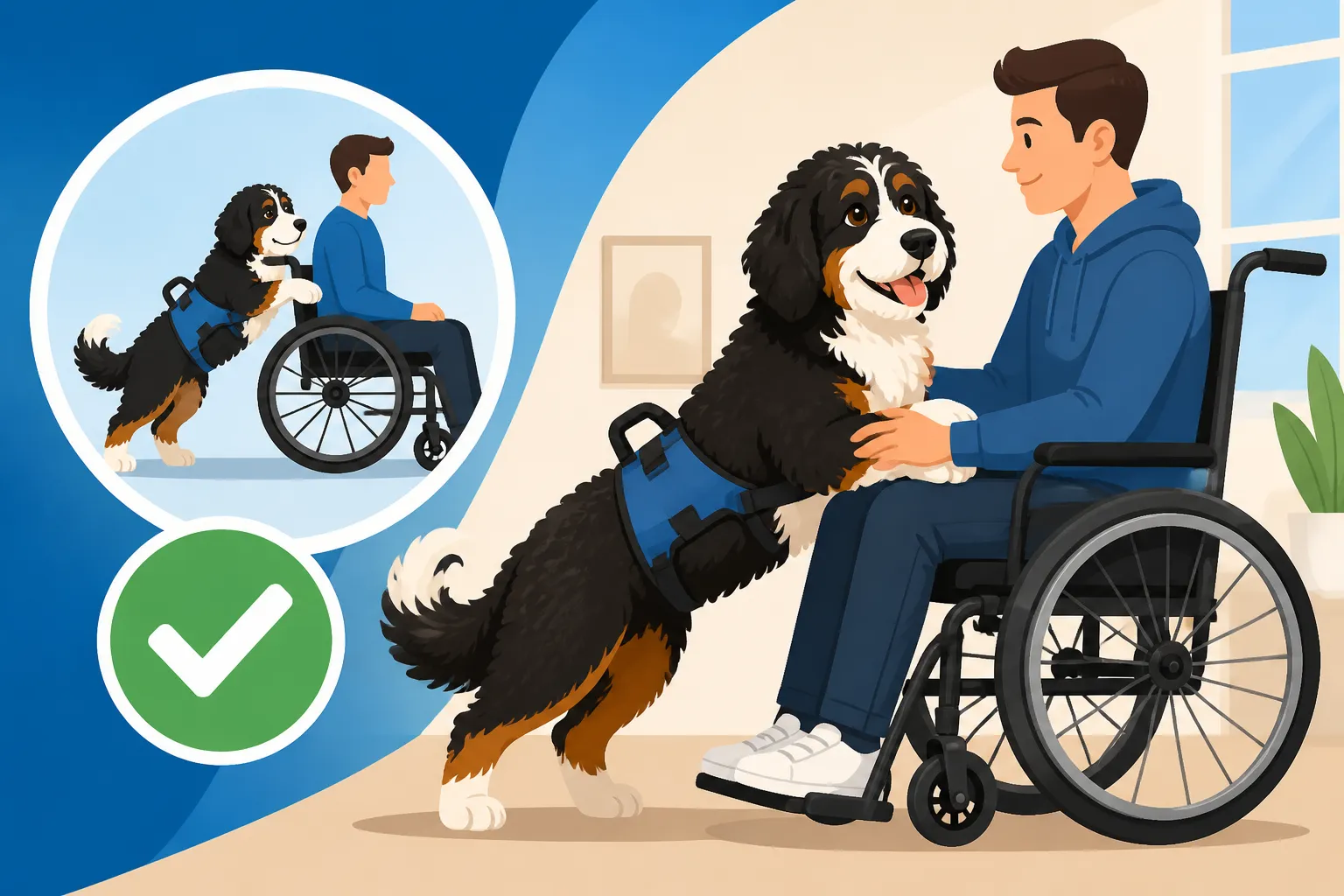
Whether a Bernedoodle Can Brace for a Wheelchair User
It’s a deeply personal journey when you’re a wheelchair user, and you begin to consider whether a canine companion could not only enrich your life but also actively assist you. One of the most sought-after forms of assistance is "bracing," where a dog provides a steady anchor or support for balance and stability. This guide aims to thoroughly explore whether the loving, sometimes goofy, and often substantial Bernedoodle possesses the unique blend of physical attributes and trainable temperament to truly brace for a wheelchair user, diving into the realities, challenges, and immense rewards.
Understanding Bracing and the Bernedoodle's Potential
When we talk about a dog bracing for a wheelchair user, it’s not just about a dog being nearby; it's about a highly trained animal providing crucial physical support. This type of service work requires a specific combination of physical strength, stable temperament, and intensive training. It’s a serious commitment from both the dog and the handler, and for a Bernedoodle, it presents both exciting possibilities and definite challenges.
What Does "Bracing" Really Mean for a Wheelchair User?
Bracing, in the context of service dogs, generally refers to a dog acting as a stable support for a person to lean on, primarily to help with balance when standing up from a seated position, maintaining balance while walking short distances, or stabilizing themselves during transfers to and from a wheelchair. It's not about the dog pulling the wheelchair, but rather being a steady, immovable anchor. Imagine needing to shift your weight or needing just a bit of extra stability to get from your chair to a bed or a couch. A well-trained bracing dog can position itself firmly, allowing you to place hands on its shoulders or back and use its solid mass to steady yourself. This requires a dog that can hold a "stand-stay" with immense focus and remain unmoving even with significant pressure.
The effectiveness of bracing depends heavily on the dog’s physical structure and temperament. A dog that is too small, too weak, or too easily distracted simply won't be able to perform this task reliably or safely. For a wheelchair user, safety is paramount; a dog that falters could lead to a fall and serious injury. Therefore, the selection and training of a bracing dog are incredibly rigorous, far beyond typical pet obedience.
Physical Attributes of a Bernedoodle for Stability and Support
When it comes to physical attributes, the standard Bernedoodle certainly checks many boxes for bracing. These are generally large, robust dogs. A The Height and Weight of a Standard Bernedoodle can easily reach 70 to 90 pounds, or even more, providing the necessary heft and low center of gravity to act as a stable anchor. Their bone structure is substantial, inherited from the Bernese Mountain Dog side, which is inherently built for strength and draft work. You can see this in their ability to engage in activities like The Draft Dog Work a Bernedoodle Can Still Do, where they pull carts with significant weight. This natural strength translates well into holding a firm, unyielding brace.
Their dense, often wavy coat provides a good grip point, though not as critical as their underlying muscle and bone. What's vital is their overall sturdy build. However, this also means attention to joint health is paramount. A dog that is constantly bracing will put extra strain on its joints, making it crucial to select a puppy from parents with excellent health clearances for hips and elbows. Neglecting this could lead to a working dog experiencing pain and early retirement, which is heartbreaking for both dog and handler.
Temperamental Traits: Are Bernedoodles Up to the Task?
This is where the Bernedoodle truly shines, but also where careful selection comes in. Bernedoodles are known for being incredibly affectionate, loyal, and eager to please, often demonstrating a deep desire to be near their people. This "clingy" nature, as some might call it, can actually be an asset in service work, fostering a strong bond and willingness to work. They often possess a wonderful blend of the Bernese's calm, gentle demeanor and the Poodle's intelligence and trainability. This intelligence makes them capable of learning complex tasks and commands, which is non-negotiable for a service dog. They can be incredibly focused when engaged in a task they understand and enjoy.
However, it's also true that Bernedoodles can have a playful, sometimes goofy streak, and they can inherit a The Stubborn Streak Under a Bernedoodle's Poodle Brain. This isn't necessarily a deal-breaker, but it means that the individual dog's personality and an owner's commitment to consistent, positive reinforcement training are key. A Bernedoodle's inherent desire to please needs to be channeled into the serious work of bracing. We're looking for a dog with a solid, unflappable temperament, not one prone to sudden distractions or anxieties. Early and extensive socialization is crucial to ensure they are Whether a Bernedoodle Is Steady Enough for Public Access in all sorts of environments, from quiet homes to bustling public spaces.
The Journey of Training a Bernedoodle for Bracing Work
Training a service dog for bracing is a marathon, not a sprint. It’s a specialized field that goes far beyond typical pet obedience classes. It demands unwavering commitment, patience, and often the guidance of experienced professionals to shape a Bernedoodle into a reliable and safe bracing partner.
Early Foundations: Puppyhood Socialization and Basic Obedience
The journey starts the moment you bring your Bernedoodle puppy home. Comprehensive socialization is foundational for any service dog. Expose your puppy to a wide variety of sights, sounds, people, and environments in a positive way. This includes everything from noisy city streets to quiet doctor's offices, different types of flooring, and people using various mobility aids. The goal is for your Bernedoodle to be unfazed by novel situations, calmly observant rather than fearful or overly excitable. This early work helps build confidence and adaptability, traits essential for a working dog.
Alongside socialization, mastering basic obedience is crucial. Commands like "sit," "stay," "down," and "come" must be rock-solid, performed reliably under any distraction. Leash manners are equally critical, especially when you're working with a large breed. Leash Manners on a Bernedoodle Heading for Ninety Pounds is not just about polite walks; it's about ensuring the dog doesn't inadvertently pull or disrupt the handler's balance. Using positive reinforcement methods from the start, such as clicker training and high-value treats, will build a strong bond and make learning enjoyable for your intelligent Bernedoodle. Resources like online training programs, such as those offered by BAXTER & Bella, can provide a structured curriculum and support for these foundational stages, guiding you through everything from potty training to polite greetings.
Specialized Bracing Techniques and Advanced Commands
Once basic obedience is flawless, the real work of bracing begins. This involves teaching specific commands and positions tailored to bracing. The dog needs to learn to stand or lie down firmly in place, often with specific cues like "brace" or "steady." They must learn to accept weight being placed on them without shifting, flinching, or breaking position. This is often taught by gradually introducing pressure, first with a light hand, then increasing weight slowly, always rewarding the dog for maintaining its position.
A key command will be a solid "stand-stay" where the dog holds its body rigid. For wheelchair transfers, the dog might learn to position itself at a specific angle next to the chair, allowing the user to lean or push off its back or shoulders. This isn't just about strength; it's about understanding and responding precisely to the handler's needs. The dog also needs to understand spatial awareness – how to navigate tight spaces with a wheelchair, how to block pedestrian traffic safely when bracing in public, and how to ignore distractions like food dropped on the floor or other animals. Many of these specialized tasks are best learned under the direct guidance of a professional service dog trainer who has experience with bracing.
Overcoming Training Hurdles: Patience, Consistency, and Professional Help
Training a Bernedoodle for bracing will undoubtedly come with its share of hurdles. Their intelligent Poodle side might mean they learn quickly, but their Bernese side can sometimes bring a slower, more thoughtful approach, which some might interpret as stubbornness. Patience is your most important tool. Consistency in training is paramount; every family member must use the same commands and expectations. What A Bernedoodle That Leans on Everyone in affection needs to understand is when that leaning translates to focused, stable support for bracing.
If you encounter difficulties, don't hesitate to seek professional help. A qualified service dog trainer can assess your Bernedoodle's unique personality and tailor training methods to address specific challenges, whether it's building more confidence, refining a specific bracing technique, or working through public access etiquette. Online communities and platforms, including those found on Amazon for specialized training books or even dedicated forums, can also offer peer support and advice. Remember, this isn't just about teaching tricks; it's about fostering a reliable, life-changing partnership.
Living with a Bracing Bernedoodle: Expectations and Realities
Bringing a bracing Bernedoodle into your life is a profound change, offering incredible independence and companionship. However, it also comes with significant responsibilities and practical considerations that extend beyond the initial training phase.
Maintaining Physical Health and Longevity for a Working Dog
A Bernedoodle performing bracing work is an athlete. Their physical well-being is directly tied to their ability to perform their duties safely and effectively. This means a lifelong commitment to their health. Regular veterinary check-ups are critical, focusing on joint health given the demands of bracing. Diet plays a huge role; feeding a high-quality large breed food is essential to support their joints and overall vitality. Monitoring their weight is paramount, as an overweight Bernedoodle will put undue strain on their hips and elbows, potentially leading to pain and reduced working life. You might find specialty large breed dog food and joint supplements, like glucosamine and chondroitin, readily available on Amazon or through your vet.
Beyond diet, appropriate exercise is vital. While they need to be strong, it’s about controlled, joint-friendly exercise rather than high-impact activities. The Exercise a Standard Bernedoodle Needs Daily should be balanced – walks, gentle playtime, and perhaps swimming, which is excellent for joint health. As they age, their needs will change, and you'll need to adapt their routine and potentially incorporate therapies like hydrotherapy or chiropractic care to keep them comfortable and able to work. This long-term care impacts what a standard Bernedoodle costs over its whole life, so budgeting for veterinary and care expenses is a must.
Public Access and the Legal Landscape for Service Dogs
One of the most significant aspects of having a service dog is public access. In many regions, legitimate service dogs are legally permitted to accompany their handlers in all public places where pets are typically not allowed. This includes stores, restaurants, hospitals, and transportation. However, this right comes with responsibilities. Your Bernedoodle must be impeccably behaved in public – calm, unobtrusive, and focused solely on its handler. This is where all that intense socialization and training truly pay off.
You'll need to be prepared for questions and sometimes challenges from the public, even with official service dog vests or identification. Knowing your rights and the legal definitions of a service animal is crucial. It’s also important to understand that public access is a privilege earned through rigorous training and adherence to strict behavioral standards. A Bernedoodle, being a large and noticeable dog, will draw attention, and its calm demeanor will be a testament to your hard work.
The Emotional and Practical Support a Wheelchair User Needs
Living with a bracing Bernedoodle is a partnership that offers profound emotional support in addition to physical assistance. The bond forged through shared work and constant companionship is incredibly powerful. However, it’s also important to acknowledge the practical and emotional burden that can sometimes come with a service dog. Beyond the physical acts of bracing, these dogs can help with anxiety, provide a sense of security, and encourage social interaction. Whether a Bernedoodle Can Be a Therapy Dog highlights their natural empathetic qualities.
The practical aspects include daily care – feeding, grooming, and potty breaks – which might require modifications or assistance depending on the user's capabilities. A standard Bernedoodle has a substantial coat that needs regular attention to prevent matting, especially in areas where harnesses rub. The Volume of Coat a Bernedoodle Owner Brushes Weekly is significant. Grooming might need to be adapted for an owner in a wheelchair, perhaps involving professional groomers or specialized grooming tables that adjust height. But the overwhelming sentiment from those who rely on service dogs is that the benefits far outweigh these challenges, making the life of a wheelchair user immeasurably richer.
Making the Right Choice: Breeder, Temperament, and Continued Support
The decision to get a Bernedoodle for bracing work is a huge one, and making the right choices from the very beginning can set you up for success. It’s not just about finding any Bernedoodle; it's about finding one with the genetic and temperamental predisposition for such a demanding role.
Selecting a Bernedoodle Puppy with Service Work Potential
Choosing the right puppy is the first, and arguably most critical, step. You cannot simply pick any Bernedoodle and expect it to excel as a bracing service dog. You need to work with a reputable breeder who understands your specific needs and selectively breeds for sound temperament, excellent health, and structural integrity. Look for breeders who perform The Five Clearances a Bernedoodle Breeder Should Have, ensuring parents are screened for common issues like hip and elbow dysplasia, eye conditions, and heart problems. A healthy physical foundation is non-negotiable for a dog that will be putting its body to work.
Beyond health, temperament is paramount. A good breeder will be able to assess individual puppies in a litter for traits like confidence, biddability (eagerness to please), focus, and resilience. They should be able to guide you towards a puppy that is neither overly shy nor overly boisterous, but rather has a calm, steady, and trainable disposition. Discuss your intentions for a service dog from the outset, as some breeders specialize in producing puppies with higher service dog potential. Don't be swayed by color or markings; focus on the core traits that will enable the dog to succeed in its vital role.
The Role of Professional Trainers and Ongoing Education
While you, as the handler, will be deeply involved in your Bernedoodle's training, the expertise of professional service dog trainers is invaluable. These trainers have specialized knowledge of bracing techniques, public access laws, and behavioral problem-solving. They can help you structure your training, provide hands-on guidance, and troubleshoot any issues that arise. You might consider a program that offers owner-assisted training, where you work directly with the professional to train your own dog, or even a fully trained service dog, though the latter often comes with a higher cost and longer wait times.
Even after formal training, continuous reinforcement and practice are essential. A service dog is always "in training," adapting to new environments and refining its skills. Staying connected with a training community, whether through in-person groups or online forums, can provide ongoing support. Continuing education for both you and your Bernedoodle ensures that the partnership remains strong and effective for years to come. Resources like BAXTER & Bella, for example, offer ongoing support and a community that can be invaluable for continued learning and problem-solving.
Essential Gear and Resources for Your Bracing Bernedoodle
Having the right gear is also an important practical consideration. A properly fitted harness is crucial, especially one designed for service work that allows for a handle to be securely attached for bracing. This is different from a regular walking harness, designed to distribute pressure safely and comfortably across the dog's sturdy frame. You can find a range of specialized harnesses and service dog vests on platforms like Amazon. Good quality grooming tools, a comfortable orthopedic bed to protect their joints, and appropriate training aids will all contribute to your Bernedoodle's success and well-being.
Additionally, consider resources beyond just equipment. Access to a supportive veterinary team that understands the unique needs of working dogs is vital. Having emergency contacts and backup plans in place for your Bernedoodle's care is also smart, just in case you're ever unable to provide it yourself. A Bernedoodle truly can be an incredible bracing partner for a wheelchair user, offering not just physical assistance but a bond that enriches life in countless ways, but it requires careful planning, dedicated training, and an unwavering commitment to their health and well-being.
| Aspect of Bracing Support | Bernedoodle Suitability | Considerations & Challenges |
|---|---|---|
| Physical Strength | High (Standard Size) | Joint health paramount; careful breeding. |
| Temperament | High (Intelligent, eager to please, loyal) | Can be goofy or stubborn; requires careful selection and training. |
| Trainability | High | Benefits from Poodle intelligence; needs consistent, positive reinforcement. |
| Size & Stability | High (Standard Size) | Provides excellent anchor; not suitable for Mini/Tiny Bernedoodles. |
| Grooming Needs | Moderate to High | Regular grooming essential to prevent matting, especially with harness. |
| Public Access | High (with extensive training) | Requires impeccable manners; handler must know service dog laws. |
| Longevity | Moderate (10-12 years typical) | Lifespan influenced by genetics, diet, and joint care. |
| Cost of Ownership | High | Initial purchase, specialized training, ongoing vet care, large breed food. |
Disclaimer
This article is for general informational purposes only and does not constitute professional advice. Laws, prices and regulations vary by location and change over time. Consult a qualified professional for guidance on your specific situation.