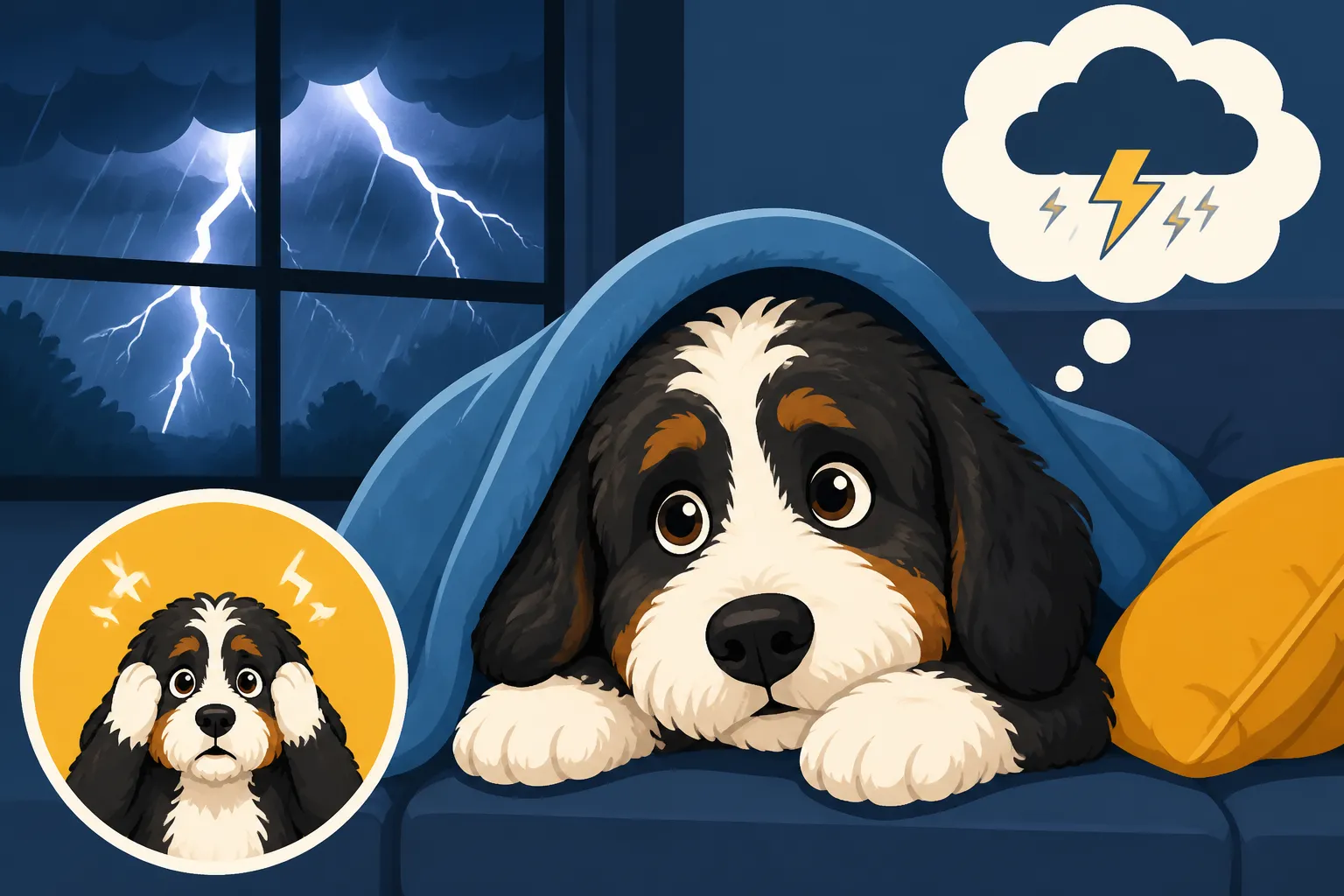
Whether a Bernedoodle Fears Thunderstorms
The rumble of distant thunder can turn a calm evening into a nightmare for many of our beloved Bernedoodles, and it’s truly heartbreaking to watch your usually goofy, confident companion transform into a shaking, panting mess. This guide is here to shed light on why some Bernedoodles react so intensely to thunderstorms, offer practical steps you can take to create a sanctuary for them, and provide long-term strategies to help manage and even alleviate their storm-related anxiety, giving both of you more peace of mind.
Decoding Your Bernedoodle's Fear of Thunderstorms
It’s easy to feel helpless when your big, fluffy Bernedoodle—who normally acts like a gentle giant—starts quivering at the first sign of a storm. You might wonder why your dog is so terrified when others seem unfazed, and it's a completely valid frustration. Understanding the roots of this fear, often called storm phobia or meteorophobia, is the first step toward helping them.
What Bernedoodle Storm Fear Looks Like
When a thunderstorm rolls in, your Bernedoodle might display a range of behaviors, from subtle discomfort to full-blown panic. You might notice them pacing restlessly, unable to settle in their usual comfy spots. They might start panting heavily, even if the house is cool, or drooling excessively. Many Bernedoodles will seek out their human companions, trying to climb into laps that are far too small for them, or relentlessly nudging for attention. Others might bolt and try to hide in the bathroom, a dark closet, or under furniture, sometimes even attempting to dig or chew their way out of a perceived enclosure. Some dogs will vocalize, whining incessantly, barking, or even howling. In severe cases, they might exhibit destructive behaviors, chewing on doorframes, scratching at walls, or having accidents indoors despite being perfectly house-trained. It’s important to recognize these signs as genuine distress, not just "bad behavior." Your Bernedoodle isn't being stubborn; they are genuinely terrified, and their body is reacting to an overwhelming sensory experience.
Why Some Bernedoodles Are More Susceptible
Several factors can contribute to a Bernedoodle's predisposition to storm phobia. Genetically, the Bernese Mountain Dog side of their lineage can sometimes carry a more sensitive or timid disposition, which can translate into heightened anxiety. If their Bernese parent struggled with loud noises or storms, it’s not uncommon for that sensitivity to be passed down. Early experiences also play a massive role. A Bernedoodle puppy who experienced a particularly violent storm without adequate comfort or positive association might develop a lasting fear. Beyond the loud bangs of thunder, dogs are incredibly sensitive to changes in barometric pressure, which they can feel long before humans hear any noise. They can also detect shifts in electromagnetic fields and even static electricity building up in their fur, which can be an uncomfortable and startling sensation. Imagine feeling tiny shocks all over your body with no explanation—it's disorienting and frightening. This sensitivity means they often know a storm is coming well before you do, leading to anticipatory anxiety that can be just as debilitating as the storm itself. It’s not just about the noise; it’s a full sensory assault for them. You might also notice that your otherwise Whether a Bernedoodle Is Calm Indoors may become a whirlwind of nervous energy when a storm approaches.
Validating Your Frustration and Their Fear
As a Bernedoodle owner, it's incredibly frustrating and heartbreaking to witness your dog's distress during a thunderstorm. You want to help them, but it often feels like nothing you do makes a difference. This helplessness is a common feeling among owners of dogs with storm phobia, and you're not alone. It's easy to get caught in a cycle where your anxiety about their fear feeds into their own panic. Remember, their fear is very real to them. They're not being dramatic; they genuinely perceive a threat. Your primary role is to be a source of calm and safety, even when you feel just as worried. Understanding that this isn't a simple "fix" but a complex behavioral issue that requires patience and consistent effort can help reframe your approach.
Building a Secure Sanctuary for Stormy Weather
One of the most immediate and impactful ways to help your Bernedoodle during a thunderstorm is to provide them with a designated safe space. This isn't just a place to hide; it's a sanctuary where they can feel protected from the perceived threat.
Designating a Den: Their Safe Space
Think of this space as your Bernedoodle's personal storm shelter, a place they can retreat to when the world outside gets too scary. For many dogs, a sturdy crate covered with a blanket can provide this sense of security. The enclosed nature can make them feel protected, almost like a small cave. If your Bernedoodle isn't crate trained, a quiet, interior room like a bathroom or a walk-in closet can work wonders. These rooms often have fewer windows, which helps muffle sounds and block out scary flashes of lightning. The key is to make it a positive place before a storm hits. Put their favorite bed in there—a cozy, Beds That Support a Heavy Old Bernedoodle could be perfect—along with some comforting toys and perhaps a treat-dispensing puzzle. Never force your dog into this space during a storm; the goal is for them to associate it with comfort and safety, not punishment or confinement.
Noise Reduction and Sensory Control
Thunder and lightning are the most obvious culprits of storm phobia, so minimizing their impact is crucial. In your Bernedoodle's safe space, draw curtains or blinds to block out flashes of lightning. To combat the noise, consider using white noise machines, fans, or even a radio tuned to classical music (at a moderate volume) to help mask the sound of thunder. The constant, predictable sound can be much less startling than sudden booms. If you have a larger home, perhaps a basement can offer the most soundproofing. You can even find sound-dampening panels for walls on Amazon that might make a difference in a dedicated room. The goal is to create an environment where the auditory and visual stimuli of the storm are as muted as possible, allowing your Bernedoodle a moment of reprieve from the overwhelming sensations.
Comfort and Security Essentials
Once you have the physical space, fill it with items that bring your Bernedoodle comfort and security. This means their absolute favorite blanket, a well-loved squeaky toy (if that brings them joy, not agitation), or a durable chew bone. Your presence can also be a huge source of comfort for many Bernedoodles. If they seek you out, offer gentle, reassuring strokes and a calm voice. Avoid overly coddling or pitying them, as this can inadvertently reinforce their fear by signaling that there is something to be afraid of. Instead, project a calm, confident energy. Engage them with a quiet game of tug or offer a high-value treat to chew on. For dogs that get agitated by static electricity, consider using anti-static dryer sheets (unscented, and don't let them ingest it) or a specialized anti-static spray on their fur, or even just grounding them by touching them frequently during the storm. Many Bernedoodle owners find a "Thundershirt" or similar anxiety wrap helpful, as the gentle, constant pressure can have a calming effect similar to swaddling a baby. You can find many options for these calming products on Amazon.
| Calming Aid Type | How It Helps | Best Use Case | Considerations |
|---|---|---|---|
| Safe Den/Crate | Provides physical enclosure and security | Dogs that seek hiding spots | Needs to be introduced positively, not as punishment. |
| White Noise/Music | Masks startling thunderclaps | Dogs sensitive to loud noises | Volume should be soothing, not overwhelming. |
| Anxiety Wraps | Applies gentle, constant pressure (swaddling) | Dogs responsive to tactile comfort, mild anxiety | Ensure proper fit; not a cure-all. |
| Pheromone Diffusers | Releases calming synthetic dog pheromones | Dogs with general anxiety or moderate storm fear | Takes time to build effectiveness; may not work for all dogs. |
| Chew Toys/Puzzles | Distraction, releases endorphins | Dogs who can still be engaged during mild anxiety | High-value treats are key; ensure toy is safe for vigorous chewing. |
Immediate Comfort Measures for a Storm-Scared Bernedoodle
When the storm hits, quick actions can make a big difference in how your Bernedoodle copes. It’s about being prepared and knowing how to respond effectively in the moment.
Your Calm Demeanor Is Their Anchor
This might be the hardest advice to follow when your heart is breaking for your terrified dog, but it’s crucial: stay calm yourself. Dogs are masters at reading our emotions. If you’re panicking, rushing around, or anxiously petting them while saying "it's okay, it's okay" in a high-pitched voice, you're inadvertently reinforcing their belief that there is something truly terrifying happening. Instead, try to be a rock. Speak in a low, soothing voice. Move slowly and purposefully. Act as if nothing unusual is happening. If they're hiding, acknowledge them gently but don't pull them out. If they come to you, offer calm, firm strokes rather than frenetic petting. Your steady energy communicates that you are not afraid, and by extension, maybe they don't need to be either. For a Bernedoodle, who can sometimes be quite sensitive, your emotional state is paramount. Remember that Whether a Bernedoodle Is Sensitive to Being Told Off also extends to picking up on your stress, so model the calm you want them to feel.
Distraction Techniques to Shift Focus
Once they are in their safe space, or if they are just mildly anxious, distraction can be a powerful tool. This isn't about ignoring their fear, but about gently redirecting their focus onto something positive and engaging. High-value treats work wonders here. Think of frozen Kongs stuffed with peanut butter or yogurt, or lick mats smeared with wet food. These require mental engagement and provide a sustained, positive activity that can help keep their mind off the storm. Puzzle toys, especially those that dispense treats, can also be incredibly effective. A brisk game of tug-of-war (if they are still willing to play) or a brief training session with familiar commands can also help ground them in routine and positive interaction. The key is to offer something so enticing that it slightly overrides the anxiety-inducing stimuli.
Exploring Calming Aids and Supplements
Beyond environmental adjustments, there's a whole world of calming aids available, and what works for one Bernedoodle might not work for another. We mentioned anxiety wraps like Thundershirts, which many owners swear by. Pheromone diffusers, which release synthetic dog appeasing pheromones (DAP), can create a more calming atmosphere in the home over time. These are readily available on platforms like Amazon. There are also various calming chews and supplements on the market, often containing ingredients like L-theanine, L-tryptophan, or chamomile. These can help to promote relaxation without sedation. Always consult with your veterinarian before introducing any new supplement or aid, especially if your Bernedoodle is on other medications or has underlying health conditions. Your vet can advise on appropriate dosages and potential interactions.
When to Seek Professional Guidance
Sometimes, despite all your best efforts, your Bernedoodle's storm phobia is so severe that it significantly impacts their quality of life (and yours). If your dog is consistently causing self-harm (e.g., breaking nails trying to dig out of crates), becoming destructive, or showing extreme, unrelenting panic, it's time to seek professional help. Your first stop should be your veterinarian. They can rule out any underlying medical conditions that might be exacerbating anxiety and discuss prescription anti-anxiety medications. For some Bernedoodles, a short-acting medication given before an anticipated storm can be a game-changer, helping them to stay calm enough to engage with other coping strategies. Your vet might also refer you to a veterinary behaviorist or a certified professional dog trainer who specializes in fear and anxiety. They can help you develop a comprehensive behavior modification plan tailored to your Bernedoodle's specific needs. Especially for a breed that can develop strong bonds and sometimes Whether a Bernedoodle Suffers Separation Anxiety, professional guidance can be invaluable.
Long-Term Behavioral Strategies for Thunderstorm Phobia
While immediate management is crucial for comfort during a storm, truly helping your Bernedoodle overcome their fear involves long-term strategies focused on changing their emotional response to storms.
Desensitization and Counter-Conditioning: A Gradual Process
This is the cornerstone of long-term fear reduction. The idea is to gradually expose your Bernedoodle to the triggers of a storm (sounds, sights) at a level so low that they don't react with fear, while simultaneously associating those triggers with something highly positive. Start by finding recordings of thunderstorms. Begin playing the sound at an incredibly low volume—so low you can barely hear it—while you engage your Bernedoodle in a fun game or feed them their favorite high-value treats. The goal is for them to associate the sound with good things, not fear. Over many, many sessions (days or weeks), very slowly increase the volume, always staying below their threshold for fear. If they show any signs of anxiety, you've gone too far, and you need to dial it back. This process requires immense patience and consistency. It’s a marathon, not a sprint, but it can be incredibly effective at rewiring their emotional response. Think of it as slowly building up their tolerance, like gently introducing a shy child to new friends.
Building Overall Confidence and Resilience Through Training
A Bernedoodle who is confident in themselves and their environment is generally better equipped to handle stressful situations. Engaging in positive reinforcement training, even for basic obedience commands, can do wonders for their self-assurance. Consistent training provides structure, predictability, and a sense of accomplishment. Explore activities like scent work or trick training, which are mentally stimulating and build confidence without being physically demanding. Online training platforms, such as BAXTER & Bella, offer a wealth of resources and guidance that can help you implement these training techniques effectively from the comfort of your home. Strengthening the bond between you and your Bernedoodle through positive interactions also makes you a more reliable source of comfort during stressful times. This proactive approach to Building Confidence in a Timid Bernedoodle can make a profound difference in how they perceive and react to challenges like thunderstorms.
The Importance of Consistency and Patience
Behavior modification for storm phobia is not a quick fix. It requires unwavering consistency and a deep well of patience. You might have setbacks—a particularly loud storm, an unexpected sound—but the key is to keep going. Every positive association you build, every moment of calm you foster, contributes to their overall resilience. It’s like tending a garden; you plant the seeds, water them consistently, and nurture them, and eventually, you see growth. Don't get discouraged if progress feels slow. Celebrate the small victories, like a storm passing with only mild panting instead of full-blown panic. Your Bernedoodle relies on your steadfast support.
Considering Medication as Part of a Comprehensive Plan
For Bernedoodles with severe, persistent storm phobia, medication can be a valuable tool, not a failure. It’s not about "drugging" your dog into submission, but about reducing their anxiety to a level where they can actually learn and benefit from behavioral therapies like desensitization and counter-conditioning. Imagine trying to learn a new skill while experiencing a panic attack—it’s impossible. Anti-anxiety medications, prescribed and monitored by your veterinarian, can lower their baseline anxiety, making them more receptive to your training efforts and more capable of coping. Some medications are given preventatively before a storm, while others are daily medications to manage chronic anxiety. This should always be a conversation with your vet, exploring all options to find the best, most humane approach for your specific Bernedoodle. It's about enhancing their quality of life, especially if What Changes in a Bernedoodle After Eight and they might be more susceptible to anxieties in their senior years.
Ultimately, dealing with a Bernedoodle who fears thunderstorms is a journey, not a destination. It involves understanding their unique sensitivities, creating a safe and predictable environment, and patiently working through long-term strategies. With dedication, you can help your beloved companion weather any storm, both literally and figuratively.
Disclaimer
This article is for general informational purposes only and does not constitute professional advice. Laws, prices and regulations vary by location and change over time. Consult a qualified professional for guidance on your specific situation.