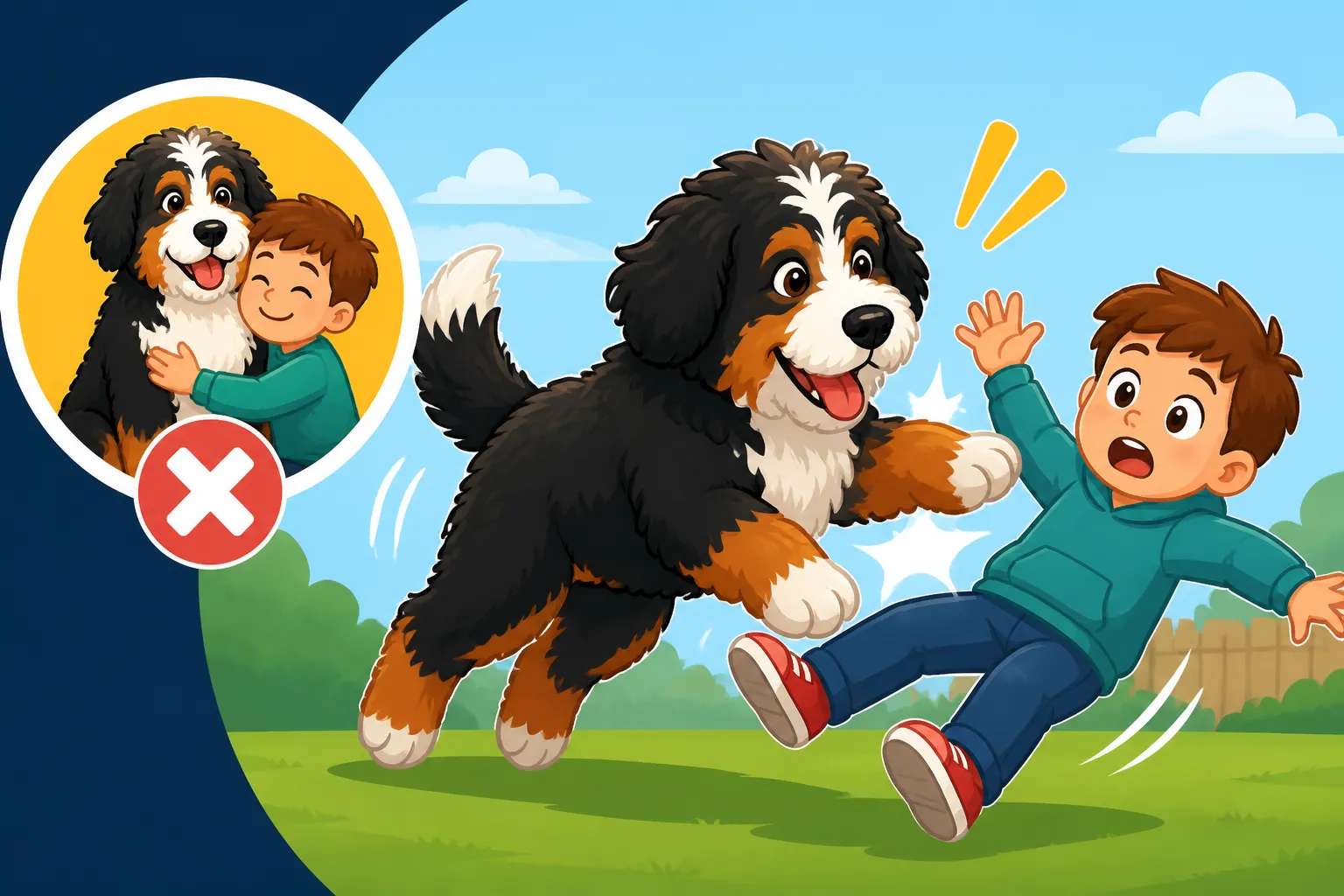
Whether a Bernedoodle Knocks Children Over
It’s a common and very real worry for families considering a Bernedoodle: will this big, happy-go-lucky dog accidentally knock over a small child in its exuberance? Many prospective owners envision the sweet, cuddly giant, but they also have visions of their little ones being bowled over by a wagging tail or an overly enthusiastic greeting. This comprehensive guide will walk you through why this concern is valid, how Bernedoodle behavior can lead to such incidents, and most importantly, what proactive steps you can take to ensure safe and happy interactions between your beloved Bernedoodle and the children in your life.
Understanding the Bernedoodle's Nature and Size
Bernedoodles are wonderful dogs, often celebrated for their gentle nature, but it’s crucial to remember that they are also large and can be incredibly energetic, especially in their younger years. This combination, while endearing to adults, can pose a challenge for small children.
The Bernedoodle's Growth Trajectory and Enthusiasm
When you bring home a Bernedoodle puppy, it's easy to forget just how quickly they'll grow into substantial dogs. A tiny, floofy four-month-old that barely reaches your knee can transform into a seventy-pound adolescent in what feels like the blink of an eye. This rapid growth often means their bodies develop faster than their brains or their understanding of their own physical presence. They're still learning coordination, spatial awareness, and appropriate social manners, even when they're already quite large.
This period of rapid growth is often coupled with immense enthusiasm. Bernedoodles are known for their joyful, playful, and sometimes goofy personalities. They love life, they love their people, and they express that love with gusto. A Bernedoodle puppy or adolescent might not grasp that a full-body wiggle, a joyful leap, or a sudden burst of speed is perfectly fine when interacting with a sturdy adult, but could easily send a toddler tumbling. Their natural exuberance, combined with their increasing size, makes accidental knocks a very real possibility if not managed carefully. Understanding The Age a Bernedoodle Stops Acting Like a Puppy can help manage expectations during this high-energy phase.
Bernese Mountain Dog vs. Poodle Influence on Temperament
A Bernedoodle is a delightful blend of two distinct breeds, and both contribute to their overall temperament and, consequently, their interactions with children. The Bernese Mountain Dog brings a reputation for being gentle, loving, and often quite patient. They are known for their devotion to their families and a desire to be close to their humans, sometimes even leaning against them for comfort or affection. However, Bernese can also be a bit clumsy or oblivious to their size, and a leaning dog, even a gentle one, can easily unbalance a small child.
On the other hand, the Poodle contributes intelligence, athleticism, and often a higher energy level. Poodles are smart and quick-witted, which is fantastic for training, but their boundless energy can manifest as bounciness and a desire to engage in active play. When these traits combine in a Bernedoodle, you often get a dog that is highly intelligent and trainable, eager to please, but also with a strong playful drive and, in some cases, a clumsy streak from their Bernese heritage. This means they want to be good and interact kindly, but their sheer size and energy can sometimes override their best intentions, leading to those unintentional bumps and tumbles with smaller family members.
Common Scenarios Leading to Accidental Knocks
Even the best-behaved Bernedoodle, with the kindest intentions, can accidentally knock over a child. It often comes down to their natural instincts and exuberance meeting the unpredictable movements and small stature of a child.
The "Greeting Frenzy" and Jumping Behavior
One of the most common scenarios for an accidental knock is the infamous "greeting frenzy." Bernedoodles, like many dogs, tend to get incredibly excited when their favorite people (or any people, really!) come home or simply enter a room after an absence. This excitement is often expressed by wiggling, tail-wagging, and, unfortunately, jumping. For a Bernedoodle that can easily weigh 70-90 pounds or more, a jump onto a small child can be less of a playful nudge and more like a full-body tackle.
Imagine a scene: your Bernedoodle has been napping peacefully, and your five-year-old skips into the living room. The dog sees the child, springs up, and launches into an excited jump to greet them, perhaps trying to lick their face. The child, being small and caught off guard, has little chance of staying upright. This isn't malice; it's pure, unadulterated joy that hasn't been properly channeled. Teaching your Bernedoodle alternative, polite greetings is paramount. It’s also important to practice Teaching a Bernedoodle Not to Jump on Guests to avoid these sorts of incidents, not just with children, but with anyone who might be unsteady on their feet.
Playtime and Zoomies
Bernedoodles, especially as adolescents, often have bursts of energy affectionately known as "zoomies." These are sudden, intense explosions of running, spinning, and general chaotic playfulness. They often happen after a bath, a meal, or just because the mood strikes. During a zoomie session, a Bernedoodle is often so focused on its own joyful movement that its awareness of its surroundings, particularly small, slow-moving obstacles like children, can be severely diminished.
Picture your Bernedoodle suddenly tearing through the living room, sliding on the rug, and bouncing off furniture. If a child is sitting on the floor playing with toys or toddling across the room, they are essentially in the path of a furry, fast-moving bowling ball. Even during more structured playtime, if the dog gets overly excited while chasing a ball or wrestling with a toy, their sheer size and momentum can easily lead to an accidental collision with a child. It's not about being aggressive; it's about being a large animal utterly caught up in the moment.
Leaning and "Herding" Instincts
While not as common as jumping or zoomies, the Bernese side of your Bernedoodle can also bring a tendency to lean or, in some cases, even a subtle desire to "herd" their family members. Bernese Mountain Dogs are famous for their "lean," a gentle press of their body against yours, a sign of affection and seeking comfort. It's incredibly sweet, but when a seventy-pound dog leans heavily against a twenty-pound child, the outcome can be a loss of balance and a fall.
Similarly, though Bernedoodles aren't traditional herding dogs, some may exhibit very mild instincts to keep their "flock" (their family) together. This might manifest as nudging, circling, or gently bumping a child who is wandering away from the group. Again, the intention is not to harm, but the physical reality of a large, strong dog performing these actions can be overwhelming and unsafe for a small human. Understanding why A Bernedoodle That Leans on Everyone does this can help you redirect the behavior towards adults or teach the dog to sit politely for affection.
Proactive Strategies for Safe Interactions
The good news is that many of these potential issues can be mitigated with proactive training, careful management, and educating both your Bernedoodle and your children. It's all about setting everyone up for success.
Early Socialization and Training are Key
The absolute best defense against a Bernedoodle accidentally knocking over children is comprehensive early socialization and consistent, positive reinforcement training. This starts the moment you bring your puppy home. Expose your puppy to a variety of sights, sounds, people (including well-behaved children under strict supervision), and environments in a positive, controlled way. This helps them grow into confident, well-adjusted adults who are less likely to react unpredictably out of fear or over-excitement. For more on early exposure, consider reading Socializing a Bernedoodle Before Twelve Weeks.
Training should focus heavily on impulse control. Commands like "sit," "stay," "wait," and especially "four on the floor" (meaning all four paws must remain on the ground during greetings) are indispensable. Reward calm behavior frequently. If your Bernedoodle puppy is learning that sitting politely earns treats and attention, they'll be less likely to jump up in excitement. Given their potential size, it’s vital to start this early, otherwise, you'll be faced with Raising a Bernedoodle Puppy That Will Outweigh You without the foundational training needed to manage them safely. Online training platforms, like those offered by BAXTER & Bella, can provide structured lessons and support specifically designed for puppy and adolescent dog behavior, offering convenient access to professional guidance from home.
Teaching Children How to Interact
It’s not just about training the dog; it’s equally important to teach your children how to behave around dogs. Children, especially very young ones, don't instinctively know how to interact safely. They might run, scream, grab at fur or tails, or try to climb on the dog, all of which can provoke an unintended reaction from even the most tolerant Bernedoodle.
Teach children:
- Gentle hands: Always pet gently, never pull fur, ears, or tails.
- Respect personal space: Don't crowd the dog, especially when it's eating, sleeping, or playing with its own toys.
- No running or screaming: Sudden movements and loud noises can excite or startle a dog.
- Be a tree: If a dog jumps on them, they should stand still, hands tucked in, and look at their feet. This removes the reward for jumping (attention or play) and makes them less likely to fall.
- Ask permission: Always ask an adult if it’s okay to pet the dog, and then let the dog come to them.
Always supervise interactions between your Bernedoodle and children, no matter how well-trained your dog or how well-behaved your child. Supervision means active involvement, not just being in the same room. Intervene gently if either the dog or child is becoming overstimulated or uncomfortable.
To further illustrate safe interactions, consider this table:
| Scenario | Unsafe Interaction (Avoid) | Safe Interaction (Encourage) |
|---|---|---|
| Greeting a dog | Running towards the dog, screaming, hugging its neck. | Standing calmly, letting the dog approach, gentle pets under the chin. |
| Playing with a dog | Roughhousing, chasing the dog, pulling its tail/ears. | Playing fetch or tug-of-off-war with adult supervision. |
| Dog is eating/sleeping | Approaching the dog's bowl, disturbing a sleeping dog. | Giving the dog space, letting it finish eating or rest undisturbed. |
| Dog gets excited | Screaming, running away, encouraging jumping with attention. | "Be a tree" (stand still, hands in pockets), ignore jumping, reward calm. |
| Walking with dog | Letting go of the leash, running ahead of the dog. | Walking beside an adult, letting the adult manage the leash. |
Managing the Environment
Environmental management is a critical tool, especially when children are very young or your Bernedoodle is still in its boisterous adolescent phase. This isn't about punishment; it's about prevention and setting clear boundaries for everyone's safety and peace of mind.
Utilize tools like baby gates to separate your Bernedoodle from children when you cannot provide direct, active supervision. This is particularly useful during busy times, meal times, or when a child has friends over and excitement levels are high. A sturdy, freestanding gate purchased from a retailer like Amazon can create an immediate physical barrier, giving both the dog and the children a safe space. Crates can also be invaluable, providing your Bernedoodle with a secure den where they can relax away from the hustle and bustle, knowing they won't be accidentally bumped or disturbed. Remember, a crate should always be a positive place for your dog.
Indoors, keeping a long leash attached to your Bernedoodle (drag leash) can allow you to gently guide them away from a child or step on the leash to prevent jumping without having to physically grab your dog. This kind of management is crucial to safely integrate A Standard Bernedoodle and a Small Child into the same household. It creates a structured environment where positive habits can be built without relying solely on constant verbal commands or corrections.
Addressing Established Behaviors and Ongoing Management
Even with early training, Bernedoodles can test boundaries, especially during adolescence. If you're dealing with an adult Bernedoodle who still tends to be too exuberant around children, don't despair—it's never too late to reinforce good habits.
Consistent Training for Jumping and Bounciness
The key to curbing jumping and bounciness is unwavering consistency. Every time your Bernedoodle jumps on a person, that behavior is, in some way, being rewarded—even if it's just with eye contact or a verbal "no." The rule should always be: "four on the floor" gets attention, jumping gets ignored. When your Bernedoodle jumps, turn your back, cross your arms, and completely disengage. Only when all four paws are on the ground (even for a split second) should you turn back and offer calm praise or a treat. Everyone in the household, and even visitors, must follow this rule.
It sounds simple, but it requires patience and dedication. For a large, powerful dog like a Bernedoodle, this might mean practicing many, many repetitions. If you're struggling, don't hesitate to seek professional help. A qualified dog trainer can provide tailored strategies and hands-on guidance. Sometimes, an experienced eye is all it takes to identify why a behavior persists and how to effectively address it. Consider investing in a few sessions with a certified professional, especially if you’re concerned about Whether a Bernedoodle Needs a Professional Trainer. They can help you refine your techniques and ensure you're communicating clearly with your dog.
Structured Play and Exercise
A tired Bernedoodle is often a well-behaved Bernedoodle. These dogs have energy, and if it's not channeled constructively, it will find its own (potentially destructive or over-exuberant) outlets. Ensure your Bernedoodle gets plenty of appropriate physical exercise and mental stimulation daily. This could include long walks, supervised off-leash play in a secure area, fetch sessions, or puzzle toys.
Crucially, some of this exercise and play should occur separate from the children, especially if the dog is prone to accidental bumps. For instance, a vigorous game of fetch in the yard with an adult can burn off steam that might otherwise result in zoomies through the house when the children are present. Structured play also reinforces your leadership and deepens your bond. Make sure your Bernedoodle is getting The Exercise a Standard Bernedoodle Needs Daily to help manage their energy levels effectively. A well-exercised dog is generally calmer and more attentive, making them less likely to accidentally knock over a child.
Understanding the Dog's Signals
Learning to read your Bernedoodle's body language is a powerful tool for preventing incidents. Dogs communicate constantly through subtle (and sometimes not-so-subtle) cues. If you can recognize the signs that your dog is becoming over-excited, stressed, or uncomfortable, you can intervene before a potential accident occurs.
Signs of increasing excitement can include:
- Stiff body posture or tail wagging wildly, not just a gentle sway.
- Panting heavily even when not hot.
- Staring intently or fixating on a child.
- Nipping at clothing or hands (even gently, this is a sign of overstimulation).
- Darting movements or pacing.
If you see these signals, it’s a cue to proactively manage the situation. This might mean redirecting your dog to a safe space, engaging them in a calm activity, or simply giving them a break from the children. Similarly, if your Bernedoodle shows signs of stress or discomfort around children (lip licking, yawning, turning head away, trying to hide), it's important to provide an escape route and ensure they don't feel cornered. Being attuned to these signals allows you to be a proactive leader in your household, ensuring that all interactions are positive and safe for both your cherished Bernedoodle and your children.
Disclaimer
This article is for general informational purposes only and does not constitute professional advice. Laws, prices and regulations vary by location and change over time. Consult a qualified professional for guidance on your specific situation.