Whether a Bernedoodle Will Get on a Grooming Table
It's a common fear among Bernedoodle parents: "How on earth am I going to get my giant, fluffy, sometimes-stubborn dog to willingly get onto a grooming table?" The thought of wrangling a seventy-pound bundle of wiggly fur up onto a slick, elevated surface, all while trying to comb out mats and trim nails, can be absolutely daunting. This guide is here to walk you through the process, focusing on patience, positive reinforcement, and practical steps to make the grooming table a comfortable and cooperative experience for both you and your beloved Bernedoodle.
Understanding the Bernedoodle's Grooming Table Challenges
Let's be honest, getting any dog to stand still on an elevated surface for an extended period isn't always easy, but Bernedoodles come with their own unique set of considerations that can make the grooming table particularly challenging. It's not just about their size; it's a combination of their physical attributes and their delightful, yet sometimes sensitive, personalities.
Size and Strength Concerns
One of the most obvious hurdles is the sheer size and strength of a standard Bernedoodle. These dogs can easily reach sixty, eighty, or even ninety pounds, and that's a lot of dog to lift, balance, and control, especially if they decide they'd rather be anywhere but the grooming table. Imagine trying to lift a squirming, full-grown Bernedoodle onto a table by yourself – it's a recipe for back pain, dropped dogs, and frayed nerves. This isn't a tiny dog you can simply tuck under an arm! Their substantial weight means that any sudden movement or jump from the table can be dangerous, not just for them but potentially for you too if you're in the way. It requires careful planning and often, specific equipment designed for larger breeds.
Even if they don't fight you, simply standing on a narrow, elevated surface can feel unnatural and unstable to a large dog. Their center of gravity is different, and the sensation of being high off the ground without solid footing can be unsettling. This isn't their natural environment, and they instinctively want to be on firm, stable ground. This is why introducing the table gradually, from a young age, is so crucial, long before they hit their full, impressive size. Raising a Bernedoodle Puppy That Will Outweigh You is an article that emphasizes the importance of early training for large breeds.
Temperament and Fear
Bernedoodles are known for their sweet, often goofy, and generally laid-back nature, a lovely trait inherited from their Bernese Mountain Dog side. However, they can also inherit a certain sensitivity or even shyness, especially around new experiences or in unfamiliar situations. This means that a harsh approach or a scary first experience on the grooming table can quickly create a lasting negative association. They are intelligent dogs, thanks to the Poodle genetics, but that intelligence can sometimes work against you if they decide a particular activity is not to their liking.
A fearful Bernedoodle on a grooming table isn't just unpleasant; it can be downright dangerous. A dog that panics might try to jump off, potentially injuring itself or twisting a limb. Their deep connection to their people also means they are very attuned to your stress, and if you're anxious about grooming, they will absolutely pick up on that, reinforcing their own discomfort. It's vital to remember that their reluctance isn't stubbornness, but often fear or confusion about what's expected of them in this unusual situation. Building trust and making it a positive experience is paramount.
Coat Maintenance Demands
Let's not forget the very reason we're trying to get them on the table in the first place: that magnificent, high-maintenance Bernedoodle coat! Whether your Bernedoodle has a wavy, curly, or even a straighter coat, it's prone to matting if not diligently cared for. The Wavy Coat Most Bernedoodles Carry article delves into the specifics of Bernedoodle coat types. Grooming a Bernedoodle is not a quick five-minute brush-through; it involves thorough line brushing, dematting, trimming, and often drying that can take hours. Imagine trying to perform this intricate work on a dog constantly trying to escape the floor.
The grooming table provides the elevation and stability needed to properly access all areas of their dense coat, from their armpits to their britches, areas where mats love to hide. Without the table, you're bending, kneeling, and chasing them around, making an already time-consuming task even more exhausting and less effective. Getting them comfortable on the table isn't just a convenience; it's an essential part of keeping their coat healthy and preventing painful matting, which ultimately leads to happier, healthier skin for your Bernedoodle. This is why it's worth the effort to teach them to tolerate, and even enjoy, their time on the table.
Early Introduction and Positive Reinforcement
The secret sauce to a Bernedoodle who willingly hops onto the grooming table (or at least tolerates it calmly) lies in starting early and making every interaction positive. It’s all about building a foundation of trust and comfort, rather than forcing the issue later when they’re bigger and stronger. Think of it as investing in their future grooming happiness!
Starting with Exposure, Not Expectation
The moment you bring your Bernedoodle puppy home, you can begin the process. You don't need a fancy grooming table right away. Start with a sturdy, elevated surface that won't wobble – even a sturdy coffee table or kitchen counter (if safe and stable) can serve as a temporary "grooming platform" for a small puppy. The goal here isn't to do a full groom, but simply to introduce the concept of being elevated and still. Place them on the surface for just a few seconds, give a treat and praise, then immediately take them down. Keep it super short and sweet.
As they grow a little, you can gradually increase the duration. The key is to never force them or make it a negative experience. If they show signs of stress, make a note, end the session on a positive note, and try again later with even shorter durations or a less intimidating setup. This early, gentle exposure helps normalize the idea of being on a table long before their puppy fluff turns into a dense adult coat that truly needs extensive grooming. This gradual approach is far more effective than waiting until they're a giant, resistant floofball.
Creating a Positive Association
Every single time your Bernedoodle is on the grooming table, it needs to be associated with good things. This means a continuous stream of high-value treats and enthusiastic verbal praise. Think about what your Bernedoodle loves most – tiny pieces of cheese, boiled chicken, or special training treats you can find on Amazon. These aren't everyday kibble treats; these are the "jackpot" rewards that make them think, "Wow, this table thing is awesome!"
Use a marker word like "yes!" or a clicker the instant they offer a desired behavior, such as standing still for a second, allowing you to touch a paw, or simply looking relaxed. Then, immediately follow with the treat. For those looking for structured guidance on this kind of cooperative care training, online programs like BAXTER & Bella often have detailed modules that can walk you through the steps of creating these positive associations, including getting dogs comfortable with various handling and grooming tools. The more positive experiences they accumulate, the more they will see the grooming table as a place where good things happen, rather than a place of confinement or discomfort.
Gradual Elevation and Desensitization
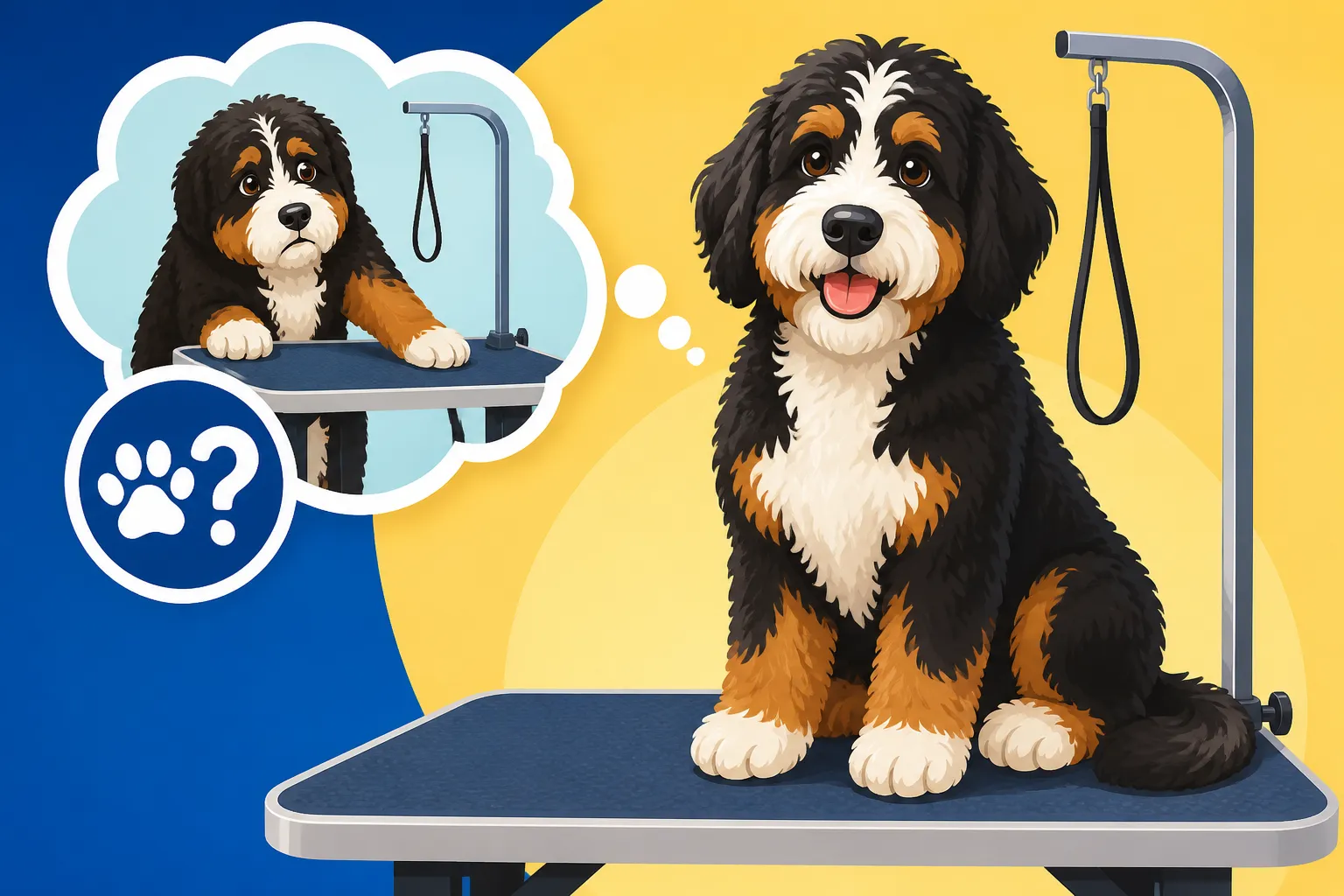
Once your Bernedoodle is comfortable with being on a low, stable surface for short periods, you can gradually introduce a proper grooming table. Again, start with short durations. Let them sniff the table, give treats. Then, encourage them to put front paws on it, rewarding them heavily. Some Bernedoodles, especially the more athletic ones, might eventually learn to hop up themselves, particularly if you use a step stool to bridge the gap. For others, gentle lifting will be necessary, but always accompany it with cheerful words and immediate rewards once their feet are on the table.
Desensitization isn't just about the table itself, but also about the sounds and sensations of grooming. While they're on the table, briefly introduce brushes, clippers (turned off at first, then on at a distance), and even the sound of a hairdryer. Touch them all over their body with your hands first, then with the brush, rewarding calmness at each step. This process helps them understand that the table is where these activities happen, and that these activities are nothing to fear. Remember, patience is your best friend here. It's a marathon, not a sprint, especially when training a big, sensitive breed like a Bernedoodle. Getting a Bernedoodle Used to the Grooming Table goes deeper into this specific training.
Tools and Techniques for Safe Table Training
Having the right equipment and knowing how to use it safely are absolutely critical for successful grooming table training, especially with a large Bernedoodle. It's not just about convenience; it's about the safety and comfort of your dog and yourself.
Choosing the Right Grooming Table
Investing in a good quality grooming table is perhaps one of the most important purchases a Bernedoodle owner will make if they plan to do any amount of home grooming. You can find a wide variety of options on Amazon. For a Bernedoodle, you'll want a table that is sturdy, stable, and large enough to accommodate their full length and width. A wobbly or too-small table will only increase their anxiety and the risk of an accident. Look for tables with non-slip surfaces, or add your own non-slip mat to prevent slips and slides, which can be very unsettling for a dog.
Consider an adjustable-height table. These are incredibly useful, as they allow you to raise or lower the table to a comfortable working height, saving your back from unnecessary strain. This is especially important when you're spending an hour or more grooming that thick Bernedoodle coat. Hydraulic or electric tables are a game-changer for larger breeds, making it easy to raise your heavy dog without any lifting on your part. Even if you start with a more basic, static table for puppy training, keep in mind that an upgrade might be beneficial as your Bernedoodle grows to its full size, often between seventy and ninety pounds.
Using Restraints Safely and Ethically
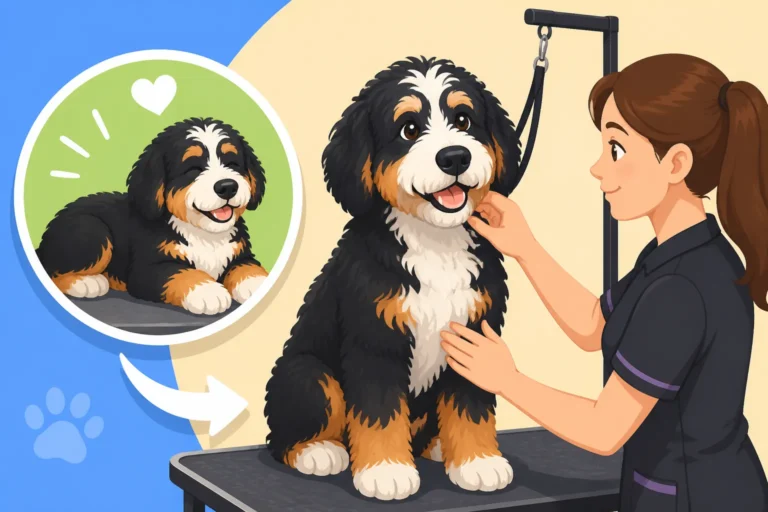
When working on a grooming table, safety restraints are not about punishing your dog; they are about keeping them safe and still. A grooming arm and loop are essential for a Bernedoodle. The loop should go snugly around their neck or under their chest, attaching to the overhead arm. This prevents them from jumping off the table, which could lead to serious injury. However, it's crucial that these restraints are used correctly and humanely. Never leave your dog unattended on a grooming table, even with restraints, as they could still injure themselves if they panic or twist awkwardly.
The goal of the restraint is to provide gentle, consistent guidance, not to choke or hurt them. The loop should be snug enough to prevent escape but loose enough for them to breathe and adjust their head. Always supervise closely. Introduce the restraint slowly, clipping it on for a few seconds, rewarding, and then removing it. Gradually extend the time they wear it. If your Bernedoodle is truly panicking, the restraint is a safety net. For training, a second loop can be used around their belly to encourage standing still. Remember, the restraint is a tool for safety and control during grooming, not a substitute for proper training and desensitization.
The Power of Treats and Praise
We've touched on this, but it cannot be overstated: high-value treats and enthusiastic praise are your most powerful allies in grooming table training. Bernedoodles are generally eager to please and highly food-motivated, a wonderful trait inherited from both parent breeds. Make every moment on the table a positive experience by continuously rewarding good behavior. This isn't just for puppies; even adult Bernedoodles benefit from a steady stream of treats during grooming sessions. What a Bernedoodle Will Work For often revolves around these high-value rewards.
Think about using a lick mat spread with peanut butter (xylitol-free!) or plain yogurt attached to the grooming arm to keep them distracted. Or have a pocket full of tiny, delectable treats you can dole out frequently. When they stand still, when they allow you to brush an ear, when they tolerate a nail trim – reward, reward, reward! Pair this with your happiest, most encouraging voice. Your positive attitude is contagious. If you make it feel like a game or a spa day, your Bernedoodle is much more likely to cooperate. Over time, the table itself will become a predictor of good things, making subsequent sessions much smoother.
Addressing Common Table-Related Behaviors
Even with the best intentions and early training, Bernedoodles can exhibit some common behaviors that make grooming challenging. Knowing how to anticipate and address these issues with kindness and consistency is key to long-term success.
Dealing with Wiggling and Jumping
A Bernedoodle puppy, full of beans and curiosity, might find it hard to stand still. As they grow, that wiggling can turn into a powerful attempt to jump off the table. The first step is prevention: ensure your table has a non-slip surface, and always use a grooming loop for safety. If your dog starts to wiggle, avoid getting frustrated or raising your voice. Instead, stop the grooming activity, offer a high-value treat when they momentarily pause, and then resume grooming. This teaches them that stillness brings rewards. If they continue to wiggle, you might need to shorten the session dramatically.
For jumpers, the grooming loop is your primary defense. However, simply preventing the jump isn't enough; you need to address the underlying reason. Are they scared? Are they bored? Is the table uncomfortable? If it's a lack of stability, reinforce the non-slip matting. If it's fear, revisit desensitization steps. If it's boredom, incorporate more frequent, tiny breaks with rewards. Consistency is vital. Every time you put them on the table, it’s a training session. If your Bernedoodle is still young, remember that The Five Minute Rule on a Bernedoodle Puppy's Walks also applies to intense training or grooming sessions – keep it short and positive to build stamina and trust.
Calming a Fearful or Anxious Bernedoodle
Some Bernedoodles, especially those with a stronger Bernese disposition, can be naturally reserved or easily overwhelmed. If your Bernedoodle shows signs of fear – trembling, tucking their tail, trying to hide, or even growling – stop immediately. Pushing a fearful dog will only worsen their anxiety and could lead to defensive aggression. This is where you need to go back to basics, creating a completely positive environment.
Start with simply letting them be near the table, rewarding them. Then, allow them to sniff the table, reward. Gradually, encourage them to put paws on, then get on, rewarding every tiny step of progress. Use calming pheromone sprays or a Thundershirt for extra comfort if needed. Some owners find that gentle, rhythmic brushing (if accepted) can be soothing. The goal is to build confidence slowly. If your Bernedoodle seems to have a strong aversion, consider consulting with a professional positive reinforcement trainer or a veterinary behaviorist. They can offer tailored strategies and help identify if there are deeper anxiety issues at play.
When to Seek Professional Help
While many Bernedoodle owners can successfully train their dogs for the grooming table with patience and positive reinforcement, there are times when professional help is invaluable. If your Bernedoodle is consistently showing severe anxiety, aggression, or a complete refusal to cooperate despite your best efforts, it might be time to bring in a professional groomer or trainer. A good professional groomer will have experience with nervous or resistant dogs and can offer advice or even handle the grooming themselves, sometimes with techniques you might not have considered.
A professional dog trainer specializing in cooperative care or behavioral modification can also be a fantastic resource. They can assess your Bernedoodle's specific temperament, identify triggers, and provide hands-on guidance to help you build your dog's confidence and cooperation on the grooming table. Sometimes, having an unbiased third party observe your interactions can reveal subtle cues or habits that are inadvertently contributing to your dog's resistance. Remember, seeking help isn't a sign of failure; it's a responsible step towards ensuring your Bernedoodle receives the essential grooming they need in the safest, most comfortable way possible. Teaching a Bernedoodle to Lie Down for Three Hours of Grooming can be a complex task, highlighting how professional insight can be helpful for extended grooming scenarios.
Here's a quick comparison of common grooming table challenges and how to approach them:
| Behavior | Possible Underlying Cause | Training Approach | Key Takeaways |
|---|---|---|---|
| Wiggling/Restlessness | Boredom, discomfort, puppy energy | Short sessions, frequent high-value treats, structured breaks, consistent rewards. | Patience, make it fun, build duration gradually. |
| Jumping Off | Fear, instability, lack of control | Secure grooming loop, non-slip mat, gentle lifting, reward for staying put. | Safety first, address fear, reinforce stability. |
| Fear/Anxiety | Negative past experience, sensitivity | Desensitization, positive association, calming aids, very gradual exposure. | Build trust slowly, never force, reward calm behavior. |
| Biting/Growling | Fear, pain, severe discomfort | STOP IMMEDIATELY. Re-evaluate, consult vet for pain, then trainer for behavior. | Prioritize safety, address root cause, professional help. |
| Refusal to Get On | Lack of positive experience, fear | Lure with treats, use a step stool, practice "paws on," reward proximity to table. | Make the approach positive, break it down into tiny steps. |
Disclaimer
This article is for general informational purposes only and does not constitute professional advice. Laws, prices and regulations vary by location and change over time. Consult a qualified professional for guidance on your specific situation.