Whether a Bernedoodle’s Color Changes After the Puppy Coat
Bernedoodle coat color changes occur when the Poodle fading gene dilutes black, brown, or red pigment after the puppy stage.
The price tag is the smallest number.
Purchase and adoption costs, insurance, routine vet care, food and grooming budgets, and the emergencies that change the total.
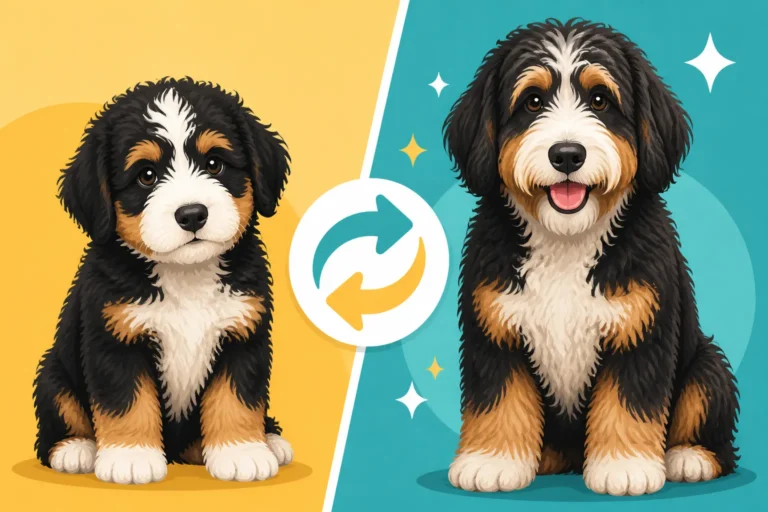
Bernedoodle coat color changes occur when the Poodle fading gene dilutes black, brown, or red pigment after the puppy stage.
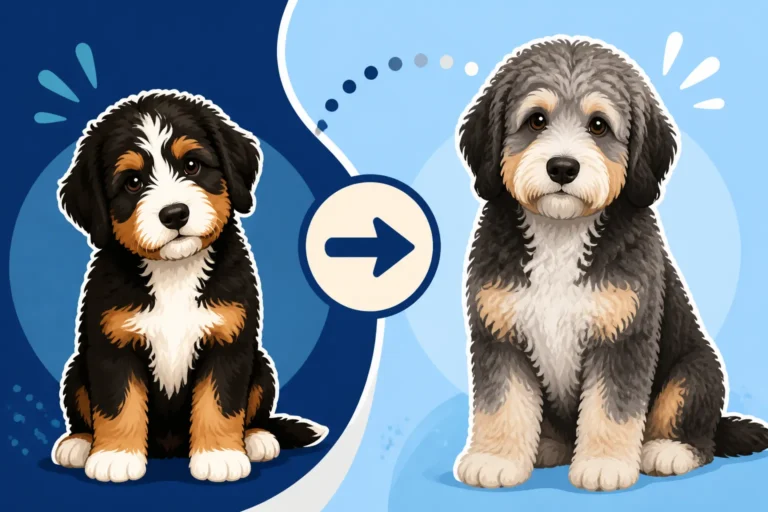
Bernedoodle coat genetics and fading genes explain why puppy markings and black coats lighten into adult charcoal or silver.
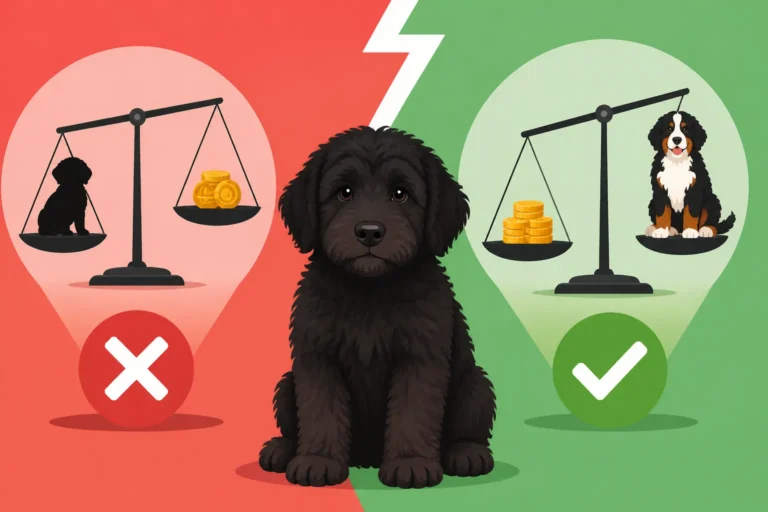
Solid Bernedoodle market value compared to tri-color puppies depends on genetics and buyer preference rather than coat purity.

Chocolate tri Bernedoodle purchase prices and the recessive genetic traits that dictate breeding costs are explained here.

Sable Bernedoodle purchase prices and lifetime costs depend on genetics, breeder reputation, and health testing requirements.

Phantom Bernedoodle puppy pricing factors include breeder reputation, genetic health testing, puppy size, and specific generation.

Double merle Bernedoodles present severe health risks and genetic challenges, making their breeding and sale a controversial practice.

Breeding two merle Bernedoodles creates double merles, causing severe eye defects, deafness, and serious health problems in puppies.

Merle Bernedoodle purchase prices, genetic testing requirements, and double merle health risks affecting long-term owner budgets.

Black and white Bernedoodle pricing factors, including breeder reputation, health testing, coat markings, size, and generation.