What Changes in a Bernedoodle After Eight
Common aging signs in a standard Bernedoodle after eight years include physical transformations, joint issues, and mobility challenges.
Know what to watch for.
Breed-specific conditions, screening and DNA tests, what surgery actually costs, and the daily habits that stretch a healthy lifespan.

Common aging signs in a standard Bernedoodle after eight years include physical transformations, joint issues, and mobility challenges.

Bernedoodle cancer risk evaluation examines whether crossbreeding reduces cancer rates inherited from Bernese Mountain Dogs.

Von Willebrand factor deficiency in Bernedoodles causes severe bleeding. This hereditary disorder impacts blood clotting.
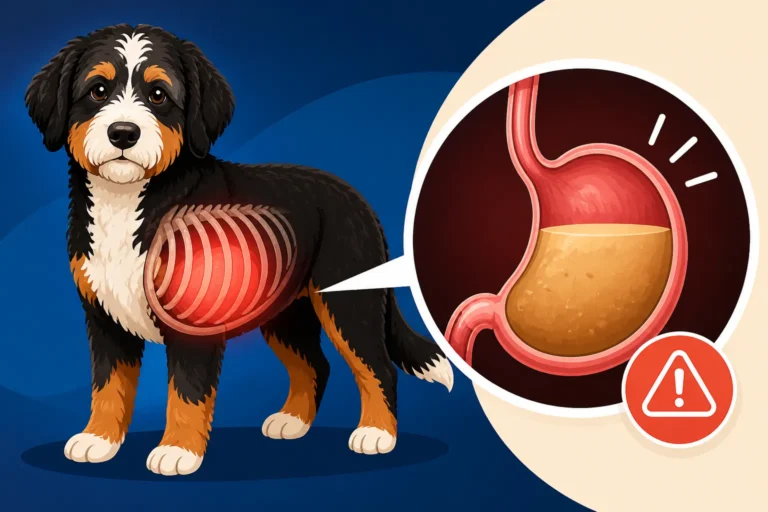
Standard Bernedoodles face deadly stomach twisting and gas risks because deep chests let the organ rotate up to 360 degrees.

Black Tri Bernedoodles struggle with warm weather because thick alpine coats trap body heat inherited from Bernese Mountain Dogs.
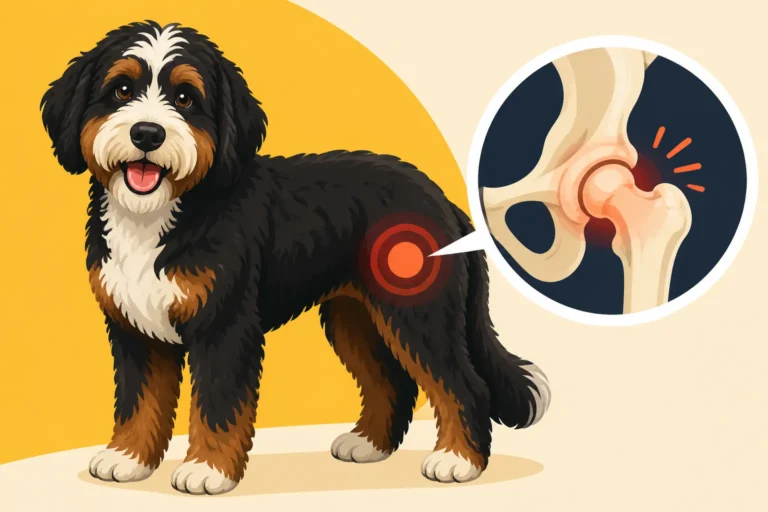
Bernedoodle hip dysplasia causes abnormal hip socket formation, leading to inflammation, cartilage damage, and progressive joint degeneration.
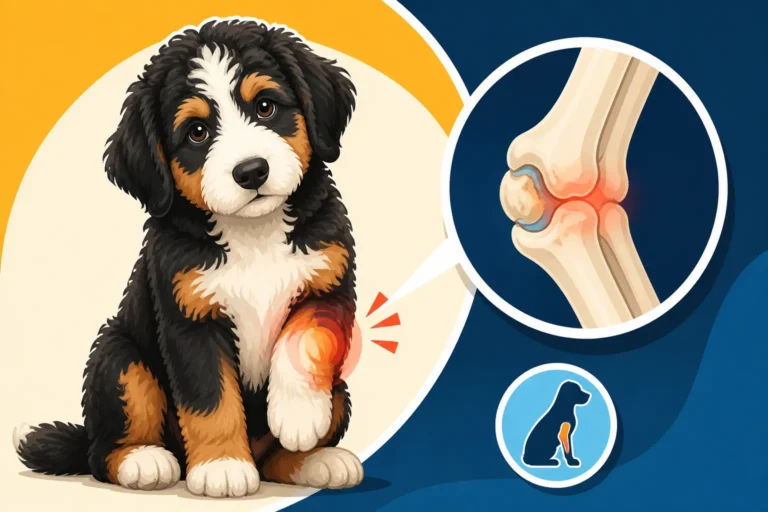
Elbow dysplasia in Bernedoodles involves developmental bone abnormalities causing joint instability, pain, inflammation, and early arthritis.
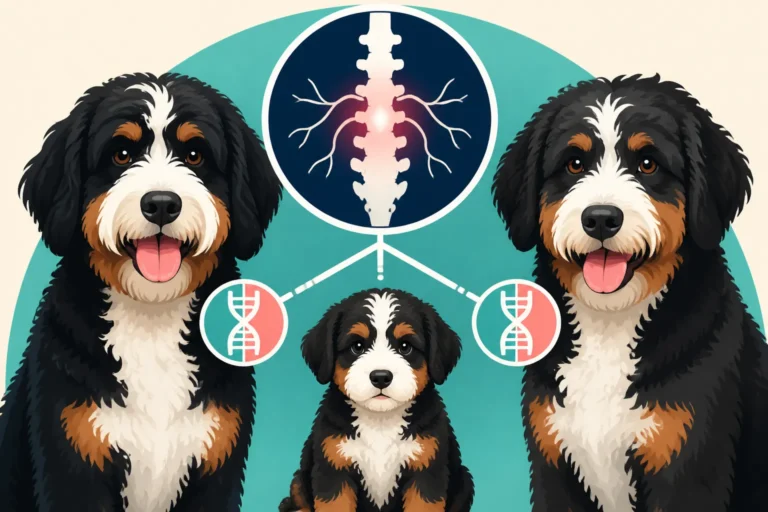
Degenerative myelopathy genetic mutations in Bernedoodle parents cause progressive spinal cord deterioration and hindlimb paralysis in dogs.

Histiocytic Sarcoma and its impact on Bernedoodles explain the aggressive cancer risks inherited from Bernese Mountain Dogs.

Bernese Mountain Dog lifespans averaging seven years and Bernedoodle longevity differences explain health challenges faced by these two breeds.