Whether a Bernedoodle Copes With Being Rehomed
Bringing a dog into your home, whether it’s a tiny puppy or a distinguished senior, is always a big commitment. But when you open your heart and home to a Bernedoodle who needs a second chance – one who’s been rehomed – you're taking on a unique set of challenges and, frankly, heartbreaks. It's tough on everyone involved, but especially on the dog who is suddenly uprooted from everything familiar. This guide is here to walk you through what to expect when a Bernedoodle copes with being rehomed, offering empathy for their journey and practical advice for helping them thrive in their new, forever home.
The Emotional Toll of Rehoming on a Bernedoodle
Rehoming is rarely an easy decision for previous owners, and it's almost always a deeply confusing and upsetting experience for the dog. Bernedoodles, being a sensitive and intelligent breed cross, often absorb the emotional shifts around them like sponges. They form deep bonds with their families, and when those bonds are suddenly severed, it can feel like their entire world has been turned upside down. It's not just a change of scenery; it's a profound disruption to their sense of security and belonging.
Why Change Hits Bernedoodles Hard
Bernedoodles inherit traits from both the Bernese Mountain Dog and the Poodle, which contributes to their unique emotional landscape. From the Bernese side, they often get a strong desire for companionship, a gentle nature, and a tendency to be quite attached to their people. The Poodle influence brings intelligence and sensitivity, making them highly attuned to their environment and the emotions of their human companions. When you combine these traits, you get a dog that thrives on routine, social connection, and predictability. Suddenly being removed from their familiar family, smells, sounds, and daily schedule can trigger significant distress. They don't understand why this is happening, only that it is happening, and their world feels unstable. This can manifest as anxiety, fear, or even a sense of mourning for their old life. Whether a Bernedoodle Recovers From a Bad Experience is a question that often weighs heavily on the minds of new owners, and it truly depends on how they are supported through this transition.
Common Stress Behaviors to Expect
When a Bernedoodle is rehomed, they can display a wide range of stress-related behaviors. These aren't indicators of a "bad" dog, but rather cries for help and expressions of their internal turmoil. You might see a once house-trained dog having accidents indoors, not because they've forgotten their training, but because they are overwhelmed or marking new territory out of insecurity. Some Bernedoodles might become withdrawn, hiding more, losing interest in food, or avoiding interaction. Others might become clingy, following you from room to room, desperate for reassurance. Excessive barking, whining, destructive chewing, or digging can also be common as they try to cope with their anxiety. It’s important to remember that these behaviors are temporary adaptations to a stressful situation. Patience, understanding, and a consistent approach are crucial in helping them navigate this difficult period. Understanding these behaviors is the first step in providing the right kind of support.
Factors That Influence a Bernedoodle's Adjustment
Every Bernedoodle is an individual, and how quickly and completely they adjust to a new home will vary. There are several key factors that play a significant role in their ability to cope with being rehomed. It's not a one-size-fits-all situation, and what works for one dog might not work for another. Being aware of these influencing factors can help you tailor your approach and set realistic expectations for the adjustment period.
Age and Prior Experiences
A Bernedoodle's age at the time of rehoming can significantly impact their adjustment. Puppies, generally under 16 weeks, are often more adaptable as their brains are still developing and forming new neural pathways. They haven't had as much time to establish deep-rooted routines or attachments, so they might bounce back quicker, though they still experience stress. A young adult Bernedoodle (say, between one and three years old) might have a harder time, as they've likely been with their previous family long enough to form strong bonds and habits. They understand the stability they've lost. Senior Bernedoodles, while sometimes calmer by nature, can also find change particularly unsettling. Their established routines are a comfort, and uprooting them can be disorienting, especially if they have age-related health issues or sensory decline.
The previous experiences of the Bernedoodle also weigh heavily. A dog coming from a loving home where they were well-socialized and cherished, but whose owners had to rehome due to unforeseen circumstances, might have an easier time adjusting than a dog who came from a chaotic or neglectful background. A dog who has been rehomed multiple times might have learned that attachments are fleeting, making them more guarded or prone to anxiety. Whether a Rescue Bernedoodle Can Gain Confidence truly depends on the foundation they had (or didn't have) and the dedication of their new family. It’s also important to consider if they've had any negative interactions or trauma associated with people or other animals, as this can certainly affect their ability to trust and settle in.
The New Home Environment and Patience
The environment of the new home plays an enormous role in a rehomed Bernedoodle's ability to cope. A calm, predictable, and patient household with clear rules and a consistent routine will provide a much-needed sense of security. Conversely, a noisy, chaotic, or inconsistent environment will only amplify their stress. Consider the energy levels of your household – do you have young children who might be too boisterous, or other pets who might not be initially welcoming? It's not about being perfect, but about being mindful and prepared.
Patience, truly, is your most valuable asset during this time. It can take weeks, or even months, for a rehomed Bernedoodle to fully decompress and feel safe. The "rule of threes" is often cited:
- 3 days: They're overwhelmed, feeling vulnerable, and might be in a "shut down" state or exhibiting high anxiety.
- 3 weeks: They start to decompress, learning the routine, and may begin to show more of their true personality (good or bad!). This is often when behavioral issues stemming from insecurity might surface.
- 3 months: They begin to feel truly at home, understanding that this is their new family and their safe space.
This is a general guideline, of course. Some Bernedoodles might take less time, others significantly more. Rushing the process or getting frustrated with setbacks will only hinder their progress. Your steady, calm presence is exactly what they need to learn that they are finally safe. Whether a Bernedoodle Copes With Being Rehomed successfully hinges on this steady, unwavering commitment.
Strategies for a Smooth Transition
Helping a rehomed Bernedoodle settle in and thrive is a marathon, not a sprint. But with the right strategies and a heart full of understanding, you can create an environment where they feel secure, loved, and finally at home. These strategies focus on building trust, establishing predictability, and addressing their emotional needs head-on.
Establishing Routine and Predictability
For a rehomed Bernedoodle, predictability is peace. A consistent daily schedule helps them understand what to expect and reduces anxiety stemming from uncertainty. Try to establish a routine for feeding, potty breaks, walks, playtime, and quiet time as soon as they arrive. This means feeding at the same times each day, taking them out for potty breaks after waking up, after meals, and before bed, and generally keeping their schedule as consistent as possible.
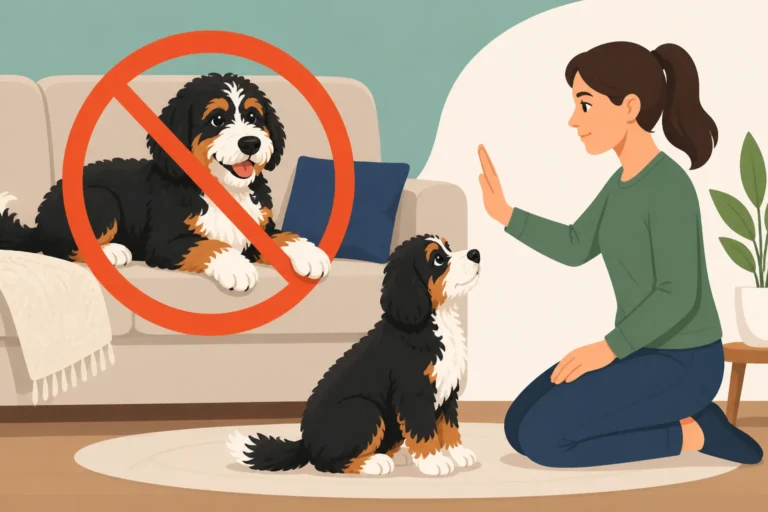
Consistency also extends to house rules. Decide upfront what is and isn't allowed – are they allowed on the furniture? Where will they sleep? Stick to these rules from day one. Inconsistency, even well-intentioned, can be confusing and undermine their sense of security. Crates can be incredibly helpful for establishing a den-like safe space and aiding with house training. Ensure the crate is a positive place, filled with comfortable bedding and safe toys. You can find a wide range of sturdy, comfortable crates and bedding on Amazon to help create this safe haven.
| Aspect of Routine | Why It Helps a Rehomed Bernedoodle |
|---|---|
| Feeding Times | Provides a predictable source of sustenance, reduces food-related anxiety. |
| Potty Breaks | Prevents accidents, builds confidence, establishes proper house manners. |
| Exercise/Walks | Offers mental and physical stimulation, helps release pent-up energy/stress. |
| Playtime | Fosters bonding, reduces stress, allows for appropriate energy expenditure. |
| Quiet/Rest Time | Teaches relaxation, prevents overstimulation, important for decompression. |
| Bedtime | Establishes a sense of closure to the day and security for the night. |
Building Trust and Positive Reinforcement
Building trust is paramount. A rehomed Bernedoodle may have learned that humans are unpredictable or even scary. You need to show them, through consistent positive interactions, that you are a safe and reliable source of comfort and security. Avoid harsh corrections or punishment, especially in the early days, as this can shatter any budding trust. Instead, focus on positive reinforcement. When they do something right – even something small, like lying calmly in their bed – reward them with praise, a gentle pet, or a high-value treat.
Spend quiet, quality time with your Bernedoodle. This doesn't always mean active play; sometimes it means simply being in the same room, reading a book while they nap, or offering gentle pets. Short, positive training sessions, teaching simple commands like "sit" or "stay," can also build confidence and strengthen your bond. Online resources, like the BAXTER & Bella Online Puppy School, offer comprehensive training guidance that emphasizes positive reinforcement, which can be incredibly beneficial for helping a rehomed dog learn to trust and respond to their new family's cues. Remember that Whether a Bernedoodle Is Sensitive to Being Told Off is often true for this breed, so a gentle hand is always best.
Managing Separation Anxiety and Fear
Separation anxiety is a common issue for rehomed dogs, who may fear being abandoned again. They might cry, bark, or become destructive when left alone. Start with very short absences, even just stepping out of the room for a minute, and gradually increase the duration. Ensure they have engaging enrichment toys (like puzzle feeders) to keep them occupied while you're gone. A white noise machine or calming music can also provide a sense of comfort.
Fear can manifest in various ways, such as shying away from new people or objects, or being startled by loud noises. Building Confidence in a Timid Bernedoodle involves gradual exposure and positive associations. If your Bernedoodle is fearful of strangers, ask visitors to ignore them initially, letting the dog approach on their own terms. Offer treats and praise when they show curiosity rather than fear. Never force an interaction. It's about empowering them to feel safe and make their own choices in their new environment.
When to Seek Professional Help
While patience and consistency go a long way, there are times when a rehomed Bernedoodle's struggles might require professional intervention. It's okay to ask for help; in fact, it's a sign of a responsible and caring owner. Recognizing when the challenges are beyond your scope is crucial for your Bernedoodle's well-being and your peace of mind.
Recognizing Persistent Behavioral Issues
If, after several weeks or months of consistent effort, your Bernedoodle is still exhibiting severe or worsening behavioral issues, it might be time to call in the experts. These could include:
- Aggression: Any signs of aggression towards people or other animals, such as growling, snapping, or biting, are serious and require immediate professional attention.
- Severe separation anxiety: If your Bernedoodle is causing significant damage to your home, self-harming (e.g., obsessive licking, chewing paws), or inconsolably distressed every time you leave, despite your efforts, a professional can provide tailored strategies.
- Extreme fear or phobias: If your Bernedoodle is paralyzed by fear in common situations, like walks outside, meeting new people, or certain sounds, and isn't making progress, a behaviorist can help desensitize them.
- Inability to settle: Some rehomed dogs remain in a constant state of agitation, unable to relax even in a quiet home. This persistent stress is detrimental to their health and quality of life.
- Medical concerns: Sometimes, behavioral changes can be symptoms of an underlying medical issue. A sudden increase in accidents, lethargy, or aggression could point to pain or illness. It's always wise to rule out medical causes with your veterinarian first. The Screening a Bernedoodle Should Have Yearly includes a full physical exam, which is a great opportunity to discuss behavioral changes.
Types of Professional Support Available
There are several types of professionals who can help you and your rehomed Bernedoodle. Knowing who to call depends on the nature of the issue:
- Veterinarian: Your first stop should always be your vet. They can perform a thorough physical exam and blood work to rule out any medical reasons for behavioral changes. They can also offer advice on calming supplements or, in some severe cases, medication to help manage anxiety while you work on behavior modification.
- Certified Professional Dog Trainer (CPDT-KA or KPA CTP): For general training issues or to help build confidence, a force-free, positive reinforcement trainer is invaluable. They can help you teach your Bernedoodle basic manners, improve leash skills, and offer strategies for common behavioral challenges. Services like BAXTER & Bella can also provide virtual one-on-one coaching with certified trainers, which can be a game-changer for specific issues. You can even find specialized tools on Amazon that trainers often recommend, like specific harnesses for Leash Manners on a Bernedoodle Heading for Ninety Pounds.
- Certified Professional Dog Behaviorist (CDBC or CAAB): For more complex or deeply ingrained behavioral problems like severe aggression, phobias, or separation anxiety, a certified behaviorist is the specialist you need. These professionals have advanced education and experience in animal behavior and can help you understand the root cause of the behavior and develop a comprehensive behavior modification plan. They often work closely with your veterinarian.
Remember, seeking professional help isn't a failure; it's an act of love and commitment to your Bernedoodle. With the right support, most rehomed Bernedoodles can overcome their past experiences and blossom into wonderful, confident companions.
Disclaimer
This article is for general informational purposes only and does not constitute professional advice. Laws, prices and regulations vary by location and change over time. Consult a qualified professional for guidance on your specific situation.