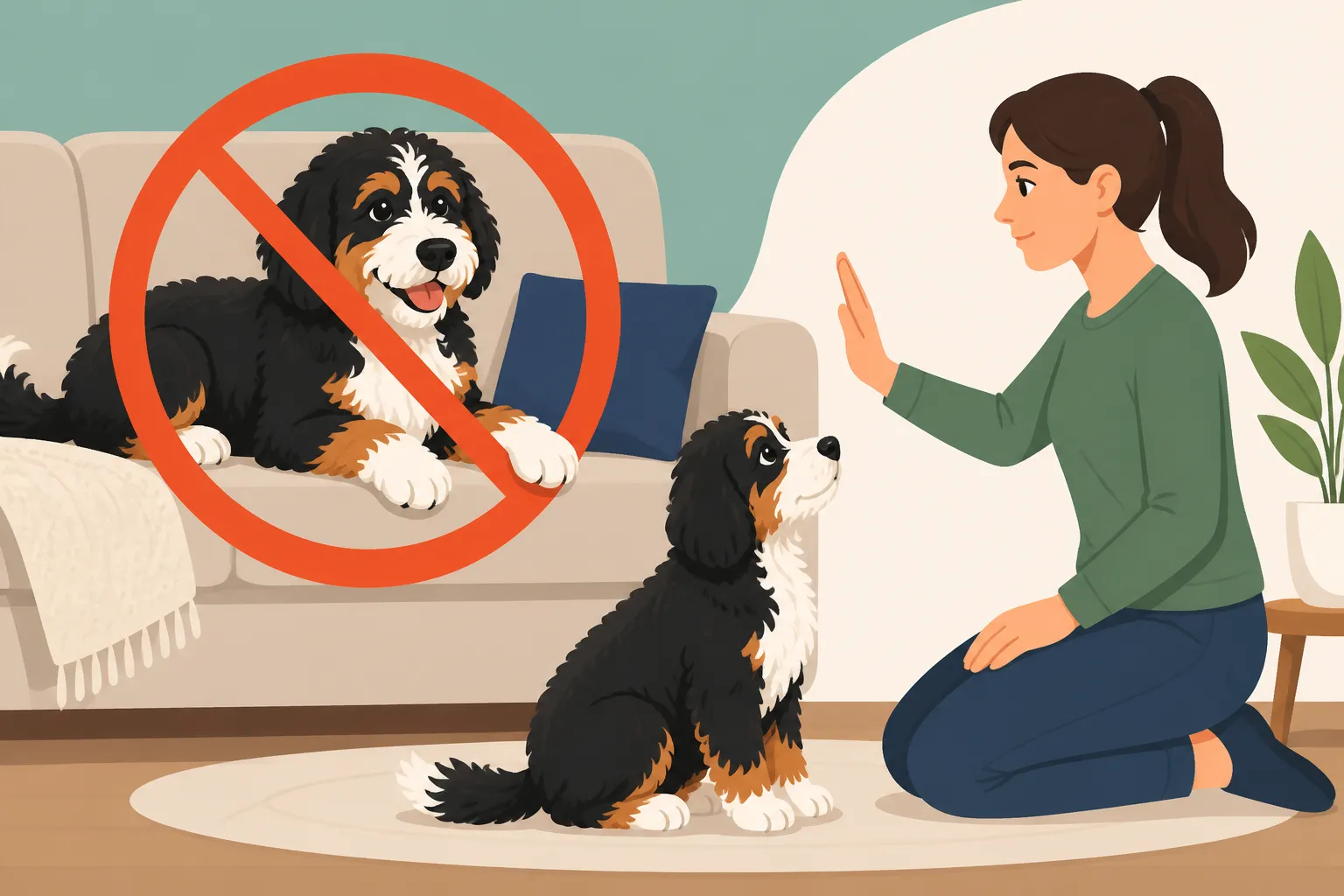
Teaching a Bernedoodle to Stay Off the Furniture
It's a classic scenario for many Bernedoodle owners: you've just fluffed your cushions, maybe even bought a new sofa, only to find your giant, lovable fluffball has claimed it as their personal throne. While their charming presence can be hard to resist, a large dog like a Bernedoodle consistently on the furniture can lead to wear and tear, hygiene concerns, and sometimes, even confused boundaries. This comprehensive guide is here to walk you through compassionate, effective strategies to teach your Bernedoodle to stay off the furniture, ensuring a harmonious home for everyone.
Why Your Bernedoodle Finds the Sofa So Irresistible
Let's be honest, who can blame them? Sofas are comfy, often smell like their favorite people, and offer a prime vantage point for observing the household. Understanding why your Bernedoodle is drawn to the furniture is the first step in addressing the behavior.
Comfort and Luxury: A Canine Cloud Nine
Think about it from your Bernedoodle's perspective. Your couch is probably soft, maybe even plush, and often situated in the warmest, coziest part of the room. It’s a far cry from a hard floor, even with a nice dog bed. They're just seeking comfort, much like we do after a long day. Bernedoodles, with their luxurious coats and often substantial size, appreciate a soft landing. They are, after all, part Bernese Mountain Dog, known for their love of lounging, and part Poodle, who often enjoys creature comforts. It’s not a deliberate act of defiance; it's simply a choice for maximum coziness. If their own designated resting spots aren't quite as appealing, the sofa becomes the obvious upgrade.
Pack Mentality and Proximity to Their People
Dogs are social creatures, and Bernedoodles, in particular, are known for being incredibly attached to their families. They want to be where you are, and if you're on the couch watching a movie or reading a book, they naturally want to be right there too. This isn't just about warmth; it's about connection. In their eyes, sharing the sofa is a sign of belonging, of being part of the "pack." For a dog that thrives on companionship, being close to you, even if it means infringing on human-only space, is deeply fulfilling. They might nudge their head onto your lap or lean their full body weight against you, which can be endearing, but if you're trying to keep them off, it's a behavior to gently redirect. This desire for proximity is a strong motivator, and it's something we need to acknowledge and work with, not against, during training.
Seeking Attention and Access to Resources
Sometimes, simply jumping on the furniture can be a way for your Bernedoodle to get your attention. Perhaps they're bored, or they want a belly rub, or maybe it's just their way of saying "hello!" If every time they hop on the couch you sigh, look at them, or push them off, they might interpret that interaction—even a negative one—as a form of attention. Furthermore, furniture often places them at a better height to observe what you're doing, or to access things like snacks on a coffee table. This isn't always malicious; it's often opportunistic. A smart Bernedoodle, which they certainly are thanks to their Poodle heritage, quickly learns what behaviors yield results. If being on the couch means more eye contact, more conversation, or even just being closer to the source of potential food, then it reinforces the behavior. This is particularly true if they’re still learning What a Bernedoodle Puppy Should Learn First.
The Case for "Off-Limits" Furniture: Why It Matters
While it might feel a little harsh to deny your cuddly companion the supreme comfort of your sofa, setting boundaries around furniture isn't just about aesthetics; it's about hygiene, protecting your investments, and establishing clear household rules.
Hygiene and Cleanliness for a Happier Home
Let's face it: Bernedoodles, despite their low-shedding claims (which aren't always 100% accurate, especially for an F1 Bernedoodle), can bring a lot into your home. Their thick, often wavy or curly coats can trap dirt, dust, pollen, and dander. Even the cleanest dog can transfer outdoor elements, muddy paw prints, or lingering doggie smells onto your upholstery. This is especially true after a romp in the park or a rainy walk. Dog hair, even minimal, can accumulate, and drool or paw marks are inevitable. For those with allergies, having a dedicated "dog-free" zone, like the sofa, can make a significant difference in air quality and comfort, even if the Bernedoodle is considered less allergenic than other breeds. Maintaining a clean home with a large, active dog requires consistent effort, and keeping them off the furniture is one less battle to fight in the war against mess.
Protecting Your Furniture and Your Wallet
A Bernedoodle is a substantial dog, with many standard Bernedoodles The Height and Weight of a Standard Bernedoodle reaching well over 70 pounds. That kind of weight, combined with sharp claws (even trimmed ones), can wreak havoc on upholstery. Cushions can sag, fabric can snag, and wooden frames can get scratched over time. The cost of repairing or replacing furniture can be significant. Imagine the wear and tear over The Twelve to Fifteen Years a Bernedoodle Is Sold On of their life! Preventing access protects your furniture from premature aging, tears, and unwanted odors, saving you money in the long run. It's not just about protecting expensive pieces; it's about maintaining the integrity and lifespan of all your upholstered items. Even an excited jump onto the couch can leave a lasting impression.
Establishing Boundaries and Gentle Leadership
This isn't about being dominant or harsh; it's about clear communication. Dogs thrive on understanding their place within the family structure and knowing what's expected of them. When you consistently enforce the "no furniture" rule, you're not just training a specific behavior; you're reinforcing your role as the benevolent leader of the household. This clarity can actually reduce anxiety in your Bernedoodle, as they don't have to guess what's allowed. It helps them understand that while they are cherished members of the family, certain human spaces are off-limits. This kind of consistent boundary setting ties into overall good behavior and respect, which is crucial for managing a dog that will eventually Raising a Bernedoodle Puppy That Will Outweigh You. It reinforces that you control access to desirable things, including the super comfy sofa.
Getting Started: Setting Up for Success
Before you even begin active training, laying the groundwork is essential. This involves making your dog's own space more appealing and ensuring everyone in the family is on the same page.
Providing Attractive Alternatives: Their Own Cozy Nooks
You can't just tell your Bernedoodle "no couch" without offering a compelling "yes!" somewhere else. Invest in a high-quality, comfortable dog bed – or several! Think about where your Bernedoodle likes to nap and place a bed there. Orthopedic beds are fantastic for larger breeds, providing excellent support for their joints. Cooling mats can be a godsend for a Bernedoodle who might Why a Black Tri Bernedoodle Overheats and seeks the coolness of the floor, but still deserves comfort. Experiment with different types and locations.
| Bed Type | Key Benefit | Ideal For | Considerations |
|---|---|---|---|
| Orthopedic | Superior joint support, reduces pressure | Large breeds, older Bernedoodles, those with Arthritis in a Bernedoodle at Eight | Can be pricier, ensure size is adequate |
| Bolster/Couch | Raised edges provide head/neck support, security | Dogs who like to "nest" or lean against things | Check if washable, some can be bulky |
| Cooling Mat | Dissipates heat, provides instant relief | Bernedoodles prone to overheating, summer months | Not a primary bed, often used on another bed or floor |
| Pillow/Cushion | Soft, versatile, often easily washable | Puppies, smaller Bernedoodles, secondary resting spots | May lack support for heavy adults, can flatten quickly |
Make these beds incredibly inviting. Toss a favorite blanket on it, hide a treat for them to find, or give them a special chew toy only for their bed. The goal is to make their own spot the most desirable place to be, a place they choose to go to, rather than being banished. Some dogs respond well to elevated beds, which allow air circulation underneath, adding to the comfort. Think about where your Bernedoodle naturally seeks comfort – perhaps near a sunny window, or tucked away in a quiet corner. Place their new, irresistible bed there.
Consistency is Key: Ensuring All Family Members Are On Board
This is where many owners struggle. One person says "off," another secretly lets them sneak up for a cuddle. For your Bernedoodle to truly understand the rule, everyone in the household must enforce it, every single time. This includes children, guests, and anyone else who interacts with your dog regularly. Have a family meeting and establish a clear, simple rule: "No dogs on the furniture." Discuss what to do if the dog jumps up (e.g., calmly say "off" and redirect), and agree on the alternative spots. Inconsistency is incredibly confusing for a dog and will prolong the training process. If even one person occasionally allows them on the couch, your Bernedoodle will continue to test the boundaries, thinking, "Maybe this time it's okay!" This can be particularly challenging with A Bernedoodle That Leans on Everyone as their affectionate nature can make it hard to say no.
Managing Access When You're Not There: Prevention is Powerful
The easiest way to prevent a behavior is to prevent the opportunity for it to happen. When you can't actively supervise your Bernedoodle, you need to manage their access to the furniture.
- Close Doors: If there's a specific room with off-limits furniture, simply close the door to that room when you're not home or can't watch them.
- Crate Training: If your Bernedoodle is crate-trained, their crate can be their safe, comfortable haven when you're away. Make sure it's appropriately sized and inviting. Whether a Crate Suits a Ninety Pound Bernedoodle is an important consideration for standard sizes.
- Baby Gates or Exercise Pens: These can be invaluable for blocking off access to certain areas of the house or containing your Bernedoodle in a dog-proofed room where furniture isn't an issue. You can find many options on Amazon for all sizes of Bernedoodles.
- "Blocking" the Furniture: If closing doors isn't an option, you can make the furniture itself less appealing. Try covering it with laundry baskets, aluminum foil (which some dogs dislike the feel/sound of), or even upside-down chairs. This isn't a permanent solution but can deter them during unsupervised times.
Prevention is not a substitute for training, but it's a vital tool, especially in the early stages, to prevent your Bernedoodle from rehearsing the unwanted behavior.
Step-by-Step Training: How to Teach "Off!"
Now that you've set the stage, it's time for active training. This needs to be consistent, patient, and always positive.
Positive Reinforcement: Making "Off" a Good Thing
The goal isn't to punish your Bernedoodle for being on the furniture, but to teach them that choosing to be off the furniture, or getting off when asked, results in good things.
- Start with "Off": When your Bernedoodle is on the furniture, approach them calmly. Have a high-value treat ready.
- Lure Them Off: Hold the treat near their nose and lure them off the furniture onto their designated dog bed or the floor. As soon as all four paws are on the floor, say "Off!" and immediately give them the treat and praise.
- Reward for Being Off: Once they are off, continue to reward them with praise and treats for staying off. If they settle on their bed, reward them lavishly. You want to create a strong association: "Off the couch = yummy treat and praise!"
- Practice Regularly: Do this in short, frequent sessions throughout the day. Don't wait until they've been on the couch for a while; catch them in the act of getting on, or shortly after.
- No Scolding: Avoid scolding or pushing them off. This can create a negative association with you or the command "Off," making them less likely to respond. A gentle lure is far more effective.
- Fade the Lure: Once they consistently get off with the "Off!" command, start to fade the lure. Use an empty hand motion, then just the verbal cue. Still reward them generously when they comply.
Remember, patience is paramount, especially with a breed that can sometimes have The Stubborn Streak Under a Bernedoodle's Poodle Brain. They are intelligent, but sometimes they need a bit more time to process and understand.
Leash Management for Early Stages
For Bernedoodles who are particularly persistent or quick to jump, using a leash (even just a house line, a lightweight leash they drag around) can be incredibly helpful in the initial training phases.
When your Bernedoodle jumps on the furniture, gently take the leash and guide them off. As their paws hit the floor, immediately say "Off!" and reward them. The leash isn't for pulling or correcting; it's simply a tool for gentle guidance and management. This is especially useful for a large, strong Bernedoodle who might be a bit too enthusiastic. It prevents you from having to physically wrestle them off the furniture, which can inadvertently reinforce the attention-seeking behavior or make them wary of your approach. The leash allows for a clear, calm, and consistent redirection without much fuss. Once they consistently understand the verbal cue, you can phase out the leash. This is a great tip for managing a large dog during training, similar to how one might handle Leash Manners on a Bernedoodle Heading for Ninety Pounds.
Dealing with Relapses and Sneaky Climbers
Let's be realistic: your Bernedoodle will test you. They will try to sneak onto the furniture when they think you're not looking. This is perfectly normal dog behavior, not a sign of malice!
- Catch Them in the Act: If you catch them just as they're about to jump up, interrupt them with a cheerful "Ah-ah!" or "Off!" and immediately redirect them to their bed, rewarding them when they get there.
- Don't Chase: If they're already settled on the couch and looking smug, don't chase them around the room. Calmly approach, give the "Off!" command, and lure them down.
- Reinforce the Good: The most important thing is to be consistent. Every time you see them on furniture, calmly redirect. Every time they choose their bed or stay off the furniture, praise and reward.
- Environmental Management: If relapses are frequent, go back to prevention. Use gates, close doors, or temporarily make the furniture less appealing when you can't supervise. This isn't a failure in training; it's smart management while the lesson sinks in.
- Identify Triggers: Are they more likely to jump on the couch when you're eating? When guests arrive? Understanding these triggers can help you proactively manage the situation. For example, if guests are a trigger, have your Bernedoodle on a leash when people come over, or crate them for a short time until the excitement dies down.
Addressing Specific Scenarios
Real life throws curveballs, and Bernedoodle owners often face unique challenges.
The Stubborn Adolescent Bernedoodle
Adolescence in dogs, much like in humans, can be a time of testing boundaries and seemingly "forgetting" previously learned rules. A Bernedoodle can remain in their adolescent phase well past their first birthday, often growing faster than their brain matures. The Age a Bernedoodle Stops Acting Like a Puppy can vary greatly! This isn't defiance; it's a developmental stage.
If your adolescent Bernedoodle seems to have suddenly forgotten the "off" command, don't despair. Go back to basics:
- Increase Rewards: Use even higher-value treats (like small pieces of cheese or cooked chicken) to motivate them.
- Short, Frequent Sessions: Keep training sessions brief and positive to avoid overwhelming them.
- Boost Management: When you're not actively training, double down on management techniques like gates or closing doors to prevent them from practicing the unwanted behavior.
- Revisit Foundations: Sometimes, revisiting basic obedience commands like "sit" or "stay" can help reinforce the overall structure and your role as a leader.
- Consider Professional Help: If you're really struggling, a certified professional dog trainer can provide tailored advice and hands-on guidance. Online resources like BAXTER & Bella offer comprehensive training programs that cover these common challenges, often providing step-by-step videos and support.
When the Furniture is Their Favorite Spot
What if your Bernedoodle just prefers the sofa, no matter how many fancy beds you buy? This is where consistency and making your alternative options truly irresistible comes into play.
- Upgrade Their Bed: Is their bed truly comfortable? Is it too small? Does it get too hot? Invest in the best bed you can reasonably afford, ensuring it's large enough for them to stretch out fully.
- Location, Location, Location: Place their bed in the prime spot. If they want to be near you, put their bed right next to the couch. If they like a view, place it near a window.
- Positive Associations: Regularly scatter treats on their bed. Encourage them to go to their bed with a "Go to your bed" command, rewarding them heavily when they do. Feed them meals on their bed. Make it a happy place.
- Make the Couch Less Appealing: While you're actively training, you can temporarily make the couch uncomfortable. Some people use couch covers that make the surface less desirable, or place pet-safe deterrent sprays (though these are often hit or miss) on the fabric.
- Be More Exciting Than the Couch: Engage with your Bernedoodle off the furniture. Play games, offer cuddles on the floor, or practice tricks. Remind them that fun happens everywhere, not just on the sofa.
Bernedoodle and Guests: Maintaining Manners
Guests can throw a wrench into any training regimen. Your Bernedoodle might be extra excited, seeking attention, or simply confused by new people in their space. Teaching a Bernedoodle Not to Jump on Guests is a related but equally important aspect of guest manners.
- Prep Your Guests: Inform your guests of your "no dogs on furniture" rule before they arrive. Ask them politely not to invite your Bernedoodle onto the furniture or secretly give them permission.
- Leash Your Dog: In the early stages of guest visits, keep your Bernedoodle on a leash. This allows you to easily and calmly redirect them if they try to jump on the couch or a guest.
- "Place" Command: If your Bernedoodle knows a "place" command (to go to their bed and stay there), this is the perfect time to use it. Reward them for staying on their bed while guests are present. You can ask them to "place" before guests even enter.
- Gradual Introduction: Don't let your Bernedoodle overwhelm guests. Have them greet guests calmly on the floor, then perhaps direct them to their bed for a chew toy.
- Crate if Necessary: If your Bernedoodle gets overly excited or struggles with the rules when guests are over, it's perfectly acceptable to put them in their crate with a special chew toy for a portion of the visit. This ensures both your dog and your guests have a more relaxed experience. You can find sturdy crates suitable for a large Bernedoodle on Amazon.
Recommended Tools and Resources
Having the right tools can make all the difference in successful furniture training.
Cozy Beds and Crates
As discussed, high-quality, comfortable beds are non-negotiable. Look for orthopedic foam, washable covers, and appropriate sizing. For crates, ensure it's large enough for your Bernedoodle to stand up, turn around, and lie down comfortably. Many Bernedoodles appreciate a soft blanket or bed inside their crate, making it a true den. For puppies, a Crate Suits a Ninety Pound Bernedoodle will be different from an adult crate, but ensuring it's always comfortable is key.
Management Tools: Gates and Pens
Baby gates are not just for babies! They are excellent for defining spaces in your home. Use them to block off living rooms with off-limits furniture or to create a designated "dog zone." Exercise pens can provide a larger, contained area if you need more space than a crate but still want to limit free roam. Brands widely available on Amazon offer robust and tall options suitable for larger breeds that might otherwise try to jump over standard gates.
Online Training Programs: BAXTER & Bella
For comprehensive guidance beyond just furniture training, online dog training programs can be incredibly valuable. BAXTER & Bella offers lifetime access to a wealth of resources, including video tutorials, webinars, and personalized support. Their holistic approach can help you address not only specific behaviors like staying off furniture but also broader obedience, socialization, and confidence-building for your Bernedoodle. This can be especially helpful for What a Bernedoodle Asks of a First Time Owner who might need extra guidance.
Shopping for Supplies: Amazon and Local Pet Stores
Whether you're looking for new dog beds, sturdy gates, puzzle toys to keep your Bernedoodle occupied, or high-value training treats, Amazon and your local pet supply stores are excellent resources. Always read reviews, especially for items like beds and gates, to ensure they're durable enough for a Bernedoodle's size and activity level. Don't be afraid to try different products until you find what works best for your dog and your home.
Teaching your Bernedoodle to stay off the furniture is a journey of patience, consistency, and positive reinforcement. It's about clear communication and providing them with comfortable, acceptable alternatives. With these strategies, you can enjoy a clean, well-behaved Bernedoodle who understands and respects the boundaries of your home, while still getting all the cuddles and affection they crave – perhaps just on the floor next to you!
Disclaimer
This article is for general informational purposes only and does not constitute professional advice. Laws, prices and regulations vary by location and change over time. Consult a qualified professional for guidance on your specific situation.