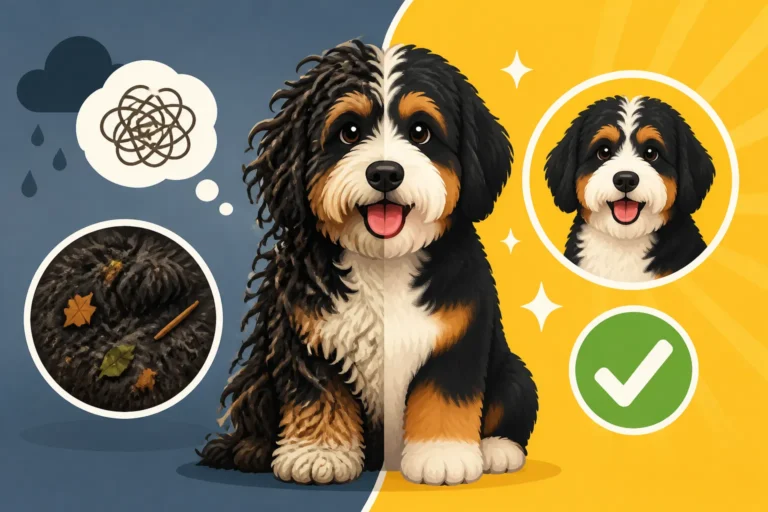
Whether Bernedoodles Existed Before 2003
It’s a question that often pops up in online forums and casual conversations among dog lovers: did Bernedoodles actually exist before 2003, or is their origin story truly that recent? Many people, seeing these adorable, fluffy companions everywhere now, might assume they've been around for ages, perhaps just under a different name or as less recognized crosses. But the reality is that the Bernedoodle, as we know and love them today, is a remarkably modern creation, born from a specific need and a purposeful vision that really only took root just over two decades ago. This guide will walk you through the surprising truth about the Bernedoodle's beginnings, why they came into existence, and how to understand their place in the broader history of companion dogs.
The Official Origin Story: When and Where the Bernedoodle Began
When you look at a Bernedoodle, it’s easy to imagine them as a timeless breed, perhaps guarding Swiss pastures or charming Victorian drawing rooms. But the truth is far more contemporary. Unlike ancient breeds with centuries of documented history, the Bernedoodle has a very clear, very recent birthdate and a specific visionary behind its initial creation. It all boils down to a deliberate effort to combine the best traits of two beloved breeds.
The Visionary Behind the Breed SwissRidge Kennels
The credit for the first intentional Bernedoodle litter goes to Sherry Rupke of SwissRidge Kennels in Ontario, Canada. It wasn't just a random pairing; it was a thoughtful, compassionate decision driven by a desire to improve upon existing breeds. Sherry Rupke, a dedicated dog breeder with a deep love for Bernese Mountain Dogs, was intimately familiar with their incredible temperament and striking good looks. However, she was also acutely aware of the heartbreakingly short The Seven Years a Bernese Lives and the Twelve a Bernedoodle Might and the prevalence of certain health issues within the Bernese breed. The constant struggle with heartbreaking illnesses like cancer made her seek a healthier alternative that retained the Bernese charm. This is why a client's suggestion became the Bernedoodle. She sought to leverage the Poodle's renowned intelligence, lower shedding coat, and, crucially, its longer lifespan, to create a healthier, more robust family companion.
The Year 2003: A Specific Beginning
The year 2003 marks the pivotal moment when the first planned litter of Bernedoodles came into the world. This wasn't some ancient, forgotten cross suddenly rediscovered; it was a deliberate act of hybridizing with specific goals in mind. Prior to this, any Bernese-Poodle mixes would have been accidental, without the careful health screening and intentional pairing that defines the Bernedoodle as a "designer dog." When we talk about The 2003 Litter That Started the Bernedoodle, we're talking about a calculated step to address genetic predispositions and offer families a dog with a greater chance at a longer, healthier life. This intentional breeding set the stage for the Bernedoodle's rapid rise in popularity, differentiating it from mere mixed-breed dogs that have always existed without such a clear origin story.
Why the Bernedoodle Emerged: Addressing Specific Needs
The Bernedoodle wasn't created simply for novelty or cuteness (though they certainly have plenty of that!). Their emergence was rooted in a very real, very emotional need experienced by many Bernese Mountain Dog owners: the heartbreak of their beloved companions' often short lives. The deliberate cross was an attempt to mitigate these profound challenges while retaining the qualities people cherished.
The Bernese Mountain Dog's Health Challenges
It's no secret among Bernese Mountain Dog enthusiasts that these gentle giants, despite their incredible personalities and stunning appearance, often face significant health hurdles. Their average lifespan, heartbreakingly, is notoriously short compared to many other breeds of similar size. Conditions like various cancers, including the aggressive What Histiocytic Sarcoma Does to a Bernese, hip and elbow dysplasia, and other genetic predispositions, cast a shadow over their otherwise joyful existence. Owners frequently grapple with the emotional and financial toll of these illnesses, leading to a profound desire for a dog with a similar loving nature but with improved longevity. It's a heavy burden for many, and the idea of a dog that could potentially circumvent some of these issues was incredibly appealing. This pressing concern is a major part of Why Cancer Prompted the First Bernedoodle.
The Poodle's Contributions: Longevity and Coat
Enter the Poodle, a breed celebrated for its sharp mind, athletic prowess, and, significantly, its robust health and impressive lifespan. Poodles generally live longer than Bernese Mountain Dogs, often well into their teens. By crossing the Bernese with a Poodle, breeders hoped to introduce this greater longevity and genetic diversity, thereby reducing the incidence of inherited diseases that plagued the Bernese line. Furthermore, the Poodle's non-shedding, hypoallergenic coat was another huge draw. Many families adore the shaggy look of a Bernese but struggle with the heavy shedding, especially those with allergies. The Bernedoodle aims to offer the best of both worlds: the Bernese's gentle, loyal temperament combined with the Poodle's intelligence, longevity, and lower-shedding coat. This combination made the potential for a healthier, easier-to-manage dog incredibly attractive, addressing very specific pain points for prospective owners. The genetic blend was hoped to offer Whether a Bernedoodle Lives Longer Than a Bernese. You can find a vast array of grooming tools suitable for a Bernedoodle's unique coat on sites like Chewy, making upkeep more manageable.
Before the Bernedoodle: The Concept of Designer Dogs
To understand why the Bernedoodle's origin in 2003 is significant, we need to talk about the concept of "designer dogs" versus just any old mixed breed. Mixed breeds have always existed, often accidentally, but the deliberate creation of a crossbreed with specific goals is a relatively modern phenomenon.
Accidental Crosses Throughout History
Of course, dogs have been crossbreeding for as long as they've been around. Throughout history, there have undoubtedly been countless accidental pairings between Bernese Mountain Dogs and Poodles, or dogs that looked like them. Farmers' dogs, stray dogs, and even pets whose owners weren't careful about breeding would naturally mix. These "mutts" often make wonderful companions, and their genetic diversity can sometimes contribute to better health, but they lack a "breed" name or an intentional breeding program behind them. They were simply mixed-breed dogs, valued for their individual personalities and utility, not for a specific combination of traits aimed at a market or a health goal. The difference between an accidental mix and a Bernedoodle is intent, purpose, and careful selection. You wouldn't find a farmer in the 1800s consciously breeding a "Bernedoodle" to market it as such.
The Rise of the "Doodle" Phenomenon
The Bernedoodle didn't just appear out of nowhere; it rode the wave of the immensely popular "Doodle" phenomenon. The Goldendoodle and Labradoodle, both Poodle crosses, paved the way, demonstrating the appeal of combining the Poodle's coat and intelligence with the beloved traits of other breeds. These earlier Doodles proved that there was a strong market for dogs that offered a specific set of characteristics, particularly a friendly temperament and a low-shedding coat, which were highly desirable for families with allergies or those seeking easier grooming. This trend showed breeders like Sherry Rupke that there was a clear demand for carefully planned crossbreeds. The success of other "doodles" provided a blueprint and a receptive audience for a new cross that aimed to address the specific health and temperament desires of Bernese Mountain Dog admirers. Platforms like Chewy quickly adapted to the growing market for these designer dogs, offering specific foods and toys tailored to their needs.
Distinguishing Intentional Breeding from Random Mixes
The key to understanding the Bernedoodle's modern origin lies in recognizing the difference between a planned, purposeful cross and a random, accidental mix. This distinction is paramount when discussing health, temperament, and predictability.
The Purposeful Selection of Parent Breeds
When a responsible breeder sets out to create a Bernedoodle, it’s not just about putting any Bernese and any Poodle together. It’s a meticulous process involving the careful selection of parent dogs from established, health-tested lines. The goal is to choose individuals who exemplify the best traits of their respective breeds – a Bernese with an excellent temperament and good conformation, and a Poodle known for its intelligence, health, and desired coat type. This purposeful selection is aimed at maximizing the chances of producing healthy puppies with predictable traits, both in terms of appearance and personality. This contrasts sharply with accidental mixes, where the genetic lottery is entirely random, and the health and temperament of the offspring are far less predictable. The goal is to produce a dog that embodies specific desired characteristics.
Health Testing and Breeder Responsibility
A defining characteristic of the intentional Bernedoodle breeding program is the emphasis on comprehensive health testing. Responsible breeders invest significant time and resources into ensuring their breeding stock is clear of genetic diseases common to both the Bernese Mountain Dog and the Poodle. This includes screenings for conditions like hip and elbow dysplasia, Degenerative Myelopathy Both Bernedoodle Parents Can Carry, Von Willebrand's Disease in a Bernedoodle, and various eye conditions. These tests are conducted on both parent dogs before breeding, to minimize the risk of passing on debilitating hereditary conditions to the puppies. This level of proactive health management is virtually non-existent in accidental mixed-breed litters, where the genetic background of the parents is often unknown. Therefore, while mixed-breed dogs have always existed, a Bernedoodle from a reputable breeder comes with a documented health history and a much higher degree of predictability, thanks to this responsible approach. Understanding The Five Clearances a Bernedoodle Breeder Should Have is crucial for any potential owner.
| Feature | Accidental Mixed Breed | Intentional Designer Breed (Bernedoodle) |
|---|---|---|
| Origin | Random, unplanned pairing | Deliberate, purposeful crossing |
| Parent Selection | Unknown or opportunistic | Carefully selected for health and temperament |
| Health Testing | Typically none | Extensive, pre-breeding health screenings |
| Predictability | Low (temperament, size, coat, health) | Moderate to High (due to parent knowledge) |
| Primary Goal | Reproduction | Specific trait combination, health improvement |
| "Breed Name" | Often general (e.g., "mix," "mutt") | Specific (e.g., "Bernedoodle," "Goldendoodle") |
| Breeder Accountability | Limited to none | High (reputable breeders offer guarantees) |
The Bernedoodle's Journey to Popularity
From a singular, purposeful litter in 2003, the Bernedoodle quickly captured the hearts of many, evolving from an experimental crossbreed to a widely sought-after family companion. This trajectory wasn't just happenstance; it was fueled by a combination of genuine appeal and modern communication.
Word-of-Mouth and Social Media's Role
In today's interconnected world, news—and cute dog pictures—travel fast. While the initial growth might have been slower, powered by word-of-mouth among dog enthusiasts and client referrals, the explosion of social media platforms played a pivotal role in accelerating the Bernedoodle's popularity. People shared photos and stories of their adorable, friendly, intelligent, and often low-shedding companions, creating a viral sensation. This visual appeal, combined with glowing testimonials about their wonderful temperaments, helped the Bernedoodle quickly gain recognition beyond niche circles. Prospective owners, seeing these beautiful dogs living happy, healthy lives, became eager to welcome one into their own homes. This rapid spread through digital channels is a distinct feature of modern dog breed popularity, something that simply wasn't possible before the internet age. Many potential owners start their research online, perhaps browsing through dog breed profiles on sites like Chewy before they even know the Bernedoodle's specific history.
The Appeal of Temperament and Appearance
Ultimately, the Bernedoodle's soaring popularity boils down to its inherent qualities. The intentional cross aimed to create a dog with a fantastic blend of traits, and for many, it succeeded beautifully. They often inherit the calm, loyal, affectionate nature of the Bernese Mountain Dog, tempered by the Poodle's intelligence and playful wit. This makes them highly trainable and adaptable companions, suitable for a wide range of families and lifestyles. Their charming, often goofy personalities, combined with their striking good looks and soft, varied coats, make them incredibly appealing. Whether it's the traditional tri-color markings or a solid black coat, their appearance is undeniably captivating. It’s this irresistible combination of brains, beauty, and biddability that has solidified the Bernedoodle's place in the hearts and homes of so many, making them one of the most beloved "designer dogs" in a remarkably short period of time. It's a testament to the success of the original vision that these dogs consistently meet and exceed expectations for families seeking a loving, intelligent, and long-lived companion. You can even find specialized Bernedoodle-themed toys and accessories on Chewy, a clear indicator of their widespread appeal.
Disclaimer
This article is for general informational purposes only and does not constitute professional advice. Laws, prices and regulations vary by location and change over time. Consult a qualified professional for guidance on your specific situation.