Whether the AKC Will Ever Recognize the Bernedoodle
One of the biggest questions that often pops into the minds of prospective Bernedoodle owners, and even those who've loved these fluffy companions for years, is whether this wonderful crossbreed will ever get the official stamp of approval from the American Kennel Club (AKC). It's a common frustration to love a dog so deeply, only to find them outside the traditional kennel club recognition, leading to a lot of speculation and misunderstanding about what that even means for your furry family member. This guide aims to clear up some of that confusion, diving deep into the AKC's stringent requirements and where the Bernedoodle currently stands in the grand scheme of official dogdom.
Understanding AKC Recognition: What Does It Even Mean?
When we talk about AKC recognition, we're not just talking about whether your dog is a "real" dog – every dog is real and loved, of course! We're discussing a very specific process that designates a group of dogs as a purebred breed with a consistent lineage, predictable traits, and a formal written standard. It's a journey that takes decades, sometimes even a century, and it's far more involved than simply being popular or having a cute name.
The Rigorous Path to Becoming a Recognized Breed
The AKC is the oldest and largest not-for-profit purebred dog registry in the United States, and they take their role very seriously. For a breed to be recognized, it typically starts with a small group of dedicated fanciers who form a national breed club. This club then works tirelessly to establish a solid foundation for their breed. They must demonstrate a significant population of dogs that consistently breed true to type, meaning puppies from two parents of the same "breed" look and behave very similarly, with predictable health and temperament.
Think about it: when you see a Golden Retriever, you have a pretty good idea of what it will look like, its general size, and its characteristic friendly demeanor. This consistency is precisely what the AKC seeks. The journey involves many steps, including acceptance into the AKC Foundation Stock Service (FSS), where breed development is tracked, then potentially moving to the Miscellaneous Class, and finally, full recognition. Each step can take years, requiring meticulous record-keeping, health testing, and breed exhibition to prove consistency across generations. It's a slow, deliberate process designed to ensure the integrity and health of the canine population under their umbrella.
Why Breed Standards and Generations Matter
At the heart of AKC recognition is the "breed standard." This is a written document that describes the ideal characteristics of the breed, including its physical appearance (size, coat type, color, head shape, tail set), temperament, and even gait. It's a blueprint that breeders strive to meet and judges use to evaluate dogs in the show ring. For a crossbreed like the Bernedoodle, which is a mix of a Bernese Mountain Dog and a Poodle, establishing a consistent breed standard is incredibly challenging. You have two distinct parent breeds, each with their own AKC standards, contributing a wide array of traits.
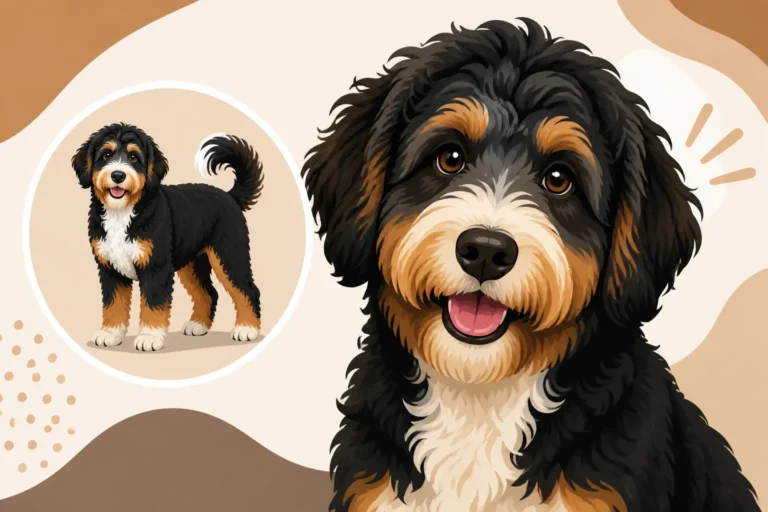
When you mix two breeds, especially with varying coat types, sizes, and temperaments, the offspring can be quite diverse. We see Bernedoodles with wavy coats, curly coats, even some with straighter coats, and their sizes can range from mini to standard, often even within the same litter. This variability, while charming to owners, is a significant hurdle for AKC recognition. The AKC wants generations of dogs that consistently produce offspring matching a specific, agreed-upon standard, and most Bernedoodles today are still F1 (first generation) or F1b (first generation backcross) crosses, meaning that consistency is still very much in flux. Understanding the importance of Whether an F1 Bernedoodle Halves the Cancer Risk or Whether an F1b Bernedoodle Lives Longer Than an F1 highlights how different generations are still being evaluated for health, let alone conformity to a physical standard.
The Bernedoodle's Current Status in the Dog World
So, where does that leave our beloved Bernedoodle? While they might not be gracing the hallowed rings of Westminster, they are certainly one of the most popular and cherished "designer" dogs out there. Their status, however, is quite different from that of an AKC-recognized breed.
Doodle Popularity Versus Official Recognition
The Bernedoodle's rise to popularity has been meteoric, much like other "Doodle" breeds. People are drawn to their adorable appearance, often non-shedding coats (though not always, as explored in Whether Any Bernedoodle Is Truly Non Shedding), and wonderful temperaments, which blend the loyal, calm nature of the Bernese with the intelligence and often lower-shedding qualities of the Poodle. This popularity, however, isn't enough for AKC recognition. The AKC focuses on preserving distinct purebred lines, and for many years, crossbreeds were seen as outside this mission.
While the public adores Bernedoodles, the official purebred dog world maintains a clear distinction. The demand for Bernedoodles, and other Doodles, has created a thriving community of breeders and enthusiasts, but it operates largely parallel to, rather than within, the traditional AKC framework. This isn't a judgment on the Bernedoodle's value as a companion, but simply a statement about the different criteria for inclusion in various registries.
Listing with Companion and Hybrid Registries
Instead of AKC recognition, Bernedoodles are typically registered with hybrid dog clubs and registries. Organizations like the Continental Kennel Club (CKC – not to be confused with the Canadian Kennel Club) or the Designer Dogs Kennel Club often provide registration for crossbreeds. These registries serve a different purpose, mainly to track parentage and provide a sense of official documentation for owners. They don't have the same rigorous multi-generational requirements for breed standards as the AKC.
For many owners, these alternative registries are perfectly sufficient. They confirm the lineage of your Bernedoodle, which can be important for peace of mind, especially when you're looking for a responsible breeder who can provide health clearances for the parent dogs. You might use platforms like Chewy to find quality food for your Bernedoodle, but you won't be finding them listed as an AKC breed in official show categories. Understanding Which Clubs Register Bernedoodles gives you a better idea of where these dogs currently fit in the broader dog community.
Challenges and Hurdles for Bernedoodle Recognition
The path to AKC recognition is fraught with challenges for any emerging breed, and for a crossbreed like the Bernedoodle, these hurdles are even more pronounced. It boils down to a few key areas that the Bernedoodle, by its very nature, struggles to consistently meet.
The Consistent Breed Standard Dilemma
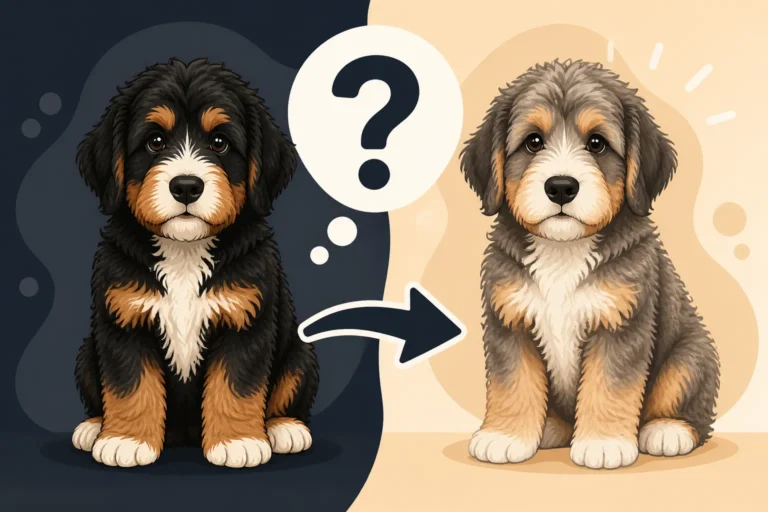
As mentioned earlier, establishing a consistent breed standard is paramount for AKC recognition. The Bernedoodle, being a first or second-generation cross, exhibits a wide range of characteristics. One Bernedoodle might look distinctly more Poodle, with a slender build and tightly curled coat, while another might strongly resemble a Bernese, with a broader head and a wavy, shaggy coat. Sizes vary dramatically, from a 25-pound Mini Bernedoodle to a 90-pound Standard. Just look at What a Traditional Tri Color Bernedoodle Looks Like versus a sable or phantom; the aesthetic variations are huge.
To achieve AKC recognition, a dedicated group of breeders would need to select for very specific traits over many generations, ensuring that virtually all puppies born conform to a narrow standard. This would mean carefully culling dogs that don't meet the aesthetic or structural criteria, a practice that's often difficult and not always a priority for breeders focused on companion animals. The current focus on hybrid vigor and combining desirable traits from both parent breeds often means embracing the variability, rather than trying to eliminate it, which is directly at odds with the AKC's mission. The Three Bernedoodle Sizes and What Sets Them further illustrates the sheer variability that would need to be ironed out.
Genetic Diversity and Health Testing Expectations
Another critical aspect for AKC consideration is genetic health and diversity. Purebred breeds, especially those with smaller gene pools, can be prone to specific genetic health issues. The idea behind "hybrid vigor" in Doodles is that by mixing two different breeds, you theoretically reduce the incidence of breed-specific genetic diseases. While this can be true in some cases, it doesn't eliminate all health concerns, and Bernedoodles still face predispositions to issues from both parent lines, such as hip and elbow dysplasia from the Bernese side, or eye conditions and bloat from the Poodle side.
For AKC recognition, a breed must demonstrate a commitment to health testing and responsible breeding practices across its entire population. Breeders would need to consistently screen for genetic diseases prevalent in both parent breeds and demonstrate a clear reduction or management of these issues through selective breeding over many generations. While many responsible Bernedoodle breeders do extensive health testing (e.g., The Five Clearances a Bernedoodle Breeder Should Have), this practice needs to be standardized and proven across a broad enough population to satisfy AKC requirements for a nascent "breed." Ensuring genetic diversity while simultaneously narrowing the breed standard is a complex balancing act.
The Future of the Bernedoodle and AKC Recognition
So, given these challenges, what does the future hold for the Bernedoodle in terms of AKC recognition? Is it an impossible dream, or just a very, very distant possibility?
The Long Road Ahead: Decades, Not Years
Realistically, if the Bernedoodle were ever to achieve AKC recognition, it would be a journey measured in decades, not years. Consider breeds like the Goldendoodle or Labradoodle, which have been around longer and are arguably even more popular; they too remain unrecognized by the AKC. The process requires a dedicated, unified group of breeders to work towards a common goal: establishing a consistent breed standard, maintaining health records, and producing generations of dogs that reliably meet that standard. It's a massive undertaking that would require a significant shift in breeding focus for many Bernedoodle enthusiasts.
There would need to be a formal "Bernedoodle Club of America" (or similar) that applies to the AKC, proving a sustained commitment to these standards. The initial "creation" of the Bernedoodle by people like Sherry Rupke of SwissRidge Kennels (The 2003 Litter That Started the Bernedoodle and Why Sherry Rupke Bred the First Bernedoodle) was about blending traits, not necessarily creating a new, rigid breed. The AKC's criteria are designed to preserve specific, established genetic lines, and to welcome a new one means ensuring it can stand on its own as a distinct, predictable entity.
Enjoying Your Bernedoodle, Recognition or Not
Ultimately, for most Bernedoodle owners, whether their dog is AKC recognized is secondary to the joy and companionship their furry friend brings. The love for these dogs stems from their individual personalities, their soft coats, and their loyal, intelligent natures. Your Bernedoodle isn't any less wonderful because it doesn't have an AKC pedigree. They still need good nutrition, regular vet check-ups, and plenty of love, whether their food comes from Chewy or a local pet store.
Focusing on responsible ownership—finding a reputable breeder who health tests, providing proper training (like Leash Manners on a Bernedoodle Heading for Ninety Pounds), and ensuring a happy, healthy life—is far more important than any official designation. The Bernedoodle's worth is in its wagging tail, its comforting lean, and the boundless affection it offers, not in a registry certificate. Whether the AKC ever opens its doors to the Bernedoodle, these fantastic dogs will continue to enrich the lives of countless families, which, in the end, is what truly matters. We're celebrating Whether the Bernedoodle Counts as a Breed Yet by appreciating them for exactly what they are: amazing companions.
| Feature | AKC Recognized Breeds | Bernedoodles (Crossbreeds) |
|---|---|---|
| Breed Standard | Highly defined, consistent physical & temperament | Wide variation in size, coat, markings, temperament |
| Generations | Generations of consistent breeding to standard | Often F1 or F1b, still evolving and diversifying |
| Registry Focus | Preservation of established purebred lines | Tracking parentage of two purebred parents, companion focus |
| Competitions | Eligible for AKC conformation, obedience, agility | Eligible for some performance events (e.g., AKC Canine Partners, certain agility/obedience clubs), not conformation |
| Health Testing | Required for responsible breeders, data contributes to breed health programs | Crucial for responsible breeders to screen parent lines |
| Recognition Timeline | Decades to centuries of development | Generally considered a "designer dog" or hybrid breed |
Disclaimer
This article is for general informational purposes only and does not constitute professional advice. Laws, prices and regulations vary by location and change over time. Consult a qualified professional for guidance on your specific situation.