What Tri Color Means on a Bernedoodle
One of the most common questions I hear from aspiring Bernedoodle parents revolves around their coats, especially those gorgeous, highly sought-after tri-color markings. It can be confusing trying to understand what makes a Bernedoodle "tri-color" and why some puppies have it while others don't, often leading to frustration when trying to pick out the perfect furry family member. This guide is here to demystify the tri-color Bernedoodle, diving deep into what this stunning pattern means for your pup, from its appearance to the fascinating genetics behind it.
Understanding the Classic Tri-Color Bernedoodle Pattern
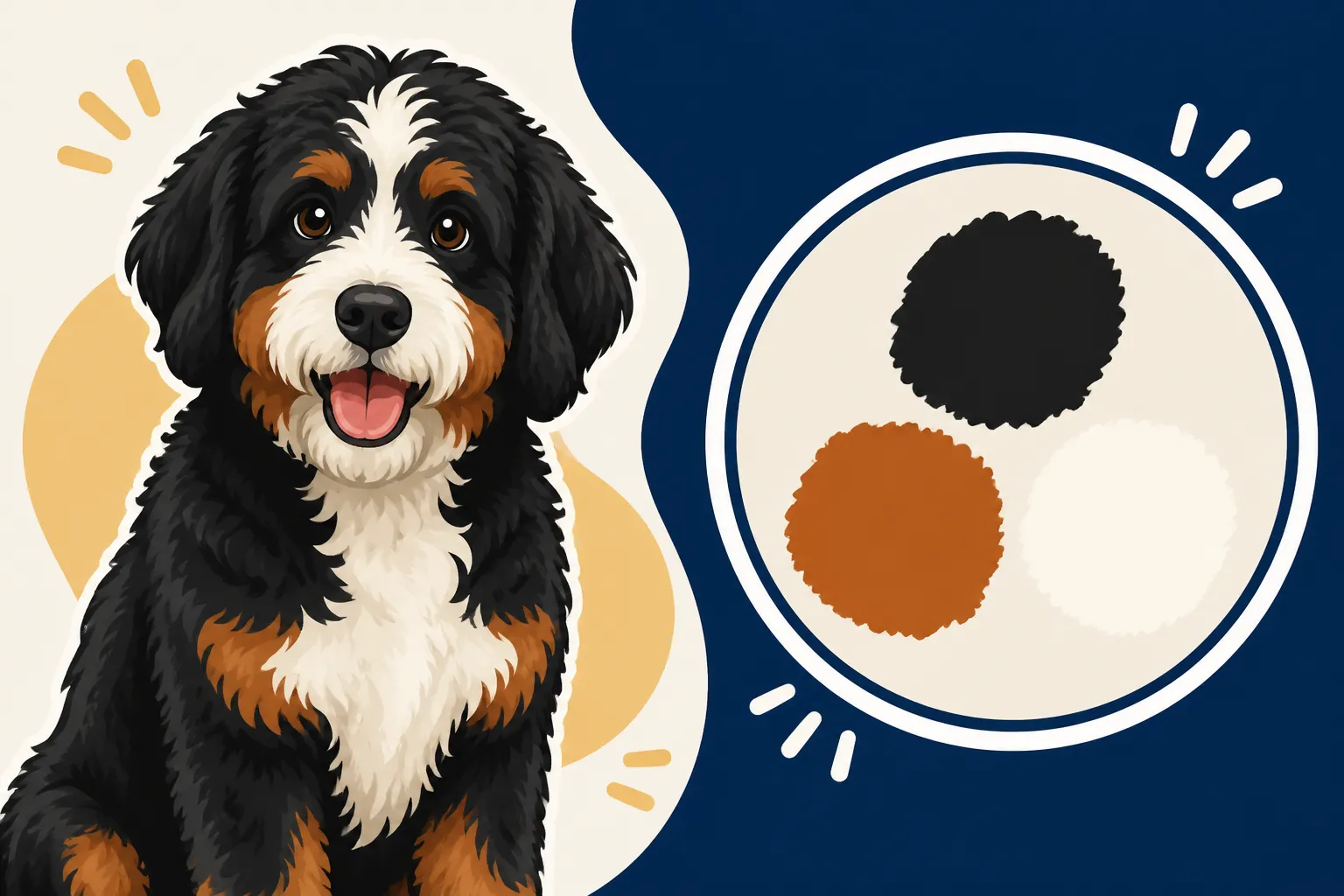
When people talk about a "tri-color Bernedoodle," they're typically envisioning that iconic coat pattern that so closely resembles the Bernese Mountain Dog parent. It's a striking combination of three distinct colors: a deep, lustrous black, clean white, and rich rust or tan markings. These colors aren't just splashed on randomly; they appear in a very specific, beautiful pattern that makes each tri-color Bernedoodle truly unique.
The Signature Black Base and White Blaze
At the heart of a traditional tri-color Bernedoodle is its black base coat. This isn't just any black; it's usually a deep, solid black that covers the majority of the dog's body. Think of it as the canvas upon which the other colors are painted. Then, almost like a beautiful signature, you'll find the white markings. The most prominent white feature is often the "blaze" running up the center of the face, usually starting between the eyes and potentially extending up the forehead. It's like a little arrow pointing right to their adorable personalities. Beyond the face, white is typically found on the chest, often extending down the belly, and on the tips of the paws. Sometimes, you'll see a white-tipped tail, which just adds another layer of charm. These white areas should ideally be crisp and clear, providing a lovely contrast to the dark coat.
The Rust or Tan "Points" That Complete the Look
What truly elevates a Bernedoodle from a bi-color (black and white) to a tri-color are those gorgeous rust or tan markings, often referred to as "points." These aren't just random patches; they appear in very specific locations, mimicking the classic Bernese Mountain Dog aesthetic. You'll typically find these rich tan or rust points above each eye, almost like expressive eyebrows that give them so much character. Other common spots include the cheeks, on the sides of the muzzle, and on the insides of the ears. Look for them on the chest, just above where the white starts, sometimes forming a neat little "bib" or outline. They also pop up on all four legs, usually on the lower part, and beneath the tail. It's these strategically placed points of color that complete the tri-color magic, giving the Bernedoodle that distinct, beloved Bernese charm in a low-shedding package. Many owners specifically search for The Tri Color Markings People Buy a Bernedoodle For because of this classic appearance.
The Genetic Blueprint Behind Those Beautiful Tri-Color Markings
Understanding how a Bernedoodle gets its tri-color coat is a fascinating dive into canine genetics. It's not just a roll of the dice; there are specific genes at play that dictate whether those beautiful black, white, and rust patterns will appear. This is especially important for breeders and prospective owners who are hoping for a specific look.
The Role of the Agouti Gene and the "Tri-Color Allele"
The primary player in producing a tri-color coat is the agouti gene series, specifically the "tri-color allele" (often denoted as 'at'). Without getting too deep into the scientific weeds, think of the agouti gene as the master switch that determines how pigment is distributed along each individual hair shaft. In simpler terms, it controls whether a dog expresses solid color, fawn/sable, or the classic tri-color pattern. For a Bernedoodle to display those distinct tan points, it generally needs to inherit at least one copy of this 'at' allele from its parents. The Bernese Mountain Dog parent, of course, is famous for carrying this gene, and it's a desirable trait for many Bernedoodle breeders to pass on. If a Bernedoodle puppy inherits two copies of this allele (at/at), it will express the tri-color pattern. If it inherits one copy (at/a or at/at), it will still express tri-color or carry the gene to its offspring. This is often why potential owners ask Whether an F1 Bernedoodle Can Be Tri Color, as the first generation cross is the most direct way to get this gene from the Bernese side.
Understanding Dominant and Recessive Genes for Color Expression
Genetics can be a bit like a puzzle, with different pieces (genes) interacting to create the final picture (the dog's coat). When it comes to color, you have dominant and recessive genes. For instance, the black coat color itself is often dominant. However, the expression of the tri-color pattern relies on a specific interplay. If a Bernedoodle inherits a gene for solid black (which would hide the tan points), it might not display the tri-color pattern, even if it carries the tri-color allele. Similarly, other genes can modify the intensity of the tan points, making them a rich rust or a lighter cream. This is why The Genetics Behind a Bernedoodle's Tri Markings are complex, and even from two tri-color parents, you might not get an entire litter of tri-color pups, though it's much more likely. Factors like dilute genes can also affect the overall color, turning black to blue or chocolate, and subsequently impacting the shade of the tan points. It's a delicate balance of inheritance that makes each litter a delightful surprise!
| Gene Locus | Description | Relevance to Tri-Color |
|---|---|---|
| A (Agouti) | Controls distribution of black and red pigments along hair shafts. | 'at' allele is essential for expressing tan points. |
| B (Brown) | Determines whether black pigment is expressed as black or brown (chocolate). | Influences the base color and the shade of tan points (chocolate tri). |
| E (Extension) | Controls where phaeomelanin (red/yellow) pigment is produced. | 'e/e' can result in a red or yellow dog, overriding black/tri-color. |
| K (Dominant Black) | Controls expression of agouti series genes. | 'KB' (dominant black) can mask tri-color expression, resulting in solid black. |
| S (Spotting) | Controls the presence and pattern of white markings. | Responsible for the white blaze, chest, and paw markings. |
Beyond Traditional Tri-Color: Exploring Variations and Fading
While the classic black, white, and rust tri-color is what most people picture, the world of Bernedoodle coats is full of delightful variations. Genetics, as we've seen, isn't always straightforward, and these variations can lead to stunning, albeit sometimes unexpected, results. Understanding these nuances helps future owners appreciate the full spectrum of Bernedoodle beauty.
Chocolate Tri, Phantom, and Other Tri-Color Offshoots
Beyond the traditional black tri-color, you might encounter Bernedoodles with similar patterns but different base colors. A "chocolate tri" Bernedoodle, for example, has a rich brown or liver base coat instead of black, with those familiar white and rust markings. This occurs when the dog inherits two copies of a recessive gene that dilutes black pigment to brown. It's absolutely gorgeous and equally striking, offering a warmer palette. Then there's the "phantom" pattern, which is technically a variation of tri-color. Phantom dogs have a solid base color (often black or chocolate) with tan or rust points, but without the white markings. So, they have the "eyebrows," cheek flashes, and leg markings, but no white blaze on the face or chest. It's like a simplified, elegant version of tri-color. These variations are less common than the traditional tri-color, and some are How Rare a Traditional Tri Bernedoodle Is, making them highly desirable to some families. When searching for dog supplies like specialized shampoos for different coat types, websites like Chewy offer a vast selection that can cater to any Bernedoodle's unique needs, whether they're a classic tri or a phantom.
The Phenomenon of Fading and Coat Changes Over Time
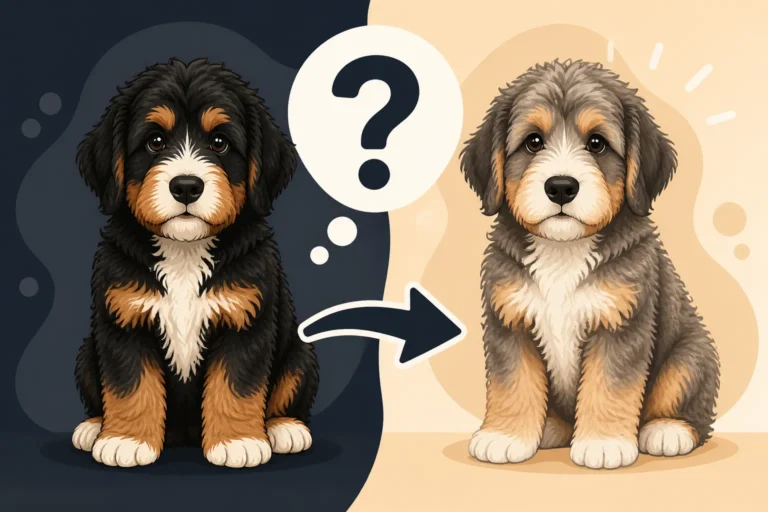
One thing many Bernedoodle owners discover, sometimes to their surprise, is that their dog's coat isn't static. It can change quite a bit from puppyhood into adulthood, and this includes tri-color markings. The most common change is fading, especially in the black portions of the coat. This is often referred to as "greying out" or "clearing." What was once a deep, jet black can soften to a charcoal, silver, or even blue-grey over time. This fading is more common if the Poodle parent carried the "fading gene." The rust or tan points can also lighten or darken, becoming a softer cream or a richer, deeper auburn. Sometimes, the white markings can expand slightly or even develop "ticking," which are small, colored flecks within the white areas. Whether a Bernedoodle's Markings Fade With Age is a common concern, but it's often a natural part of their genetic makeup and doesn't detract from their charm. These coat changes are part of the journey of owning a Bernedoodle, and while they might not look exactly like their puppy pictures forever, they evolve into equally beautiful adult dogs.
Why the Tri-Color Bernedoodle Holds Such Allure
It's no secret that the tri-color Bernedoodle is one of the most coveted variations of this delightful crossbreed. There's just something incredibly appealing about that classic three-color pattern that captures hearts and often fetches a premium price. But what exactly is it that makes this particular coat so desirable? It's a blend of familiarity, visual appeal, and even a touch of perceived rarity.
The Bernese Mountain Dog Connection and Visual Appeal
For many, the appeal of the Bernedoodle lies in its unique blend of the Poodle's intelligence and low-shedding coat with the beloved temperament and appearance of the Bernese Mountain Dog. And when it comes to appearance, the tri-color pattern is the most direct visual link to the Bernese. It evokes that majestic, gentle giant image, but in a dog that often sheds much less and can have a longer lifespan. This immediate recognition and appreciation for the Bernese aesthetic, combined with the "doodle" charm, creates a powerful draw. What a Traditional Tri Color Bernedoodle Looks Like is exactly what many prospective owners are hoping for when they embark on their search. The crisp white against the deep black, accented by those warm rust points, is simply stunning and makes heads turn at the dog park. It's a visually striking coat that carries a certain elegance and timeless quality.
Desirability and Market Impact of Tri-Color Bernedoodles
Because the tri-color pattern is so highly sought after and requires specific genetics to achieve, it often commands a higher price tag. Breeders who consistently produce true tri-color Bernedoodles, especially those with clear, well-defined markings, can understandably charge more for their puppies. This isn't just arbitrary; it reflects the effort in selective breeding, genetic testing of parent dogs, and the sheer demand for this particular look. While What Tri Color Adds to a Bernedoodle's Price can vary significantly based on region and breeder, it's almost universally accepted that a well-marked tri-color puppy will be at the higher end of the Bernedoodle price spectrum. This market dynamic often influences breeding decisions, with many aiming to produce these highly desirable coats. Remember, regardless of color, a healthy, well-socialized puppy from a reputable breeder is paramount. Chewy, for example, provides a wealth of products suitable for puppies of any color, ensuring your new tri-color friend gets the best start in life with quality food, toys, and training aids.
Managing Coat Care for All Bernedoodle Colors
While this guide focuses on the aesthetics of the tri-color pattern, it's crucial to remember that the type of coat (wavy, curly, straight) rather than the color dictates grooming needs. However, the presence of distinct markings might make a matted tri-color Bernedoodle appear even more disheveled, highlighting the importance of regular care. All Bernedoodles, regardless of their color, require consistent grooming to prevent matting and keep their coats healthy. This includes regular brushing, professional grooming every 6-8 weeks, and attentive care for areas prone to tangles, like behind the ears and in the armpits. A high-quality slicker brush and metal comb are your best friends in this endeavor. Even if your tri-color pup decides to roll in the mud, maintaining their coat with the right grooming tools—easily found at retailers like Chewy—is key to keeping them comfortable and looking their best.
Disclaimer
This article is for general informational purposes only and does not constitute professional advice. Laws, prices and regulations vary by location and change over time. Consult a qualified professional for guidance on your specific situation.