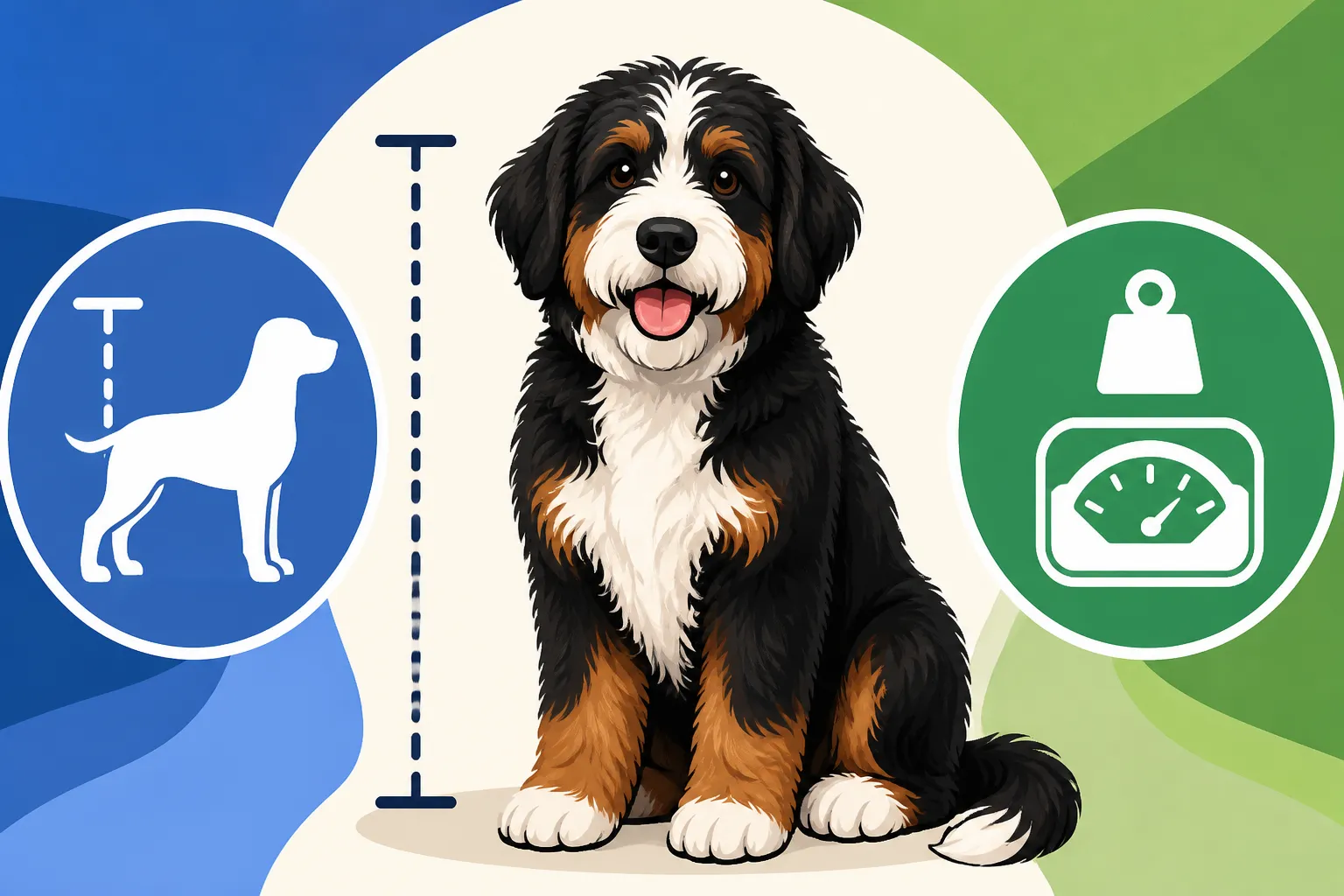
The Height and Weight of a Standard Bernedoodle
One of the biggest excitements, and sometimes anxieties, for prospective Bernedoodle owners is figuring out just how big their furry family member will get. It’s not always as straightforward as you might think with a hybrid breed, and many new owners find themselves surprised by the sheer scale of their "standard" pup. This guide aims to clear up the mystery around the height and weight of a standard Bernedoodle, giving you a realistic picture of what to expect as your cuddly puppy transforms into a gentle giant.
Decoding the "Standard" in Bernedoodle Size
When breeders talk about a "standard" Bernedoodle, they're generally referring to the largest size category. Unlike purebred dogs with rigid breed standards set by organizations that dictate exact measurements, Bernedoodles, as a hybrid, have a bit more wiggle room. This means the term "standard" isn't a universally fixed point, which can be a source of confusion for eager future owners. You might envision a dog of a certain size, only to find the reality is a touch different, sometimes bigger, sometimes a little smaller, than your initial expectation.
What Exactly Defines a Standard Bernedoodle?
Typically, a standard Bernedoodle is the result of crossing a Standard Poodle with a Bernese Mountain Dog. The aim is to blend the best characteristics of both parents, creating a robust, intelligent, and affectionate dog. Because both parent breeds are sizable, their offspring, the standard Bernedoodle, naturally follows suit. There's no official registry dictating precise measurements, but the general consensus among ethical breeders is that a standard Bernedoodle will mature into a large dog. We're talking about a dog that will absolutely take up a significant amount of sofa space and likely reach the kitchen counter if they stand on their hind legs – sometimes even if they don't!
This isn't to say every standard Bernedoodle will be identical. Far from it. Just as children from the same parents can vary in height and build, so too can puppies in a litter. One might lean more heavily towards the Poodle's lanky, athletic build, while another might inherit more of the Bernese's sturdy, blockier frame. This beautiful genetic lottery is part of the charm, but it also means precision is elusive. Expect a range, not a single definitive number, when considering your puppy's ultimate size. Understanding this variability upfront can save a lot of head-scratching later on.
The Variability Inherent in a Hybrid Breed
The beauty of the Bernedoodle lies in its hybrid vigor and the blend of two distinct breeds. However, this also means there's less consistency in traits like size compared to a purebred dog. When you breed two purebred Bernese Mountain Dogs, you have a very strong expectation of the puppies' eventual size based on generations of established genetics. The same goes for two Standard Poodles. But when you cross them, you introduce a wider spectrum of possibilities.
Think of it like this: your Bernedoodle puppy is getting a random selection of genes from both its Bernese and Poodle parents. One pup might inherit more of the Bernese genes that contribute to broad chests and heavy bones, while a littermate might get more of the Poodle genes leading to a taller, leaner physique. This genetic mixing bowl is why even within the same litter, you can see quite a size difference. This variability is one of the reasons why predicting the exact adult weight and height can be challenging, even for experienced breeders. It's an exciting journey watching them grow and seeing which traits shine through, but it definitely means being prepared for a dog that could fall anywhere within the expected range, or even occasionally surprise you by exceeding it.
Typical Height and Weight Ranges for Standard Bernedoodles
So, what does that "standard" size actually look like in terms of numbers? While there's no official standard, most reputable breeders and Bernedoodle enthusiasts agree on a general range. These are big dogs, designed to be substantial companions, and their size reflects their heritage. It's crucial to prepare for a large animal, not just emotionally, but logistically, in terms of living space, car size, and even the type of leash and harness you'll need.
Breaking Down the Average Height
A standard Bernedoodle, generally speaking, will stand quite tall at the shoulder. Most will fall within a height range of 23 to 29 inches when measured from the ground to the highest point of their shoulder blade (the withers). This means they'll likely reach your hip, or even higher, when standing next to you. Imagine a dog that can comfortably rest its chin on most kitchen counters without even trying! This stature makes them impressive to behold but also means they occupy a significant vertical space.
This height can also make a huge difference in daily life. For instance, consider how they'll interact with children. While often gentle, a Bernedoodle of this height can easily knock over a small child just by wagging its tail with enthusiasm, or by leaning against someone. A Standard Bernedoodle and a Small Child is a topic many parents grapple with, and understanding their height is a key part of that preparation. You'll want to ensure your home environment is set up safely for everyone, human and canine alike, and that your Bernedoodle learns good manners from a young age to navigate its large size responsibly.
Exploring the Typical Weight Spectrum
When it comes to weight, standard Bernedoodles are substantial, often ranging from 70 to 90 pounds. However, it's not uncommon for some to push past the 100-pound mark, especially larger males. This heft brings with it a whole host of considerations. A dog of this weight requires robust equipment – think heavy-duty crates, durable leashes, and sturdy beds. You'll also need to consider your own ability to manage a dog of this size, particularly if they pull on the leash, which is a common challenge that needs early and consistent training. Leash Manners on a Bernedoodle Heading for Ninety Pounds should be a priority.
This weight isn't just about their physical presence; it also impacts their health and dietary needs. A larger dog requires more food, and specific formulations of food designed for large breeds, especially during their growth phases. Feeding a Bernedoodle That Will Reach Ninety Pounds covers how critical proper nutrition is to support their rapid growth without putting undue stress on their developing joints. Keeping an eye on their weight throughout their life is also essential, as obesity in large breeds can exacerbate joint issues and other health problems. You want your Bernedoodle to be a healthy, active companion for many years, and managing their weight is a huge part of that.
Differences Between Males and Females
Just like in humans, there's a noticeable size difference between male and female standard Bernedoodles. Typically, male Bernedoodles tend to be both taller and heavier than their female counterparts. While a female might average closer to the lower end of the 70-90 pound weight range and 23-26 inches in height, a male might easily hit 90+ pounds and closer to 29 inches.
This isn't a hard and fast rule, of course. You might encounter a particularly robust female or a leaner male. Genetics play a huge role, as do the sizes of their specific Poodle and Bernese parents. If you're hoping for a slightly smaller "standard" Bernedoodle, you might lean towards a female, but always remember that there's still a range. Conversely, if you're prepared for a truly majestic, very large companion, a male might be more likely to fit that bill. It's another layer of variability that makes each Bernedoodle unique, and why talking to your breeder about the size of the parent dogs is always a good idea.
Here's a general guide to expected sizes:
| Size Category | Height (at withers) | Weight Range (approx.) | Typical Parent Breeds |
|---|---|---|---|
| Standard | 23-29 inches | 70-90+ pounds | Standard Poodle x Bernese Mountain Dog |
| Mini | 18-22 inches | 25-50 pounds | Miniature Poodle x Bernese Mountain Dog |
| Tiny | 12-17 inches | 10-24 pounds | Toy Poodle x Bernese Mountain Dog |
Note: These ranges are approximate and individual dogs can vary.
Factors Influencing a Standard Bernedoodle's Final Size
Understanding the general ranges is one thing, but what really determines where your individual puppy will land within those scales? It's a complex interplay of genetics, parental size, and even early life factors like nutrition. When you're looking at a fluffy little puppy, it's hard to imagine them growing into a substantial dog, but those tiny paws hint at the magnificent size to come. Predicting What a Bernedoodle Puppy Will Weigh is a fun but often challenging endeavor.
The Influence of the Parent Breeds
The most significant factor in a Bernedoodle's size is the size of its parents. A standard Bernedoodle typically comes from a Standard Poodle and a Bernese Mountain Dog. Standard Poodles themselves are substantial dogs, usually standing 20-24 inches tall and weighing 40-70 pounds. Bernese Mountain Dogs are true giants, often 25-27 inches tall and weighing 70-115 pounds. When these two breeds combine, the resulting offspring will inherit a mix of these genetic blueprints.
If both parent dogs are on the larger end of their respective breed standards, it's highly probable that their Bernedoodle puppies will also be on the larger side of the standard Bernedoodle spectrum. Conversely, if the parent Standard Poodle is a smaller female and the Bernese Mountain Dog is a more moderately sized male, their puppies might lean towards the lower end of the Bernedoodle standard size. It's not an exact science, but looking at the parents provides the best clue. A good breeder will be transparent about the size of their breeding stock, which is invaluable information when trying to gauge your puppy's potential.
Genetics and Breeder Predictability
While parent size is a strong indicator, genetics are incredibly complex. Beyond the immediate parents, the genes carried by ancestors further back in the pedigree can also subtly influence size. This is why even when breeders carefully select parents, there can still be variations in a litter. An individual puppy might inherit a combination of genes that makes it slightly smaller or larger than its littermates or even its parents.
Ethical breeders who have been working with Bernedoodles for many generations often have a better sense of what their lines tend to produce. They've observed the growth patterns of past puppies and can give you a more educated guess about your puppy's potential adult size. However, even with all their experience, it's impossible to give a guarantee. If a breeder promises an exact size, be wary. Instead, they should provide an educated estimate and discuss the range of possibilities. It's a common concern: Whether a Bernedoodle Ends Up Bigger Than Promised is something many owners wonder about.
Nutrition and Early Growth
Beyond genetics, a Bernedoodle's growth rate and final size can be influenced by its nutrition during puppyhood. Overfeeding a large breed puppy can actually be detrimental, promoting excessively rapid growth that puts undue stress on developing bones and joints. This can increase the risk of orthopedic issues like hip and elbow dysplasia later in life. It's a common misconception that more food equals a bigger, healthier dog; for large breeds, controlled, steady growth is paramount.
Feeding a high-quality, large-breed puppy food formula is crucial. These foods are specifically designed with appropriate calcium and phosphorus ratios to support skeletal development at a healthy pace. Brands like Chewy often carry a wide selection of these specialized diets. Stick to the feeding guidelines provided by the food manufacturer, adjusting only if your vet recommends it based on your puppy's individual growth curve. Avoiding free-feeding and sticking to measured meals helps ensure your Bernedoodle grows at a sustainable rate. Large Breed Puppy Food for a Standard Bernedoodle is a vital consideration for any new owner.
Managing Expectations and Planning for a Large Dog
Bringing a standard Bernedoodle into your home means embracing the reality of a truly large dog. This isn't just about their impressive stature; it impacts everything from the type of home you live in to your daily routine. Many first-time large dog owners are surprised by the scale of commitment required, but with the right preparation, it’s an incredibly rewarding experience.
Living Space and Equipment Considerations
A standard Bernedoodle needs space. While they are often calm indoors, they still require enough room to stretch out comfortably, turn around in their crate, and move without constantly bumping into furniture or people. If you live in a smaller apartment, you might find yourself rearranging furniture more than once! Their tail, when wagging enthusiastically, can be quite the force, capable of clearing low-lying tables.
You'll also need to invest in appropriately sized equipment. A standard wire crate for a large dog can take up a corner of a room, and a quality dog bed large enough for them to sprawl out on (available at retailers like Chewy) can be a significant purchase. Think about your car as well – will a 70-90+ pound dog fit comfortably and safely in your vehicle for vet visits or adventures? These are practical considerations that are often overlooked in the excitement of puppy planning. The Full Cost of Twelve Years With a Bernedoodle includes many of these large-item purchases.
The Importance of Early Training for a Large Puppy
With a dog that can easily outweigh many adults, early and consistent training isn't just a suggestion; it's a necessity. A standard Bernedoodle puppy, even at just a few months old, will be growing rapidly. What seems like cute puppy behavior – jumping up, pulling on the leash, leaning – quickly becomes unmanageable and potentially dangerous when that puppy weighs 60, 70, or even 90 pounds.
Starting basic obedience from day one, focusing on commands like "sit," "stay," "down," and "leave it," is crucial. Socialization is also paramount to ensure your large Bernedoodle is comfortable and confident in various situations and around different people and other animals. Enrolling in puppy classes and continuing with advanced training as they grow can make all the difference. Remember, you're raising a dog that will be physically capable of pulling you over or counter-surfing with ease. Instilling good manners while they are still small enough to manage is the key to having a well-behaved and safe companion throughout their long life. Raising a Bernedoodle Puppy That Will Outweigh You truly emphasizes this critical aspect of Bernedoodle ownership.
Disclaimer
This article is for general informational purposes only and does not constitute professional advice. Laws, prices and regulations vary by location and change over time. Consult a qualified professional for guidance on your specific situation.